Don't miss our holiday offer - up to 50% OFF!

Custom Denim Tech Pack: We Work From Your Detailed Specifications

In the meticulously precise world of denim manufacturing, the bridge between a visionary design and a flawless finished garment is forged long before a single thread is cut. This critical bridge is the Technical Package, or Tech Pack. At ZENITH CLOTHING, a leading garment manufacturer specializing in premium denim, we operate on a fundamental principle: “Custom Denim Tech Pack: We Work From Your Detailed Specifications.” This philosophy is not merely a service tagline; it is the cornerstone of our operational ethos, ensuring accuracy, efficiency, and the faithful translation of your unique vision into wearable art.
This comprehensive guide delves into the essence of the custom denim tech pack, elucidating why detailed specifications are non-negotiable and how our collaborative process at ZENITH CLOTHING transforms your blueprints into exceptional jeans.
Introduction: The Tech Pack – The DNA of Your Denim
A Technical Pack is the comprehensive blueprint for any apparel item. For denim, a fabric renowned for its complexity, variations, and cultural weight, the tech pack’s role is magnified. It is the single source of truth that guides every department—from fabric sourcing and pattern making to cutting, sewing, washing, and finishing. A well-constructed, detailed denim tech pack eliminates ambiguity, prevents costly errors, and streamlines the entire production timeline. It ensures that the prototype sample in Los Angeles matches the bulk production run in our facilities, stitch for stitch, shade for shade.
At ZENITH CLOTHING, we believe the most successful outcomes arise from a partnership built on clarity. We do not impose generic templates; instead, we build the manufacturing process around your detailed specifications. Your tech pack is the foundation, and our expertise is the structure built upon it.
Chapter 1: Deconstructing the Denim Tech Pack – Core Components
A custom denim tech pack is a multi-faceted document. Each section must be meticulously detailed to capture the full spectrum of the design.
1.1 The Front Page: Garment Identity
- Styled Sketch/Technical Flat: A clean, digital illustration of the garment (front, back, and side views) with all design lines, seams, and details clearly visible.
- Garment Description: Basic style name, number, season, and intended audience.
- Size Spec Breakdown: The range of sizes to be produced (e.g., W25-L30 to W34-L32).
1.2 The Heart: Detailed Specifications & Measurements
- Point of Measurement (POM) Sheet: This is the critical numerical core. It provides graded measurements for every key dimension across all sizes.
- Examples: Waist (laid flat), rise (front and back), thigh, knee, leg opening, inseam, outseam.
- Denim-Specific POMs: Back yoke height, pocket placement (exact distance from side seam and waistband), belt loop width and spacing, zip fly length.
- Tolerance Levels: Explicitly stated allowable variance (e.g., ±0.5 cm for waist, ±1 cm for inseam). Precision here defines quality.
1.3 Material & Trims Callouts: The Ingredients List
- Main Fabric: Denim is not a monolith. Specifications must include:
- Composition: e.g., 98% Cotton, 2% Elastane.
- Weight: in ounces per square yard (e.g., 12.5 oz, 14 oz).
- Construction: e.g., 3×1 Right Hand Twill.
- Mill/Source Reference: If applicable.
- Wash Type: Base fabric shade (e.g., Raw Indigo, Rinse, Light Sanforized).
- Trims & Hardware:
- Buttons & Rivets: Metal composition (e.g., brass, antique copper), size, logo engraving details, placement.
- Zipper: Brand, type (e.g., YKK® Vislon #5), tape color, puller style.
- Thread: Stitch type (e.g., chainstitch, safety stitch) and thread color for different operations (topstitching typically contrast, construction typically matching).
- Labels: Main label, care label, size tag – material, dimensions, and attachment method.
- Pocketing: Fabric composition and weight for the pocket bags.
1.4 Construction Notes: The Assembly Manual
This section details how the garment is to be put together. For denim, this is especially rich:
- Stitch Types: Specify SPI (Stitches Per Inch) for each operation. (e.g., “Topstitch with 8 SPI gold polycore thread”).
- Seam Types: Flat-felled seams for outseams (standard on quality denim), overlapped seams, safety stitches.
- Hardware Application: How rivets are clinched, button shanks are formed.
- Pocket Construction: Order of assembly for front pockets (often including hidden rivets or bar tacks), coin pocket placement, back pocket embroidery or patch details.
1.5 Artwork & Embellishment Guidelines
- Back Pocket Embroidery: Vector artwork file, thread colors (PMS references), stitch type (satin, fill), and exact placement coordinates on the pocket.
- Patches: Leather or fabric patch artwork, dimensions, debossing/embossing details, and attachment method (stitched at waistband).
- Distressing & Wash Maps (If Pre-Washed): Perhaps the most crucial for denim aesthetics. Detailed diagrams and photos indicating:
- Whiskering: Location, intensity, and shape on front thighs.
- Honeycombs: Behind the knees.
- Grinding/Sanding: On pocket edges, hems, knees.
- Tears & Repairs: Exact placement and method.
- Wash Formula: Chemical treatments (enzyme, stone, bleach) and their duration to achieve the specific shade and hand-feel.
Chapter 2: The ZENITH CLOTHING Collaborative Workflow: From Your Specs to Our Sample
Our process is engineered to respect and refine your detailed specifications.
2.1 Phase 1: Tech Pack Intake & Deep Analysis
Upon receiving your tech pack, our technical team conducts a thorough feasibility analysis. We cross-reference every POM for grading consistency, review construction methods for durability, and assess material callouts for availability and cost implications. We prepare a preliminary list of clarifications—this is where our dialogue begins.
2.2 Phase 2: Proactive Clarification & Enhancement
We never assume. If a stitch type is unspecified for a detail, we will ask. If a wash map lacks intensity gradation, we will seek visual references. We may also offer value-engineering suggestions from a manufacturer’s perspective: “Using a standard YKK® zip of the same color will reduce lead time by 2 weeks,” or “This seam can be constructed with a 4-thread overlock for similar strength at a higher output speed.” The goal is alignment and optimization, not alteration of your design intent.
2.3 Phase 3: Pattern Making & Sample Development
With all specifications locked and clarified, our master pattern makers digitize your designs. Patterns are graded according to your size spec sheet. A Proto Sample is then crafted in a similar-weight fabric. This sample is solely to validate fit, proportions, and construction logic.
2.4 Phase 4: The Fitting & Iteration Loop
We ship the proto sample to you for fit evaluation on your chosen model or fit form. Your feedback (“increase back rise by 0.75cm,” “tighten thigh by 1cm”) is integrated directly back into the tech pack and patterns. This iterative loop continues through the Fit Sample stage until the fit is approved.
2.5 Phase 5: The Gold Standard – The Pre-Production (PP) Sample
Once fit is approved, we create the Pre-Production Sample in the exact final fabrics, trims, and washes specified. This sample represents the final bulk production quality. Your approval of the PP sample, against the finalized tech pack, is the green light for production. It is the tangible proof that we have perfectly executed from your detailed specifications.
Chapter 3: The High Cost of Ambiguity: Why “Detailed” is Non-Negotiable
Vague tech packs invite interpretation, and in manufacturing, interpretation leads to variance, errors, and delays.
- Scenario A: “Light blue wash” is subjective. Without a lab dip or physical swatch reference, the resulting batch could be too gray, too green, or too dark.
- Scenario B: Omitting the SPI for topstitching can lead to a factory default (often 6-7 SPI), altering the visual density and hand-feel you envisioned (which may require 8-9 SPI).
- Scenario C: Unclear pocket placement coordinates can cause misalignment, making back pockets sit too high or too far apart, ruining the silhouette.
At ZENITH CLOTHING, our “work from your detailed specifications” model is our—and your—quality control firewall. It formalizes expectations and creates an objective benchmark for every production milestone.
Conclusion: The Partnership for Precision
In denim, where heritage meets innovation, the path to a perfect pair of jeans is paved with data, details, and disciplined communication. A custom denim tech pack is the lexicon of that communication. By providing comprehensive, detailed specifications, you empower us to act as the flawless extension of your brand’s vision.
We bring to this partnership decades of technical expertise in denim fabrication, access to premier mills and wash houses, and a state-of-the-art manufacturing infrastructure. We translate your specs into patterns, your wash maps into chemical formulas, and your hardware callouts into perfectly set rivets.
Proof of Provenance: Your Manufacturing Partner
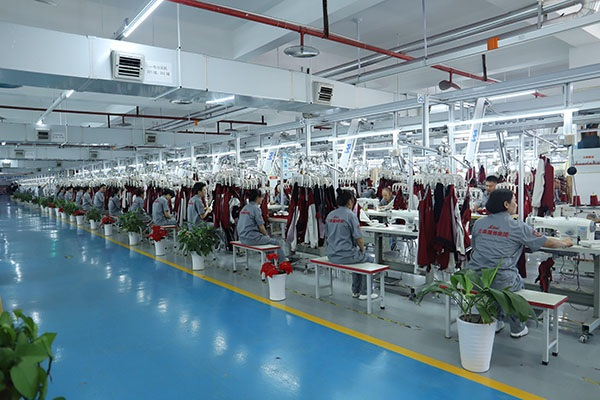
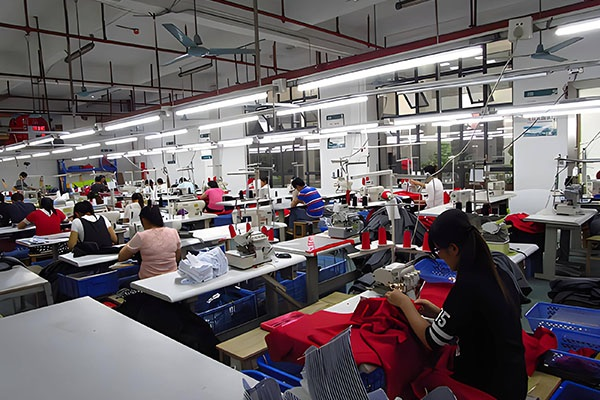
This commitment to precision and partnership is not theoretical. It is the daily practice of ZENITH CLOTHING, a fully vertical apparel manufacturer with a specialized focus on premium denim and casual wear. Our facilities are equipped to handle every stage, from fabric sourcing and cutting to sewing, intricate washing, finishing, and quality assurance. We have been the trusted production partner behind emerging labels and established brands, turning their detailed tech packs into inventory-ready garments that inspire loyalty and define style.
When you are ready to translate your denim concepts into reality, partner with a manufacturer who speaks the language of specifics. Partner with ZENITH CLOTHING.
Let us build your legacy, one precise detail at a time.