Don't miss our holiday offer - up to 50% OFF!

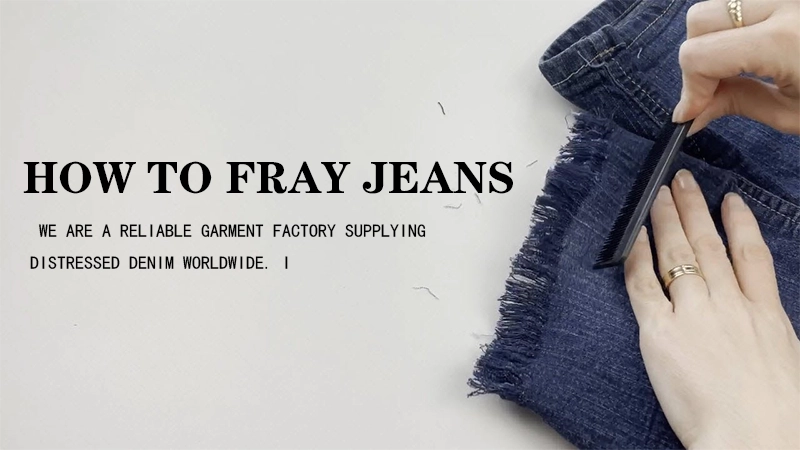
how to fray jeans

Introduction: The Enduring Appeal of Distressed Denim
Distressed denim is far more than a passing trend; it is a enduring staple of global fashion. The look of frayed hems, selectively abraded knees, and subtly unraveling seams communicates a message of effortless cool, individuality, and a lived-in sense of style. Whether it’s the grunge-inspired aesthetics of the 1990s or the high-fashion runways of today, the demand for jeans that look perfectly imperfect continues to dominate the market.
For the fashion-forward individual, fraying jeans is a form of self-expression—a way to breathe new life into an old wardrobe staple. However, for brands and retailers, capturing this specific aesthetic consistently and at scale is a complex manufacturing challenge. This guide serves two purposes. First, it provides a detailed, expert overview of the techniques used to fray denim, from simple DIY methods to advanced textile finishes. Second, it demonstrates why partnering with a professional garment factory is essential for brands looking to offer high-quality distressed denim to a global audience.
Part 1: The Anatomy of Denim and Fraying Fundamentals
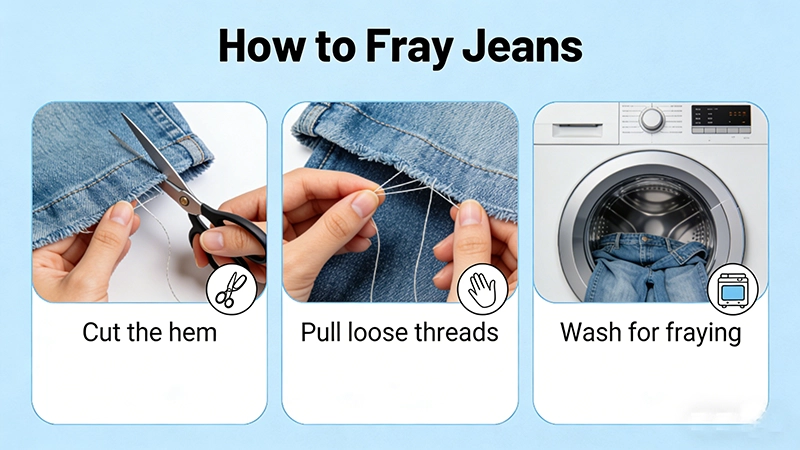
Before attempting to fray denim, whether at home or in a factory, one must understand the material itself. Denim is a sturdy cotton warp-faced textile in which the weft passes under two or more warp threads. This twill weave construction is what gives denim its characteristic diagonal ribbing and durability.
Understanding the Weave
The “fray” is created when the horizontal (weft) threads are broken, cut, or worn away, leaving the vertical (warp) threads exposed. In standard denim, the warp threads are dyed indigo while the weft threads remain white or grey. This contrast is what makes distressed areas visually pop.
100% Cotton vs. Stretch Denim
The behavior of the fray depends heavily on the fabric composition.
- 100% Cotton Denim: This is the ideal canvas for fraying. It is rigid, and the threads release cleanly, creating a classic, textured fringe.
- Stretch Denim (Cotton/Elastane Blend): Fraying stretch denim requires more finesse. The elastane threads are elastic and can retract, making the frayed edge look bunched or less pronounced. While possible, it often requires different handling than rigid denim.
Part 2: The Artisan‘s Toolkit: DIY and Artisanal Fraying Techniques
For small-scale designers or individuals, mastering manual techniques is the first step to understanding the look and feel of quality distressing. These methods are the foundation upon which industrial processes are built.
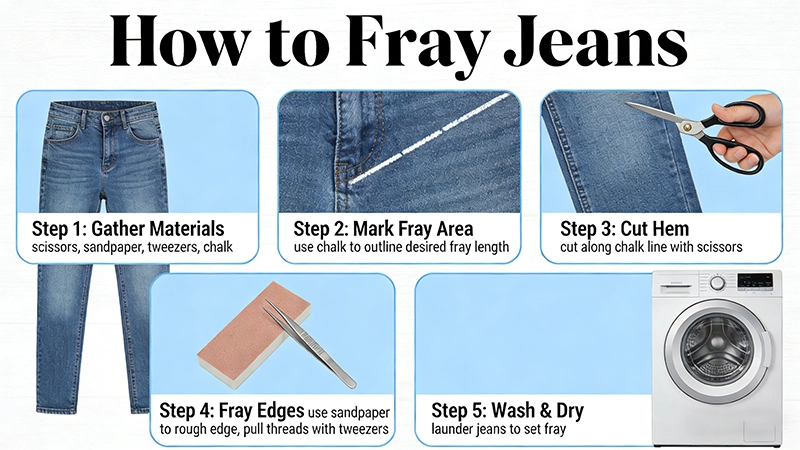
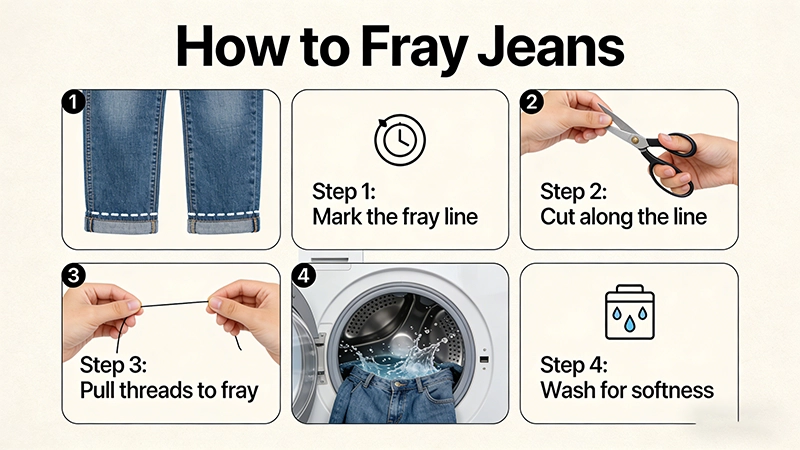
1. The Precision Cut and Pull Method
This technique offers the most control and is ideal for creating clean, frayed hems.
- Marking: Start by determining the desired length. Use chalk or a fabric marker to draw a straight line where you want the cut to be. For a frayed hem, it’s often recommended to add an extra inch to account for the fray that will develop.
- The Initial Cut: Using sharp fabric scissors, cut horizontally across the leg, leaving a buffer of 1-2 inches below your desired final fray line. This extra fabric is the raw material for the fray.
- Thread Extraction: This is the most meticulous step. Using a seam ripper or tweezers, begin pulling the horizontal (white) threads away from the cut edge. As you remove the horizontals, the vertical (blue) threads will stand alone, creating the classic fringe. Tweezers allow for pulling individual threads to achieve a natural, uneven look rather than a perfectly straight line.
2. Abrasion Techniques for a Worn Finish
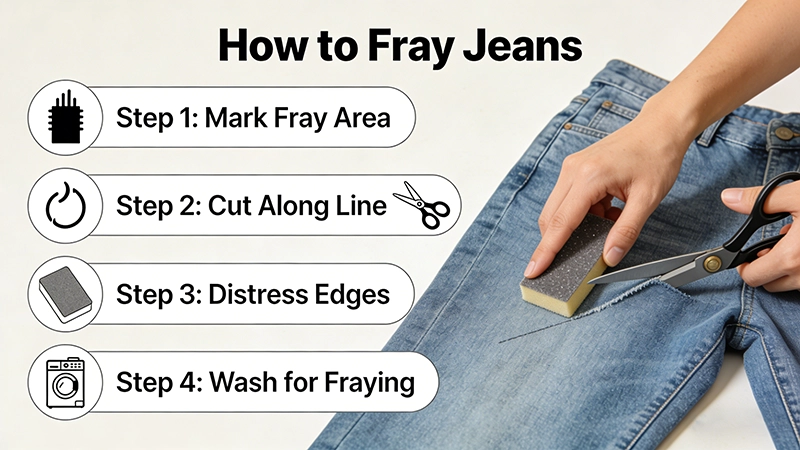
To create a “distressed” area, such as a faded thigh or a soft hole, abrasion is key. This mimics the natural wear and tear of years of use.
- Sandpaper and Pumice: Using medium to coarse-grit sandpaper or a pumice stone, rub the denim vigorously. Placing a piece of cardboard inside the leg prevents the abrasion from damaging the back seam. This technique breaks the surface fibers, softening the denim and creating a faded, fuzzy texture.
- The Cheese Grater Method: For a more aggressive tear, a clean cheese grater or pumice stone can be dragged across the denim. This is a quicker way to distress the fabric, but it requires a steady hand to avoid creating unintended holes.
3. The Wash and Wear Method
Sometimes, the best tool is the washing machine. After making small snips or initial abrasions, washing and drying the jeans in a machine accelerates the fraying process. The tumbling action against other clothes and the drum agitates the loose threads, softening the edges and encouraging natural unraveling.
Part 3: The Industrial Evolution: How Factories Master Distressing
While DIY methods are great for one-off pieces, they are inefficient for mass production. High-end distressed denim from reputable suppliers involves a sophisticated combination of mechanical and chemical engineering. Factories must replicate the randomness of wear and tear uniformly across thousands of units.
The Shift from Manual Labor to Automation
Historically, distressing was done by hand with sandpaper and grinders—a laborious and inconsistent process. Today, technology drives efficiency. As industry leaders have demonstrated, the introduction of laser technology has revolutionized denim finishing. What once took skilled workers minutes of manual abrasion can now be achieved in seconds.
Key Industrial Fraying and Distressing Techniques
1. Laser Finishing
Laser technology is the gold standard for modern denim manufacturing. Using high-definition software, designers can program specific patterns of wear onto the denim. The infrared laser essentially “burns” away the indigo dye on the surface of the fabric with incredible precision.
- Advantages: Lasers can replicate the look of whiskers (the fading near the crotch), scratches, and honeycombs (fading behind the knees) without using water or harmful chemicals. This process is not only faster but also significantly more environmentally friendly than traditional hand-sanding -2.
2. Enzyme and Stone Washing
To achieve that soft, lived-in feel and overall fade, factories use large industrial washing machines.
- Enzyme Washing: Instead of using harsh chemicals, manufacturers use cellulase enzymes. These biological catalysts break down the cellulose on the surface of the cotton fibers, gently removing the top layer of dye and exposing the white core of the yarn. This creates a soft hand-feel and a uniform “used” appearance without the mechanical damage of stones.
- Stone Washing: For a more aggressive abrasion and a true “worn-out” look, pumice stones are added to the wash cycle. As the stones tumble with the jeans, they literally beat the fabric, creating softness and localized wear marks. Modern factories use advanced washing systems to mitigate the damage pumice can cause to machinery.
3. Ozone Treatment
Ozone technology is an eco-friendly innovation used for bleaching and fading denim. By introducing ozone gas into the washing drum, factories can lighten the color of denim uniformly or create unique fading patterns. This process uses no water and significantly reduces the need for chemical bleaches.
4. Manual Finishing (The Human Touch)
Despite the rise of automation, the human hand is still invaluable. After laser and washing processes, artisans often review the jeans to add final touches. This might involve using a knife to open a sealed laser line into a hole, using tweezers to pull extra threads for a heavier fray, or adding “grinding” to the pocket edges and hems to ensure the distressing looks organic and not digitally printed.
| Technique | Typical Application | Key Characteristic |
|---|---|---|
| Laser Finishing | Whiskers, scratches, honeycombs | High precision, dry process, eco-friendly |
| Enzyme Wash | Overall softening, surface fade | Biological removal of dye, soft hand-feel |
| Stone Washing | Heavy abrasion, worn-in softness | Uses pumice stones, aggressive finish |
| Ozone Treatment | Bleaching, uniform fading | Waterless, chemical-free oxidation |
| Manual Finishing | Holes, heavy frays, thread pulling | Artisanal, unique detailing, final review |
Part 4: Customization Options for Your Brand
For businesses looking to enter the denim market, understanding the vocabulary of customization is essential. When placing a bulk order for distressed denim, you have several variables to control:
Distressing Levels
- Light Distress: Subtle fading and minimal fraying. Often achieved with light enzyme washes and targeted laser whiskering. Suitable for “smart casual” looks.
- Moderate Distress: Includes small holes (often called “destroyed” denim), heavier fraying on hems, and noticeable abrasion on pocket edges and seams.
- Heavy Distress: Extreme looks with large tears, heavy fringe, and significant fabric removal. This often requires a combination of manual cutting and multiple wash processes.
Placement
Common distressing zones include:
- The Hem: The most common area for fraying, from a subtle unraveled edge to a long, shaggy fringe.
- The Knees: Rips and frays here are classic. Laser technology allows for “pre-creased” fading that matches the way the knee bends.
- The Thighs and Pockets: Often abraded to create soft, faded spots.
Private Label Integration
Custom styles aren’t just about the denim; they are about the brand identity. A full-service factory handles the integration of branding into the garment. This includes custom-molded buttons and rivets with your logo, leather or synthetic leather patch designs, custom woven labels, and specific thread colors for stitching that contrast with or complement the wash.
Part 5: Why Scale Matters—The Manufacturer‘s Advantage
While the DIY tutorials are plentiful online, the gap between a home project and a retail-ready product is vast. This is where the expertise of a dedicated garment factory becomes indispensable.
Consistency Across Bulk Orders
If a brand orders 1,000 pairs of frayed jeans, every pair must look virtually identical. Manual hand-finishing can vary from one artisan to the next. Factories solve this through digital replication. Lasers save the exact pattern of distressing, and washing formulas are precisely measured and controlled for every batch. This ensures that the first pair off the line matches the last.
Quality Control
Professional factories implement rigorous multi-stage quality checks. This includes inspecting fabric for defects before cutting, checking stitching during assembly, and verifying the wash and distressing finish on the final garment. For stretch denim, this ensures that the distressing hasn’t compromised the integrity of the elastane, which could lead to blowouts.
Supply Chain and Sustainability
Reputable manufacturers are moving toward sustainable production. This means using water recycling systems in wash-houses, employing laser and ozone technology to reduce chemical runoff, and sourcing sustainable materials like organic or recycled cotton. For a brand, partnering with a factory that holds certifications (like GOTS or BSCI) allows them to market their products as ethically made.
Part 6: Partner with ZENITH CLOTHING for Your Denim Line
Navigating the complexities of denim manufacturing requires a partner with experience, technical skill, and a commitment to quality. At ZENITH CLOTHING, we bridge the gap between your creative vision and the global market.
Who We Are
ZENITH CLOTHING is a premier garment factory specializing in high-quality denim and apparel manufacturing. With years of experience in the industry, we have honed our craft to deliver exceptional distressed denim that meets the rigorous demands of today‘s fashion landscape. We are not just a supplier; we are an extension of your brand, dedicated to bringing your custom styles to life with precision and authenticity.
Our Manufacturing Capabilities
Our state-of-the-art facility is equipped to handle every stage of production, from fabric sourcing to final finishing. We combine traditional craftsmanship with cutting-edge technology to produce superior distressed denim.
- Advanced Wash House: We utilize laser technology, enzyme washes, and ozone systems to create a full spectrum of finishes, from subtle vintage fades to aggressively destroyed looks, all while minimizing our environmental footprint.
- Expert Artisans: While we embrace technology, we value the human touch. Our skilled team manually inspects and finishes garments to ensure that every fray and fade looks organic and intentional.
- End-to-End Customization: Whether you need a specific rigid denim fabric, custom rips and frays, or branded rivets and patches, we have the infrastructure to execute your vision.
Your Partner for Global Success
We understand the challenges of the fashion industry—tight deadlines, high standards, and the need for scalability. Whether you are a startup looking to launch your first collection or an established brand seeking a reliable production partner, ZENITH CLOTHING offers the flexibility and capacity to meet your needs. Our streamlined processes ensure fast turnaround times without compromising on quality.
Inquire Now for Your Bulk Orders
The demand for custom, distressed denim continues to grow. Don’t settle for mass-produced mediocrity. Elevate your brand with denim that tells a story.
We invite retailers, designers, and entrepreneurs to partner with us. Let ZENITH CLOTHING handle the complexities of production so you can focus on design and marketing. For bulk orders, private label development, or to discuss your specific project requirements, we encourage you to reach out to our team today.
Inquire now and discover the ZENITH CLOTHING difference—where expert craftsmanship meets industrial reliability.