Don't miss our holiday offer - up to 50% OFF!

How to customize your denim jacket

The denim jacket is a timeless wardrobe staple. Its durable fabric, classic cut, and effortless versatility have made it a favorite across generations. However, the true beauty of a denim jacket lies not in its uniformity but in its potential for transformation. Customizing your denim jacket allows you to express your identity, revive an old piece, and create something that no one else in the world owns. Whether you are aiming for a punk rock edge, a bohemian flair, or a sleek modern aesthetic, the process of customization is both an art and a craft. This guide will walk you through every method, tool, and technique you need to turn a standard denim jacket into your personal masterpiece.
Part 1: Why Customize Your Denim Jacket?
Before diving into the how-to, it is important to understand the why. Mass-produced fashion often lacks soul. By customizing your denim jacket, you reclaim your clothing as a form of self-expression. Customization also promotes sustainability; instead of discarding an old or stained jacket, you give it a second life. Furthermore, a customized jacket becomes a conversation starter, a reflection of your interests, music tastes, travels, or artistic side. From painted murals to stitched patches, every detail tells a story.
Part 2: Preparing Your Jacket for Customization
Proper preparation ensures that your designs last. Start by washing and drying your denim jacket to pre-shrink the fabric and remove any factory finishes. If you prefer a stiff surface for painting, skip the fabric softener. Next, lay the jacket flat on a hard surface. Gather your tools based on the customization method you choose: fabric paints, brushes, needles, thread, patches, studs, stencils, chalk for marking, and scissors. Always test paints or adhesives on an inside seam first to check for colorfastness and fabric reaction. Iron the jacket to remove wrinkles, creating a smooth canvas.
Part 3: Painting and Bleaching – Artistic Transformations
3.1 Fabric Painting Techniques
Fabric paint is one of the most accessible ways to customize denim. Acrylic paint mixed with fabric medium works best, as it remains flexible after drying. Begin by sketching your design lightly with chalk. Popular motifs include floral patterns, geometric shapes, portraits, or abstract splashes. Use small, fine brushes for detailed work and foam brushes for backgrounds. Apply thin layers, allowing each to dry completely before adding the next. Once finished, heat-set the paint by ironing on the reverse side for several minutes. This prevents cracking and washing out.
3.2 Bleaching for Unique Patterns
Bleach creates dramatic, high-contrast effects on indigo denim. Work in a well-ventilated area and wear gloves. Dilute bleach with water in a 1:1 ratio for a milder effect. Use a spray bottle for a speckled look, or dip sections of the jacket for ombre fades. For stenciled designs, soak a sponge in the bleach solution and dab it over a stencil held firmly against the fabric. After achieving the desired lightness, rinse the jacket thoroughly in cold water to stop the bleaching action, then wash with mild detergent. Note that bleach weakens fibers over time, so avoid over-bleaching.
Part 4: Embroidery and Stitching – Adding Texture and Detail
Embroidery transforms a denim jacket into a tactile work of art. Denim’s tight weave provides excellent support for stitches. For beginners, use an embroidery hoop to keep the fabric taut. Choose cotton embroidery floss in colors that contrast or complement the denim. Popular stitches include backstitch for outlines, satin stitch for filling shapes, and French knots for texture. You can embroider pre-designed patterns like flowers, skulls, or lettering, or create freeform abstract designs. For a quicker alternative, use a sewing machine with a darning foot to draw thread sketches. Remember to knot threads securely on the inside and trim excess. Embroidered details are durable and washable, making them ideal for long-term wear.
Part 5: Patches and Appliqués – Instant Attitude
Patches are perhaps the most classic denim jacket customization. They range from woven band logos to embroidered flowers, vintage military insignia, or humorous slogans. There are two ways to attach patches: sewing or iron-on. Iron-on patches have a heat-activated adhesive backing. Position the patch, cover with a thin cloth, and press with a hot iron for 30–60 seconds. However, sewing provides a more permanent hold, especially on heavy denim. Use a whipstitch or blanket stitch around the patch edge with a strong polyester thread. For a layered look, overlap patches or mix sizes and shapes. Patches can also be handmade from cut-up printed t-shirts or fabric scraps—simply apply fabric glue around the edges before stitching.
Part 6: Distressing, Ripping, and Fraying – The Worn-In Look
Distressed denim never goes out of style. To create authentic-looking rips, use a sharp craft knife or box cutter. Mark the areas you want to tear, such as the cuffs, collar, or back panel. Place a piece of cardboard inside the jacket sleeve or body to avoid cutting through both layers. Slice horizontally across the weave, then use tweezers to pull out the vertical blue threads, leaving only the white horizontal threads visible. This creates the classic frayed rip. For a softer frayed edge on hems or pocket openings, rub the denim with sandpaper or a pumice stone, then wash and dry the jacket to encourage further fraying. Be careful not to cut too close to seams, as this can cause structural weakness.
Part 7: Adding Hardware – Studs, Spikes, and Rivets
Hardware customization gives a jacket an edgy, rebellious feel. Studs and spikes come in screw-on or pronged styles. Pronged studs are easier for denim: push the prongs through the fabric from the right side, then bend them flat against the inside using a flathead screwdriver or a specialized stud setter. Plan your layout before committing—common arrangements include along the collar, down the placket, on the pocket flaps, or across the shoulders. You can also replace original buttons with custom metal snaps or add chain connectors between pockets. For a subtler look, use small pyramid studs spaced evenly. Always reinforce the reverse side of the fabric with an iron-on patch if the denim is lightweight, as heavy studs can cause tearing over time.
Part 8: Lining and Reconstructing – Advanced Customization
For those ready to take customization further, adding a lining transforms both the look and function of a denim jacket. Choose a lightweight fabric like flannel, silk, or cotton with a bold pattern. Turn the jacket inside out and trace the existing lining or body panels onto paper to create a pattern. Cut the lining fabric with seam allowances, then sew the panels together. Attach the lining to the jacket’s interior by hand-sewing along the armholes, collar, and front opening. Alternatively, you can crop the jacket by cutting straight across the bottom and hemming the raw edge with a double-folded stitch. Add elastic to the hem for a blouson effect. Reconstructing also includes swapping out the sleeves for leather or knit cuffs, or even combining two different jackets into one hybrid piece.
Part 9: Caring for Your Customized Denim Jacket
After all your hard work, proper care is essential. Turn the jacket inside out before washing to protect surface decorations. Use cold water and a gentle cycle, or hand wash when possible. Avoid bleach and harsh detergents. For painted or heavily embroidered jackets, spot cleaning is safest. Air dry flat or hanging, never in a direct heat dryer, as high heat can melt adhesives, crack paints, or shrink denim. If you used bleach, apply a fabric conditioner to restore softness. Store the jacket on a broad hanger to maintain shoulder shape, and avoid folding over painted areas.
Part 10: Inspiration and Design Ideas
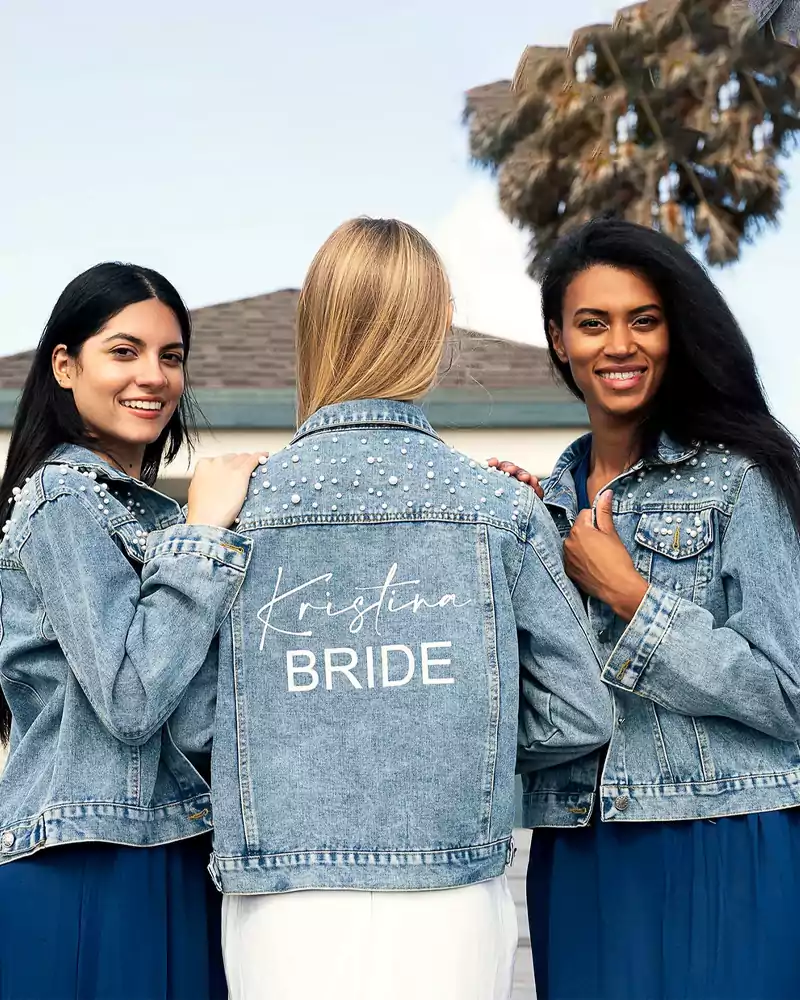
Still unsure where to start? Here are several theme-based ideas:
- Music Tribute: Sew patches of your favorite bands, paint lyrics on the back, and add safety pins.
- Nature Lover: Embroider leaves, vines, and flowers across the shoulders; use green and brown thread.
- Abstract Art: Splatter neon fabric paint, add irregular stitching lines, and attach mismatched buttons.
- Travel Journal: Sew on flags from countries you have visited, plus embroidered coordinates or dates.
- Punk Revival: Layer multiple patches, add rows of spikes on the collar, and create large ripped holes.
- Minimalist: Bleach a single geometric shape on the back pocket and add a line of subtle running stitch.
Mix and match techniques for truly unique results. Remember that mistakes often become design features—a crooked stitch or a paint drip adds character.
Conclusion
Customizing a denim jacket is more than a DIY project; it is a celebration of individuality. Whether you paint, stitch, rip, spike, or line your jacket, each choice reflects a part of you. The process takes patience, but the reward is a garment that cannot be bought in any store. As you wear your customized jacket, you carry with you the hours of creative effort, the stories behind each patch, and the pride of making something uniquely yours.
About the Manufacturer – ZENITH CLOTHING
Behind every great denim jacket is quality construction, and that is where we come in. ZENITH CLOTHING is a professional specializing in premium denim outerwear. We understand that the best canvases for customization start with superior materials. Our denim jackets are crafted from high-grade cotton blends, reinforced seams, and consistent dye lots, ensuring that every stitch, paint stroke, or stud you add remains secure for years. Whether you are a DIY enthusiast or a brand looking for wholesale blanks, ZENITH CLOTHING offers durable, ethically produced jackets in a range of washes and cuts. From classic trucker styles to oversized modern fits, our pieces are designed to inspire creativity. When you choose ZENITH CLOTHING, you are not just buying a jacket—you are investing in a foundation for art. Contact our team to explore our collection and start your customization journey with the quality you deserve.