Don't miss our holiday offer - up to 50% OFF!

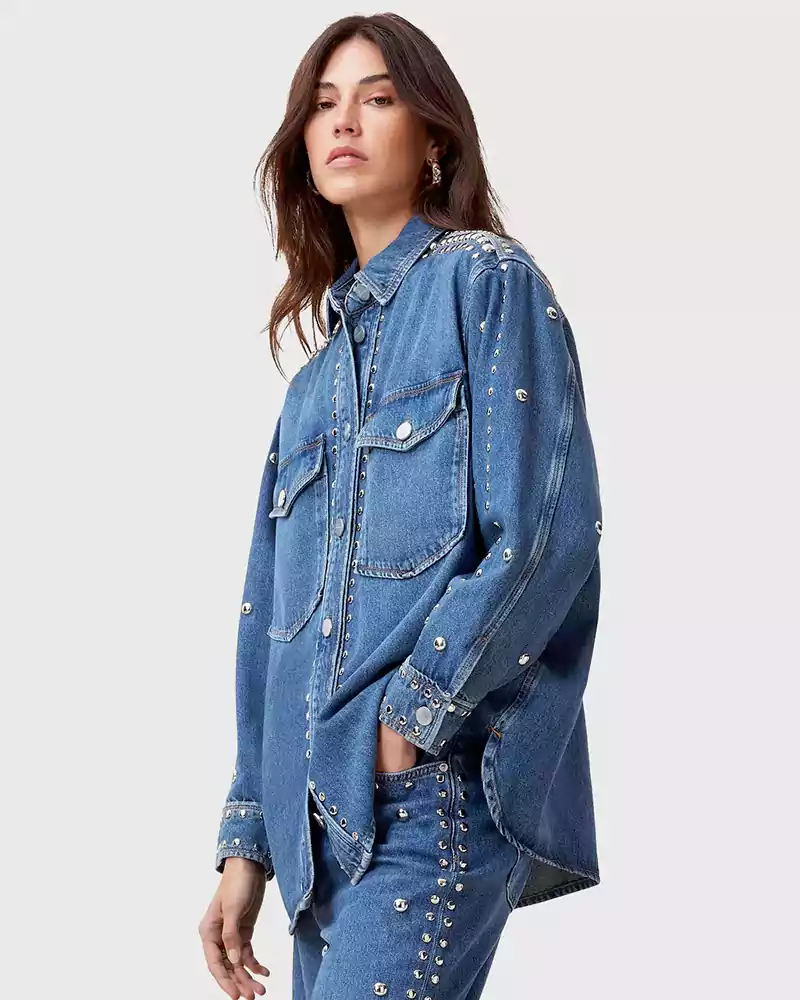
Custom embroidered denim shirt

In an era where mass-produced garments dominate retail shelves, the custom embroidered denim shirt stands as a powerful counterstatement. It is not merely an article of clothing; it is a declaration of individuality, a canvas for storytelling, and a testament to the enduring appeal of handcrafted detail. Denim, originally a utilitarian fabric for miners and cowboys, has evolved into a global wardrobe staple. Embroidery, an ancient textile art form dating back thousands of years, transforms this rugged material into something deeply personal and visually striking.
At ZENITH CLOTHING, we have dedicated our manufacturing expertise to mastering this specific fusion. We understand that a custom embroidered denim shirt is more than the sum of its threads. It represents a collaboration between the wearer and the maker. Whether it is a corporate logo on a team uniform, a beloved pet’s portrait on a casual button-down, or an intricate floral cascade down a shirt front, embroidery adds texture, depth, and permanence. Unlike screen printing, which sits on the surface and cracks over time, embroidery becomes part of the fabric’s very structure. This article explores every facet of this unique garment—from raw denim selection to digitizing artwork and final stitching—while establishing ZENITH CLOTHING as your premier manufacturing partner.
Chapter 1: The Denim Foundation – Selecting the Right Base Shirt
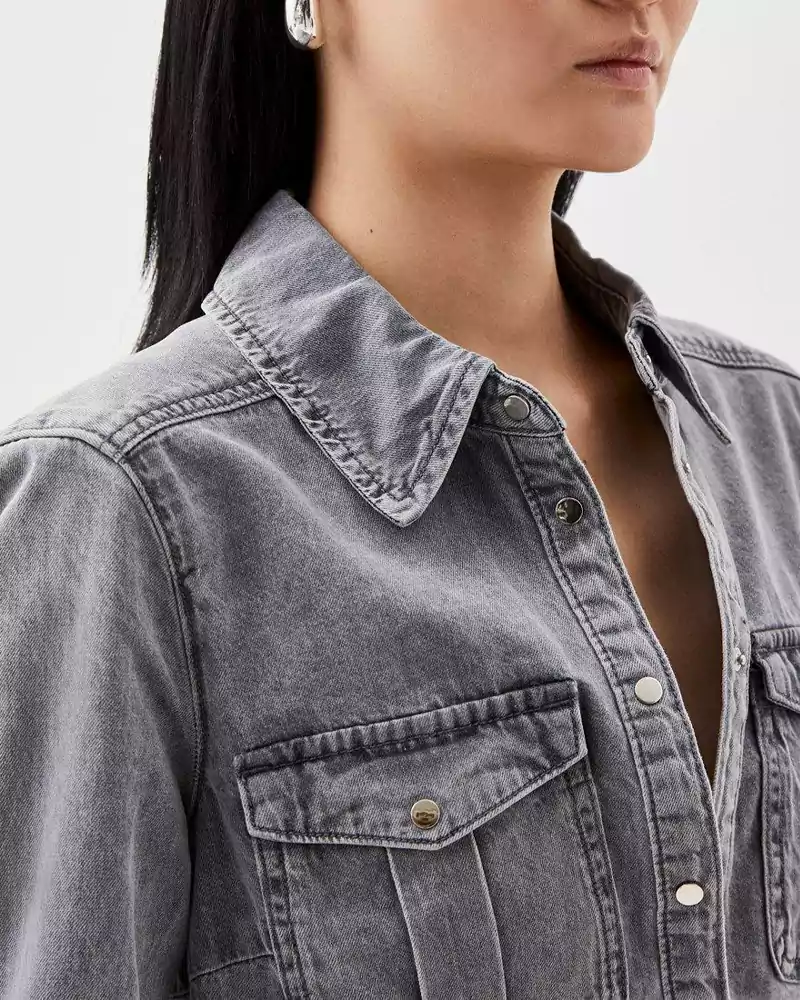
Before a single embroidered stitch is made, the foundation must be flawless. Not all denim shirts are created equal, and the choice of base material directly impacts the final embroidery result.
1.1 Weight and Weave
Denim is measured in ounces per square yard. For embroidered shirts, we at ZENITH CLOTHING typically recommend a mid-weight denim between 8 oz and 12 oz. Lightweight denim (under 8 oz) is prone to puckering under dense embroidery, as the needle perforations can distort the weave. Heavyweight denim (over 14 oz), while durable, requires industrial machinery to penetrate cleanly and may feel overly stiff when layered with thread. Our preferred 10 oz to 12 oz range offers the perfect balance: sturdy enough to hold complex designs without tearing, yet breathable enough for year-round wear.
1.2 Indigo, Black, and Beyond
The color of the denim dramatically affects thread visibility. A deep indigo blue provides high contrast for bright white, red, or gold threads, making logos and monograms pop. Black denim creates a moody, modern backdrop for metallic threads or neon colors. For a more subtle, sophisticated look, we offer washed-down or stonewashed denim, where the faded surface gives embroidery a vintage, lived-in aesthetic. ZENITH CLOTHING maintains an extensive inventory of pre-washed and raw denim rolls, allowing us to cut and sew shirts in any shade requested by our B2B clients.
1.3 Construction Quality
A poorly constructed shirt will ruin even the most beautiful embroidery. Our factory follows strict quality protocols: reinforced yoke seams, double-needle stitching on all main joins, and pre-shrunken fabric to prevent post-embroidery distortion. Every custom embroidered denim shirt that leaves our facility begins as a precision-cut pattern, ensuring that the embroidery area remains flat and tension-free during the stitching process.
Chapter 2: The Art of Embroidery – Techniques and Thread Selection
Embroidery is a language of loops and satin stitches. Understanding the technical vocabulary helps buyers appreciate what is achievable and what requires special handling.
2.1 Machine Embroidery vs. Hand Embroidery
For commercial production of custom embroidered denim shirts, machine embroidery is the only practical choice. High-speed multi-head machines—like the 12-head Tajima and Barudan units operating in the ZENITH CLOTHING factory—can produce hundreds of identical shirts per day with perfect consistency. Hand embroidery, while artistically valuable, is time-prohibitive for bulk orders (taking 20 to 80 hours per shirt). However, we do offer hybrid techniques where machine-embroidered outlines are accented by hand-done French knots or chain stitches for limited-edition collections.
2.2 Thread Types and Their Effects
Not all threads behave the same way on denim:
- Rayon thread: High luster, smooth finish, ideal for detailed logos and lettering. Slightly less durable but excellent for fashion-focused shirts.
- Polyester thread: Stronger than rayon, colorfast against UV and bleach. Our default recommendation for workwear and frequently washed garments.
- Metallic thread: Creates shine and glamour but requires slower stitching speeds and larger needles to prevent breakage. Best for small accent areas.
- Cotton thread: Matte finish that blends seamlessly with natural denim. Perfect for vintage-style designs.
ZENITH CLOTHING stocks over 1,500 thread colors from Madeira and Robison-Anton, ensuring exact Pantone matching for corporate brand guidelines.
2.3 Digitizing: The Critical Pre-Production Step
Embroidery begins not with thread, but with software. Digitizing converts a logo, monogram, or illustration into stitch commands: start points, stop points, underlay patterns, density settings, and pull compensation. Denim is a “springy” fabric; it compresses under the embroidery foot and then relaxes, which can misalign a design. Our digitizing team at ZENITH CLOTHING adds specific pull compensation (usually 0.2mm to 0.5mm) to ensure the final shape matches the original artwork. We always run a test sew-out on a scrap denim swatch before production begins.
Chapter 3: Design Possibilities – What Can You Embroider on a Denim Shirt?
The only limitation is the hoop size of the embroidery machine. Our largest commercial hoops accommodate designs up to 14 inches by 14 inches, suitable for full back pieces or front bibs.
3.1 Corporate and Workwear Applications
Businesses increasingly choose custom embroidered denim shirts for uniforms. A denim shirt projects durability and approachability—ideal for breweries, automotive shops, construction supply companies, and high-end retail staff. Embroidery on the left chest (pocket area) or the upper back (below the collar) provides professional visibility without the harshness of a screen-printed transfer. ZENITH CLOTHING has produced thousands of such shirts for clients ranging from boutique coffee roasters to national hardware chains.
3.2 Personalization and Monograms
Monograms remain the most popular form of custom embroidery. A single initial on the cuff, three-letter monogram on the placket, or full name script across the yoke transforms a stock shirt into a personal heirloom. For wedding parties and family reunions, we often embroider dates and last names inside the collar band or along the side seam—subtle details that carry emotional weight.
3.3 Artistic and Illustrative Embroidery
Modern embroidery technology allows for remarkable detail. Photorealistic portraits require specialized software that maps pixels to stitch angles; we recommend limiting these to a 4-inch by 4-inch area for clarity. Floral and botanical designs are particularly striking on denim, as the rough texture of the fabric contrasts beautifully with smooth satin-stitch petals. Western-themed embroidery (cacti, horseshoes, eagles) remains perennially popular on denim shirts, tapping into Americana aesthetics.
3.4 Placement Considerations
Embroidery placement is not arbitrary. Pockets must be either embroidered before assembly (so the back of the stitching is hidden between the pocket and shirt front) or embroidered with a cap hoop that avoids sewing the pocket shut. Plackets (the button strip) are best embroidered with the buttons removed or taped over. Yokes and collars require flat hooping to avoid puckering. Our production managers at ZENITH CLOTHING advise clients on optimal placement during the quoting stage, often sending digital mockups before any fabric is cut.
Chapter 4: The Manufacturing Process – From Order to Delivery
Transparency in manufacturing builds trust. Here is the exact process ZENITH CLOTHING follows for every custom embroidered denim shirt order.
4.1 Step One: Artwork Review and Digitizing
Clients submit vector artwork (AI, EPS, or CDR files preferred; high-resolution PNG or JPEG accepted). Our digitizing team creates the embroidery file, typically within 24 to 48 hours. We email a stitch preview image and a sew-out photo for approval.
4.2 Step Two: Fabric Cutting and Shirt Assembly
While the embroidery file is being approved, our cutting department lays out denim rolls on 10-meter-long cutting tables. Using computerized Gerber cutters, we cut all shirt components (front left, front right, back yoke, back main, collar, cuffs, placket strips, pocket bags) with precision to 0.5mm tolerance. Components are sorted into order-specific bins.
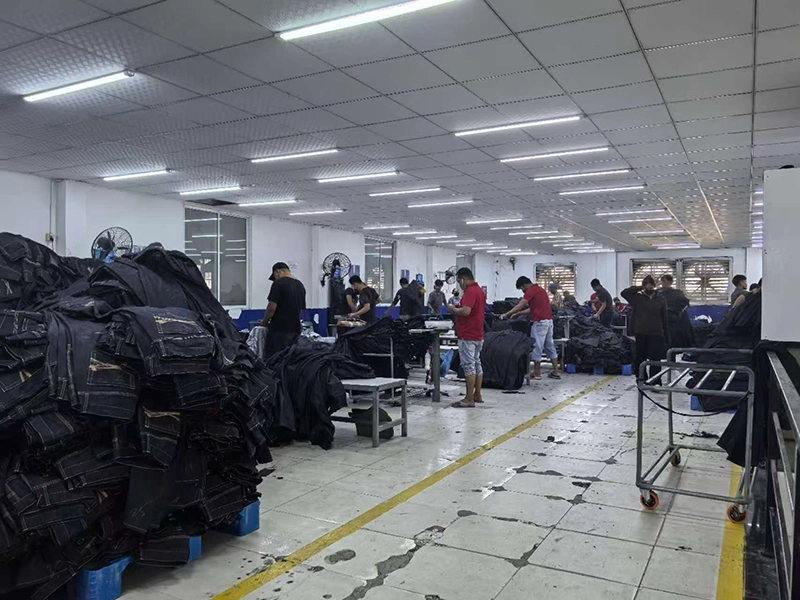
Our sewing lines then assemble the shirts, stopping at the point where embroidery is required. For chest logos, we leave the pocket off until after embroidery. For collar embroidery, we leave the collar stand open. This partial assembly approach ensures that the embroidery machine can access the desired area without obstruction.
4.3 Step Three: Hooping and Embroidery Production
Each shirt component is individually hooped—stretched taut in a plastic or metal frame that holds the fabric perfectly flat. Denim requires firm hooping; too loose and the fabric shifts, too tight and it distorts. Our experienced hooping operators work by both gauge and feel.
The embroidery machines then run the digitized design. Depending on stitch count (a 10,000-stitch logo takes about 15 minutes per shirt at 700 stitches per minute), we can produce between 50 and 300 embroidered units per day on a single machine. With our 24-machine embroidery department, ZENITH CLOTHING handles orders from 50 pieces to 50,000 pieces without subcontracting.
4.4 Step Four: Quality Control and Trimming
After embroidery, every shirt undergoes a three-point inspection:
- Topside inspection: No broken threads, no skipped stitches, proper registration of multi-color designs.
- Backside inspection: No birdnesting (tangled bobbin thread) on the fabric reverse. We trim all jump threads (the threads that travel between design elements) by hand using curved scissors.
- Tension check: The embroidery should lie flat without tunneling (where the fabric rises between stitch lines).
Shirts that fail any check are set aside for re-embroidery or, if the damage is too severe, are deconstructed and replaced from surplus cut components.
4.5 Step Five: Final Assembly, Washing, and Packaging
After embroidery passes inspection, we complete the shirt assembly: attaching pockets over embroidered areas (if applicable), sewing buttons and buttonholes, and adding any labels or hang tags.
For clients who desire a softer hand feel, we offer a final garment wash. This wash removes the factory starch from the denim and slightly puckers the embroidery, giving a desirable “home-sewn” character. Unwashed shirts are pressed and folded.
Packaging options range from bulk polybags (50 shirts per carton) to individual polybags with hangers, to eco-friendly kraft paper boxes. Our standard turnaround time for custom embroidered denim shirts is 20 to 25 business days from final approval, with rush options available for an additional fee.
Chapter 5: Care and Longevity – Protecting Your Embroidery
A custom embroidered denim shirt can last a decade or more with proper care. We include these instructions with every wholesale order.
5.1 Washing Guidelines
Turn the shirt inside out before washing. This protects the embroidery threads from abrasion against other garments. Use cold water (maximum 30°C / 85°F) and a mild liquid detergent. Avoid bleach or optical brighteners, which can degrade polyester and rayon threads. Machine washing on a gentle cycle is acceptable, but hand washing is ideal for heavily embroidered shirts.
5.2 Drying and Ironing
Air drying is strongly recommended. High heat from mechanical dryers can shrink the denim faster than the embroidery thread, causing permanent puckering. If machine drying is unavoidable, use the lowest heat setting and remove the shirt while still slightly damp. When ironing, iron the reverse side of the embroidery. If ironing the front is necessary, place a pressing cloth (a thin cotton towel) between the iron and the embroidery.
5.3 Repair Services
ZENITH CLOTHING offers a paid repair service for commercial clients. If a thread breaks or a design begins to unravel, we can re-hoop the shirt and restitch the affected area. Because we keep digital stitch files on record for every order, repairs are precise and virtually invisible.
Chapter 6: Why Partner with ZENITH CLOTHING?
After reading about the intricacies of custom embroidered denim shirts, you need a manufacturer who combines technical expertise with responsive service. ZENITH CLOTHING is that manufacturer.
6.1 Our Manufacturing Capabilities
We operate a 50,000-square-foot factory equipped with:
- 24 commercial embroidery heads (12-color capability)
- 40 industrial sewing machines (lockstitch, overlock, coverstitch, buttonhole)
- Computerized fabric spreaders and Gerber cutting tables
- In-house digitizing department (no outsourcing)
- Garment washing and finishing lines
Our monthly production capacity exceeds 15,000 custom embroidered denim shirts.
6.2 Quality and Compliance
All ZENITH CLOTHING products meet OEKO-TEX Standard 100 certification, meaning no harmful chemicals or dyes are present in the denim or threads. We also comply with sedex and BSCI social compliance audits, ensuring ethical wages and working conditions. Our quality control rejection rate for embroidery defects is under 1.2%, well below the industry average of 3-4%.
6.3 Low Minimums and Scalable Pricing
We believe every business deserves access to custom manufacturing. Our minimum order quantity for custom embroidered denim shirts is just 50 pieces per design. At 50 pieces, pricing is competitive with premium off-the-shelf brands. At 500 pieces, pricing becomes cost-effective for retail resale. At 5,000 pieces, we are among the most affordable manufacturers in the sector.
6.4 Our Brand: ZENITH CLOTHING
ZENITH CLOTHING is not a middleman or a trading company. We are the factory. When you work with us, you speak directly to production planners, digitizers, and quality control managers. Our brand stands for three pillars:
- Zenith Precision: Every stitch placed exactly where it should be.
- Zenith Durability: Threads and fabrics selected for longevity.
- Zenith Service: Real-time communication, digital proofs, and on-time delivery.
We have manufactured custom embroidered denim shirts for over 300 businesses across North America, Europe, and Australia. Our clients include hospitality groups, construction firms, fashion startups, and promotional product distributors. Many have reordered from us for five consecutive years.
Conclusion: Your Design, Our Denim, One Perfect Shirt
The custom embroidered denim shirt is a remarkable garment precisely because it bridges two worlds: the rugged, democratic history of denim and the painstaking, personal art of embroidery. It can be a walking business card, a cherished gift, or a piece of wearable art. But its quality depends entirely on the hands that cut the fabric, digitize the logo, and run the machines.
ZENITH CLOTHING has spent years perfecting every step of this process. We know how denim behaves under a needle. We know which threads will survive industrial laundry. We know how to ship 5,000 shirts with consistent embroidery placement on every single one. We are not here to simply sell you a product; we are here to become your long-term manufacturing partner for custom embroidered denim shirts and beyond.
Whether you need 50 shirts for a small team or 50,000 for a global campaign, contact ZENITH CLOTHING. Provide your artwork, your quantities, and your deadline. We will handle the rest—from digitizing to cutting to embroidering to shipping. Your vision, stitched into denim, delivered with pride.
ZENITH CLOTHING – Stitching Custom Denim, One Thread at a Time.