Don't miss our holiday offer - up to 50% OFF!

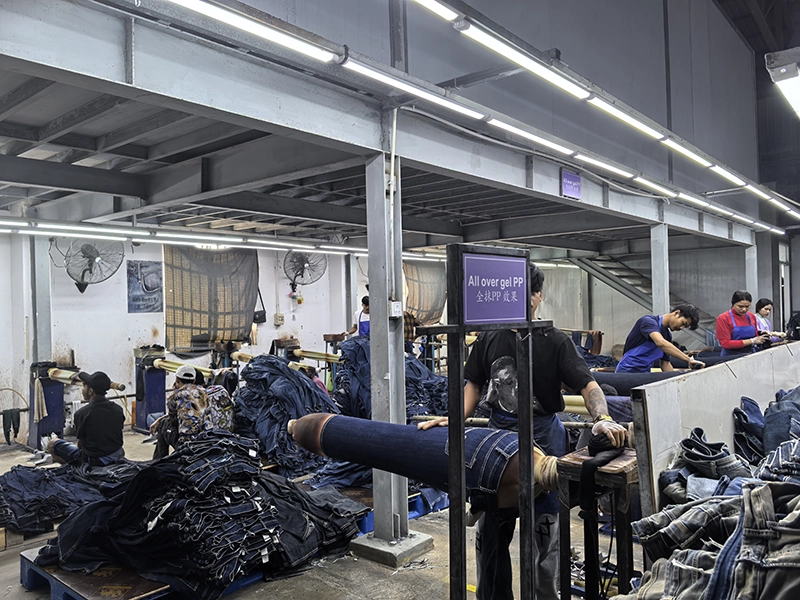
is denim and supply a good brand

In the world of fashion, the lifespan of a brand is not always determined solely by the quality of its products. Sometimes, strategy, pricing, and corporate restructuring dictate a label’s fate more than consumer love. Such was the case with Denim & Supply, a sub-brand launched by Ralph Lauren.
For those who discovered a military jacket or a pair of distressed jeans at a sample sale in 2015, the question remains: Was Denim & Supply a good brand?
The short answer is yes, it was a good brand, but it was ultimately a victim of its parent company’s broader business strategy and an identity that was perhaps too niche for its price point.
The Rise: A Creative Offshoot
Ralph Lauren launched Denim & Supply in 2011. At the time, the goal was to capture a younger, edgier demographic than the classic “Polo” customer. The brand was not merely cheap jeans; it was a specific aesthetic. It blended American denim culture with bohemian and military influences.
Imagine the ruggedness of a vintage workwear jacket mixed with flowy, bohemian scarves and graphic tees. It had a “urban feel” in its final seasons, but at its core, it was about individuality and a sort of curated rebellion. For consumers who found mainline Ralph Lauren too “preppy” or conservative, Denim & Supply offered a cool, artsy alternative.
The Quality vs. The Price
Evaluating if Denim & Supply was “good” requires looking at the product itself. By all accounts, the construction was solid. Because it was backed by the Ralph Lauren supply chain, the denim was generally of a higher quality than fast-fashion competitors.
However, the fatal flaw was value perception. The brand struggled to attract its target audience—shoppers aged 15 to 30—because it was too expensive for that cohort.
Young consumers in the 2010s were beginning to migrate toward fast fashion (Zara, H&M) or saving for premium heritage brands. Denim & Supply fell into a no-man’s-land. It was priced higher than mall brands but didn’t carry the same prestige weight as the main “Ralph Lauren” or “Polo” labels. While the style was recognized as good, the price-to-age ratio was off.
The Downfall: Corporate Math
Ultimately, a brand can be “good” and still fail. In late 2016, Ralph Lauren’s then-CEO Stefan Larsson announced a restructuring plan called the “Way Forward.” The goal was to simplify the company and focus on core brands—namely Ralph Lauren and Polo.
Denim & Supply was a casualty of this streamlining. Despite having about 20 standalone stores and an international presence, the brand accounted for less than 2% of the group’s global net sales. To put it in perspective, the brand was likely generating around $150 million annually, which sounds like a lot until you realize it was a rounding error for a giant like Ralph Lauren.
The executives made a logical decision: instead of running a separate brand to sell denim to the youth, they decided to absorb that energy into the Polo brand. As then-CFO Jane Hamilton Nielsen noted, they believed they had a “great opportunity with Polo to recover denim’s sales over time”.
Conclusion: A Cult Classic
So, is Denim & Supply a good brand? If you are shopping for it today on resale sites like eBay or Poshmark, the answer is yes.
Because the brand is discontinued (discontinued in late 2016, with stores closing shortly after), it has achieved a small cult status. The brand was good enough to be missed. It offered a specific aesthetic that Ralph Lauren’s main line does not fully cover—that rugged, artsy, downtown look.
In retrospect, Denim & Supply failed because of bad timing and corporate politics, not because the clothes were ugly or fell apart. It was a good brand that simply couldn’t find its economic footing in a rapidly changing retail landscape.
Verdict: High quality, great aesthetic, but poor market positioning. A good buy if you find it second-hand.