Don't miss our holiday offer - up to 50% OFF!

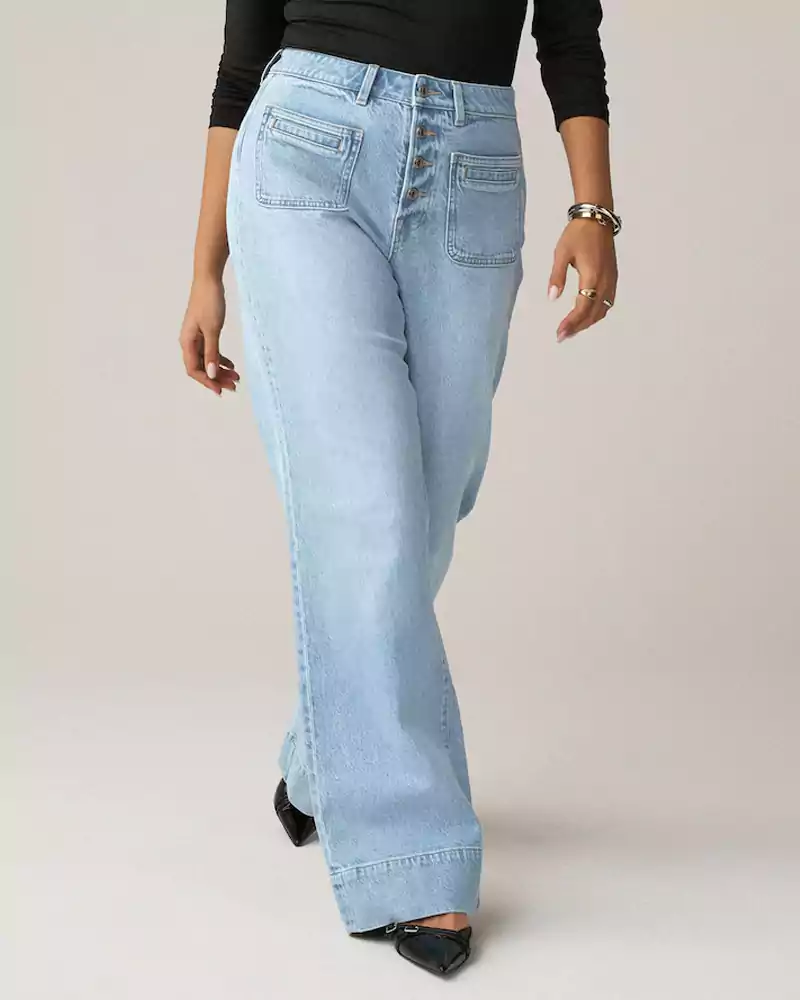
Womens customized denim jeans

In the ever-evolving world of women’s fashion, few garments have maintained the timeless, universal appeal of denim jeans. From their rugged workwear origins to their status as a high-fashion staple, jeans have transcended decades of trends. However, one size—or even one cut—has never truly fit all. Today, the most significant shift in the industry is the move from mass production to customization. Women are no longer willing to settle for off-the-rack jeans that gap at the waist, pinch at the hips, or fall short in length. They want denim designed for their unique body shape, personal style, and functional needs. This article explores every facet of women’s customized denim jeans, from fabric selection and fit engineering to design details and sustainable manufacturing. Finally, we will introduce you to ZENITH CLOTHING, a leading garment manufacturer dedicated to bringing bespoke denim visions to life.
Chapter 1: Why Customization Matters in Women’s Denim
1.1 The Problem with Standard Sizing
The traditional sizing system (0, 2, 4, 6, etc.) is based on outdated, generalized body measurements that fail to account for natural variations in women’s anatomy. Two women wearing the same size 6 can have entirely different waist-to-hip ratios, thigh circumferences, and torso lengths. Standard jeans often lead to uncomfortable compromises: a waist that gaps open, a crotch that sags, or thighs that feel like tourniquets.
1.2 The Empowerment of a Perfect Fit
Customized denim eliminates guesswork. When a woman wears jeans tailored to her exact contours, her confidence improves. She moves freely, sits comfortably, and presents herself authentically. Customization is not a luxury—it is a solution to a universal fit problem. Moreover, bespoke jeans allow women to choose rises (low, mid, high), inseams (petite, regular, tall), and leg shapes (skinny, straight, bootcut, flare, wide-leg) that complement their unique silhouette.
1.3 Expressing Personal Style Through Denim
Beyond fit, customization offers creative control. A woman can decide between raw selvedge, stonewashed, acid-washed, or distressed finishes. She can select thread colors, hardware (zinc, copper, antique brass), pocket shapes, and even embroidery. This level of personalization ensures that her jeans are an extension of her identity—not a uniform dictated by a retailer.
Chapter 2: Anatomy of Women’s Customized Denim Jeans
2.1 Understanding Denim Fabric: The Foundation of Quality
The journey to perfect custom jeans begins with fabric. Denim is a rugged cotton twill weave, but variations in weight, composition, and finish dramatically affect the final product.
- Weight: Lightweight denim (8–10 oz) is breathable and ideal for summer or relaxed fits. Mid-weight (11–14 oz) offers structure and versatility for everyday wear. Heavyweight (15 oz and above) provides durability, holds shape longer, and molds to the body over time—a favorite among raw denim enthusiasts.
- Stretch vs. Rigid: Stretch denim incorporates elastane or Lycra, offering comfort and ease of movement. Rigid denim (100% cotton) is stiff initially but breaks in beautifully, creating a unique patina that conforms exclusively to the wearer.
- Weave and Texture: Left-hand twill (softer feel), right-hand twill (diagonal texture), and broken twill (anti-rotation) each produce different draping characteristics. Slub yarns create irregular, vintage-like surfaces, while open-end yarns yield a smoother finish.
2.2 Key Measurements for Custom Fit
A professional manufacturer measures over 20 points on the body to draft a custom denim pattern. Critical measurements include:
- Natural waist circumference
- High hip and low hip
- Thigh width (at crotch level)
- Knee width and leg opening
- Front and back rise length
- Inseam and outseam
- Hip curve angle (crucial for preventing “waist gap”)
Each measurement influences the jean’s final drape. For example, a pronounced hip curve requires a deeper back yoke and shaped side seams to prevent pulling.
2.3 Hardware and Finishing Details
Customization extends to every metal and stitch. Clients choose:
- Buttons: Logo-embossed, donut-style, or tack buttons.
- Rivets: Copper, silver, or black nickel. Hidden rivets on back pockets add sophistication.
- Zippers: YKK brass, matte black, or invisible zippers.
- Stitching: Contrast (gold, orange, yellow) for a classic jean look, or tonal for a minimalist aesthetic. Chain-stitching at the hems produces the characteristic roping effect after washing.
Chapter 3: Designing Your Custom Denim – A Step-by-Step Process
3.1 Step 1: Silhouette Selection
The first decision is the leg shape. Popular options include:
- Skinny: Fits close from thigh to ankle, ideal for tucking into boots.
- Straight: Consistent width from knee to hem, universally flattering.
- Bootcut: Slight flare below the knee, balancing wider hips.
- Flared: Dramatic widening from knee to hem, a 1970s revival.
- Wide-Leg: Loose from thigh to floor, offering comfort and drama.
- Mom Jean: Relaxed through hip and thigh with a tapered ankle.
3.2 Step 2: Rise and Waistband Style
The rise dramatically affects comfort and appearance.
- Low rise (7–8 inches): Sits below the navel, suited for shorter torsos.
- Mid rise (8.5–9.5 inches): Sits at or just below the belly button, the most versatile option.
- High rise (10–12 inches): Reaches above the navel, slims the waist and elongates legs.
Waistband variations include contour bands (curved to follow hip shape), split bands (for adjustable fit), or wide waistbands (corset-inspired).
3.3 Step 3: Pocket and Yoke Design
Pockets define the back view. Shallow pockets flatten the glutes, while deep, angled pockets lift and round. Options include:
- Patch pockets: Sewn onto the exterior, common on Western or boho styles.
- Felled seam pockets: Integrated into the yoke for a clean finish.
- Coin pocket placement: Traditional at right front or repositioned for asymmetry.
The yoke (the V-shaped panel below the waistband) can be chevron, pointed, or curved. A deep yoke reduces horizontal wrinkling.
3.4 Step 4: Wash and Finish
No customization is complete without the wash. Clients specify:
- Raw (unwashed): Stiff, dark indigo that fades with wear.
- One-wash: Softened but retains deep color.
- Stonewashed: Pumice stones create random abrasions.
- Enzyme washed: Biopolishing smooths fibers for a soft handfeel.
- Bleach or acid wash: High-contrast, edgy effects.
- Whiskering and honeycombing: Artificial fading at stress points (fly, back of knees) for a lived-in look.
3.5 Step 5: Length and Hem Finish
Inseam lengths from 26 inches (petite) to 36 inches (extra tall). Hem finishes include:
- Raw edge: Unhemmed, frayed look.
- Cuffed: Turned up and stitched.
- Blind stitch: Invisible hem for dressy jeans.
- Chain-stitch roll: Single-needle rolled hem for vintage reproduction.
Chapter 4: Manufacturing Custom Denim – The Technical Process
4.1 Pattern Drafting and Grading
Once measurements are received, a CAD (computer-aided design) program generates a unique pattern. Unlike mass grading (scaling a single pattern up and down), custom pattern drafting adjusts each curve proportionally. The pattern is then printed on heavy paper and laid onto the fabric.
4.2 Cutting: Manual vs. Automated
For single-pair custom orders, manual cutting with a straight knife or band knife ensures precision. For small batches (e.g., 10–50 identical custom jeans), automated CNC (computer numerical control) cutters reduce waste. Fabric is spread in single plies to avoid shifting.
4.3 Assembly: The Critical Steps
Denim assembly requires specialized machines:
- Flatlock machines: For lap seams (inside leg).
- Felled seam machines: For outseams and crotch.
- Chainstitch machines: For hems and waistbands.
- Buttonhoppers and rivet setters: For hardware.
Key quality checkpoints include:
- Waistband alignment: Must match the zipper fly exactly.
- Inseam consistency: No twisting (a common defect in cheap denim).
- Bar tacking: Reinforced stitching at pocket corners and fly base.
4.4 Washing and Finishing
After assembly, jeans enter the laundry. For custom orders, small-capacity washer-extractors allow precise control. Techniques include:
- Desizing: Removing industrial starch from raw denim.
- Stone washing: Loading pumice stones to abrade the surface.
- Enzyme bath: Cellulase enzymes eat away loose indigo for a soft, faded look.
- Rinse and softener: Final treatment to set the color and add handfeel.
4.5 Quality Control and Packing
Every custom pair is inspected for:
- Stitch tension (no puckering or loose loops)
- Hardware security (rivets not sharp or loose)
- Symmetry (both legs equal length and shape)
- Color consistency (no wash unevenness)
Finally, jeans are folded with acid-free tissue, labeled with the client’s name, and packed in poly bags.
Chapter 5: Sustainable Customization – Reducing Waste
5.1 The Environmental Problem with Fast Fashion Denim
Mass-produced jeans generate enormous waste: unsold inventory incinerated, gallons of water used in conventional washing, and chemical runoff from synthetic indigo. Customization inherently reduces waste because nothing is made without a confirmed buyer.
5.2 Eco-Friendly Fabric Options
ZENITH CLOTHING offers sustainable denim choices:
- Organic cotton: Grown without pesticides, softer and hypoallergenic.
- Recycled cotton: Post-industrial denim scraps ground back into fiber.
- Tencel or Lyocell blends: Closed-loop production, compostable.
- Hemp denim: Stronger than cotton, uses 50% less water.
5.3 Water-Saving Finishing
Modern customized denim can use:
- Ozone washing: Gas decolorizes indigo without water.
- Laser distressing: High-energy beams create whiskers, holes, and fades digitally—no pumice, no chemicals.
- E-flow technology: Nanobubbles deliver enzymes to fabric, reducing water usage by 95%.
5.4 On-Demand Production: The Zero-Inventory Model
Customization aligns perfectly with sustainable manufacturing. By producing only what is ordered, there is no overstock, no clearance sales, and no landfill-bound clothing. ZENITH CLOTHING operates a just-in-time production system where each cut of denim is tied to a specific customer order.
Chapter 6: Why Work with a Professional Manufacturer – Introducing ZENITH CLOTHING
6.1 Who We Are
ZENITH CLOTHING is a dedicated garment manufacturing company specializing in premium, customized women’s denim jeans. With over a decade of experience in the apparel industry, we have refined our processes to offer end-to-end bespoke denim solutions—from initial consultation and body scanning to pattern making, sample approval, bulk production, and global shipping.
6.2 Our Capabilities
- Minimum order quantity (MOQ): Flexible. We produce single pairs for individual clients, small batches for boutique brands, and larger runs for established labels.
- Fabric library: Over 200 denim varieties, including selvedge, power stretch, non-stretch, colored denim (black, white, grey, ecru), and seasonal blends.
- Custom hardware: We source or mold custom buttons, rivets, and leather patches with your logo or initials.
- Sampling: First sample within 10 business days. Adjustments unlimited until approval.
- Sizing range: Standard US 00 to 24, plus fully custom measurements.
- Wash development: In-house laundry with laser and ozone machines for eco-friendly finishes.
6.3 Quality Assurance
Every pair of ZENITH CLOTHING jeans undergoes a 15-point inspection. We guarantee:
- No twisted legs
- Symmetrical pockets
- Secure rivets that will not detach
- Smooth zipper action
- Colorfastness (indigo does not bleed excessively)
6.4 Our Commitment to Ethical Production
We believe customization should not come at the cost of workers’ rights. Our factory is certified for:
- Fair wages and overtime compensation
- Safe, ventilated workspaces
- No child or forced labor
- Regular third-party audits
6.5 How to Start Your Custom Denim Project
Partnering with ZENITH CLOTHING is simple:
- Consultation: Share your design sketches, reference jeans, or fit requirements.
- Measurement Submission: Send body measurements via our online form, or request a fit kit.
- Sample Making: We produce one prototype for your approval.
- Revisions: Adjust fit, wash, or details as needed.
- Production: Once samples are approved, we cut, sew, wash, and finish.
- Delivery: Your customized jeans are packed and shipped within 15–20 working days.
6.6 Contact Us
Whether you are an individual seeking the perfect pair of jeans or a brand owner wanting to launch a custom denim line, ZENITH CLOTHING is your manufacturing partner. We bring technical expertise, creative flexibility, and ethical standards to every stitch.
Conclusion: The Future of Denim is Custom
Women’s denim has finally entered an era where the wearer holds the design pen. No longer confined to rigid sizing and generic washes, women can now demand jeans that celebrate their individuality. Customization solves the age-old fit problems, reduces environmental waste, and delivers unmatched satisfaction. From selecting the weight of the twill to choosing the color of the rivet, every decision contributes to a garment that is truly one of a kind.
As a premier clothing manufacturer, ZENITH CLOTHING stands ready to turn your denim dreams into reality. Our expertise in pattern engineering, sustainable finishing, and precise assembly ensures that your customized jeans will not only fit perfectly but also last for years. The era of settling is over. Embrace the perfect fit. Choose ZENITH CLOTHING for all your women’s customized denim jeans needs.