Don't miss our holiday offer - up to 50% OFF!

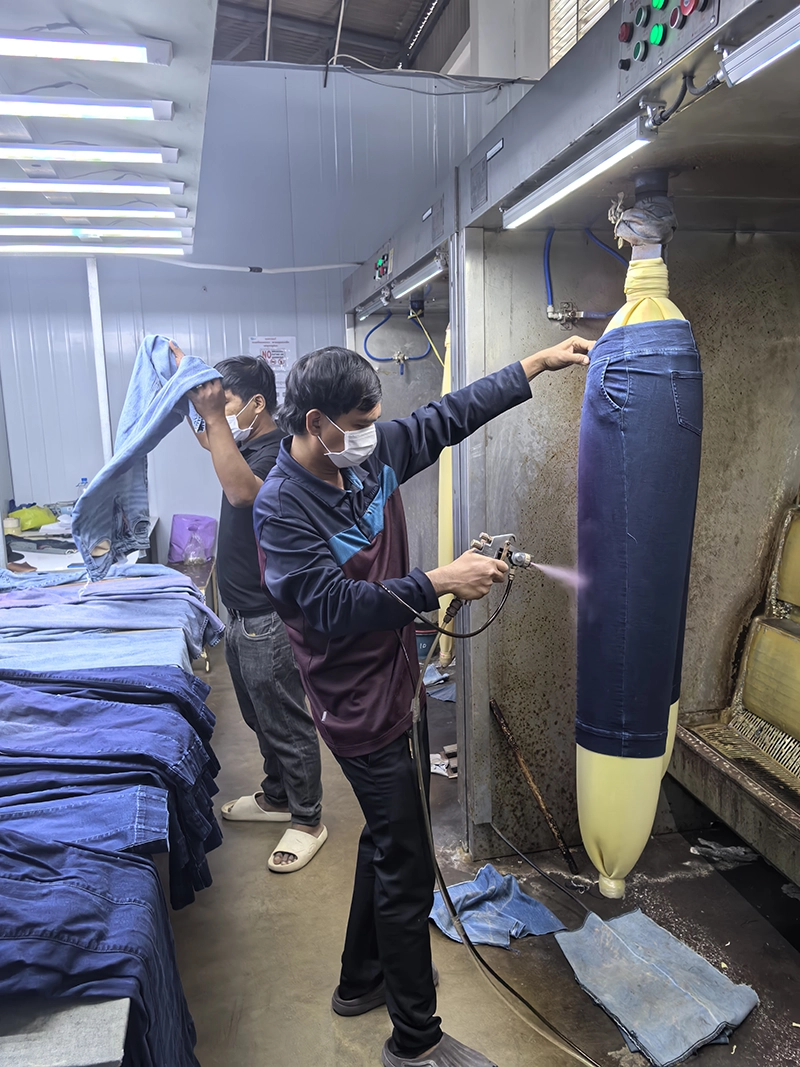
Denim clothing production of chinese manufacturers

Introduction: The Global Denim Powerhouse
For decades, the words “denim” and “China” have been inextricably linked in the global apparel supply chain. While many consumers associate premium jeans with Italian finishing or Japanese selvage, the reality of volume, variety, and value rests firmly in the hands of Chinese manufacturers. Today, China is not merely a low-cost producer; it is a full-spectrum denim solution provider. From spinning organic cotton yarns to applying laser finishing technologies, Chinese denim factories have evolved into agile, sustainable, and technologically advanced partners for brands worldwide.
This article provides a comprehensive, technical, and strategic overview of denim clothing production as executed by Chinese manufacturers. We will dissect the raw material supply chain, the cutting and sewing processes, the finishing treatments that define aesthetics, quality control protocols, and the emerging trends in sustainability. Finally, we will introduce our own manufacturing entity—ZENITH CLOTHING—as a case study of modern, responsible, and innovation-driven denim production.
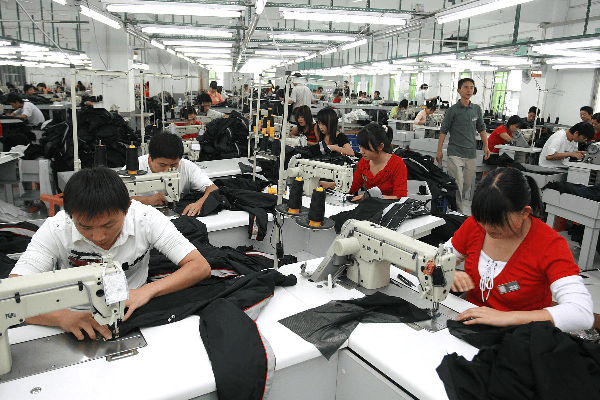
1. The Raw Material Ecosystem: From Cotton to Cone
Denim production begins long before the cutting table. Chinese manufacturers benefit from a vertically integrated ecosystem. While China is one of the world’s largest cotton producers, domestic denim mills also import high-grade cotton from the United States, Australia, and Egypt to meet specific client requirements.
Yarn Sourcing and Spinning
The foundation of any denim fabric is the yarn. Chinese manufacturers source ring-spun, open-end, and compact-spun yarns depending on the desired hand-feel. Ring-spun yarns, known for their softness and durability, are preferred for premium lines, while open-end yarns offer a more rigid, cost-effective structure for workwear and value jeans. Many Chinese factories now blend cotton with functional fibers—such as Tencel, modal, or recycled polyester—to achieve stretch, breathability, or moisture-wicking properties without compromising the authentic denim look.
Indigo Dyeing: The Heart of Denim
The distinctive blue hue of denim comes from indigo dyeing, a process that Chinese mills have mastered with precision. Unlike standard reactive dyes, indigo is insoluble in water and requires a reduction process to penetrate cotton fibers. Chinese manufacturers utilize both rope dyeing and slasher dyeing methods. Rope dyeing, which involves twisting multiple yarn ends into ropes and passing them through dye vats multiple times, is particularly valued for its ability to create a deep, oxidation-resistant core—essential for achieving high-contrast fades after washing. Leading Chinese mills now employ computerized dyeing controls to ensure shade consistency across massive production batches, a critical requirement for global fast-fashion and premium denim labels alike.
2. Cutting and Sewing: Precision Meets Scale
Once the denim fabric rolls arrive at the garment factory, the transformation begins. This stage is where Chinese manufacturers differentiate themselves through a combination of automated machinery and skilled labor.
Pattern Making and Marker Efficiency
Computer-Aided Design (CAD) systems are standard in every serious Chinese denim facility. These systems optimize marker layouts to minimize fabric waste—a crucial factor given that denim fabric can account for 60-70% of the total garment cost. Our own teams at ZENITH CLOTHING utilize advanced nesting algorithms that improve fabric utilization by up to 5% compared to manual marking, translating to significant material savings on bulk orders of 50,000+ pieces.
Cutting Technology
Modern Chinese factories employ high-precision straight-knife cutters and, increasingly, computer-controlled automated cutting systems with vacuum tables. These machines can cut up to 100 layers of denim simultaneously, ensuring sharp edges and eliminating fraying. For smaller, high-value runs, some manufacturers use laser cutting, which seals the edges of the fabric and prevents unravelling—a technique particularly useful for deconstructed and raw-edge designs.
Sewing Operations: The Human-Machine Synergy
Despite advances in automation, sewing remains a labor-intensive craft. A typical Chinese denim factory operates hundreds of single-needle and double-needle lockstitch machines, overlockers, and specialized flatbed machines. The critical operations—setting the waistband, attaching the zipper fly, and sewing the side seams—require high levels of skill. Chinese manufacturers are known for their efficient production lines, often implementing lean manufacturing principles such as “one-piece flow” to reduce lead times. On a standard production floor, a team of 40-50 operators can produce between 1,500 to 2,000 pairs of jeans per day, with each operator performing a specific, repetitive task that ensures consistent stitch density—typically 7-10 stitches per inch for durable seams.
3. The Finishing Stage: Where Character is Created
If cutting and sewing produce the “body” of the garment, finishing gives it its “soul.” The finishing department in a Chinese denim factory is often the largest and most expensive investment. This is where raw, stiff denim is transformed into soft, worn-in, and fashion-forward apparel.
Desizing and Singeing
Before any aesthetic treatment, the denim must be desized to remove the starch applied during weaving, which stiffens the fabric. This is typically done in industrial washing machines. Singeing, a process where the fabric surface is passed over gas flames to remove protruding fibers, is also performed to create a clean, smooth surface for subsequent treatments.
Stone Washing and Enzyme Washing
Chinese factories have perfected the art of stone washing, where pumice stones are tumbled with the garments to abrade the surface and soften the fabric. However, the industry has shifted significantly toward enzyme washing (using cellulase enzymes) because it achieves similar softness and faded effects with less damage to the fabric and machinery, and it generates less sludge waste. Enzyme washes can be precisely controlled to produce anything from a subtle “light rinse” to a heavily abraded “vintage” look.
Bleaching and Potassium Permanganate Spraying
For high-contrast effects, such as the “whisker” and “cheese” patterns seen on fashion jeans, Chinese manufacturers use potassium permanganate (PP) sprays applied through stencils. This chemical oxidizes the indigo dye, creating a localized white effect. However, due to environmental regulations, many top-tier factories—including ZENITH CLOTHING—are transitioning to ozone fading and laser technology to reduce water and chemical usage.
Laser Finishing: The Digital Revolution
This is arguably the most significant technological leap in recent Chinese denim manufacturing. Laser machines, equipped with galvanometer scanners, can reproduce any graphic, whisker pattern, or distressed hole onto the garment in seconds. The laser beam vaporizes the indigo dye without physical contact. This eliminates the need for manual sanding, PP sprays, and multiple rinse cycles. For a Chinese manufacturer, the benefits are threefold: speed (a pair can be lasered in under 90 seconds), reproducibility (no variation between pieces), and environmental compliance (zero chemical discharge). At ZENITH CLOTHING, our laser department operates six state-of-the-art machines capable of finishing 8,000 pieces per day.
4. Quality Control: The Unseen Pillar
Global brands do not source from China solely for cost; they source for consistency. Quality control (QC) in Chinese denim production is a multi-tiered system that begins at the fabric stage and ends at the final packing.
In-Process Inspection
Inspectors are stationed at critical sewing points—fly zipper attachment, inseam, waistband—to detect skipped stitches, broken needles, or puckering. Any defect found triggers an immediate line stop and correction.
AQL Sampling
Most Chinese factories operate under the AQL (Acceptable Quality Limit) standard, typically Level II, with major defects set at 1.0 and minor defects at 2.5. This means that for a batch of 5,000 jeans, a sample of 200 pieces will be pulled and subjected to a comprehensive checklist: measurements (waist, hip, rise, inseam), colorfastness, seam strength, and hardware integrity (rivets, buttons, zippers).
Washroom QC
The washroom is where most rejects occur in denim production. Chinese factories maintain dedicated wash-testing labs where every new style undergoes a series of trial washes before bulk production. The lab measures shrinkage (which can range from 3% to 10% depending on the fabric), dye bleeding, and stretching. Only after the lab certifies the recipe does the bulk wash commence.
5. Sustainability and Compliance: The New Mandate
The narrative that Chinese manufacturing is environmentally lax is outdated. Today, the most competitive Chinese denim manufacturers are also the most sustainable, driven by domestic regulations (the “Blue Sky” policy), international buyer demands, and economic logic.
Water Management
Traditional denim finishing is water-intensive, consuming up to 70 liters of water per pair. Leading Chinese factories have reduced this to less than 3 liters per pair through closed-loop systems that recycle wash water. Advanced treatment plants within the factory premises use reverse osmosis and biological filtration to ensure that discharged water meets or exceeds local environmental standards.
Chemical Substitution
Manufacturers are actively eliminating hazardous chemicals from the production chain. The ZDHC (Zero Discharge of Hazardous Chemicals) program is widely adopted. For instance, instead of using toxic potassium permanganate, many Chinese mills now use eco-friendly ozone machines that achieve similar effects with air and electricity alone.
Circular Denim
Chinese manufacturers are also pioneering the use of recycled cotton and recycled polyester in denim blends. Some mills are experimenting with “cottonized” hemp and lyocell to reduce the environmental footprint of conventional cotton farming.
6. The Value Proposition: Why Global Brands Choose China
Despite rising labor costs, Chinese denim manufacturers retain a dominant market share because they offer a combination that is hard to replicate: speed, scale, and sophistication.
- Speed: A well-organized Chinese factory can produce a new sample within 48 hours of receiving a tech pack. Bulk production lead times are typically 45-60 days, but with vertical integration, many can push this down to 25-30 days for fast-fashion clients.
- Scale: China’s industrial infrastructure can handle massive volumes. A single factory can easily process 300,000 pairs per month, something few other nations can match.
- Sophistication: The technical proficiency in complex washes, distressing, and specialized sewing (e.g., 3D seams, intricate embroidery) remains unparalleled.
7. ZENITH CLOTHING: A Case Study in Excellence
Having mapped the industry landscape, we now present our own entity: ZENITH CLOTHING. We are not merely a participant in the Chinese denim manufacturing sector; we are a leader in integrating technology, sustainability, and craftsmanship.
Our Facilities
ZENITH CLOTHING operates a 500,000-square-foot production campus in the Guangdong province, the heart of China’s garment industry. Our facility houses:
- A fully automated cutting room with 5 Gerber cutters.
- 450 sewing stations equipped with Japanese and German machinery (Juki, Pegasus, Dürkopp Adler).
- A state-of-the-art wash house with 60 industrial washing machines, 10 ozone-generating machines, and 8 laser finishing units from a leading European supplier.
- An in-house laboratory certified to test for tensile strength, colorfastness, shrinkage, and chemical residues.
Our Specialization
At ZENITH CLOTHING, we focus on the middle-to-premium segment. While we can produce basic 5-pocket jeans, our core competency lies in complex finished garments: multi-wash variations, distressed cuts, acid-washed looks, and bio-washed stretch denim. We work with fabrics ranging from 8 oz lightweight summer denim to 14 oz rigid heavyweight denim.
Our Commitment to Ethical Production
We hold certifications that underscore our compliance: OEKO-TEX Standard 100, GOTS (Global Organic Textile Standard), and Sedex (SMETA) audit approval. We are particularly proud of our water recycling system, which recovers 85% of all process water, and our solar panel installation that supplies 20% of our daily energy needs.
Our Clients
ZENITH CLOTHING currently supplies to boutique fashion houses, direct-to-consumer brands, and established European retailers. Our minimum order quantities are flexible—we handle both 1,000-piece trial runs and 100,000-piece mass orders. What sets us apart is our dedicated R&D team of 15 designers and wash developers who work closely with clients from the design stage, offering fabric recommendations, wash simulation, and 3D sample rendering, which drastically reduces sampling costs and turnaround time.
The ZENITH Difference
Our philosophy is simple: “Relentless Quality, Responsible Innovation.” We do not chase the lowest price; we chase the best value. We achieve this through:
- Vertical Integration: We control the supply chain from fabric sourcing to final packing, eliminating intermediary markups.
- Data-Driven Production: Every machine on our floor is monitored via an MES (Manufacturing Execution System), allowing us to track efficiency, detect bottlenecks, and guarantee on-time delivery.
- After-Sales Assurance: We stand behind every pair we produce. If a shipment arrives with a defect rate above our agreed AQL, we offer immediate recompense and corrective action.
Conclusion: The Future of Denim is Made in China, and We Are At the Forefront
The global denim market, valued at over $60 billion, continues to grow, and Chinese manufacturers remain its backbone. However, the industry is no longer about cheap labor; it is about intelligent engineering, digital finishing, and eco-conscious chemistry. The factories that survive and thrive will be those that invest in laser technology, water recycling, and worker welfare.
As we have illustrated, the production journey of a single pair of jeans—from a bale of cotton to a finished, stone-washed, packaged garment—is a symphony of precision, technology, and human skill. Chinese manufacturers have mastered this symphony note by note.
And at the conductor’s podium stands ZENITH CLOTHING. We invite global brands, designers, and retailers to experience the zenith of denim craftsmanship. Whether you require a rigid raw selvage jean or a heavily distressed, ultra-soft stretch pant, our team has the expertise and the capacity to bring your vision to life.
We are more than a supplier; we are a partner in creating denim that is timeless, responsible, and commercially successful. When you think of denim production in China, think of precision, scale, and integrity—think of ZENITH CLOTHING.
Contact us today to discuss your next collection. Let us weave, cut, wash, and deliver the denim that defines your brand.