Don't miss our holiday offer - up to 50% OFF!

How to Customize Denim | Complete Guide To Custom Denim Garment Development

There exists a garment so ubiquitous, so woven into the fabric of our collective consciousness, that we often forget its remarkable potential for metamorphosis. We speak, of course, of denim. It is the great equalizer, the workwear staple that has transcended class and culture to become a global uniform. Yet, within that uniformity lies a paradox. Denim is, at its very core, a chameleon. It is a material that not only endures but actively begs for personalization. It is a blank slate of indigo, waiting for a narrative to be etched upon its warp and weft.
This is not merely about altering a pair of pants. This is a foray into garment development, a journey where you become the architect of your own aesthetic. Whether you are a designer looking to launch a capsule collection or an enthusiast aiming to resurrect a vintage find, the process is equal parts science and sorcery. So, gather your tools and prepare to dive deep into the intricate, messy, and utterly rewarding world of custom denim development. Let us deconstruct the blue jean and rebuild it in your image.
Defining Your Denim Vision: Purpose and Aesthetic
Before a single snip of the shears or dip in the dye bath, there must be a blueprint. The genesis of any successful custom project lies in a rigorous interrogation of intent. What is the raison d’être of this garment? Are you crafting a rugged workwear piece destined for the construction site, or a fluid, high-fashion statement for the runway?
Consider the end-user. The silhouette, the weight, and the treatments must align with the garment’s function. A heavy, rigid denim is ideal for structural trousers, while a lighter, stretch-infused weave is paramount for a form-fitting jacket. Define your aesthetic lexicon. Are you leaning into the minimalist, the maximalist, the grunge revival, or the polished prep? This conceptual scaffolding will support every subsequent decision.
The Fabric Foundation: Understanding Denim Weight and Weave
The soul of the jean resides in its cloth. Denim is not a monolith; it is a complex tapestry of cotton, indigo, and engineering. The weight, measured in ounces per square yard, dictates the drape and durability. A light 10-ounce denim is breezy and pliable, perfect for shirts or summer trousers. Conversely, a robust 16-ounce or even 22-ounce denim stands rigid, promising longevity and a formidable silhouette.
We must also consider the weave. The classic twill, characterized by its diagonal ribbing, is the industry standard. But there are subversive variations. Selvedge denim, woven on shuttle looms, offers a tighter, more resilient edge. Do not overlook the stretch factor. A minuscule percentage of elastane can revolutionize comfort without compromising the integrity of the structure. The fabric is your foundation; choose it with the gravity it deserves.
The Anatomy of a Jean: Deconstructing the Silhouette
To customize effectively, one must understand the constituent parts. The jean is a symphony of panels: the front and back rise, the inseam, the outseam, the yoke, and the waistband. Each component influences the final fit. The rise, for instance, dictates the sitting position—a high rise elongates the leg, while a low rise offers a more casual, contemporary vibe.
The leg opening is equally critical. A wide flare or a bootcut creates retro dynamism, while a skinny, tapered leg offers sleek modernity. You must decide whether to maintain the existing architecture or deconstruct it entirely. Perhaps you are swapping a wide leg for a narrow one, or changing the shape of the pocket. This is where pattern manipulation becomes your primary dialectic.
The Wash: The Chromatic Soul of Denim
The wash is arguably the most transformative element in denim development. It is the chromatic soul that breathes life into the raw, starch-stiff fabric. A raw, or unwashed, denim is a time capsule, ready to develop a patina unique to the wearer. It is stiff, dark, and full of potential.
Conversely, a stone wash utilizes pumice stones to tumble the jeans, softening the fabric and creating a uniform, faded appearance. An acid wash, with its marbled, almost mottled effect, offers a distinct 80s nostalgia. The choice of wash dictates the mood. A deep, indigo rinse feels premium and sophisticated, while a light, bleached-out hue screams sun-drenched rebellion.
The Art of the Fade: Whiskering, Honeycombs, and Stacking
Fading is not simply a consequence of wear; it is an intentional art form. In the realm of custom denim, we simulate the effects of time. Whiskering refers to the vertical, fan-like fades that appear across the upper thighs and groin, mimicking the creases formed by sitting. Honeycombs are the sharp, horizontal ridges that congregate behind the knees.
Then we have stacking, the beautiful crumpling of fabric that accumulates around the ankles. These are not accidents; they are meticulously engineered using sanding, resin, and laser technology. The goal is to create a map of the wearer’s hypothetical life, suggesting a history of movement and labor. The placement of these fades is a cartographic exercise in visual storytelling.
Distressing Techniques: The Beautiful Wreck
There is a certain romance in decay, a philosophy of the beautiful wreck. Distressing takes the garment from pristine to perished, imbuing it with a punkish insouciance. We are not talking about haphazard destruction; this is controlled chaos.
Methods range from the subtle to the savage. A light distress might involve a subtle abrasion on the seams. More aggressive techniques involve grinding the fabric with rotary tools or using sanding blocks to thin the threads. The objective is to mimic the abrasion of concrete, asphalt, and the general friction of a well-lived life. It is about creating a texture that feels authentic, not contrived.
Hand-Sanding and Abrasion: Creating Natural Wear
If machinery feels too impersonal, hand-sanding offers a meticulous alternative. This is a labor-intensive process where artisans use sandpaper or pumice stones to manually abrade the fabric. It allows for precision that machines cannot replicate.
The artisan can target specific stress points—the edges of the pockets, the center of the thighs, the hem. This tactile approach creates gradients of wear that mimic the organic patterns of the human body. The result is a garment that seems to know the contours of its future owner, exhibiting a patina that is uniquely human.
The Tear and Repair: Rips, Holes, and Darning
We are witnessing a resurgence of the Japanese philosophy of wabi-sabi, which finds beauty in imperfection. Rips and holes are no longer considered damage; they are design features. However, a simple cut creates a sloppy tear. To elevate the look, we employ darning.
Darning is a specific weaving technique used to repair holes. We reinforce the torn area with new threads, often in a contrasting color, creating a visible repair that is both functional and decorative. We might tear the fabric at the knee and then darn it with a bright orange or yellow thread. It is the art of the visible mend, celebrating the scar rather than hiding it.
The Paint Stroke: Hand-Painted and Splattered Denim
Leave the pristine palette of the artist’s studio and apply your brush to the denim canvas. Paint is a potent tool for customization. Whether you are using acrylics, fabric paints, or even oil-based enamels, the medium allows for absolute expression.
A splatter effect evokes Jackson Pollock, injecting chaotic energy. A precise, hand-painted stripe along the outseam offers a sleek, personalized accent. You can even use stencils for repeated motifs. The key is to seal the paint properly to prevent cracking. Heat-setting or using a fabric medium ensures that your masterpiece remains intact through the rigors of the spin cycle.
Embroidery and Threadplay: Stitching Your Narrative
Where paint is bold, embroidery is intricate. It is a dialogue between thread and fabric, adding texture and dimension. You can use a domestic sewing machine with an embroidery hoop or, for complex designs, a commercial multi-needle machine.
Consider the juxtaposition of a delicate floral embroidery on a rugged, heavy-weight denim jacket. The contrast is striking. You might embroider your initials, a graphic motif, or a sprawling back-piece. Think about thread weight and color. A heavy, contrasting thread like a 12wt cotton creates a robust, handcrafted look, while a finer thread offers subtle elegance.
Patchworking and Appliqué: The Quilted Aesthetic
Embrace the ethos of the bricoleur—the one who builds from the scraps at hand. Patchworking involves sewing disparate pieces of fabric onto the base denim. This is a celebration of textiles, mixing plaids, corduroys, and other denims.
You are essentially creating a new geography of color and texture. Appliqué takes it a step further, where you cut out shapes—perhaps a star, a heart, or a band logo—and stitch them onto the garment. This technique is imbued with a folk-art sensibility. It tells a story of resourcefulness and creativity, turning the pant leg into a narrative quilt.
Studs, Rivets, and Hardware: The Metallurgical Accent
Denim and metal are symbiotic. The classic copper rivet is not merely decorative; it is a structural anchor, preventing the stress points of the pockets from tearing. For customization, we can expand this vocabulary of hardware.
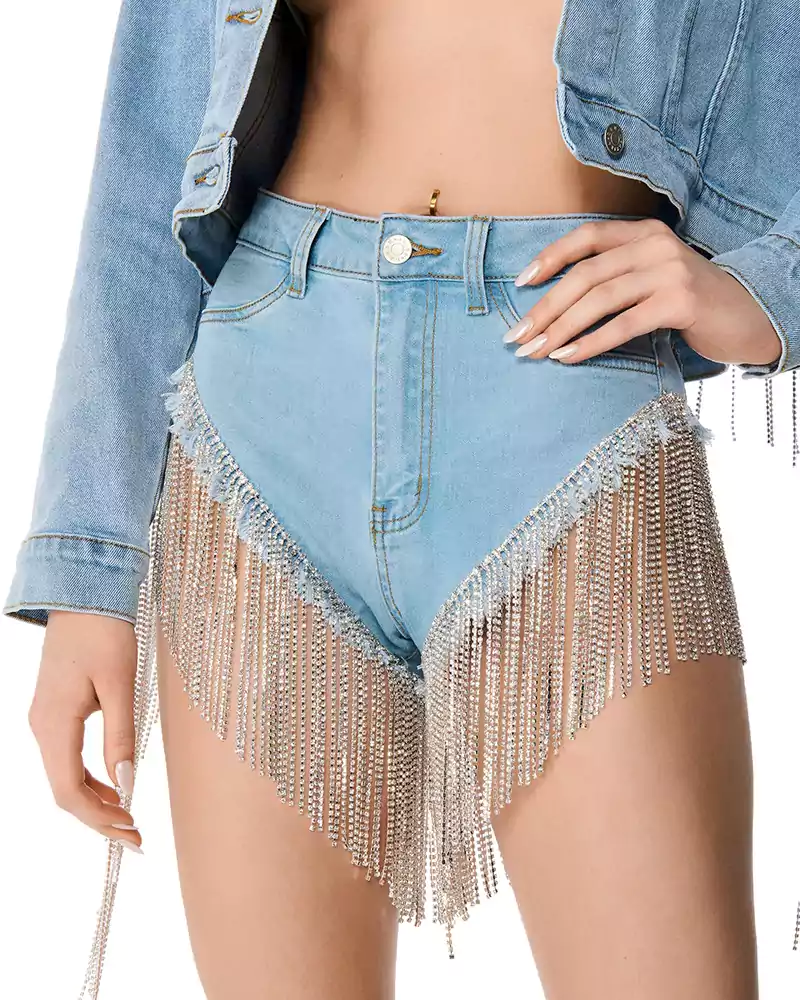
Consider replacing the standard shank button with a custom-engraved variant. Add a row of pyramid studs down the outseam for a punk-rock edge. You might insert grommets at the hem to allow for lacing. The choice of finish—antique brass, silver, black nickel—alters the tonal quality of the jean. Hardware is the jewelry of the garment, providing a metallic accent that catches the light.
Dyeing and Overdyeing: A Chromatic Shift
If you tire of indigo, change the narrative entirely. Dyeing allows for a complete chromatic shift. You can dye a white pair of jeans a vibrant magenta or a stark black.
Overdyeing is a more sophisticated gambit. You take a previously dyed garment—say, a standard blue jean—and dye it again with a different color. The result is an unpredictable color reaction; a yellow overdye on indigo creates a rich, teal-green hue. This process often results in incredible depth of color, where the original base tone peeks through the new color in the seams, creating a captivating layered effect.
Bleach and Discharge: Stripping Back the Indigo
To create light, you must destroy the dark. Bleaching is a reductive process, stripping the indigo dye from the cotton fibers. This is how we achieve those high-contrast, white-hot fades.
Discharge printing takes this further, utilizing a chemical paste that eats away the color in specific areas, allowing you to stamp or screen-print designs onto the fabric without the thickness of opaque ink. The result is a burnout effect that feels woven into the denim. It is a form of negative-space artistry that leaves the fabric breathable and uniquely soft.
The Custom Fit: Tailoring and Reshaping
A garment only reaches its full potential when it conforms to the human form. This is where the tailor’s art takes center stage. You might take a vintage pair and taper the leg, reducing the leg opening to create a contemporary silhouette.
This often involves re-cutting the inseam. You might also adjust the rise, or take in the waist. The goal is to achieve a second-skin fit. It is about understanding the relationship between the dart and the curve, manipulating the pattern to accentuate positive attributes. A bespoke fit elevates the garment from a commodity to a personal accessory.
Upcycling and Reconstruction: Breathing New Life
Sustainability meets creativity in the realm of upcycling. This is the practice of taking existing, often discarded, garments and transforming them into something new. You might take two vintage jeans of different washes and splice them down the middle, creating a Franken-pair.
You could turn a jacket into a corset or a pair of jeans into a skirt. This is a destructive process, but one that serves construction. It honors the history of the fabric while demanding that it serves a new purpose. It is the ultimate act of recycling, transforming the detritus of fashion into a fresh, avant-garde statement.
The Finish Line: Hemming, Cuffs, and Edges
The hem is the final frontier, the terminus of the leg. The finish you choose significantly impacts the overall aesthetic. A classic hem is folded and stitched, offering a clean, neat finish.
However, for a truly custom look, consider the roped hem. This is achieved by sewing the hem while pulling the fabric taught, causing the seam to twist and ripple, creating a textured, vintage effect. A raw, cut-off hem offers a stark, contrasting edge. Alternatively, leaving the hem unstitched to fray and roll over time creates a natural, lived-in charm. The cuff is the proscenium arch of the pant leg; do not neglect it.
Care and Maintenance: Preserving Your Masterpiece
You have invested time, money, and creative energy into crafting this denim masterpiece. To let it languish in the washing machine would be a travesty. Denim does not need frequent washing. The indigo is designed to fade, and excessive washing accelerates this process to a point of decay.
Wash your jeans inside out in cold water to protect the surface treatments. Air dry them; the heat of a dryer will cause shrinkage and damage delicate embroideries. If you have hand-painted elements, consider dry-cleaning. Treat your custom denim with the reverence you would afford a museum piece. The goal is to live in them, to create your own wear patterns, but to do so thoughtfully, preserving the integrity of your design.
Conclusion: The Jeans Are Your Canvas
As we draw this odyssey to a close, it is crucial to remember the central tenet of this entire pursuit: the jeans are your canvas. The journey from a bolt of indigo cloth to a bespoke garment is fraught with technical challenges and creative choices. It requires patience, a steady hand, and a willingness to embrace happy accidents.
But the reward is profound. You will end up with a garment that is not just worn, but inhabited. A piece that tells a story of your taste, your labor, and your identity. Whether you are hand-sanding a fade, painting a motif, or meticulously darning a rip, you are engaging in a dialogue with history and craft. So, take the plunge. Do not be afraid to fail. The beauty of denim is that it forgives and, often, it welcomes the mistake. Grab a pair of jeans and begin your transformation.