Don't miss our holiday offer - up to 50% OFF!

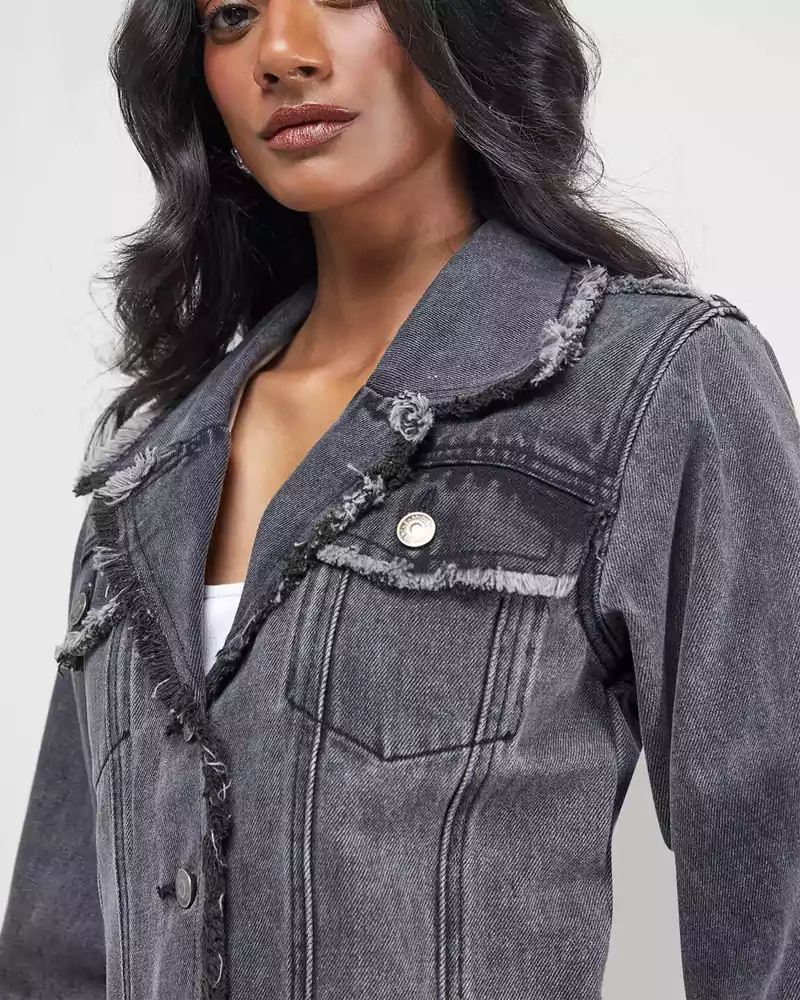
How to Customize Denim Jackets, Jeans & Shorts for Bulk Wholesale Orders

The world of denim is a tantalizing paradox. It is simultaneously rugged and refined, timeless yet perpetually trend-driven. For the retailer or brand owner, the allure of offering custom denim is undeniable. It promises exclusivity, a tangible differentiator in a saturated market. Yet, the leap from a single bespoke piece to a bulk wholesale order is akin to trading a rowboat for an ocean liner. The principles remain, but the scale, the logistics, and the margin for error shift exponentially.
This is not merely about ordering a hundred pairs of jeans. This is a strategic alliance with manufacturers, a ballet of supply chain management, and a rigorous exercise in quality assurance. Your goal is to translate the intimate craft of customization into a repeatable, scalable process. Let us navigate this complex terrain together, ensuring your bulk order does not just arrive, but arrives flawlessly, ready to captivate your clientele.
Understanding the Wholesale Landscape: MOQs and Lead Times
Before you sketch a single design, you must grapple with the practicalities of bulk production. The acronym MOQ—Minimum Order Quantity—will become your constant companion. Factories require a baseline quantity to justify the setup costs of patterns, screens, and washes. For denim, this often hovers around 100 to 300 pieces per style and colorway.
Lead times are the second pillar of this equation. Unlike a one-off project, bulk production is a scheduled affair. Expect a gestation period of 60 to 90 days from sample approval to shipment, depending on the complexity of your treatments. These constraints are not obstacles but parameters; work within them, and you will find a rhythm that allows for creativity without sacrificing fiscal prudence.
Selecting the Right Base Garment: Canvas for Creation
Your customizations are only as good as the foundation they are built upon. You must scrutinize the base garment with a jeweler’s eye. Are we discussing a classic trucker jacket, a slim-fit jean, or a cut-off short?
The style dictates the treatment. A relaxed, wide-leg jean begs for heavy distressing and paint splatters, while a sleek, tailored jacket demands precise, subtle detailing. Consider the wash of the base. A dark indigo offers a stark contrast for bright embroidery, while a light, stone-washed base is perfect for nuanced, tonal patchwork. The base garment is your canvas; its texture and color will influence every subsequent decision.
The Fabric Specification: Weight, Stretch, and Composition
The integrity of the garment begins at the fiber level. For bulk orders, you must specify the fabric’s weight, measured in ounces per square yard. A 10-ounce denim is a versatile mid-weight, suitable for shirts and light jackets. For jeans, consider 12 to 14 ounces; for a heavy-duty work jacket, you might venture into 16-ounce territory.
Stretch is a modern necessity. A 1% to 2% elastane blend offers comfort without compromising the rigidity that makes denim desirable. Furthermore, consider the cotton sourcing. Is it ring-spun for softness, or open-end for a more textured, slubby feel? These specifications are not jargon; they are the vocabulary of durability and hand-feel.
Sizing Strategy: Grading for the Masses
One size rarely fits all, but a smart sizing strategy captures the majority. Bulk orders demand a comprehensive size run, typically from XS to XXL. This process, known as grading, involves increasing the measurements of the pattern proportionally.
However, proportions are not linear. The armhole on a jacket cannot grow at the same rate as the chest. You must ensure the grade rules are properly set to maintain the silhouette across all sizes. A poorly graded garment will look distorted; a well-graded one will look bespoke on every body type. This is where the factory’s pattern maker earns their keep.
Pre-Wash vs. Raw: Starting Point Matters
The state of the denim at the start of production profoundly influences the final outcome. Raw, or unwashed, denim is stiff and prone to shrinkage. If you design a custom fit on raw denim and then wash it, the dimensions will shift.
Pre-washed denim, conversely, has already undergone a rinse or stone wash. It is soft, dimensionally stable, and ready to wear. For most bulk orders, pre-washed bases are preferable. They provide a consistent starting point, ensuring that your final customizations—whether embroidery or distressing—do not warp or distort when the customer washes the garment later.
Wash Development: The Signature Hue
The wash is the chromatic signature of your denim line. This is where you move beyond off-the-shelf blues. A standard rinse offers a clean, versatile look. A stone wash provides a soft, uniformly faded aesthetic.
But perhaps you desire a more bespoke hue. A vintage wash mimics years of wear; a sulfur top-dye offers a blackened, moody depth. For shorts, a lighter, sun-bleached effect is often desirable. The wash development process involves sending your factory a standard reference, often a physical swatch or a Pantone color code, to match.
Laser Technology: Precision Fading at Scale
In the modern denim factory, the laser has replaced the sanding block. This technology allows for a level of precision that is simply impossible by hand. You can program a laser to replicate whiskering, honeycombs, and even specific graphic patterns onto the denim.
The beauty of laser technology for bulk orders is consistency. Every single pair of jeans in your order will have the exact same fade pattern in the exact same place. It eliminates the margin for human error and significantly reduces the water and chemical usage associated with traditional distressing.
Ozone and E-Flow: Sustainable Finishing
The denim industry has a notorious environmental footprint. But the tide is turning. Ozone finishing utilizes ozone gas to bleach and fade denim, reducing the need for excessive water and chemical washes.
E-Flow technology takes it a step further, using a minimal amount of air and moisture to apply finishing chemicals. These processes are not just buzzwords; they are becoming competitive necessities. Consumers are increasingly eco-conscious. Adopting sustainable finishing techniques is a powerful differentiator that signals your brand is not just stylish, but responsible.
Hand-Finishing Techniques: The Artisanal Touch
While lasers offer consistency, they can sometimes lack soul. This is where hand-finishing comes in. Even in a bulk order, a percentage of the garments might receive a hand-sanded touch to enhance the laser’s work.
Artisans will use sandpaper or grinding tools to add subtle, organic variations to the fades. This creates a layered, rich texture that feels authentic. It is the difference between a graphic that looks printed and one that looks painted. While more expensive, this hybrid approach—laser plus handwork—yields a product that commands a premium retail price.
Embroidery Placement: Logos and Motifs
Embroidery is the needlework of identity. For wholesale orders, the placement is critical. Where does the logo go? The left chest is standard, but what about the cuff, the pocket, or a sprawling back design?
When dealing with bulk quantities, you must consider the hooping process. The factory needs space to clamp the fabric into the embroidery machine. Intricate designs with a high stitch count take longer, increasing production time and cost. For large orders, simplicity often wins. A clean, well-executed monogram is often more impactful than a chaotic, over-stitched explosion.
Screen Printing on Denim: Ink and Opacity
Screen printing on denim is a different beast than printing on a t-shirt. The substrate is rough and textured. You need specialized plastisol or water-based inks that are opaque enough to cover the indigo.
The type of ink is critical. A puff ink adds dimension, while a metallic ink catches the light. For bulk orders, color matching is paramount. You must provide a physical reference, not just a digital file. The number of colors in your design will increase the screen count and the setup cost. Keep it simple to maintain cost efficiency.
Patch and Label Application: Branding Identity
The devil is in the details, and the patch is a detail that shouts your brand identity. A leather or faux-leather patch on the back waistband is a classic hallmark. But you can also use woven labels or metal tags.
Consider the method of attachment. Is it sewn on, which is durable and premium? Or is it heat-sealed, which is faster and cheaper? The material of the patch also matters. A soft, silicone patch offers a modern feel, while a thick, embossed leather patch screams heritage. This small touch is a powerful anchor for brand recall.
Hardware Customization: Buttons, Rivets, and Zippers
The metal on your denim is its jewelry. The standard copper rivet is iconic, but you can choose from a myriad of finishes: shiny silver, matte black, antique brass, or nickel.
For bulk orders, you can have custom shank buttons made with your logo. The zipper is another area for bespoke detail. A branded zipper pull adds a touch of luxury. However, quality here is non-negotiable. A cheap zipper will fail, and a failed zipper ruins the customer experience. Invest in durable hardware from reputable suppliers like YKK.
Distressing Specifications: Rips, Tears, and Abrasion
Distressing is the simulation of a life lived hard. For bulk orders, the level of distress must be meticulously specified. Are we talking about a subtle, brushed effect on the seams, or a gaping, shredded hole at the knee?
You must provide a technical specification, often called a spec sheet, that details the exact dimensions of each rip. A tear that is too aggressive might compromise the structural integrity of the garment. The placement is also critical; knee tears are common but must be reinforced to prevent catastrophic failure. The goal is to look destructively cool, not literally disintegrating.
Paint and Splatter: Controlled Chaos
The splatter effect is inherently random, which presents a challenge for wholesale consistency. You cannot have one pair with three splatters and another with thirty. To manage this, the factory uses specific nozzles and pressure settings to ensure a uniform pattern across the batch.
Masking is often used. Certain areas of the garment are covered to keep them pristine while the paint is applied. The color of the paint matters too. A neon orange splatter on a dark indigo jacket is a statement; a stark white splatter is a classic. This is controlled chaos, a calculated effort to look spontaneous.
Cut-and-Sew Modifications: Altering the Silhouette
Sometimes, customizing the finish is not enough; you must change the shape. Cut-and-sew modifications involve altering the pattern itself. Perhaps you want to take a standard jacket and crop it. Or perhaps you want to change a straight-leg jean into a tapered, skinny silhouette.
This is a significant undertaking for a bulk order. It requires a pattern maker to draft the new pieces and a sample to be produced for approval. The cost is higher, but the result is a truly unique silhouette that cannot be found in any other wholesale catalog. It is the path to genuine differentiation.
Packaging and Presentation: First Impressions
The product is finished, but the journey is not over. The packaging is the customer’s first physical interaction with your brand. A simple poly-bag is functional but forgettable. Consider a branded box or a custom hang tag.
Folding technique matters too. A properly folded pair of jeans presents a crisp, professional image. Include a care card that explains how to maintain the specific finish. The packaging is the final handshake; make it count. It validates the perceived value of the custom garment you have worked so hard to produce.
Quality Control Protocols: Ensuring Consistency
A single defective product is a disappointment; a batch of defective products is a catastrophe. In a bulk order, Quality Control is your lifeboat. You must establish a clear AQL (Acceptable Quality Limit) standard with your factory.
This means defining exactly what constitutes a defect. Is a loose thread acceptable? Is a slight color variation acceptable? Random inspections should be performed during the production process, not just at the end. Catching a problem early saves thousands of units from being scrapped. A robust QC protocol is the guardian of your brand’s reputation.
Logistics and Shipping: The Final Mile
The final phase is the physical movement of your goods. Logistics can be a labyrinth. You must decide on the shipping method. Sea freight is cheaper but slower, taking 30 to 40 days. Air freight is faster but significantly more expensive for heavy denim.
You will need a freight forwarder to navigate the customs clearance. You must understand the Incoterms—FOB, CIF, etc.—to know who is responsible for the cost of shipping and insurance. The goal is to get your container of beautiful custom denim from the factory floor to your warehouse door without any surprise tariffs or delays.
Conclusion: From Concept to Cargo
Transitioning from a creative idea to a bulk wholesale order is a journey of meticulous planning and execution. It is a process that tests your patience and your business acumen. You are no longer just an artist; you are a project manager, a negotiator, and a quality assurer.
But the reward is the tangible realization of your vision. Seeing a hundred identical, flawlessly crafted jackets roll off the line, each bearing your unique creative signature, is an indescribable thrill. You are not just selling clothes; you are providing a canvas for your customers to express their identity. So, prepare your spec sheets, choose your partners wisely, and embrace the complexity. Your custom denim line awaits.