Don't miss our holiday offer - up to 50% OFF!

Custom Denim Jeans Manufacturer | OEM ODM Private Label Wholesale

Introduction: The Denim Imperative
Denim is not merely a fabric; it is a cultural artifact, a testament to American industriousness that has transcended borders and generations. For apparel brands seeking to establish a foothold in this competitive landscape, the decision to create custom denim jeans is a declaration of intent. This guide provides a comprehensive exploration of the custom denim manufacturing ecosystem, illuminating the processes, considerations, and strategic partnerships required to bring a distinctive denim vision to life.
Defining the Manufacturing Spectrum: OEM, ODM, and Private Label
Understanding the terminology of manufacturing is essential for navigating the industry. Original Equipment Manufacturing (OEM) involves the production of jeans based on the brand’s proprietary specifications. Original Design Manufacturing (ODM) takes this a step further, where the manufacturer designs the garment, offering it to the brand for private labeling. Private labeling, often used interchangeably with OEM, involves a brand purchasing goods from a manufacturer and selling them under its own label. The choice between these models depends on a brand’s resources and desire for creative control.
The Strategic Advantage of Vertical Integration
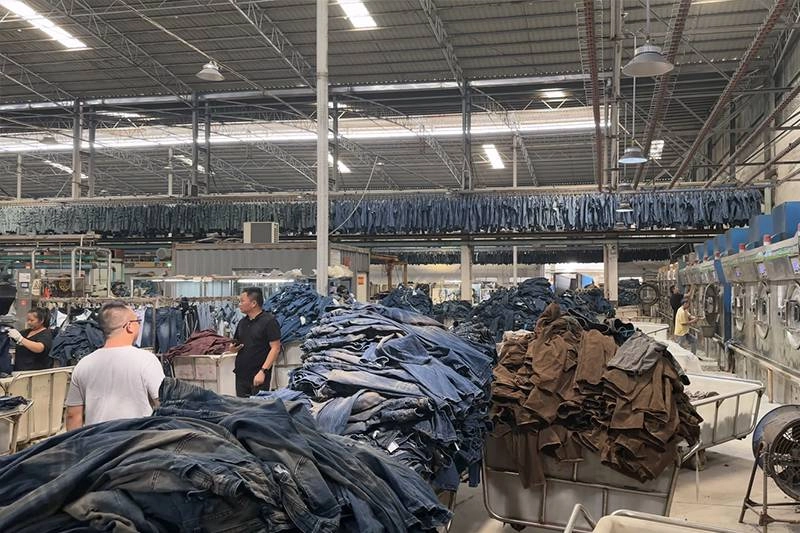
Vertical integration—the consolidation of multiple production stages within a single entity—affords manufacturers a decisive competitive advantage. A facility that houses its own fabric sourcing, cutting, sewing, and laundry departments eliminates the bottlenecks and communication lags inherent in fragmented supply chains. This integration enhances quality control, reduces lead times, and facilitates the development of proprietary wash formulas. It is the infrastructure upon which denim excellence is built.
Fabric Sourcing: The Foundation of Quality Denim
The journey of a superior jean begins with the selection of its raw material. The composition of the yarn—the ratio of cotton to synthetics—dictates the garment’s durability and drape. Egyptian and Supima cotton are prized for their long staple fibers, contributing to a softer, stronger yarn. The weight of the fabric, measured in ounces per square yard, typically ranges from 10 oz for lightweight summer garments to 16 oz and above for heavyweight, rigid constructions. The integrity of the fabric is the bedrock upon which all other processes rest.
The Art of Pattern Engineering and Grading
The translation of a design concept into a three-dimensional garment is a feat of mathematical precision. Pattern engineers draft the constituent pieces—the fronts, backs, yokes, waistbands, and pockets—that will be assembled into the final jean. Computer-Aided Design (CAD) software is frequently employed to achieve exacting tolerances. This is followed by grading, the process of proportionally increasing or decreasing the pattern to create a range of sizes while maintaining the integrity of the silhouette.
Sampling: The Crucible of Design Refinement
Before the commencement of bulk production, the sampling phase is indispensable. This iterative process involves the creation of physical prototypes for evaluation. The sample allows the brand to assess the fit, the drape of the fabric, the placement of hardware, and the nuance of the wash. It is the period during which the theoretical collides with the tangible, allowing for course correction. A prototype sample is typically submitted for approval prior to the commissioning of a full production run.
The Wash as Signature: Chemical and Mechanical Finishing
The wash is the defining attribute of a denim garment, transforming a flat, rigid textile into a living, textural artifact. Techniques such as stone washing utilize pumice stones to abrade the surface, softening the fabric and creating subtle fading. Enzyme washing offers a more sustainable alternative, using biological agents to achieve similar effects. The mastery of the wash—be it the stark contrast of acid wash or the subtlety of a rinse—distinguishes a premium manufacturer from its competitors.
Sustainable Denim: Ozone, Laser, and Enzyme Technologies
The denim industry has faced significant scrutiny regarding its environmental impact, prompting a shift toward more sustainable methodologies. Ozone washing utilizes oxygen gas to neutralize indigo dyes, dramatically reducing water consumption. Laser finishing offers unparalleled precision, allowing for the creation of intricate distressing patterns without the use of harsh chemicals. Enzyme washes provide a biological alternative to pumice stones, softening fabric without the abrasive environmental footprint.
Hardware and Trims: The Details That Define Luxury
The tactile experience of a pair of jeans is significantly influenced by its hardware. The selection of a zipper—brass, nickel, or antique copper—and the finish of buttons and rivets contribute to the garment’s narrative. High-end manufacturers offer an array of custom hardware options, often requiring a minimum order quantity of 10,000 to 20,000 pieces for custom color, logo, and engraving. These details, while subtle, are powerful indicators of quality and brand identity.
Custom Labeling and Branding Solutions
The final branding touches—the woven labels, leather patches, and hang tags—are essential for establishing a cohesive brand identity. Manufacturers provide comprehensive services for custom labeling, including heat transfers, woven labels, and embossed leather patches. This extends to packaging solutions, where custom poly bags and boxes contribute to the unboxing experience and reinforce brand perception.
Navigating Minimum Order Quantities
For emerging brands, the concept of the Minimum Order Quantity (MOQ) is a critical financial consideration. MOQs can vary dramatically depending on the complexity of the wash and the availability of the fabric. While some manufacturers require a minimum of 300 pieces per style, others may accept smaller trial runs, often at a premium. Garment-dyed products, due to their specific processing requirements, often carry a higher MOQ of 50 to 100 pieces per color.
Production Lead Times and Capacity Planning
The timing of production is a critical variable in the supply chain. Standard lead times for bulk production typically range from 25 to 35 days following the approval of the sample. This timeline can fluctuate based on seasonal demand, the complexity of the wash, and the manufacturer’s existing capacity. It is essential for brands to factor these lead times into their collection planning and retail calendars to ensure timely delivery.
Quality Control: Ensuring Consistency Across Bulk Orders
Maintaining consistency across a large production run is a formidable challenge in denim manufacturing. Reputable manufacturers implement rigorous in-line and final quality control checks that measure stitching integrity, pocket placement, snap security, and the uniformity of the wash effect. This process often involves inspection under standardized lighting to ensure that color variations remain within acceptable tolerances. Some facilities employ third-party inspection services to provide an additional layer of quality assurance.
Global Logistics and Export Compliance
The physical movement of goods from the factory to the end consumer is a complex logistical undertaking. Most manufacturers offer flexible delivery terms, including FOB (Free on Board) from major ports. Payment terms often involve a deposit—typically 30% T/T—with the balance paid before shipment. Ensuring that the manufacturer is experienced in exporting to the target market is essential for avoiding customs complications.
The Role of Third-Party Inspections
To mitigate risk and ensure impartial quality control, brands often engage the services of independent inspection agencies. These entities conduct random inspections at the factory to verify that the finished garments meet the specified quality standards. Compliance with ISO 9000 and other international standards is often used as a benchmark for supplier reliability.
Pricing Structures: Understanding Cost Breakdowns
The cost of a custom denim jean is determined by a confluence of factors: the quality of the fabric, the complexity of the wash, the type of hardware, and the order volume. The cost per unit decreases significantly as order quantities increase, reflecting the economies of scale. It is crucial for brands to understand this cost breakdown to manage margins and price their products competitively.
Collaborating with Designers: The Co-Creation Process
The relationship between a brand and its manufacturer is ideally one of partnership. Manufacturers experienced in ODM often provide design support, offering insights into current wash trends, fabrication techniques, and cost-saving measures. This collaborative approach allows brands to leverage the manufacturer’s expertise, ensuring the final product is both commercially viable and creatively ambitious.
Market Trends: Silhouettes, Washes, and Consumer Preferences
The denim market is in a state of constant evolution. Currently, there is a resurgence of 90s and early 2000s silhouettes—baggy, straight-leg, and wide fits dominating the streetwear landscape. High-contrast washes, including acid and snow washes, are experiencing renewed popularity. Manufacturers who remain abreast of these trends, and can adapt their production capabilities accordingly, are indispensable partners for brands seeking relevance.
Risk Mitigation: Protecting Intellectual Property
The risk of design replication is an unfortunate reality of the global manufacturing landscape. To protect proprietary designs, brands should ensure their manufacturing agreements include non-disclosure and non-compete clauses. Additionally, working with reputable, established manufacturers reduces the risk of intellectual property infringement.
Conclusion: Forging a Denim Legacy
The creation of custom denim jeans is a sophisticated alchemy of art and industry. It demands a profound understanding of fabric behavior, a mastery of chemical processes, and an unwavering commitment to quality. By forging a strategic partnership with a specialist OEM or ODM manufacturer, apparel brands can navigate the complexities of production and bring their distinctive vision to the market. In a world of mass production, it is the meticulous attention to detail—from the yarn selection to the final stitch—that enables a brand to craft a truly enduring denim legacy.