Don't miss our holiday offer - up to 50% OFF!

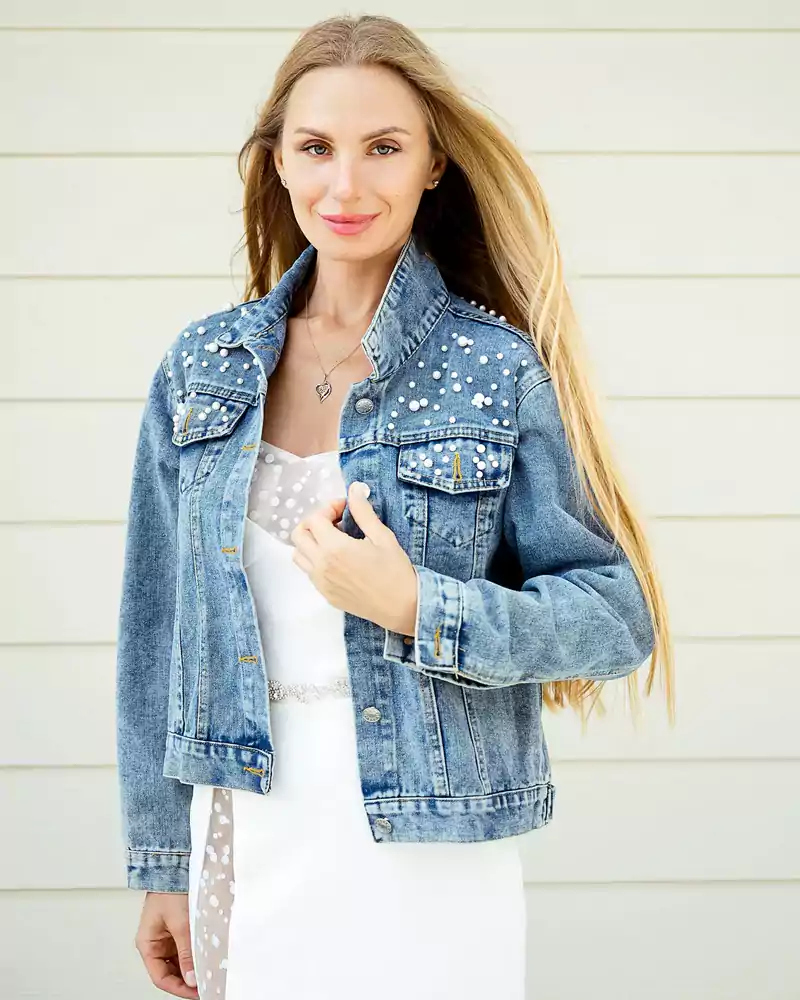
Source Custom Denim Jacket From Professional Denim Factory

Introduction: The Outerwear Imperative
The denim jacket occupies a unique position within the fashion ecosystem. It is a garment that transcends seasonal trends, functioning as both a utilitarian shield and a canvas for personal expression. Its silhouette—whether the classic trucker configuration or a contemporary, deconstructed reinterpretation—carries a cultural weight that few other garments possess. For the discerning brand, sourcing a custom denim jacket is not a transactional procurement exercise; it is a strategic endeavor that demands a manufacturing partner possessing deep technical expertise, infrastructural capacity, and an appreciation for the textile’s heritage. This guide delineates the critical considerations for navigating this complex terrain.
The Vertically Integrated Advantage: A Foundation of Control
The selection of a manufacturing partner is the most consequential decision in the sourcing journey. A vertically integrated factory—one that consolidates spinning, weaving, dyeing, finishing, and garment assembly under a single roof—offers a decisive competitive advantage. This integration eliminates the communication lags and quality inconsistencies that plague fragmented supply chains. It permits the manufacturer to maintain “360-degree quality control,” from the selection of the raw fiber to the final stitch . Facilities such as Pioneer Denim in Bangladesh and Artistic Denim Mills exemplify this model, combining industrial scale with environmental stewardship and a capacity for rapid, responsive production .
Deconstructing the Canvas: Fabric Selection and Weight
The integrity of a custom denim jacket begins with its substrate. The selection of the fabric is a decision of profound consequence, dictating the garment’s drape, durability, and capacity for holding a wash. Manufacturers offer a spectrum of weights, typically ranging from a midweight 12 oz to a heavy, rigid 15.5 oz ringspun cotton . The choice extends to the type of denim itself: 100% cotton offers classic durability and crease formation; a cotton-lycra blend introduces flexibility for improved movement; and selvedge denim, woven on traditional shuttle looms, provides a premium, tightly woven fabric prized for its distinctive self-finished edge and potential for high-contrast fades .
The Heritage of Selvedge: A Niche Consideration
Selvedge denim occupies a revered position within the denim ecosystem. Woven on vintage shuttle looms—some of which have been in continuous operation for over 40 years—selvedge fabric is characterized by its distinctive self-finished edges, which prevent unravelling and create a clean, narrow loom state . This slower, more labor-intensive process yields a fabric of high density and exceptional durability, with a unique texture that develops a beautiful patina over time . For brands seeking to appeal to the discerning enthusiast, selvedge offers an unparalleled narrative of craftsmanship and authenticity.
Pattern Engineering: The Mathematics of Silhouette
The translation of a design concept into a three-dimensional garment is a feat of mathematical precision. Pattern engineers draft the constituent pieces—the fronts, backs, yokes, sleeves, collars, and pocket flaps—that are assembled into the final jacket . The complexity of the denim jacket’s construction, with its numerous panels and stress points, demands meticulous attention to seam clearance and panel boundaries . The grading process, which proportionally adjusts the pattern for different sizes, must be executed with exactitude to ensure that the fit remains consistent across the entire size range.
Sampling: The Crucible of Design Refinement
Before the commencement of bulk production, the sampling phase is indispensable. This iterative process involves the creation of physical prototypes that allow for the evaluation of the fabric, fit, and finishing details . The sample serves as a tangible benchmark against which the final order is measured. The sampling period, typically requiring 7 to 10 days, is the crucible in which potential issues—be it the placement of a pocket or the behavior of a seam—are identified and rectified . It is the period during which the theoretical collides with the tangible.
The Wash as Signature: Chemical and Mechanical Finishing
The wash is the defining attribute of a denim jacket, transforming a flat, rigid textile into a living, textural artifact. The choice of wash—whether stone, enzyme, acid, vintage, or distressed—dictates the garment’s character and aesthetic appeal . These industrial laundering processes subject the jacket to extreme heat, chemical abrasion, and mechanical stress . The selection of a specific wash is often the most potent means of differentiating a brand’s offering in a crowded marketplace.
The Internal Skeleton: Preserving Structural Integrity
A critical, yet often overlooked, consideration is the jacket’s internal architecture. Under the violent kinetic stress of industrial wash vats, weak internal seams can shrink unevenly and split open, resulting in wavy plackets and sagging waistbands . To preserve structural integrity, the technical specifications must mandate high-density, long-staple cotton internal components that serve as an unyielding anchor behind button tracks, collar bases, and pocket channels . This internal skeleton ensures the garment holds its true dimensions through the harshest finishing cycles.
Embellishment and Customization: The Signature Details
Customization extends beyond the fabric and wash to the secondary details. Brands can select from a panoply of embellishment techniques: high-density embroidery, direct-to-garment printing, custom chenille patches, and laser engraving . The choice of hardware—buttons, zippers, and rivets—is equally significant, with finishes ranging from brass to gunmetal to anti-copper. Each detail contributes to a cohesive narrative of quality and brand identity.
Navigating Minimum Order Quantities
The concept of the Minimum Order Quantity (MOQ) is a critical financial consideration for emerging brands. The MOQ for custom denim jackets is significantly higher than for simpler garments like T-shirts, reflecting the complexity of pattern making, fabric consumption, and industrial wash processes . While mass-market exporters may demand 1,000 pieces or more, small-batch specialists often offer thresholds starting at 100 pieces per style and color . Luxury or artisanal units may accept as few as 20 to 50 pieces, though the cost per unit will be substantially higher . Identifying a manufacturer with MOQs that align with a brand’s projected sales volume is essential for effective cash flow management.
Lead Times and Production Planning
The timeline from order placement to delivery is a variable that must be factored into operational planning. Standard lead times for bulk production typically range from 25 to 35 days following the approval of the pre-production sample . This timeline can fluctuate based on the complexity of the wash, the manufacturer’s existing capacity, and the logistical arrangements for shipping. Understanding this production cycle is essential for integrating the jacket collection into a retail calendar.
Sustainability: The Green Imperative
The denim industry has faced significant scrutiny regarding its environmental impact, prompting a shift toward more sustainable practices. Professional factories are adopting technologies such as advanced water recycling systems, renewable energy sources, and ozone finishing to reduce their footprint . Many hold certifications such as GOTS, GRS, OEKO-TEX Standard 100, and LEED, demonstrating a commitment to environmental and social responsibility. For brands seeking to appeal to a conscientious consumer base, partnering with a factory that prioritizes sustainability is a strategic imperative .
Quality Control: The Assurance of Consistency
Maintaining consistency across a bulk production run is a formidable challenge. Reputable manufacturers implement rigorous in-line and final quality control checks that measure stitching integrity, hardware placement, wash consistency, and overall fit . This process often involves a multi-point checklist on every piece, ensuring that the quality observed in the sample is replicated across the entire order. A professional manufacturing partner treats quality control as an intrinsic component of production, not an afterthought.
Conclusion: Forging an Outerwear Legacy
The sourcing of a custom denim jacket is an endeavor that requires a profound understanding of fabric behavior, a mastery of manufacturing processes, and an unwavering commitment to quality. It is a partnership that extends beyond mere transaction, demanding collaboration with a manufacturer that possesses the technical acumen, infrastructural capacity, and design sensitivity to translate a vision into a tangible, enduring garment. By selecting a vertically integrated partner, navigating the nuances of fabric and wash, and managing the logistical variables of MOQ and lead time, a brand can create an outerwear piece that is not merely a product, but a lasting artifact of craftsmanship and identity.