Don't miss our holiday offer - up to 50% OFF!

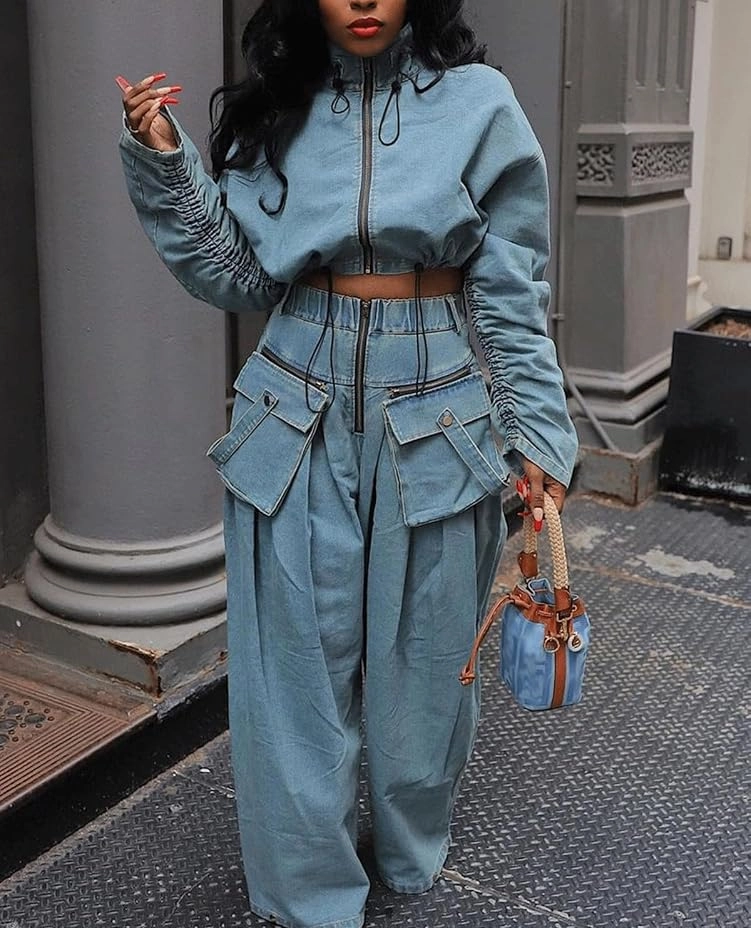
Custom Denim Tracksuit Manufacturer for Bespoke Two‑Piece Garment Production

Introduction: The Coordinated Imperative
The denim tracksuit represents a distinct sartorial proposition within contemporary streetwear. It is a garment that transcends the utilitarian origins of its constituent parts, offering a cohesive aesthetic that communicates a deliberate, curated identity. For the trend‑driven brand, the two‑piece denim set is a powerful merchandising tool—a coordinated statement that resonates with the modern consumer’s desire for a “complete look.” This guide delineates the strategic considerations for sourcing a custom denim tracksuit from a professional manufacturer, navigating the technical, commercial, and creative variables that define a successful bespoke production partnership.
OEM/ODM: Defining the Creative Partnership
The pathway to a custom denim tracksuit involves a fundamental choice between manufacturing models. Original Equipment Manufacturing (OEM) allows a brand to provide its own specifications, tech packs, and approved samples for execution, offering maximal creative control . Original Design Manufacturing (ODM) offers a more collaborative approach, where the manufacturer develops the concept from a brief or adapts existing designs for the brand’s label . This distinction is critical, as it dictates the level of creative control a brand maintains over the final product. A professional manufacturer will offer both models, adapting to the brand’s design capabilities and resources.
Fabric Foundations: The Substrate of a Bespoke Set
The integrity of a denim tracksuit is predicated upon the quality of its substrate. The fabric’s weight, composition, and weave dictate the garment’s drape, durability, and capacity for holding a wash. Manufacturers typically offer midweight washed cotton denim as a standard option, valued for its balance of structure and comfort . For bespoke collections, options such as cotton-polyester blends or avant‑garde patchwork using complementary fabrics are available to create distinctive visual contrasts . The selection of the fabric is the foundational decision upon which all other elements rest.
The Wash as Signature: Chemical and Mechanical Finishing
The wash is the defining attribute of denim, transforming a flat textile into a textured artifact. The selection of the wash—whether a soft light wash for a casual appeal or a more aggressive acid wash for a grunge aesthetic—is a primary differentiator for a brand’s offering . Vintage washes, evoking a faded, lived‑in look, are particularly favoured in the streetwear sphere, aligning with the trend of “intentional imperfection” . The wash process, which may include stone washing or enzyme washing, must be carefully considered, as it affects the set’s consistency. Reputable manufacturers will confirm the wash shade through a sample before bulk production to ensure consistency between the jacket and trousers .
The Silhouette Spectrum: From Boxy to Wide‑Leg
The architecture of a denim tracksuit is defined by its silhouette. The contemporary market has shifted towards relaxed, voluminous cuts that prioritise comfort and a distinct visual language. A boxy jacket offers room for layering, while a straight‑leg or wide‑leg pant provides a balanced drape . For a more rebellious aesthetic, an oversized jacket with a relaxed wide‑leg cut leans into the trend of intentional imperfection . This is a marked departure from the slim fits of previous seasons and reflects a broader cultural shift towards relaxed dressing.
Customization Capabilities: Beyond the Fabric
A premium manufacturer will offer customization that extends to the secondary details that define a brand’s identity. This includes the choice of hardware—zippers, buttons, and buckles—in finishes such as brass, gunmetal, or antique copper. The application of logos and branding is paramount, with options ranging from high-density embroidery and chenille patches to woven labels and screen printing . Some manufacturers offer specialized embellishments like rhinestone detailing and 3D embroidery to create a premium, statement‑making effect . This level of detailing is what distinguishes a mass‑market product from a premium, brand‑driven offering.
Navigating Minimum Order Quantities
For emerging and established brands alike, the Minimum Order Quantity (MOQ) is a critical financial consideration. The market has evolved to accommodate smaller players, with many manufacturers offering thresholds as low as 50 pieces per style and color for first‑time orders . The standard MOQ for a custom denim tracksuit is typically 100 sets per color per style, with some suppliers offering flexible support of 50 sets for first cooperations, depending on denim availability and wash complexity . This flexibility is a significant departure from traditional mass production and is an investment in market testing and risk mitigation.
Production Timelines: Sampling and Bulk Lead Times
The timeline from order placement to delivery is a variable that must be factored into operational planning. A standard production cycle includes a sampling phase, which typically requires 7 to 10 days after the design and fabric details are confirmed . Bulk production lead times generally range from 20 to 35 days following sample approval, depending on the complexity of the wash and the manufacturer’s capacity . Understanding this cycle is essential for integrating the collection into a brand’s retail calendar. Some manufacturers offer expedited options for samples, with development taking as little as 5 to 7 working days .
Quality Control: The Assurance of Consistency
Maintaining consistency across a production run is a formidable challenge. Reputable manufacturers implement rigorous in‑line and final quality control checks. This process often involves a multi‑point inspection that assesses wash shade, stitching integrity, pocket balance, zipper quality, and set consistency . Professional facilities employ dedicated QA/QC staff to ensure that the quality observed in the sample is replicated across the entire order . Some facilities engage third‑party inspection agencies, such as SGS and Bureau Veritas, to provide an additional layer of impartial quality assurance .
Compliance and Certifications: Verifying Integrity
For brands targeting international markets, manufacturer certifications are a critical consideration. Certifications such as ISO 9001 (quality management), OEKO‑TEX Standard 100 (chemical safety), BSCI (social compliance), and WRAP (responsible production) provide assurance that the production process aligns with international standards for quality, safety, and ethical labour . Verifying these credentials is a fundamental part of responsible sourcing and mitigates supply chain risk.
The Infrastructure of Production: A Modern Factory Profile
A professional manufacturer will possess the infrastructure to support bespoke production. This includes an in‑house laundry facility for controlled wash development, a dedicated sampling department, and a robust supply chain for sourcing raw materials. One Guangdong‑based manufacturer, for example, operates with 80 employees, a 3,000 m² facility, 35 cooperative suppliers, and an on‑site material inspection process, offering an MOQ as low as 30 pieces per design . This level of vertical integration allows for greater control over quality and lead times.
Conclusion: Forging a Coordinated Identity
The sourcing of a custom denim tracksuit for bespoke two‑piece garment production is a strategic endeavour that demands a careful selection of a manufacturing partner. By navigating the nuances of fabric selection, wash consistency, silhouette definition, and quality control, a brand can create a coordinated garment that communicates a deliberate, curated aesthetic. It is a partnership that extends beyond transaction, requiring a manufacturer that understands the creative vision and possesses the technical acumen to execute it. The result is not merely a matching jacket and trousers, but a statement of identity—a cohesive artifact that embodies the brand’s character and ambition in the dynamic landscape of streetwear fashion.