Don't miss our holiday offer - up to 50% OFF!

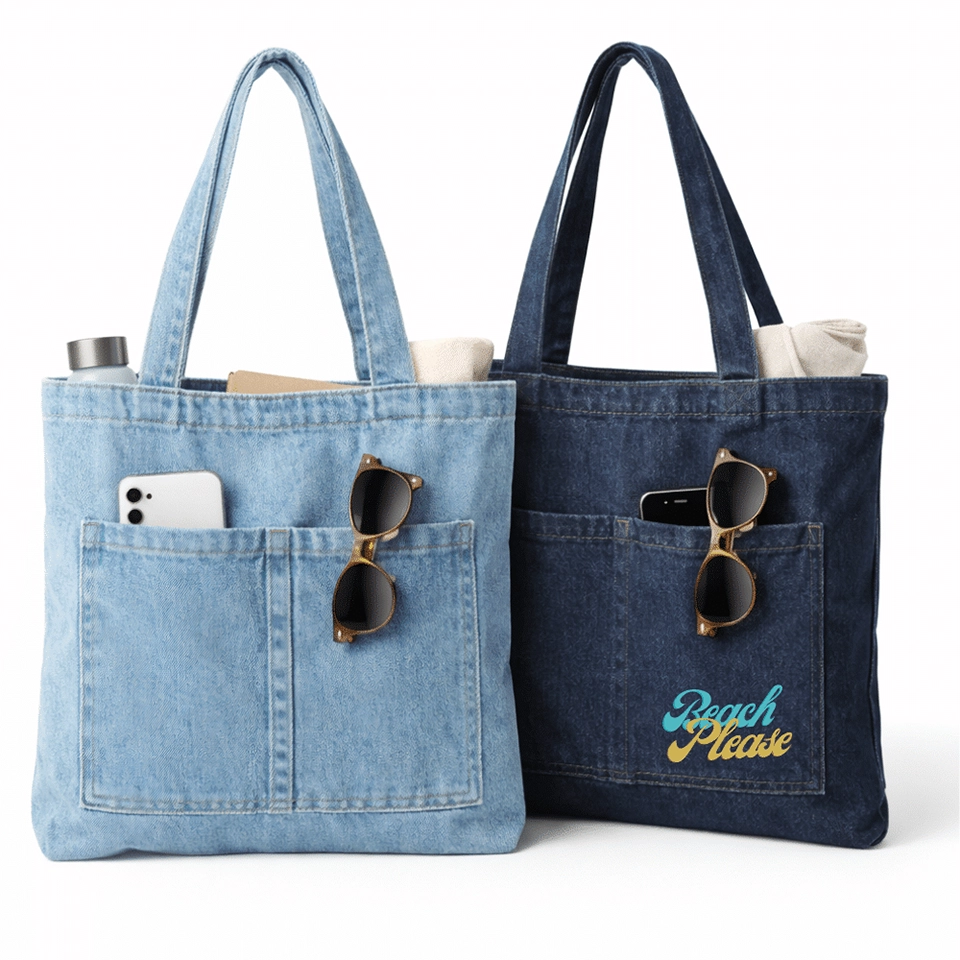
Custom Denim Shopping Bag Manufacturer for Bespoke Accessory Production

Introduction: The Shopping Bag as Brand Ambassador
The shopping bag has evolved from a mere conveyance for goods into a potent mobile billboard, a tactile representation of a brand’s identity. For the discerning brand, the transition from generic packaging to a custom denim shopping bag represents a strategic elevation of the customer experience. Denim, with its connotations of durability, authenticity, and timeless style, offers a substrate that communicates quality and craftsmanship . This guide delineates the critical considerations for sourcing custom denim shopping bags from a professional manufacturer, navigating the technical, commercial, and creative variables that define a successful bespoke accessory production partnership.
The OEM/ODM Spectrum: Defining the Partnership
The pathway to a custom denim shopping bag involves a fundamental choice between manufacturing models. Original Equipment Manufacturing (OEM) allows a brand to provide its own specifications, designs, and tech packs for execution, offering maximal creative control . Original Design Manufacturing (ODM) offers a more collaborative approach, where the manufacturer develops the concept from a brief or adapts existing designs for the brand’s label . This distinction is critical, as it dictates the level of creative involvement a brand maintains over the final product. A comprehensive manufacturer will offer both models, adapting to the brand’s design capabilities and resources.
Fabric Foundations: The Substrate of a Denim Bag
The integrity of a custom denim shopping bag is predicated upon the quality of its substrate. The fabric’s weight, composition, and weave dictate the bag’s drape, durability, and capacity for holding structural form. Manufacturers typically offer a spectrum of denim weights, measured in ounces per square yard . Lighter fabrics, such as 8oz, are ideal for event giveaways where portability and foldability are priorities. A mid-weight fabric of 10oz to 12oz offers a balance of structure and cost, making it the most versatile choice for daily retail use . Heavier fabrics, ranging from 14oz to 16oz, deliver maximum durability for heavy loads and wholesale distribution .
The Wash as Signature: Finishing the Fabric
The wash is a defining attribute of denim, transforming a flat textile into a textured artifact. For denim shopping bags, the selection of a wash contributes to the garment’s character and brand alignment. Manufacturers offer a range of washes, from a soft, untreated stone wash for a vintage, lived-in aesthetic, to more aggressive options like acid wash for a high-contrast, rebellious look . A custom wash, developed to a brand’s specific Pantone or reference, can ensure that the bag’s aesthetic is perfectly aligned with the broader product line .
The Silhouette Spectrum: Defining the Form
The architecture of a denim shopping bag is defined by its silhouette and structural configuration. The standard tote bag, with its open-top design and dual handles, remains the most versatile and prevalent form for retail and promotional applications . Beyond the classic tote, manufacturers offer variations such as shopper totes, crossbody bags, and multi-pocket organizers . The addition of zipper closures enhances security and is a key feature for bags intended for daily carry . The choice of silhouette is a foundational decision that dictates the bag’s functionality and visual identity.
Customization Capabilities: Beyond the Fabric
A premium manufacturer will offer customization that extends to the secondary details that define a brand’s identity. This includes the choice of handles—whether cotton webbing, reinforced denim, or leather—which contribute to the bag’s tactile experience and durability . The selection of hardware—zippers, buckles, and sliders—in finishes such as antique brass, gunmetal, or nickel, adds a layer of tactile refinement that distinguishes a premium product . The interior of the bag can be upgraded with custom-printed lining, padded laptop sleeves, and internal organizers .
The Art of Branding: Application Methods
The application of a logo or brand mark is the definitive act of customization. Manufacturers offer a panoply of application methods, each with distinct aesthetic and functional properties:
- Embroidery: The gold standard for premium branding, imparting a tactile, three-dimensional finish that is exceptionally durable .
- Screen Printing: A cost-effective method for high-volume orders, allowing for vibrant, multi-colored designs on the fabric’s surface .
- Leather/PU Patches: A classic, textural alternative often associated with heritage and quality .
- Woven Labels: A refined option for detailed branding .
- Laser Engraving: A precise method for creating indelible marks on metal hardware or leather components .
Hardware and Trims: The Details That Define Quality
The tactile experience of a denim bag is significantly influenced by its hardware and trims. The selection of a zipper—its material, tape color, and puller shape—is a functional and stylistic decision . For denim bags, a full-length durable zipper across the main opening ensures privacy and security for contents . The choice of hardware finish—from antique brass to gunmetal—contributes to the bag’s tactile refinement . A professional manufacturer will offer branded zipper pullers and engraved sliders to further reinforce a brand’s identity .
Sustainability: The Green Imperative
The apparel and accessory industry faces increasing scrutiny regarding its environmental impact. Forward-thinking manufacturers are responding by adopting sustainable practices, from the use of organic cotton and recycled denim to the implementation of GRS-certified materials . Certifications such as GRS (Global Recycled Standard) and GOTS (Global Organic Textile Standard) provide assurance that the production process aligns with international standards for environmental and social responsibility . A sustainable denim shopping bag is not merely a product but a statement of a brand’s commitment to responsible consumption.
Navigating Minimum Order Quantities
For emerging and established brands alike, the Minimum Order Quantity (MOQ) is a critical financial consideration. The landscape has evolved to accommodate brands of varying scales. Some manufacturers offer flexible MOQs as low as 300 pieces for standard OEM projects . Others specialize in small-batch production, with MOQs starting from a few hundred pieces, making it feasible for startups to test the market . For high-volume retail programs, MOQs may be set at 500 or 1,000 pieces . Understanding these thresholds is essential for effective cash flow management and risk mitigation.
Production Lead Times: Planning for Success
The timeline from order placement to delivery is a variable that must be factored into operational planning. A standard production cycle includes a sampling phase, which typically requires 5 to 10 days after the design and fabric details are confirmed . Bulk production lead times generally range from 15 to 45 days following sample approval, depending on the complexity of the design, the wash process, and the manufacturer’s capacity . For expedited needs, some manufacturers offer fast-track samples in 3 to 5 days.
Quality Control: The Assurance of Consistency
Maintaining consistency across a production run is a formidable challenge. Reputable manufacturers implement rigorous in-line and final quality control checks. This process often involves a multi-point inspection that assesses fabric integrity, stitching, hardware security, and the accuracy of logos and branding . Professional facilities employ dedicated QA/QC staff to ensure that the quality observed in the sample is replicated across the entire order.
Compliance and Certifications: Verifying Integrity
For brands targeting international markets, manufacturer certifications are a critical consideration. Certifications such as ISO 9001 (quality management), OEKO-TEX Standard 100 (chemical safety), and BSCI (social compliance) provide assurance that the production process aligns with international standards for quality, safety, and ethical labor . Verifying these credentials is a fundamental part of responsible sourcing.
The Global Manufacturing Landscape: Key Hubs
China remains the global epicenter of denim bag manufacturing, with specific regions offering distinct advantages. Guangdong Province, the industrial powerhouse of the Pearl River Delta, is home to large-scale, vertically integrated factories capable of high-volume production . Fujian Province, centered around Quanzhou, is known for its agile manufacturers that excel in intricate designs and mid-volume runs . The geography of sourcing influences both the scale and the specificity of what a manufacturer can achieve.
China’s Manufacturing Ecosystem: A Supplier Profile
The Chinese denim bag manufacturing ecosystem comprises a diverse array of specialists:
- Kyuri: A manufacturer specializing in wholesale custom denim tote bags with an MOQ from 300 pieces and factory-direct pricing .
- FY Custom Bag Manufacturer: A supplier offering versatile customization with a small MOQ, free mock-up services, and experience exporting to over 10,000 buyers .
- Synberry: A manufacturer with 30 years of experience, supporting GRS, GOTS, and OEKO-TEX standards, with bulk lead times of 30–45 days .
- Xinrui Packaging: A bag factory with 16 years of experience, a 6,500-square-meter facility, and a 12-person sample development team .
- Kewei Bag: A manufacturer offering low MOQs and competitive rates, with a focus on heavy-duty denim construction .
Conclusion: Forging an Accessory Identity
The sourcing of a custom denim shopping bag is a strategic endeavor that demands a careful selection of a manufacturing partner. By navigating the nuances of fabric selection, wash consistency, silhouette definition, branding options, and quality control, a brand can create an accessory that is not merely a carrier, but a durable artifact of its identity. It is a partnership that extends beyond transaction, requiring a manufacturer that understands the creative vision and possesses the technical acumen to execute it with precision. The result is a bag that embodies the brand’s character and ambition, carried by customers and seen by the world.