Don't miss our holiday offer - up to 50% OFF!

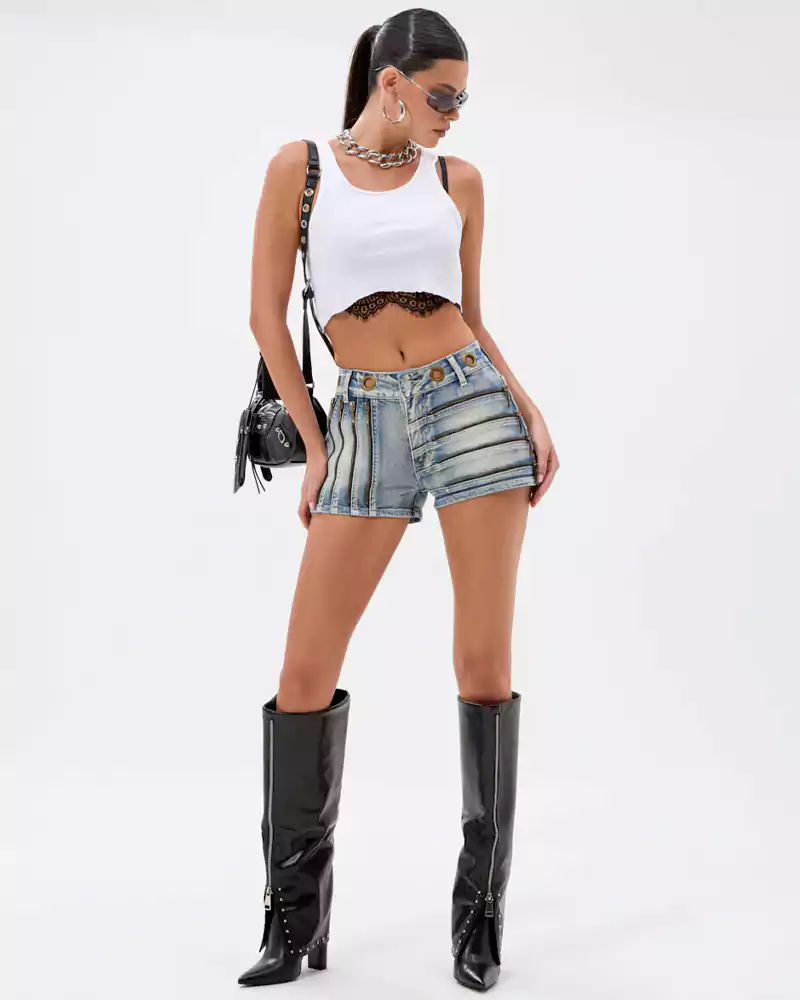
custom applique mens denim shorts

Introduction: The Ascendance of Men’s Denim Shorts
Men’s denim shorts have shed their dubious reputation. Once derided as sartorial surrender—the uniform of tourists and suburban fathers—they have reclaimed legitimacy through thoughtful design, premium materials, and artistic embellishment. The custom appliqué denim short represents the apotheosis of this rehabilitation. It combines the casual ease of cut-off jeans with the artistry of textile decoration. This discourse examines the multifaceted dimensions of custom appliqué men’s denim shorts, encompassing design, materials, manufacturing, and market dynamics.
The Appliqué Tradition: Historical and Cultural Context
Origins of Appliqué in Textile Decoration
Appliqué—the technique of attaching fabric shapes to a base material—has adorned textiles for millennia. Ancient Egyptians applied decorative panels to garments and furnishings. Medieval Europeans embellished ecclesiastical vestments with appliquéd motifs. Cultures across Africa, Asia, and the Americas developed distinctive appliqué traditions.
Appliqué in Denim and Workwear
Appliqué found fertile ground in denim and workwear. Laborers patched worn garments with contrasting fabrics, creating inadvertent decoration. Countercultural movements of the 1960s and 1970s embraced appliqué as a means of self-expression. Contemporary designers have elevated appliqué to an art form.
Contemporary Applications in Menswear
Contemporary menswear embraces appliqué with renewed vigor. Streetwear labels apply bold graphics and logos to denim garments. Luxury houses commission artisanal appliqué for limited-edition pieces. The technique spans the aesthetic spectrum, from minimalist to maximalist.
Defining Custom Appliqué Men’s Denim Shorts
Custom Versus Ready-to-Wear
Custom appliqué denim shorts are produced according to individual specifications. Clients select denim fabric, silhouette, inseam length, appliqué designs, and embellishments. Ready-to-wear alternatives offer standardized options. Custom manufacturing ensures optimal fit and personal significance.
The Role of Appliqué in Personalization
Appliqué personalizes denim shorts by introducing color, texture, and imagery. It transforms utilitarian garments into expressive artifacts. Clients may choose appliqué designs reflecting personal interests, cultural heritage, or aesthetic preferences.
Target Markets and Consumer Profiles
Custom appliqué denim shorts appeal to diverse consumer segments. Streetwear enthusiasts seek bold graphics and logos. Festival-goers desire distinctive, photogenic garments. Workwear aficionados appreciate rugged, functional designs. Luxury consumers pursue artisanal, exclusive pieces.
Denim Fabric Selection for Men’s Shorts
Lightweight Denim for Summer Comfort
Lightweight denim—typically under ten ounces per square yard—offers breathability and comfort in warm weather. It drapes softly and suits relaxed silhouettes. Lightweight denim is ideal for summer shorts.
Midweight Denim for Structure and Durability
Midweight denim—between ten and fourteen ounces—balances comfort and durability. It holds its shape, resists abrasion, and accommodates appliqué without sagging. Midweight denim suits most shorts applications.
Stretch and Performance Blends
Stretch denim incorporates elastane or spandex, enhancing mobility and comfort. Performance blends may include moisture-wicking, quick-drying, or antimicrobial properties. These fabrics suit active men and humid climates.
Selvedge and Raw Denim for Premium Shorts
Selvedge and raw denim—prized for their quality and fading potential—elevate shorts to premium status. Selvedge edges may appear on outseams. Raw denim develops unique fades over time.
Sustainable and Recycled Denim Options
Sustainable and recycled denim—produced from organic cotton, recycled fibers, or eco-friendly dyes—appeals to environmentally conscious consumers. These fabrics reduce environmental impact and align with circular economy principles.
Silhouettes and Fits in Men’s Denim Shorts
Slim and Tapered Cuts
Slim and tapered cuts hug the thigh and narrow toward the hem. They suit lean body types and contemporary aesthetics. Custom manufacturing ensures that slim cuts accommodate muscular thighs without excessive tightness.
Straight and Relaxed Fits
Straight and relaxed fits maintain consistent width from hip to hem. They offer comfort and versatility. Relaxed fits accommodate diverse body types and suit casual contexts.
Baggy and Wide-Leg Silhouettes
Baggy and wide-leg silhouettes have ascended in streetwear and skate culture. They prioritize comfort and create distinctive visual profiles. Custom manufacturing can execute these silhouettes with precision.
Carpenter and Utility Shorts
Carpenter and utility shorts incorporate functional details—hammer loops, reinforced panels, multiple pockets. They appeal to workwear enthusiasts and those seeking practical garments.
Jorts: The Polarizing Length Debate
Jorts—long denim shorts extending below the knee—provoke strong opinions. Advocates cite comfort and sun protection. Detractors deem them aesthetically dubious. Custom manufacturing enables clients to specify their preferred length, whether cropped or elongated.
Inseam Lengths and Proportion
Above-the-Knee Lengths
Above-the-knee lengths—typically five to seven inches—offer a contemporary, athletic appearance. They suit casual and summer contexts.
At-the-Knee Lengths
At-the-knee lengths—typically nine to eleven inches—offer balanced proportions. They suit diverse body types and occasions.
Below-the-Knee Lengths
Below-the-knee lengths—twelve inches or more—constitute jorts. They offer coverage and comfort but require confidence to wear.
Custom Inseam Adjustments
Custom inseam adjustments ensure optimal length for individual preferences and proportions. Clients specify inseam measurements, and manufacturers cut accordingly.
The Appliqué Design Process
Conceptualization and Mood Boarding
Conceptualization begins with mood boarding. Designers gather references—images, textures, colors—that inform the appliqué design. Clients articulate their vision, whether abstract or representational.
Digital Design and Vector Preparation
Digital design translates concepts into vector files. Software such as Adobe Illustrator enables precise manipulation of shapes, colors, and compositions. Vector files guide cutting machines and printing processes.
Material Selection for Appliqué Elements
Material selection determines the appliqué’s appearance and durability. Options include contrast denim, leather, canvas, fleece, and technical fabrics. Materials must withstand washing and wear.
Color Theory and Contrast
Color theory informs appliqué design. Complementary colors create visual tension. Analogous colors create harmony. Contrasting values ensure legibility. Designers balance these considerations to achieve desired effects.
Placement and Composition
Placement and composition determine the appliqué’s visual impact. Designs may appear on front panels, back pockets, hems, or side seams. Composition considers balance, scale, and negative space.
Types of Appliqué Techniques
Traditional Stitched Appliqué
Traditional stitched appliqué involves cutting fabric shapes, positioning them on the base material, and stitching around the edges. The stitching may be visible or concealed, depending on the desired effect.
Raw-Edge and Frayed Appliqué
Raw-edge and frayed appliqué leave fabric edges unfinished, allowing them to fray over time. This technique creates rustic, deconstructed aesthetics. Fraying can be controlled through stitching or bonding.
Reverse Appliqué
Reverse appliqué involves cutting away the base material to reveal contrasting fabric beneath. The technique creates depth and intrigue. It requires precision cutting and stitching.
Layered and Dimensional Appliqué
Layered and dimensional appliqué stacks multiple fabric layers to create texture and depth. Padding or interfacing may add volume. These techniques produce sculptural effects.
Laser-Cut and Bonded Appliqué
Laser-cut and bonded appliqué employ technology to achieve precision and efficiency. Lasers cut intricate shapes. Bonding agents attach appliqué without visible stitching. These techniques suit complex, detailed designs.
Materials for Appliqué on Denim
Contrast Denim and Chambray
Contrast denim and chambray offer tonal variation and textural interest. Light washes against dark bases create striking effects. Chambray’s finer weave adds subtlety.
Leather and Vegan Leather
Leather and vegan leather appliqué introduce luxury and durability. These materials withstand wear and develop patina. Vegan alternatives appeal to cruelty-conscious consumers.
Canvas, Twill, and Duck
Canvas, twill, and duck provide sturdy, matte surfaces for appliqué. They resist abrasion and hold shape. These materials suit utilitarian and workwear-inspired designs.
Fleece, Sherpa, and Terry Cloth
Fleece, sherpa, and terry cloth add warmth and texture. They suit winter shorts and cozy aesthetics. These materials require careful stitching to prevent bulk.
Reflective and Technical Fabrics
Reflective and technical fabrics enhance visibility and performance. They appeal to cyclists, runners, and urban commuters. These materials introduce futuristic aesthetics.
Recycled and Upcycled Materials
Recycled and upcycled materials—derived from post-consumer garments or production waste—reduce environmental impact. They imbue appliqué with narrative significance.
Embellishments Complementing Appliqué
Embroidery and Chain Stitch
Embroidery and chain stitch add texture and color. They may outline appliqué shapes, add details, or create standalone motifs.
Screen Printing and Heat Transfer
Screen printing and heat transfer apply graphics to denim surfaces. They may complement or contrast with appliqué elements.
Patches, Badges, and Woven Labels
Patches, badges, and woven labels convey branding and personal expression. They may be stitched or adhered to shorts.
Studs, Rivets, and Hardware
Studs, rivets, and hardware add metallic accents and reinforce stress points. They introduce industrial aesthetics.
Distressing, Rips, and Fraying
Distressing, rips, and fraying create worn, lived-in appearances. They may be applied to base denim or appliqué elements.
Wash, Finish, and Color Considerations
Indigo, Black, and Colored Denim Bases
Indigo, black, and colored denim bases provide diverse foundations for appliqué. Indigo offers classic appeal. Black conveys edginess. Colored denims enable bold combinations.
Stonewashing, Acid Washing, and Enzyme Treatments
Stonewashing, acid washing, and enzyme treatments alter denim appearance and hand feel. They may be applied before or after appliqué, depending on desired effects.
Laser Fading and Ozone Finishing
Laser fading and ozone finishing reduce water consumption and chemical usage. They create precise fades and whiskers.
Colorfastness and Crocking Concerns
Colorfastness and crocking concerns arise when dyes transfer to skin or other garments. Proper dye fixation and washing mitigate these issues.
Preserving Appliqué Integrity Through Finishing
Preserving appliqué integrity through finishing requires careful handling. Harsh treatments may damage appliqué materials or stitching. Manufacturers must select finishing processes compatible with appliqué.
Construction and Manufacturing Processes
Pattern Drafting for Men’s Shorts
Pattern drafting translates measurements into templates. Patterns accommodate silhouette, rise, inseam, and appliqué placement.
Cutting Denim and Appliqué Components
Cutting denim and appliqué components requires precision. Die cutting, laser cutting, or manual cutting are among the methods.
Stitching Techniques for Appliqué Attachment
Stitching techniques for appliqué attachment include straight stitch, zigzag stitch, satin stitch, and blind stitch. Technique selection depends on desired appearance and durability.
Reinforcing Stress Points
Reinforcing stress points—pocket corners, fly openings, belt loops—prevents premature wear. Bar tacks, rivets, and reinforced stitching are among the methods.
Hemming and Edge Finishing
Hemming and edge finishing prevent fraying and create polished appearances. Options include folded hems, raw hems, and bound edges.
Hardware and Functional Details
Buttons, Rivets, and Zippers
Buttons, rivets, and zippers contribute to function and aesthetics. Options include brass, nickel, copper, and matte finishes.
Belt Loops and Suspender Buttons
Belt loops and suspender buttons accommodate belts and suspenders. They may be customized in width, placement, and material.
Pocket Configurations and Utility Loops
Pocket configurations and utility loops enhance functionality. Options include slash pockets, coin pockets, cargo pockets, and hammer loops.
Drawstrings and Elastic Waistbands
Drawstrings and elastic waistbands offer comfort and adjustability. They suit casual and athletic contexts.
Customization Workflows: From Order to Delivery
Online Design Tools and Configurators
Online design tools and configurators enable remote customization. Users select fabric, silhouette, appliqué designs, and embellishments.
Client Consultation and Design Proofing
Client consultation and design proofing ensure alignment between expectation and execution. Designers review specifications and provide digital proofs.
Sampling and Prototyping
Sampling and prototyping produce physical examples for evaluation. Samples verify fit, appearance, and functionality.
Production, Quality Control, and Fulfillment
Production, quality control, and fulfillment complete the workflow. Garments are manufactured, inspected, packaged, and shipped.
Sizing and Fit Customization
Made-to-Measure Denim Shorts
Made-to-measure denim shorts are produced according to individual measurements. This approach ensures optimal fit.
Inclusive Sizing for Diverse Body Types
Inclusive sizing accommodates diverse body types. Manufacturers should offer comprehensive size ranges and adjust patterns accordingly.
Proportional Adjustments for Rise and Inseam
Proportional adjustments for rise and inseam ensure proper fit. Rise affects comfort and silhouette. Inseam determines length.
Minimum Order Quantities and Production Flexibility
Single-Pair Custom Orders
Single-pair custom orders accommodate individual clients. Manufacturers produce one garment at a time.
Small-Batch Runs for Emerging Brands
Small-batch runs enable emerging brands to test designs and minimize inventory risk.
Scaling Production for Established Labels
Established labels require larger production volumes. Manufacturers scale operations while maintaining quality.
Lead Times and Capacity Planning
Lead times and capacity planning ensure timely delivery. Communication with clients regarding lead times is essential.
Quality Assurance for Custom Appliqué Denim Shorts
Fabric Inspection and Defect Identification
Fabric inspection identifies defects before cutting. Defective sections are removed or avoided.
Appliqué Adhesion and Stitch Integrity Testing
Appliqué adhesion and stitch integrity testing evaluate durability. Peel tests, rub tests, and wash tests are among the methods.
Colorfastness and Crocking Tests
Colorfastness and crocking tests evaluate dye transfer and fading.
Final Inspection and Fit Verification
Final inspection and fit verification ensure that garments meet specifications.
Pricing Structures and Cost Drivers
Material Costs: Denim and Appliqué Elements
Material costs reflect denim quality and appliqué materials. Premium fabrics and exotic materials increase costs.
Labor and Customization Costs
Labor and customization costs reflect the skill and time required for production.
Tooling and Design Investments
Tooling and design investments are required for custom appliqué. These costs are amortized across production runs.
Retail Versus Wholesale Pricing Models
Retail pricing applies to direct-to-consumer sales. Wholesale pricing applies to B2B transactions.
Sustainability and Ethical Manufacturing
Upcycled and Recycled Denim Sourcing
Upcycled and recycled denim sourcing reduces waste and extends fabric lifespan.
Eco-Friendly Adhesives and Threads
Eco-friendly adhesives and threads reduce environmental impact.
Waste Reduction in Cutting and Production
Waste reduction in cutting and production minimizes fabric loss.
Fair Labor Practices and Certifications
Fair labor practices are non-negotiable. Certifications provide third-party validation.
Marketing Custom Appliqué Men’s Denim Shorts
Storytelling and Design Narratives
Storytelling and design narratives differentiate custom appliqué shorts. Brands communicate the inspiration, craftsmanship, and uniqueness of each piece.
Photography and Visual Merchandising
Photography and visual merchandising showcase the product. High-quality images capture appliqué details and overall aesthetics.
Social Media and Influencer Collaborations
Social media and influencer collaborations amplify reach. Authentic partnerships lend credibility.
E-Commerce and Retail Strategies
E-commerce and retail strategies determine how consumers discover and purchase products.
Target Markets and Consumer Segments
Streetwear and Skate Culture
Streetwear and skate culture embrace custom appliqué denim shorts. Bold graphics, logos, and distressing appeal to these demographics.
Festival and Vacation Wear
Festival and vacation wear favor distinctive, photogenic garments. Custom appliqué shorts suit these contexts.
Workwear and Utility Enthusiasts
Workwear and utility enthusiasts appreciate functional details and durable construction.
Luxury and Designer Markets
Luxury and designer markets pursue artisanal, exclusive pieces. Custom appliqué shorts command premium prices.
Logistics, Packaging, and Distribution
Protective Packaging for Appliqué Garments
Protective packaging for appliqué garments prevents damage during shipping.
Custom Boxes and Unboxing Experiences
Custom boxes and unboxing experiences enhance perceived value.
Shipping and Customs Considerations
Shipping and customs considerations affect delivery times and costs.
Returns, Alterations, and After-Sales Service
Returns, alterations, and after-sales service ensure customer satisfaction.
Case Studies: Successful Custom Appliqué Denim Shorts
Independent Artisan Brands
Independent artisan brands have carved niches in the custom appliqué market. Their approaches emphasize craftsmanship and personalization.
Streetwear Labels Embracing Appliqué
Streetwear labels embrace appliqué for its expressive potential. Their offerings combine bold graphics with premium denim.
Luxury Houses and Designer Collaborations
Luxury houses and designer collaborations produce artisanal appliqué shorts. These pieces command premium prices and attract discerning consumers.
The Future of Custom Appliqué Men’s Denim Shorts
Technological Advancements in Appliqué
Technological advancements—laser cutting, digital printing, automated stitching—will transform appliqué production.
Evolving Consumer Preferences
Consumer preferences will continue to evolve. Sustainability, inclusivity, and personalization will remain salient.
Sustainability Imperatives
Sustainability imperatives will intensify. Manufacturers must reduce environmental impact and adopt circular practices.
Global Market Expansion
Global market expansion will continue. Emerging economies and e-commerce growth create opportunities.
Conclusion: The Art of Personalization in Menswear
Custom appliqué men’s denim shorts exemplify the art of personalization in menswear. They combine heritage materials, artistic embellishment, and individualized fit. They satisfy consumers who demand garments of exceptional quality and personal significance. As fashion evolves, the allure of custom appliqué will endure—a testament to denim’s versatility and the enduring human desire for garments that express individual identity.