Don't miss our holiday offer - up to 50% OFF!

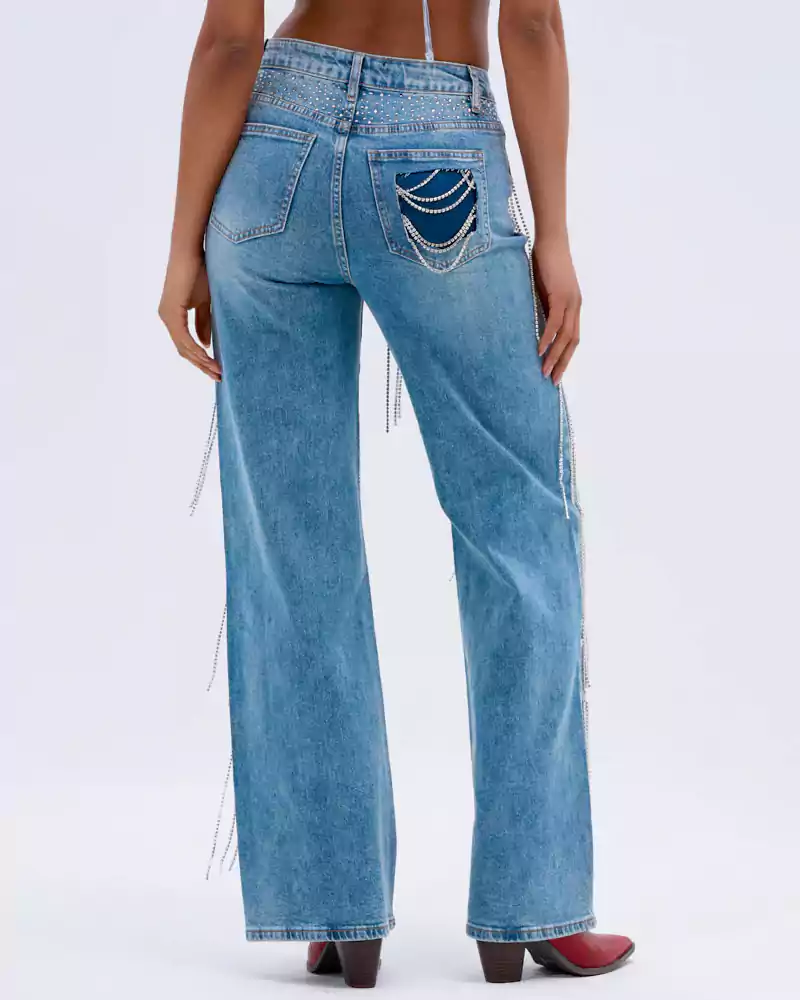
Custom Stacked Denim Pants Manufacturer from China

Introduction: The Stacked Denim Aesthetic and Its Global Ascendancy
Stacked denim pants have migrated from the fringes of streetwear to the center of contemporary menswear. Characterized by extended inseams that cascade in horizontal folds above the footwear, stacking is a deliberate aesthetic that signals fluency in urban fashion vernacular. For apparel brands, the category offers differentiation and cultural credibility. For manufacturers, it demands precision in pattern engineering and construction. China has emerged as a formidable source for custom stacked denim pants, offering a confluence of technical capability, cost efficiency, and scale. This article examines the considerations that inform the selection and collaboration with a Chinese manufacturer of stacked denim.
Defining Stacked Denim Pants: Silhouette, Drapery, and Intent
Stacked denim pants are characterized by an inseam significantly longer than the wearer’s leg, causing the fabric to accumulate in folds—stacks—around the ankles and lower shins. The effect is intentional, not accidental. It conveys a relaxed, voluminous silhouette that contrasts with the tapered or skinny fits that dominated previous decades. Stacking is most pronounced in straight, wide, or baggy leg shapes, though it can be achieved in slimmer cuts with sufficient length. The manufacturer must understand that stacking is a design objective, not a sizing error.
The Origins of Stacking in Streetwear and Hip-Hop Culture
The stacking aesthetic has roots in hip-hop culture, where oversized clothing signaled both style and status. As the culture globalized, so too did its sartorial markers. Skaters adopted stacked pants for their durability and freedom of movement. Japanese streetwear labels refined the look, pairing stacked denim with sneakers and cropped jackets. Social media amplified the aesthetic, catapulting it into mainstream fashion. Understanding this lineage enables manufacturers and brands to approach stacking with cultural sensitivity and design intentionality.
Why China Has Become a Preeminent Sourcing Destination
China’s ascent in denim manufacturing is the product of decades of investment in infrastructure, technology, and skilled labor. The country boasts vertically integrated supply chains, from cotton cultivation to finished garment. Its factories operate advanced machinery—laser finishing, automated cutting, ozone washing—that rivals or exceeds facilities elsewhere. Chinese manufacturers have accumulated deep expertise in denim, particularly in the Guangdong and Zhejiang provinces. For stacked denim, which demands precise pattern engineering and construction, this expertise is invaluable.
The Landscape of Chinese Denim Manufacturing Clusters
China’s denim industry is clustered in specific regions. Guangdong province, particularly the Xintang area, is renowned as a denim hub, producing a substantial share of the world’s denim garments. Zhejiang province hosts factories specializing in premium and small batch production. Jiangsu and Shandong contribute additional capacity. Each cluster has distinct strengths: Xintang excels in volume and wash innovation; Zhejiang in flexibility and craftsmanship. Buyers should align their requirements with the appropriate cluster.
Distinguishing Between Trading Companies and Vertically Integrated Factories
A critical distinction exists between trading companies and vertically integrated factories. Trading companies act as intermediaries, sourcing production from various factories. They offer convenience but may lack transparency and control. Vertically integrated factories own their cutting, sewing, washing, and finishing operations, affording greater control over quality and lead times. For stacked denim, where consistency across batches is paramount, a vertically integrated factory is generally preferable. Buyers should verify a supplier’s actual capabilities through audits and factory visits.
Fabric Selection: Stretch, Rigid, and Heavyweight Denims for Stacking
Fabric selection shapes the stacking effect. Stretch denim, incorporating elastane, allows the fabric to conform to the leg while still accumulating folds. Rigid denim, lacking elasticity, produces more pronounced, architectural stacks. Heavyweight denim—fourteen ounces and above—creates stacks with substantial presence; lighter weights yield softer, more fluid folds. The manufacturer should provide swatches and guidance on how each fabric behaves when stacked. Shrinkage potential must also be considered, as unsanforized denim will alter the stack geometry after washing.
The Mechanics of Stacking: How Fabric Weight and Length Interact
Stacking is a function of excess length and fabric rigidity. A longer inseam yields more folds; a stiffer fabric yields folds that stand away from the leg. The interaction is non-linear. Beyond a certain length, stacks may collapse or appear chaotic. The manufacturer must advise on optimal inseam lengths for the desired aesthetic, balancing excess fabric with wearability. The leg opening also matters; a narrow opening compresses stacks, while a wider opening allows them to spread.
Indigo Dyeing and Wash Capabilities in Chinese Mills
Chinese mills possess advanced indigo dyeing capabilities. Rope dyeing, slasher dyeing, and sulfur dyeing are all practiced. The number of dips determines shade depth. For stacked denim, where the fabric is folded upon itself, color consistency across the garment is critical; uneven dyeing becomes conspicuous in the stacks. Chinese washhouses excel in a range of finishing techniques—stonewashing, enzyme washing, laser fading, ozone treatment—enabling diverse aesthetic outcomes.
Pattern Engineering for the Stacked Silhouette
Pattern engineering for stacked denim requires a departure from conventional approaches. The extended inseam must be integrated into the pattern without distorting the rise, seat, or thigh. The leg shape must accommodate the additional fabric without appearing excessively voluminous above the knee. Grading must preserve the stacking effect across sizes. A manufacturer with experience in stacked fits possesses pattern blocks and grading rules specifically calibrated for this aesthetic.
Inseam Length, Leg Opening, and the Geometry of Drape
Inseam length and leg opening are the primary variables governing drape. A thirty-four-inch inseam on a thirty-inch leg yields approximately four inches of excess, producing modest stacks. A thirty-eight-inch inseam yields eight inches, producing dramatic stacks. The leg opening determines how the stacks sit relative to the shoe. A sixteen-inch opening creates a broad, pooling effect; a fourteen-inch opening produces tighter, more defined folds. The manufacturer should collaborate with the buyer to calibrate these variables.
Rise, Seat, and Thigh Proportions in Stacked Fits
Stacked denim is often cut with a mid-to-high rise and a relaxed seat and thigh. This proportioning accommodates movement and prevents the fabric from pulling at the crotch when the stacks are compressed. A low rise combined with a long inseam can produce an uncomfortable, sagging effect. The manufacturer must balance the desire for volume with the imperatives of fit and comfort, advising on proportions that flatter diverse body types.
Construction Techniques for Extended-Length Garments
Extended-length garments introduce construction challenges. The longer inseam requires more fabric, increasing weight and stress on seams. Chain-stitched hems, common on premium denim, resist unraveling and produce attractive roping fades. Felled inseams and outseams enclose raw edges and add strength. Bartacks reinforce stress points. The manufacturer must specify stitch density, needle sizes, and thread weights appropriate to the fabric and the garment’s length.
Hardware, Trims, and Branding Integration
Hardware—buttons, rivets, zippers—contributes both function and branding. Custom buttons with debossed logos, engraved rivets, and branded leather patches enhance perceived value. Labels, whether woven or printed, convey brand identity and care instructions. The manufacturer must source these components from vetted suppliers, ensure compliance with international standards, and integrate them without disrupting production flow. Lead times for custom hardware can be substantial, necessitating early coordination.
Wash Treatments and Finishing for Stacked Denim
Washing is where denim acquires character. For stacked denim, the wash must be applied consistently, as folds and creases can create uneven fading. Techniques such as whiskering and hand sanding must be adapted to the stacked silhouette. Laser finishing enables precise, repeatable effects. The manufacturer must replicate the approved wash sample across bulk production, a task requiring disciplined process control and experienced washhouse personnel.
Sizing and Grading for International Markets
Sizing stacked denim for international markets requires attention to regional fit preferences. North American and European consumers may favor different rises and leg openings than Asian consumers. The manufacturer must provide accurate size charts, ideally with garment measurements, and grade patterns across a wide spectrum. Extended sizing, including larger waists and longer inseams, broadens the addressable market. Transparency and consistency are paramount.
The Sampling Process and Its Criticality
Sampling validates the design and construction. For stacked denim, sampling must assess not only fit and finish but also the stacking effect itself. Photographs of the garment worn—ideally with footwear—reveal how the stacks drape and settle. Multiple iterations may be required to calibrate inseam length and leg opening. A manufacturer that embraces iterative sampling reduces the risk of bulk production failures.
Minimum Order Quantities and Production Scalability
MOQs in Chinese denim manufacturing vary widely. Vertically integrated factories may require higher volumes; smaller workshops may accommodate lower quantities at higher per-unit costs. Buyers should understand that MOQs reflect fabric procurement, setup costs, and production efficiency. Scalability is equally important. A manufacturer must demonstrate capacity to ramp up production without sacrificing quality or extending lead times.
Quality Assurance Protocols for Chinese Production
Quality assurance must be rigorous. Measurements, stitch integrity, hardware function, and wash consistency are baseline checks. The stacking effect must be evaluated in the finished garment. A manufacturer with a documented QA protocol and traceable records provides assurance. Third-party inspections, conducted by firms such as SGS, Bureau Veritas, or Intertek, offer additional verification and are recommended for buyers new to Chinese sourcing.
Compliance, Certification, and Ethical Sourcing
Compliance is non-negotiable. Certifications such as WRAP, BSCI, Sedex, GOTS, and OEKO-TEX provide independent verification of labor conditions and environmental performance. Restricted substances lists must be observed. Wastewater from dyeing and washing must be treated responsibly. A manufacturer committed to these standards enables buyers to market their products with integrity and mitigates legal and reputational risks.
Tariffs, Logistics, and Cross-Border Trade Considerations
International trade introduces layers of complexity. Tariffs on denim apparel vary by country of origin and destination. Rules of origin determine eligibility for preferential treatment. Documentation—commercial invoices, packing lists, certificates of origin—must be accurate to avoid customs delays. Logistics providers specializing in apparel freight can expedite clearance. A manufacturer experienced in export markets anticipates these requirements and collaborates with buyers to navigate them efficiently.
Cost Structures and Negotiation Dynamics
Costs comprise fabric, trims, labor, washing, finishing, packaging, and overhead. A reliable manufacturer provides itemized quotations that delineate these components. Negotiation should focus on total cost of ownership, not merely unit price. Payment terms, currency fluctuations, and volume discounts should be discussed openly. The lowest bidder may deliver the highest defect rate; quality and reliability must be weighed alongside cost.
Common Pitfalls When Sourcing from China
Pitfalls are plentiful. Inadequate vetting of a supplier’s credentials leads to substandard output. Overlooking communication barriers results in misunderstandings. Neglecting to verify compliance invites customs seizures. Underestimating lead times during peak seasons causes stockouts. Remedies include thorough due diligence, clear technical documentation, bilingual communication, and regular progress reviews.
Case Studies: Successful Stacked Denim Programs
Examination of successful programs yields insights. A European streetwear brand partnered with a Guangdong factory to produce stacked denim in heavyweight selvedge, achieving sell-through within weeks. A North American label collaborated with a Zhejiang manufacturer on stretch stacked denim for a broader demographic. In both cases, success derived from aligned aesthetics, transparent communication, and the manufacturer’s technical proficiency.
Future Trends in Stacked Denim Manufacturing
The future will be shaped by digitalization, automation, and sustainability. 3D sampling reduces the need for physical prototypes. Automated cutting and sewing enhance precision. Blockchain traceability appeals to transparency-minded consumers. Circular economy models encourage take-back and recycling. Manufacturers that invest in these capabilities will offer buyers a competitive advantage.
Conclusion: Selecting a Chinese Partner for Stacked Denim Excellence
The custom stacked denim pants manufacturer from China represents a strategic opportunity for brands navigating an era of rapid iteration and discerning consumers. The selection of such a manufacturer is a decision of considerable consequence. It determines product quality, market responsiveness, and brand reputation. The ideal partner combines technical expertise, transparent communication, scalable capacity, and ethical integrity. By conducting rigorous due diligence, documenting specifications meticulously, and nurturing collaborative relationships, buyers can bring distinctive stacked denim to market that resonates with consumers and endures beyond a single season.