Don't miss our holiday offer - up to 50% OFF!

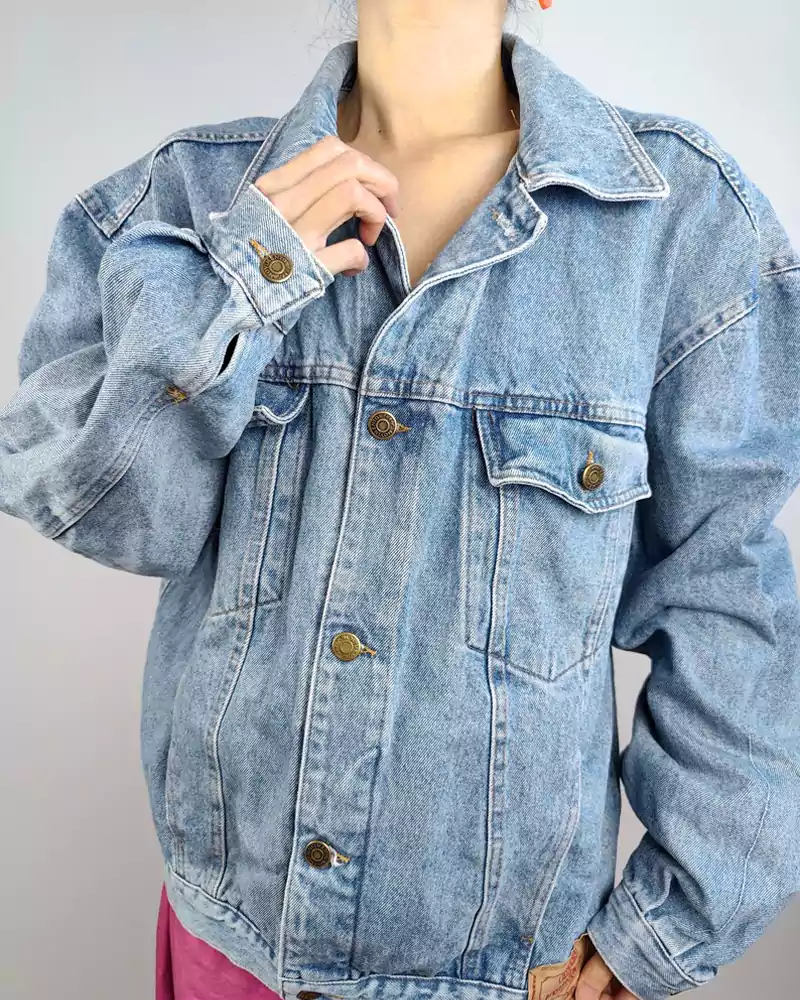
Custom Logo Denim Jacket | OEM Private Label Garment Manufacturer

Introduction: The Renaissance of the Custom Logo Denim Jacket
The denim jacket occupies a singular position in the modern wardrobe. It is at once utilitarian and expressive, a garment that has transcended its origins to become a canvas for personal and commercial identity. For brands seeking a tangible artifact that embodies resilience and authenticity, the custom logo denim jacket represents an unparalleled opportunity.
This article examines the intricate landscape of OEM and private label denim jacket manufacturing. It is a domain where textile engineering, branding strategy, and global logistics converge. The objective is to furnish brand owners, merchandisers, and entrepreneurs with a comprehensive understanding of what it takes to bring a custom logo denim jacket from concept to consumer.
The Historical Evolution of the Denim Jacket
From Workwear to Cultural Icon
The denim jacket was born of necessity. Early iterations served miners, cowboys, and laborers who required garments capable of withstanding punishing conditions. Its riveted construction and robust cotton twill made it indispensable. Over decades, however, this functional artifact underwent a profound cultural transmutation. Rebels adopted it. Musicians adorned it. Subcultures claimed it as a uniform. By the late twentieth century, the denim jacket had become a symbol of individuality rather than mere utility.
The Modern Iteration as a Branding Canvas
Contemporary denim jackets are no longer confined to the realm of fashion houses. They have become strategic marketing instruments. Corporations commission embroidered versions for employee uniforms. Streetwear labels use them as flagship products. Music festivals and events deploy them as premium merchandise. The jacket’s large surface area, particularly the back panel, offers a generous tableau for logos, slogans, and artwork. This dual identity—functional garment and promotional medium—makes it exceptionally valuable.
Why the Denim Jacket Endures as a Promotional and Retail Staple
Versatility Across Demographics
Few garments appeal so broadly. The denim jacket suits men and women, young and old, urban and rural. It layers effortlessly over hoodies, dresses, and button-down shirts. For brands, this versatility translates into a single SKU with extraordinary reach. A well-designed jacket can serve a teenager in Tokyo and a retiree in Toronto without modification.
Durability as a Long-Term Marketing Asset
Promotional products often suffer from short lifespans. Pens are lost. Tote bags fray. The denim jacket, by contrast, endures for years. Its fabric strengthens with wear; its stitching holds fast. Every time the wearer dons the garment, the brand receives an impression. This longevity amortizes the initial investment and compounds brand visibility over time.
Understanding the OEM and Private Label Distinction
Original Equipment Manufacturer: The Mechanics
An OEM arrangement entails a manufacturer producing goods according to a buyer’s specifications, which are then sold under the buyer’s brand. The buyer typically controls the design, the materials, and the branding. The OEM supplies the capacity, the machinery, and the technical expertise. In denim manufacturing, this often means the buyer provides tech packs, and the factory executes them precisely.
Private Label: The White-Label Advantage
Private label manufacturing is a subset of OEM. Here, the manufacturer may already produce a stock garment—a classic trucker jacket, for instance—that the buyer can customize with their own labels and logos. This route accelerates time to market and reduces development costs. The trade-off is reduced exclusivity. For emerging brands, however, private label offers a pragmatic entry point.
The Role of the Garment Manufacturer in Brand Development
Design Consultation and Technical Specification
Reputable manufacturers do not merely execute orders; they advise. They review sketches and mood boards, flagging construction challenges and suggesting alternatives. They translate aesthetic intent into technical specifications: stitch types, thread counts, seam allowances, and measurement tolerances. This consultative phase is where good ideas become manufacturable realities.
Sampling, Prototyping, and Pre-Production Approvals
No serious production run begins without sampling. The first prototype—often called a fit sample—reveals whether the design translates from paper to fabric. Subsequent iterations refine details. A pre-production sample serves as the golden standard, the reference against which all bulk units are measured. Skipping or rushing this phase is a false economy; defects discovered at scale are costly to remedy.
Denim Selection: The Foundation of Quality
Ounce Weight and Weave Considerations
Denim is graded by weight, measured in ounces per square yard. Lightweight denim (8–10 oz) drapes softly and suits warm climates. Midweight (11–14 oz) is the industry standard for jackets, balancing structure and comfort. Heavyweight (15 oz and above) offers rigidity and pronounced fades, appealing to denim aficionados. The weave—right-hand twill, left-hand twill, or broken twill—affects the fabric’s hand, appearance, and fading behavior.
Raw versus Washed Denim Finishes
Raw denim arrives unwashed, stiff, and dark. It develops unique creases and fades tailored to the wearer. Washed denim undergoes finishing treatments that soften the fabric and stabilize shrinkage. For branded merchandise, washed denim is often preferable; it feels broken-in from the first wear and presents a consistent appearance across units.
The Denim Wash and Finish Spectrum
Stonewashing, Acid Washing, and Enzyme Treatments
Stonewashing employs pumice stones to abrade the fabric, yielding a worn, vintage look. Acid washing uses chlorine to strip color, creating high-contrast patterns. Enzyme treatments deploy cellulase to soften and gently fade the denim without harsh chemicals. Each method produces distinct aesthetics and must be specified with precision.
Distressing, Whiskering, and Laser Finishing
Mechanical distressing—rips, abrasions, and frays—is often executed by hand. Whiskering, the cat-whisker creases near the crotch and pockets, mimics natural wear. Laser finishing has emerged as a sustainable alternative, using focused light to burn away indigo and replicate these effects with minimal water and chemical use.
Custom Logo Application Techniques
Embroidery: Texture and Prestige
Embroidery deposits colored thread directly into the fabric. It yields a raised, tactile emblem that conveys quality and permanence. Complex logos with gradients or fine details may require digitizing expertise; a poorly digitized file produces a dense, puckered result. For denim, which is heavy and unforgiving, underlay stitching and appropriate backing are essential.
Screen Printing: Vibrancy and Scale
Screen printing applies ink through a mesh stencil. It excels at bold, flat colors and large graphics. On denim, plastisol inks offer opacity and durability, while water-based inks provide a softer hand. The technique is cost-effective at volume but less economical for small runs with multiple colors.
Heat Transfer and Sublimation
Heat transfer involves pressing a pre-printed design onto the garment. It accommodates photographic imagery and intricate color gradients. Sublimation, which gasifies ink into the fabric, works best on light-colored synthetics; on cotton denim, it requires a polymer coating. These methods suit small batches and rapid turnaround.
Leather Patches, Woven Labels, and Metal Hardware
A leather patch affixed to the rear waistband is a hallmark of premium denim. It can be debossed, embossed, or printed with a logo. Woven labels, stitched into seams, offer a refined branding touch. Custom metal hardware—buttons, rivets, and zipper pulls—can be die-struck with a brand mark, integrating identity into the garment’s very architecture.
Chenille and Embroidered Appliqué
Chenille patches, with their fuzzy, raised texture, evoke varsity jackets and heritage aesthetics. Embroidered appliqué involves stitching a pre-cut fabric shape onto the jacket. Both techniques add dimensionality and can be combined with embroidery for layered effects.
Placement Strategy for Brand Markings
The Back Panel: The Billboard
The back of a denim jacket is prime real estate. A large embroidered or printed logo here transforms the wearer into a walking advertisement. Careful attention must be paid to placement; too high, and it crowds the yoke; too low, and it disappears when the jacket is worn open.
Chest, Sleeve, and Hem Placements
Chest logos offer subtle branding, visible but not overwhelming. Sleeve placements, particularly on the upper arm, evoke military insignia and convey a sense of membership. Hem placements, near the bottom edge, are understated and often discovered only upon close inspection.
Interior Labeling and Hidden Branding
Not all branding is outward-facing. Interior neck labels, side-seam tags, and even printed messages on pocket bags create moments of private discovery. These details reward the wearer’s attention and reinforce perceived quality.
Hardware and Trims: The Overlooked Details
Buttons, Rivets, and Zippers
Shank buttons, usually made of brass or zinc alloy, anchor the front closure. Rivets reinforce stress points at pocket corners. Zippers, whether metal or nylon, must match the garment’s aesthetic and withstand repeated use. Corrosion resistance is paramount for longevity.
Custom Hardware as a Branding Device
A button bearing a logo is a minute but potent brand touchpoint. Custom zipper pulls, embossed with a wordmark, transform a functional element into a signature. These details differentiate a generic jacket from a branded one and signal attention to craft.
Sizing, Fit, and Grading for Global Markets
Men’s, Women’s, and Unisex Blocks
Pattern blocks determine fit. Men’s jackets typically have broader shoulders and straight waists. Women’s jackets are shaped at the waist and bust. Unisex blocks split the difference, offering a relaxed fit that suits a wide range. Brands must choose blocks that align with their target demographic.
Regional Size Grading Nuances
A medium in Asia is not a medium in North America. Grading—the process of scaling patterns across sizes—must account for regional body shapes and sizing conventions. Failure to do so results in poor fit, high return rates, and brand damage.
Fabric Sourcing and Ethical Supply Chains
Mill Selection and Traceability
The denim mill is the wellspring of quality. Reputable mills in Japan, Italy, Turkey, and China produce fabrics with distinct characteristics. Traceability—knowing the cotton’s origin and the mill’s practices—is increasingly demanded by consumers and regulators alike.
Sustainability Certifications and Compliance
Certifications such as GOTS, OEKO-TEX, and BCI signal adherence to environmental and social standards. They are not merely badges; they are evidence of responsible sourcing. Brands that ignore these considerations risk reputational harm and market exclusion.
Quality Control Protocols in Denim Manufacturing
Inline and End-of-Line Inspection
Quality control begins on the production floor. Inline inspectors monitor stitching, measurements, and alignment as garments progress. End-of-line inspection subjects finished jackets to comprehensive review. Both stages are critical; catching defects early prevents waste.
AQL Standards and Defect Classification
Acceptable Quality Limit (AQL) standards define how many defects are tolerable in a given lot. Defects are classified as critical, major, or minor. A critical defect—such as a non-functioning zipper—renders the garment unsellable. Major defects affect appearance or function. Minor defects are cosmetic and often acceptable within limits.
Minimum Order Quantities and Scalability
Low MOQ Models for Emerging Brands
Traditional factories demand high minimums—often 500 units per style. Emerging brands, however, need flexibility. Some manufacturers now offer low MOQ programs, accepting 50 to 100 units. These arrangements often carry higher per-unit costs but lower financial risk.
Scaling to Mass Production
Once a style proves successful, brands scale up. This transition requires the manufacturer to maintain consistency across larger runs. Communication, documentation, and process control become even more critical.
Costing Structures in OEM Denim Production
Material, Labor, and Overhead Breakdown
The cost of a denim jacket comprises fabric, trims, labor, finishing, packaging, and factory overhead. Fabric typically accounts for 40–60% of the total. Labor varies by region and complexity. Understanding this breakdown empowers buyers to negotiate intelligently.
Hidden Costs and How to Anticipate Them
Hidden costs lurk in sampling fees, rush charges, inspection fees, and freight surcharges. Currency fluctuations and tariff changes can also alter landed costs. Prudent buyers build contingencies into their budgets and seek transparency from suppliers.
Lead Times and Production Scheduling
Typical Timelines from PO to Delivery
A standard denim jacket order may take 60–90 days from purchase order to delivery. This includes fabric procurement, cutting, sewing, finishing, inspection, and shipping. Complex washes or custom hardware extend the timeline.
Mitigating Seasonal Bottlenecks
Factories experience peak seasons, particularly before major holidays. Booking capacity early and maintaining open communication with suppliers mitigates delays. Some brands place orders a full season ahead to secure priority.
Packaging, Labeling, and Retail Readiness
Polybagging, Hangtags, and Fold Standards
Packaging protects the garment and communicates brand values. Polybags, hangtags, and folding standards should be specified in the tech pack. Retailers often have precise requirements; failure to meet them can result in chargebacks.
Compliance Labeling for Export Markets
Every export market has labeling regulations. Fiber content, country of origin, care instructions, and cautionary warnings must comply with local laws. Non-compliance can lead to customs seizures and fines.
Logistics and Global Distribution
Incoterms and Freight Considerations
Incoterms define the division of responsibilities between buyer and seller. FOB, EXW, and DDP are common. Freight can move by sea, air, or rail. Sea freight is economical but slow; air freight is fast but costly. The choice depends on urgency and budget.
Customs Documentation and Duties
Customs clearance requires accurate documentation: commercial invoices, packing lists, bills of lading, and certificates of origin. Duties and taxes vary by country and trade agreement. Underestimating these costs can erode margins.
Common Pitfalls When Sourcing Custom Denim Jackets
Communication Gaps and Specification Drift
Misunderstandings arise when specifications are ambiguous. A shade of indigo, a stitch density, a button finish—each must be documented precisely. Photographs, Pantone references, and physical samples reduce ambiguity.
Underestimating Sampling Cycles
New buyers often expect a single sample to suffice. In reality, two or three rounds are common. Each round consumes time. Brands that budget for multiple iterations avoid disappointment and delays.
The Future of Custom Logo Denim Manufacturing
Digital Printing and On-Demand Production
Digital printing allows full-color graphics without screens, enabling small batches and rapid customization. On-demand production, where garments are printed only after an order is placed, reduces inventory risk and waste.
Sustainable Innovation and Circular Denim
The industry is moving toward circularity. Recycled cotton, waterless dyeing, and take-back programs are gaining traction. Brands that embrace these innovations position themselves as responsible leaders.
Conclusion: Partnering for Enduring Brand Value
The custom logo denim jacket is more than a garment. It is a durable, versatile, and deeply expressive branding instrument. Bringing one to market requires navigating a complex chain of mills, factories, finishers, and logistics providers. Yet the reward is substantial: a product that carries a brand’s identity for years, not months.
Selecting the right OEM or private label partner is the pivotal decision. The ideal manufacturer combines technical mastery, transparent communication, and a commitment to quality. With such a partner, a brand can transform a humble denim jacket into an enduring emblem of its values and vision.