Don't miss our holiday offer - up to 50% OFF!

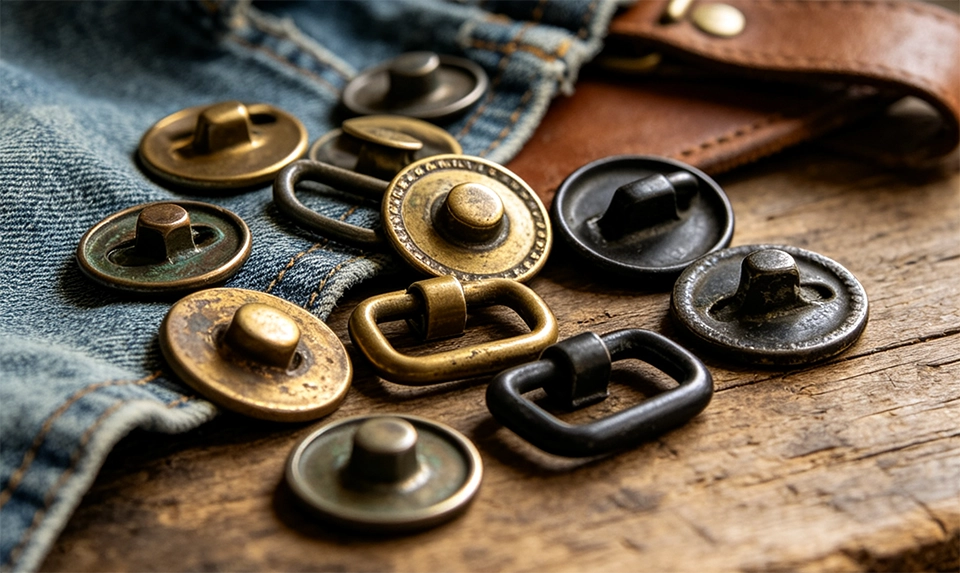
Engraved Custom Denim Rivets for Streetwear Denim

Introduction: The Rivet as Micro-Monument
A rivet is an infinitesimal thing. It measures mere millimeters. It hides in the corners of pockets, unnoticed by the casual observer. Yet for the streetwear connoisseur, the rivet is a site of significance—a micro-monument to brand identity, a whispered signal of authenticity. When engraved with a custom motif, the rivet transcends its utilitarian function. It becomes a collectible, an authentication mark, a piece of the brand’s soul rendered in metal. This article examines the engraved custom denim rivet as a strategic instrument for streetwear denim brands, exploring its history, metallurgy, design grammar, and production pathways.
The Historical Provenance of the Denim Rivet
Jacob Davis, Levi Strauss, and the Patent of 1873
The rivet entered denim history through necessity. Jacob Davis, a Nevada tailor, sought to reinforce the stress points of work trousers for a customer who strained the pockets. His solution—copper rivets at pocket corners—was patented in 1873 with Levi Strauss. The rivet was born as pure function.
From Reinforcement to Aesthetic Signature
Over a century later, the rivet has become more than reinforcement. It is an aesthetic signature. Brands emboss logos on rivets, plate them in exotic finishes, and engrave them with motifs. The rivet communicates quality, heritage, and attention to detail.
Defining the Engraved Custom Rivet
Engraving Versus Debossing, Embossing, and Etching
Engraving removes material from a surface, cutting lines and shapes into the metal. Debossing presses a design into the surface without removing material. Embossing raises the design. Etching uses acid to corrode the surface in patterns. Each technique yields a distinct visual and tactile result.
The Distinction Between Functional and Decorative Rivets
Functional rivets secure fabric—they hold pocket corners, reinforce stress points. Decorative rivets serve no structural purpose; they exist solely for visual impact. Engraved rivets may serve either function, but their value lies in their decorative and branding potential.
Why Streetwear Embraces the Engraved Rivet
The Aesthetics of Micro-Detail
Streetwear culture prizes detail. The tiny, the subtle, the easily missed—these are the markers of insider knowledge. An engraved rivet rewards close inspection. It transforms a garment from merchandise into an artifact.
Scarcity, Authenticity, and Subcultural Signaling
Engraved rivets are more expensive to produce than blank hardware. They signal investment and seriousness. For subcultures that value authenticity, they function as proof of legitimacy—a way for brands to demonstrate commitment beyond marketing rhetoric.
The “If You Know, You Know” Principle
The engraved rivet operates on the principle of insider recognition. Those who know, know. The rivet is a covert communication channel, legible only to those who possess the cultural capital to look.
Rivet Anatomy and Classification
Burrs, Posts, Caps, and Tack Assemblies
A rivet comprises a burr (the backing washer), a post (the shaft), and a cap (the visible head). In tack assemblies, the post and cap are a single unit. Understanding these components is essential for specifying custom rivets.
Standard, Decorative, and Concealed Rivets
Standard rivets protrude slightly from the fabric. Decorative rivets may be larger, ornate, or jeweled. Concealed rivets hide beneath fabric layers. The choice depends on the design intent.
Size Nomenclature and Gauge Standards
Rivet sizes are expressed in gauge (wire diameter) and length. Common sizes for denim include 9mm, 10mm, and 11mm caps. Specifications must be precise to ensure compatibility with setting equipment.
Metals and Alloys for Rivet Manufacture
Brass, Copper, and Zinc Alloy Characteristics
Brass offers a warm, golden hue and excellent malleability. Copper provides a reddish tone and develops patina. Zinc alloy is economical and versatile but less durable. Each metal dictates the engraving’s appearance and longevity.
Stainless Steel and Its Finishing Challenges
Stainless steel resists corrosion but is difficult to engrave. It requires specialized tooling and slower production speeds. Its durability suits high-wear applications.
Nickel Restrictions and Skin Sensitivity Compliance
Nickel can cause skin sensitization. Regulations such as REACH (EU) and CPSIA (US) restrict nickel release from jewelry and apparel hardware. Nickel-free plating alternatives exist but must be specified.
Engraving Techniques and Their Signatures
Hand Engraving: Artisanal Imprecision as Virtue
Hand engraving, executed with a graver or burin, yields unique, slightly irregular marks. The imperfection is the signature. Hand engraving suits limited editions and premium applications.
Die-Striking and Coining: Precision at Volume
Die-striking involves forcing metal into a die under high pressure, transferring the engraved design. Coining is a similar process with finer detail. Both techniques enable high-volume production with consistent results.
Laser Engraving: Depth Control and Fine Detail
Laser engraving vaporizes metal with focused light. It accommodates fine detail and precise depth control. Laser engraving is ideal for prototypes and small batches.
CNC Milling and Micro-Engraving for Prototypes
CNC milling cuts designs into metal with rotating tools. It is slower than die-striking but offers flexibility for prototyping and small runs.
Plating and Patination: The Chromatic Palette
Antique Brass, Gunmetal, and Black Nickel
Antique brass offers a warm, aged appearance. Gunmetal provides a dark, industrial aesthetic. Black nickel delivers a sleek, modern finish. Plating colors must align with the brand’s palette and the garment’s overall aesthetic.
Copper, Bronze, and Oxidized Finishes
Copper and bronze platings evoke heritage and warmth. Oxidized finishes simulate age and wear. These options suit vintage-inspired streetwear.
PVD Coatings and Their Durability Advantage
Physical Vapor Deposition (PVD) coatings are exceptionally durable, resisting abrasion and corrosion. They maintain their appearance longer than electroplated finishes, justifying higher costs for premium applications.
Design Grammar for Engraved Motifs
Typographic Engraving: Wordmarks and Monograms
Typography at rivet scale demands simplification. Serif details may disappear. Sans-serif wordmarks or single-letter monograms often prove more legible.
Iconographic Engraving: Symbols, Crests, Sigils
Icons—arrows, stars, crosses, sigils—translate well to rivet scale. Their simple forms remain legible even when reduced to millimeters.
Abstract and Geometric Micro-Patterns
Abstract patterns—concentric circles, crosshatching, geometric tessellations—add texture without requiring legibility. They function as visual rhythm rather than communication.
Legibility at the Micron Scale
Minimum Stroke Width and Depth Ratios
Stroke width must exceed a minimum threshold to remain visible. Depth ratios determine whether the engraving catches light. Specifications must account for the metal’s hardness and the plating’s thickness.
Contrast, Reflectivity, and Readability
Contrast between engraved recesses and surrounding surfaces determines legibility. Plating that fills recesses can obscure the design. The engraver must balance depth, plating, and finish.
The Limits of the Human Eye
At a certain scale, engraving becomes invisible to the naked eye. The design must be legible at intended viewing distances—whether arm’s length or close inspection.
Placement Strategy Across the Garment
Pocket Corners: The Traditional Anchor
Pocket corners are the traditional location for rivets. They reinforce stress points and provide a visible branding opportunity. Engraved pocket rivets are the most common application.
Fly, Waistband, and Yoke Rivets
Rivets at the fly, waistband, or yoke offer alternative placements. These locations are less conventional but equally visible. They can create a cohesive hardware narrative across the garment.
Sleeve, Cuff, and Hem Placements on Jackets
On denim jackets, rivets may appear at sleeve cuffs, hems, or yoke seams. These placements extend the branding story beyond the traditional pocket corner.
Rivets on Non-Denim Streetwear Substrates
Chinos, Canvas, and Twill Applications
Engraved rivets are not confined to denim. Chinos, canvas, and twill accept rivets, extending branding across a brand’s entire range.
Leather and Coated Fabric Considerations
Leather and coated fabrics require specialized rivet setting techniques. The rivet must penetrate without cracking or delaminating the material.
Technical Outerwear and Performance Fabrics
Performance fabrics—Gore-Tex, softshell, ripstop—demand lightweight, corrosion-resistant rivets. The hardware must not compromise the fabric’s technical properties.
Custom Dies: Engineering and Economics
Die Fabrication: Steel Selection and Tolerances
Custom dies are fabricated from hardened steel. Tolerances must be precise—deviations of microns can render the engraving illegible. Die fabrication is a specialized skill.
Die Costs and Amortization Across Production Runs
Die costs range from hundreds to thousands of dollars. These costs amortize across production runs. High-volume orders absorb die costs more easily than small batches.
When Custom Dies Cease to Be Economical
For limited editions or one-off projects, custom dies may be uneconomical. Laser engraving or CNC milling offer alternatives for small runs.
The Rivet as Brand Signature
Consistency Across Collections and Categories
A consistent rivet design across collections and categories creates a recognizable signature. Consumers learn to identify the brand by its hardware.
Collector Appeal and Authentication
Engraved rivets appeal to collectors. They serve as authentication marks, distinguishing genuine products from counterfeits.
Counterfeiting Risks and Mitigation
Counterfeiters may replicate rivets. Complex engravings, PVD coatings, and serialized marks raise the barrier to imitation.
Hardware Integration with Other Branded Components
Coherence with Buttons, Zippers, and Snaps
Rivets must cohere with buttons, zippers, and snaps. Finish, color, and design language should align across all hardware components.
Color Harmony and Finish Matching
Mismatched finishes—shiny rivets with matte buttons—create visual discord. Finish matching ensures a unified aesthetic.
The Risk of Visual Discord
Incoherent hardware undermines the brand’s credibility. Every component must serve the whole.
Manufacturing Pathways for Engraved Rivets
Rivet Specialists Versus General Hardware Suppliers
Rivet specialists possess expertise in engraving, plating, and setting. General hardware suppliers may lack this specialization. The choice depends on the complexity of the design and the volume required.
Tooling Lead Times and Production Scheduling
Custom die fabrication requires lead time—often two to four weeks. Production scheduling must account for this delay.
Quality Control for Engraved Hardware
Inspection verifies engraving depth, plating uniformity, and dimensional accuracy. Defective rivets must be rejected before installation.
Installation and Attachment Methods
Hand-Setting Versus Press-Based Attachment
Hand-setting uses a hammer and setter. Press-based attachment uses a rivet press. The latter ensures consistency and speed for production runs.
Rivet Setting Machines and Die Compatibility
Rivet setting machines require dies compatible with the rivet’s size and design. Incompatible dies cause deformation or incomplete setting.
Common Installation Defects and Their Causes
Defects include crushed caps, misaligned burrs, and loose settings. These defects arise from incorrect die sizes, excessive pressure, or operator error.
Durability, Corrosion, and Wear
Salt Spray Testing and Corrosion Resistance
Salt spray testing simulates exposure to corrosive environments. Rivets must resist corrosion for the garment’s expected lifespan.
Abrasion and the Longevity of Engraved Detail
Abrasion wears away engraving over time. Depth and plating determine longevity. Shallow engravings disappear quickly.
Patina Development as Aesthetic Evolution
Some metals develop patina—a natural oxidation that adds character. Patina can be a feature or a flaw, depending on the brand’s aesthetic.
Sourcing and Minimum Order Quantities
MOQs for Custom Engraved Rivets
MOQs for custom rivets typically range from 1,000 to 10,000 pieces. Low-volume orders may be possible with laser engraving.
Stock Hardware Versus Bespoke Tooling
Stock hardware offers speed and low cost but no differentiation. Bespoke tooling offers uniqueness at higher cost and longer lead time.
Lead Times and Replenishment Planning
Lead times range from two to eight weeks depending on complexity. Replenishment planning ensures that hardware remains available for reorders.
Quality Assurance and Compliance
Pull Testing and Tensile Strength Standards
Pull testing verifies that rivets withstand tension without failing. Standards vary by application and material.
CPSIA, REACH, and Nickel Release Regulations
Regulations restrict nickel release and hazardous substances. Compliance is mandatory for export markets.
Documentation and Traceability
Documentation—material certificates, test reports—provides traceability. Traceability supports claims of quality and compliance.
Common Pitfalls in Engraved Rivet Production
Shallow Engraving and Illegibility
Shallow engraving disappears after plating or wear. Depth specifications must be enforced.
Inconsistent Plating Across Batches
Plating inconsistency creates visible mismatches. Quality control must verify color and finish across batches.
Over-Engineering and Cost Escalation
Excessive complexity increases cost without proportional benefit. Simplicity often yields better results at rivet scale.
The Future of Engraved Hardware
Digital Micro-Manufacturing and On-Demand Tooling
Digital manufacturing enables on-demand tooling and small-batch production. Custom rivets become accessible to emerging brands.
Sustainable Metals and Recycled Alloys
Recycled brass and copper reduce environmental impact. Sustainable hardware appeals to conscientious consumers.
Smart Hardware and Embedded Identity
Smart hardware—embedded NFC chips or QR codes—could authenticate products and enable digital experiences.
Conclusion: The Infinite Smallness of Brand
The engraved custom denim rivet is a study in contradiction. It is tiny, yet it carries the weight of brand identity. It is functional, yet it exists primarily for aesthetic and symbolic purposes. It is mass-produced, yet it feels personal, artisanal, secret. For streetwear brands, the rivet is a canvas of infinite smallness—a place where the brand’s name, logo, or sigil can live in quiet perpetuity. The casual observer will never notice. The connoisseur will never forget.