Don't miss our holiday offer - up to 50% OFF!

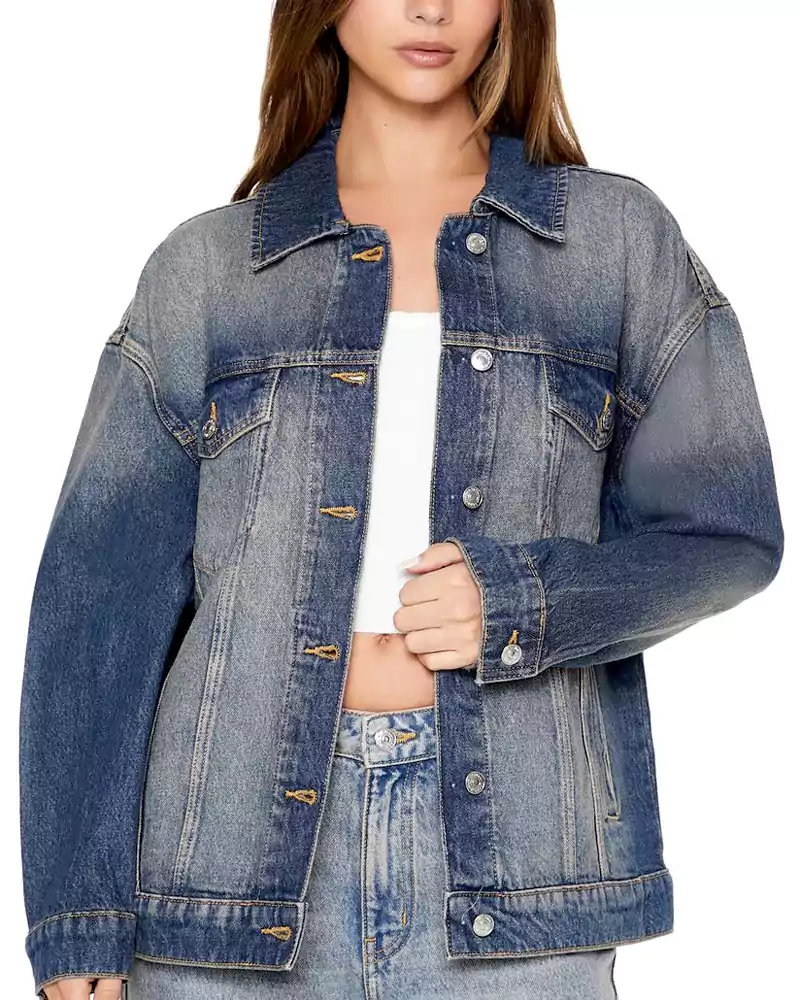
Custom selvedge denim jacket manufacturer button vintage japanese cotton 14 15 oz raw fabric jean jackets for men

The Requisite Rigor of Custom Selvedge Denim Jacket Manufacturing
The manufacture of a custom selvedge denim jacket is an endeavor that rewards patience and punishes haste. It is a pursuit situated at the intersection of industrial production and artisanal craft, where the machinery employed is often older than the operators who tend it. For the brand or individual seeking a garment of singular quality—a men’s denim jacket wrought from Japanese cotton, woven at fourteen or fifteen ounces, and destined to bear the honed patina of raw denim—the manufacturer occupies a position of extraordinary influence. This entity must possess not merely the capacity to cut and sew, but the discernment to recognize that certain fabrics and certain constructions cannot be rushed. The selvedge denim jacket, in its finest iterations, is an heirloom in waiting. Its fabrication demands a manufacturer who understands this implicitly.
Selvedge Denim: The Artisanal Fabric at the Heart of the Garment
Selvedge denotes a method of weaving, not a mere designation of origin. The term derives from “self-edge,” referring to the clean, tightly woven band that runs along both edges of fabric produced on a shuttle loom. This loom, a relic of a bygone industrial era, propels a single weft thread back and forth across the warp, rather than employing the rapid, multi-thread projectiles of modern mass-production machinery. The consequence is a fabric of remarkable density, imbued with an irregular texture and a durability that modern counterparts struggle to emulate. The selvedge edge itself—often adorned with a colored thread, such as the iconic red—serves as a guarantor of authenticity. For a custom denim jacket, the incorporation of this edge into the garment’s design, perhaps along the back yoke or within a seam, transforms a mere article of clothing into a conversation piece .
Raw Denim: The Unwashed Canvas for Individual Patina
Raw denim, sometimes called dry denim, is fabric in its most pristine and uncompromising state. It has emerged from the loom and undergone no laundering, no chemical softening, no artificial distressing. The indigo dye clings tenaciously to the surface of the cotton yarns, having been applied through repeated dipping and oxidation in a process known as rope dyeing. The core of each yarn remains undyed and white . When a jacket is constructed from raw denim, the wearer becomes the final agent in its manufacture. Every crease at the elbow, every fold at the chest, every abrasion from a seatbelt or a bag strap etches itself into the fabric’s memory. The fades that emerge over months and years are not merely aesthetic effects; they are cartographic records of a life lived in the garment. A manufacturer who specializes in raw denim understands that the jacket leaving the factory is not a finished product but a beginning .
Japanese Cotton and the Cultivation of Superior Fade Potential
The provenance of the cotton fiber exerts a profound influence upon the fabric’s capacity for beautiful aging. Japanese denim manufacturers have elevated the sourcing of cotton to something approaching a philosophical discipline. They favor long-staple varieties—Zimbabwean cotton, Texas cotton, and certain American and Brazilian blends—for their superior length and strength . These fibers spin into yarns of exceptional uniformity and resilience, capable of withstanding the tensions of shuttle-loom weaving. Moreover, Japanese mills often employ cotton with a deliberate irregularity, blending yarns of varying thickness to create slub textures that yield vertical, high-contrast fades as the indigo abrades from the raised surfaces. This is not defect; it is engineered character, a phenomenon that a discerning manufacturer must know how to preserve rather than suppress .
The 14 to 15 Ounce Paradigm: Weight as a Determinant of Character
Fabric weight, expressed in ounces per square yard, is a metric of considerable consequence. A 14-ounce denim translates to approximately 475 grams per square meter, while 15 ounces approaches 509 grams per square meter . This range occupies a fertile middle ground. Heavier than the lighter fabrics suited to summer shirts, yet not so ponderous as the 17-ounce and 21-ounce denims that require a period of acclimatization, 14 to 15 ounces offers a jacket that feels substantial without being prohibitive. The fabric possesses sufficient body to maintain the architectural lines of a classic denim jacket—the structured shoulders, the defined chest pockets, the slightly cropped waist. Yet it remains pliable enough to break in within a reasonable timeframe. For men’s jackets intended for daily wear, this weight range represents a near-ideal equilibrium .
Button Selection: The Overlooked Element of Denim Jacket Distinction
The hardware of a denim jacket is a detail too often consigned to afterthought. Yet buttons are points of tactile engagement, the interfaces through which the wearer experiences the garment daily. For a custom selvedge jacket, button selection merits deliberate consideration. The traditional material is metal—brass, steel, or die-cast alloys—often finished to appear aged or tarnished to complement the raw denim aesthetic . Rivet buttons, a category specifically designed for denim garments, offer a robustness appropriate to the fabric’s weight . The color of the button must harmonize with the indigo hues, and its weight must feel commensurate with the jacket’s heft. A plastic button on a 15-ounce selvedge jacket would be an incongruity, a discordant note in an otherwise harmonious composition. The manufacturer who understands this will guide the client toward hardware that honors the garment’s intended caliber.
Manufacturing Considerations for the Men’s Denim Jacket Silhouette
The men’s denim jacket possesses an established vernacular—the Type I, Type II, and Type III archetypes, each with its own proportions and details. Custom manufacturing must navigate between fidelity to these traditions and the client’s desire for differentiation. The pattern-making and cutting stages are critical. Selvedge fabric is narrow, typically only 70 to 80 centimeters in width, demanding careful layout to minimize waste . The sewing must accommodate the fabric’s density and rigidity, often requiring specialized machines. Furthermore, the manufacturer must advise on pre-shrinking protocols. Unsanforized raw denim will shrink significantly upon first wash, potentially as much as ten percent, and the jacket’s sizing must anticipate this transformation . A jacket cut without this foresight may fit perfectly in its raw state and become unwearable after its first exposure to water.
The Convergence of Heritage Production and Contemporary Demand
The market for custom selvedge denim jackets, while niche, is animated by a sophisticated and devoted clientele. These are individuals who value provenance, tactility, and the narrative embedded in a garment’s production. They are not merely purchasing a jacket; they are investing in a process. The manufacturer who serves this market must therefore function not only as a producer but as a custodian of craft. This entails securing access to authentic Japanese selvedge fabric, maintaining relationships with mills that still employ shuttle looms, and preserving the sewing techniques that such fabric demands. The economics of minimum order quantities and lead times must be navigated, but the fundamental proposition remains constant: a custom selvedge denim jacket is an object of enduring value, and its manufacture is an act of commitment to principles that transcend seasonal trends .