Don't miss our holiday offer - up to 50% OFF!

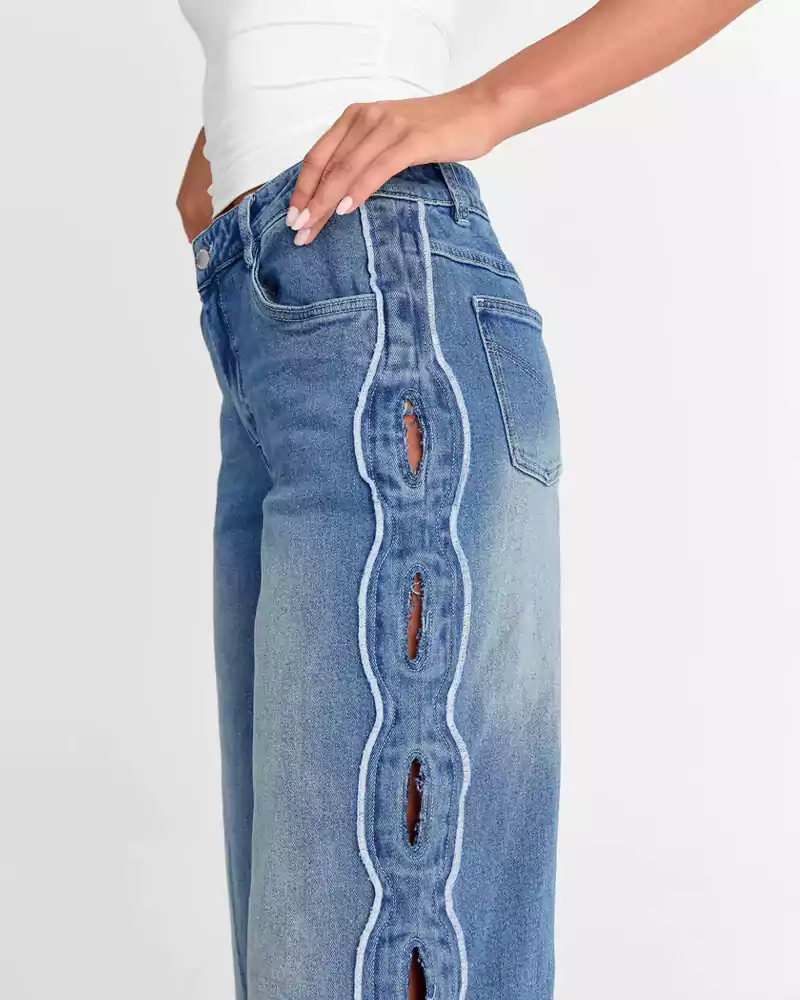
Custom denim baggy pants with embroidery

Introduction: The Embroidered Baggy Denim Pant as a Canvas of Expression
The baggy denim pant has undergone a remarkable rehabilitation. Once dismissed as a relic of 1990s excess, it has been reclaimed by a generation seeking comfort, volume, and a rejection of the skinny-fit orthodoxy. Into this silhouette, brands and artisans have introduced a decorative intervention of considerable antiquity: embroidery. The custom embroidered baggy denim pant is thus a garment of dual lineage—a product of contemporary streetwear culture and an inheritor of textile traditions that predate the industrial revolution. This treatise examines the manifold dimensions of this garment, from its cultural antecedents to its technical production.
The Baggy Silhouette: A Cultural and Kinesthetic Survey
Lineage from Skater and Hip-Hop Subcultures
The baggy silhouette emerged from the convergence of skateboarding and hip-hop culture in the late 1980s and 1990s. Skaters required pants that permitted unimpeded movement and resisted abrasion; the resulting garments were voluminous, durable, and deliberately unpretentious. Hip-hop artists, meanwhile, adopted oversized proportions as a statement of style and a rejection of the tailored conventions of mainstream fashion. The baggy denim pant became a uniform of sorts—a garment that signaled membership in a cultural tribe while prioritizing comfort and mobility over the strictures of slim tailoring.
The Y2K Revival and Contemporary Oversized Proportions
The Y2K aesthetic, with its embrace of excess and absurdity, has exerted a potent influence on contemporary fashion. The baggy denim pant has returned, but with refinements. The proportions are still generous, but the construction is more considered. The waist may be higher; the drape more deliberate. The contemporary baggy pant is not merely oversized; it is engineered to achieve a specific silhouette—one that is voluminous yet controlled, relaxed yet intentional.
Grading and Fit Considerations for the Baggy Cut
The baggy cut presents unique challenges in pattern grading. Unlike slim or straight fits, the baggy silhouette is defined by its ease—the additional circumference that allows for a loose, draped appearance. The grading must preserve this ease across sizes. The leg opening, thigh width, and rise must all be scaled proportionally. A baggy pant that is too narrow in the thigh or too short in the rise will lose its defining character. The pattern engineer must therefore calibrate the grading to maintain the garment’s intended proportions.
The Embroidery Medium: Technique, Texture, and Durability
Distinguishing Embroidery from Printing and Appliqué
Embroidery is the art of decorating fabric with needle and thread. It is distinct from printing, which applies pigment to the surface, and from appliqué, which sews cut fabric shapes onto the garment. Embroidery creates a raised, tactile surface. The design is integrated into the fabric, not layered upon it. This integration accounts for embroidery’s superior durability and its distinctive aesthetic—a quality of depth and dimension that printing cannot replicate.
Thread Selection: Rayon, Polyester, and Metallic Filaments
The choice of thread is consequential. Rayon thread offers a lustrous sheen and a soft hand, making it suitable for decorative motifs on lighter denim. Polyester thread is more durable and colorfast, resistant to fading and abrasion—attributes of value for garments subject to frequent washing. Metallic threads, while visually striking, are more fragile and require careful handling. The thread selection must align with the garment’s intended use and care instructions.
Stitch Types and Density: Satin, Fill, and Chenille
Embroidery encompasses a variety of stitch types. Satin stitches create a smooth, raised column and are used for outlines and lettering. Fill stitches, which may be tatami or step-and-repeat, cover larger areas with a dense, uniform texture. Chenille embroidery—often used for varsity-style lettering and patches—employs a thicker thread and a chain-stitch construction to produce a plush, dimensional effect. The design’s complexity dictates the stitch types required, and the digitizer must optimize the file accordingly.
Design Possibilities: Where Embroidery Meets Denim
Placement Zones: Thigh, Knee, Hem, and Pocket
The baggy denim pant offers multiple zones for embroidery placement. The thigh, with its broad expanse, accommodates large motifs or intricate scenes. The knee—particularly in distressed styles—may feature smaller marks that interact with the fabric’s abrasions. The hem, whether raw or finished, can be embellished with borders or small repeated motifs. The back pocket, a traditional site for branding, may carry embroidered logos or decorative designs.
Motif Categories: Typographic, Botanical, Geometric, and Figurative
The motif repertoire is vast. Typographic embroidery—names, mottos, initials—offers a personal or brand-specific dimension. Botanical motifs, such as roses, vines, and leaves, evoke romantic or natural themes. Geometric patterns—diamonds, chevrons, grids—lend a structured, contemporary quality. Figurative embroidery, whether cartoonish or realistic, transforms the garment into a narrative canvas. The choice of motif should align with the brand’s aesthetic and the target consumer’s preferences.
Tonal Versus Contrast Embroidery
Tonal embroidery—thread matched to the denim’s hue—creates a subtle, textured effect. The design is felt as much as seen. Contrast embroidery—thread in a starkly different color—produces a bold, graphic statement. The choice between tonal and contrast depends on the intended effect. A tonal design may suit a premium, understated aesthetic; a contrast design may align with a more expressive, streetwear-oriented positioning.
The OEM and Custom Production Pathway
The Tech Pack and Embroidery Digitizing
The Tech Pack for an embroidered baggy denim pant must include precise specifications for the embroidery. The artwork must be digitized—converted into a stitch file that directs the machine. The digitizing process determines stitch density, underlay, and sequencing. A poorly digitized file will produce puckering, thread breaks, and an unsatisfactory appearance. The Tech Pack should specify the stitch count, the thread colors, and the placement coordinates.
Minimum Order Quantities and Sampling Protocols
MOQs for custom embroidered denim vary widely. Domestic decorators may accommodate single-piece orders on blank garments; overseas manufacturers typically require 50 to 200 pieces per style. The sampling process for embroidered denim involves the creation of a pre-production sample with the final embroidery applied. This sample is evaluated for stitch quality, placement accuracy, and color fidelity. Revisions may be required before bulk production commences.
Sourcing: Domestic Decorators Versus Overseas Manufacturers
The sourcing decision hinges on the depth of customization required. A domestic decorator can embroider onto a blank baggy denim pant sourced from a wholesale supplier, offering speed and lower minimums. An overseas manufacturer can produce the garment from scratch—custom silhouette, custom wash, custom hardware—with embroidery integrated into the production line. The former is suitable for small runs and quick turnarounds; the latter is appropriate for brands seeking proprietary designs and larger volumes.
Fabric and Wash Considerations for Embroidered Denim
Denim Weight and Its Effect on Embroidery Stability
The weight of the denim influences the embroidery’s stability. Heavier denims—12 ounces and above—provide a stable foundation that resists distortion. Lighter denims may require additional backing or stabilizer to prevent puckering. The pattern engineer must account for the fabric’s behavior during the embroidery process and specify appropriate stabilizers.
Wash Sequencing: Before or After Embroidery
The sequencing of wash and embroidery is a critical decision. If the garment is washed before embroidery, the fabric will have already undergone its shrinkage and color transformation; the embroidery is applied to the finished fabric. If the garment is washed after embroidery, the wash may affect the thread’s color and sheen. In general, washing before embroidery is preferable for ensuring colorfastness and dimensional stability.
Colorfastness and Thread Compatibility
The thread must be compatible with the denim’s dye and the wash process. Some threads may bleed or fade when exposed to the chemicals used in industrial washing. The thread manufacturer’s specifications should be consulted, and wash testing should be conducted to verify performance. The goal is a garment that retains its embroidered design through repeated washing and wear.
Quality Assurance in Embroidered Baggy Denim Production
Stitch Density and Puckering Control
Puckering—the unwanted gathering of fabric around embroidery—is a common defect. It results from excessive stitch density, inadequate backing, or improper thread tension. The digitizer must calibrate the stitch count to the fabric’s weight and stability. Quality control should include visual inspection for puckering and measurement of the embroidery’s dimensions against the specification.
Thread Tension and Backing Stabilizers
Thread tension affects both the appearance and the integrity of the embroidery. Tension that is too tight will pull the fabric; tension that is too loose will produce loops and loose stitches. The machine operator must monitor tension throughout production. Backing stabilizers—cut-away or tear-away—provide additional support and must be specified in the Tech Pack.
Wash Testing and Durability Verification
The finished garment should be subjected to wash testing to verify the embroidery’s durability. The garment is washed according to the care instructions, and the embroidery is inspected for fading, fraying, or detachment. Any defects identified in testing must be addressed before bulk production is approved.
Styling and Market Positioning
The Embroidered Baggy Pant in Streetwear Aesthetics
The embroidered baggy denim pant occupies a distinctive position in streetwear. It is at once casual and ornamental, rugged and refined. It pairs with oversized hoodies, graphic tees, and chunky sneakers. The embroidery adds a note of personalization, a mark of distinction within a sea of uniform denim. For brands targeting the streetwear consumer, the embroidered baggy pant offers a vehicle for creative expression and differentiation.
Gender-Neutral and Women’s Interpretations
The baggy silhouette is inherently gender-neutral. It flatters a range of body types and communicates a relaxed, unpretentious attitude. Women’s interpretations may adjust the rise or the leg opening, but the essential character remains. The embroidery motifs may be calibrated to different audiences—botanical and romantic for some, geometric and assertive for others—but the garment’s foundation is universal.
Conclusion: The Strategic Value of Embroidered Baggy Denim
The custom embroidered baggy denim pant is a garment of considerable strategic value. It combines the cultural resonance of the baggy silhouette with the tactile luxury of embroidery. It offers brands a canvas for creative expression and a means of differentiation in a crowded market. The production pathway—from Tech Pack through digitizing, sampling, and bulk manufacturing—is a discipline of specification and verification. For brands willing to engage this process, the rewards are substantial: a garment that is at once contemporary and timeless, utilitarian and ornamental, mass-produced and meticulously crafted.