Don't miss our holiday offer - up to 50% OFF!

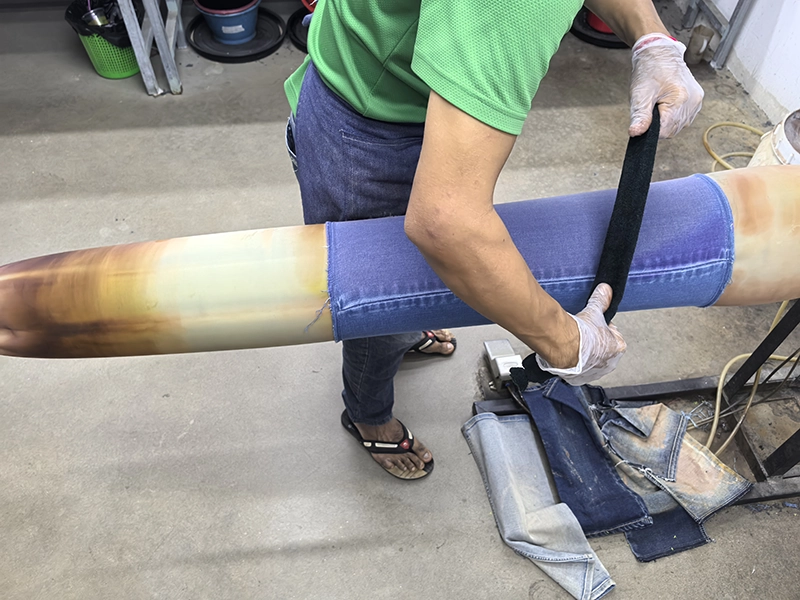
Denim Pants Factory: Expert in Manufacturing Custom Fit Ladies Jeans for OEM

In the fast-paced world of fashion, denim remains the undisputed king of casual wear. It is a fabric of heritage, attitude, and endless versatility. However, for global brands, retailers, and startups, the journey from a sketch on a napkin to a perfectly fitted pair of ladies’ jeans on a shelf is fraught with complexity. This is where a specialized Denim Pants Factory becomes more than just a supplier—it becomes a strategic partner.
As an expert in Manufacturing Custom Fit Ladies Jeans for OEM (Original Equipment Manufacturing), we understand that “fit” is the soul of a jean. Unlike men’s standard sizing, women’s denim requires a nuanced understanding of body geometry, style preferences, and fabric behavior. This article explores the depth of OEM expertise required to dominate the ladies’ denim market and how the right factory partner brings your brand’s vision to life with precision and scalability.
1. Decoding OEM in the Ladies’ Denim Sector
OEM in the context of ladies’ denim is a collaborative manufacturing process where a factory produces jeans based on a brand’s unique design specifications. The brand retains the rights to the intellectual property—the fit, the stitching pattern, the hardware—while the factory provides the technical muscle to mass-produce it .
1.1 Beyond Basic Production
For a denim pants factory claiming expertise, OEM is not a one-size-fits-all transaction. It involves interpreting a “tech pack” (a document containing measurements, design sketches, and construction details) and transforming it into a physical product that matches the designer’s intent. This requires a deep investment in Research & Development (R&D). Leading factories utilize 3D prototyping to replicate designs accurately before bulk production, ensuring fit consistency across a diverse range of sizes, often from size 00 to 24 or beyond .
1.2 The Complexity of Women’s Sizing
The “Custom Fit” aspect is paramount. Women’s bodies vary significantly in hip-to-waist ratios, thigh circumference, and rise preferences. An expert OEM manufacturer employs experienced pattern graders who understand that a “size 28” in a high-waisted skinny cannot simply be scaled up from a mid-rise straight leg. They use Computer-Aided Design (CAD) systems to adjust patterns, adding or reducing space where the body demands it, ensuring the jeans are flattering rather than just wearable -2-3.
2. The Anatomy of Customization: From Fabric to Finish
Expertise in ladies’ jeans manufacturing is defined by the depth of customization offered. A true partner provides a blank canvas for brands to express their identity.
2.1 Fabric Sourcing and Innovation
The journey begins with the cloth. Denim is no longer just cotton; it is a high-performance textile. An expert factory maintains strong relationships with fabric mills to source everything from rigid selvedge for the premium market to performance stretch (typically 92% cotton blended with 6-8% elastane or recycled polyester) for all-day comfort .
- Sustainable Options: With the rise of eco-conscious consumerism, factories must offer sustainable alternatives like organic cotton, recycled denim (often made from post-consumer PET bottles), and fabrics using low-impact dyes .
- Weight and Hand-feel: The “hand-feel” and weight (measured in ounces) are critical. A lightweight 8oz denim is perfect for summer jeggings, while a sturdy 14oz fabric is required for structured, workwear-inspired silhouettes .
2.2 Crafting the “Custom Fit”
The “Custom Fit” promise is delivered through meticulous pattern engineering. Expert manufacturers offer various fit modifications, such as:
- Curved waistbands designed to prevent gapping at the back for women with a pronounced lumbar curve.
- Gusseted crotches for mobility in active or skinny styles.
- Yoke angles adjustments to influence how the jean sits on the hips and eliminates sagging -2.
2.3 Hardware and Trim Storytelling
Every rivet, button, and zipper tells a story. OEM expertise extends to custom-molded hardware. Whether a brand requires nickel-free rivets for sensitive skin, antique brass buttons with a laser-etched logo, or branded zippers, the factory must have the supply chain connections to source and apply these details without damaging the fabric during the assembly process .
3. Mastering the Wash: The Chemistry of Style
If the fit is the soul of the jean, the wash is its personality. A plain pair of indigo pants can be transformed into a vintage “mom jean,” a edgy streetwear piece, or a sleek office-appropriate trouser through the magic of washing and finishing.
3.1 Advanced Washing Techniques
Expert factories house advanced wash houses capable of a vast spectrum of finishes:
- Traditional Finishes: Stone wash, enzyme wash, and acid wash for classic, broken-in looks.
- Laser Technology: Laser finishing allows for precise “whiskers” (the fade lines near the hips), distressing, and even pattern etching without the use of harmful chemicals or manual sandblasting, which is better for worker safety .
- Eco-Friendly Processing: Water scarcity is a global issue, and denim washing is traditionally water-intensive. Specialized factories now utilize ozone fading technology and waterless machines, which can reduce water consumption in denim processing by over 35% compared to traditional methods .
3.2 The “Pre-Production Fit Kit”
Before a single bulk order is cut, expert manufacturers insist on a rigorous sampling phase. They create “fit kits”—samples in multiple sizes—to be tested on real bodies or 3D scanning machines. This ensures that a high-stretch jegging doesn’t suffer from “seam puckering” (wavy seams) and that the “memory” of the stretch fabric allows it to snap back after wear .
4. The Manufacturing Floor: Precision at Scale
Transitioning from a perfect sample to mass production without losing quality is the ultimate test of a denim pants factory.
4.1 Specialized Machinery and Skilled Labor
Denim requires specific handling. Unlike sewing polyester blouses, denim needs machinery with high tensile strength to pierce through multiple layers of thick fabric and rivets.
- Cutting: Factories use automated die-cutting machines or computer-controlled cutters to ensure every panel is identical, minimizing fabric waste (typically targeting 8–12% waste) .
- Sewing: Skilled operators manage specialized machines for different tasks: chain-stitch machines for authentic roping effects on hems, flat-felled seam machines for durability on inner legs, and bartackers for reinforcing stress points like pocket corners .
4.2 Production Capacity and Turnaround
Time-to-market is critical in fashion. An expert factory operates with transparency regarding lead times. For a dedicated ladies’ jeans facility, a streamlined workflow might see:
- Sampling: 5-10 days for a first prototype.
- Bulk Production: 20-45 days depending on order quantity and wash complexity.
- Quality Control: Multi-stage inspections (fabric, in-line sewing, final garment) ensure defect rates stay below 2.5% .
| Production Stage | Typical Duration | Key Activities |
|---|---|---|
| Pattern & Sampling | 5 – 10 Days | Tech pack review, 3D prototyping, fit sample creation |
| Fabric Sourcing | 10 – 20 Days | Mill selection, greige goods ordering, dyeing/laser processing |
| Bulk Cutting | 3 – 5 Days | Automated spreading, precision cutting, bundling |
| Sewing & Assembly | 15 – 25 Days | Operator assembly, inseam/outseam stitching, pocket setting |
| Washing & Finishing | 5 – 10 Days | Enzyme wash, stone wash, laser detailing, drying |
| Final QC & Packing | 3 – 5 Days | AQL inspection, metal detection, poly bagging, cartoning |
5. Navigating the Global Market: Why Expertise Matters
The global denim landscape is competitive. Brands sourcing from China benefit from a “complete industrial chain” where fabric mills, trim factories, and washing plants are often located within the same geographic cluster, allowing for faster turnaround and easier communication .
5.1 Low MOQs and Scalability
The modern fashion economy is driven by data and “drops.” Startups need low Minimum Order Quantities (MOQs) to test the market, while established brands need the ability to scale up bestsellers immediately. An expert OEM partner offers flexibility—perhaps starting with 100 to 300 pieces per style for a capsule collection, but possessing the production lines to ramp up to thousands of pieces per month without a drop in quality -4-10.
5.2 Compliance and Ethical Manufacturing
Today’s brand owners are held accountable for their supply chain. Expert manufacturers operate with certifications like ISO 9001 (quality management), SA8000 (social accountability), and OEKO-TEX (product safety). They ensure fair wages, safe working conditions, and proper wastewater treatment, protecting the brand’s reputation as much as the product quality .
Conclusion: Your Partner in Denim Excellence – ZENITH CLOTHING
Navigating the complexities of denim production—from the initial concept of a custom-fit ladies’ jean to the final delivery of a retail-ready product—requires a partner with proven expertise, advanced technology, and an unwavering commitment to quality.
This is where ZENITH CLOTHING stands apart. We are not just a denim pants factory; we are the architects of your brand’s denim story. As a premier (clothing manufacturer) , we specialize in bringing your OEM visions to life with precision and passion.
At ZENITH CLOTHING, our brand is built on the pillars of:
- Custom Fit Mastery: Our in-house design team and pattern engineers work tirelessly to ensure that every high-waisted skinny, bootcut, or wide-leg silhouette we produce fits and flatters the modern woman.
- End-to-End Solutions: We manage the entire supply chain—from sourcing sustainable denim fabrics and custom-molded rivets to applying the perfect enzyme wash and attaching your custom leather patch.
- Scalable Expertise: Whether you are a startup requiring a low MOQ to launch a new idea or a global retailer needing a massive seasonal shipment, our factory scales to meet your demand without sacrificing craftsmanship.
- Uncompromised Ethics: We are committed to sustainable production methods, utilizing water-saving laser technology and ensuring every worker in our facility is treated with dignity and respect.
When you choose ZENITH CLOTHING, you are choosing a dedicated partner committed to excellence in every stitch. Let us manufacture the jeans that define your brand and captivate your customers.
Contact ZENITH CLOTHING today to discuss your next collection.