Don't miss our holiday offer - up to 50% OFF!

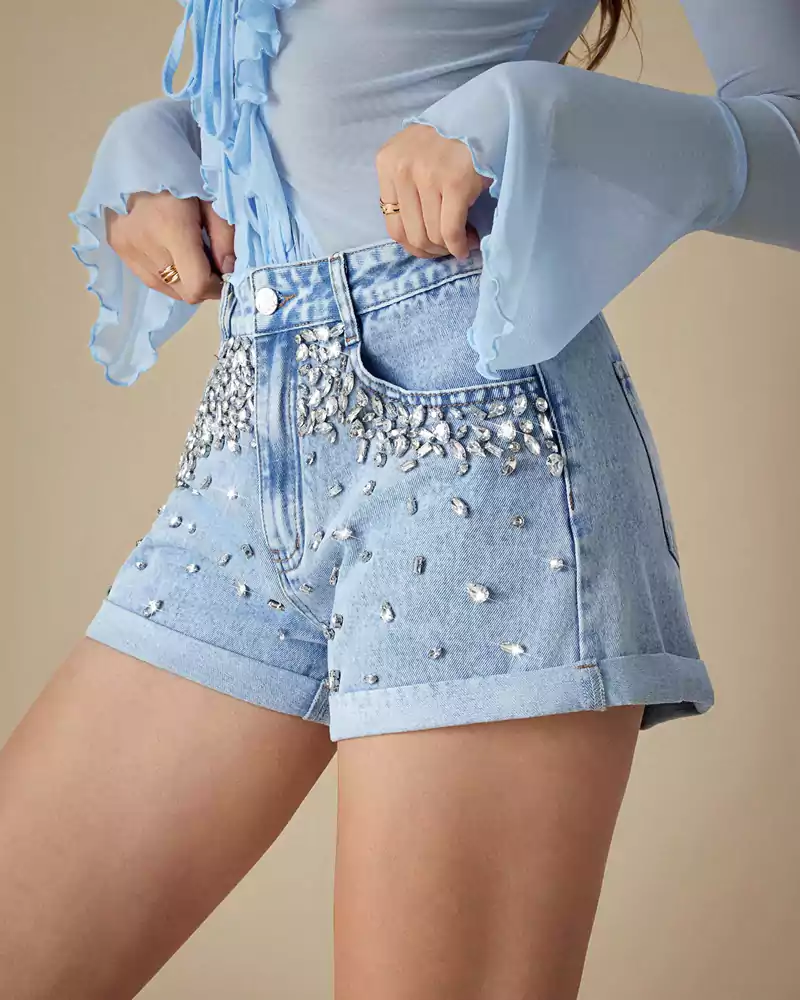
How to customize your denim shorts

In the ever-evolving world of fashion, denim shorts remain a perennial staple. From classic cuts to trendy, distressed styles, they are a canvas for personal expression and a must-have for any apparel brand’s collection. However, for businesses looking to make a mark—whether a startup launching its first line or an established retailer refreshing its inventory—the journey from a concept to a finished product on a large scale can be daunting. How do you maintain quality, consistency, and uniqueness when ordering thousands of units?
The answer lies in partnering with a specialized manufacturer who understands the intricacies of bulk production. This guide will walk you through the entire process of customizing denim shorts at scale, leveraging the power of OEM (Original Equipment Manufacturing) and ODM (Original Design Manufacturing) services. From selecting the perfect raw denim to managing global logistics, we will explore how to transform your vision into a high-quality, market-ready product.
The Foundation: Understanding OEM vs. ODM for Denim Shorts
Before diving into the customization process, it is crucial to understand the two primary models of manufacturing collaboration: OEM and ODM. Your choice between them will define the level of creative control and technical involvement you have in the project.
OEM (Original Equipment Manufacturing) is often referred to as “contract manufacturing.” In this model, you come to the table with a fully fleshed-out design. You have the specifications, the tech packs, and the exact vision for the short. The manufacturer’s role is to act as an extension of your production team, sourcing the precise materials and executing the construction according to your blueprints. This is ideal for established brands with dedicated design teams who have a specific fit and style that defines their identity.
ODM (Original Design Manufacturing) , on the other hand, is a collaborative partnership. Here, the manufacturer provides the design expertise. If you have a mood board, a collection of inspirational images, or just a vague idea of the silhouette you want, an ODM partner can bring it to life. They will help you select washes, choose hardware, and finalize patterns based on their technical knowledge of what works well in denim. This is particularly beneficial for newer brands or retailers looking to expand their offerings without investing heavily in an in-house design infrastructure.
At scale, a hybrid approach is often the most effective. You might leverage ODM services for the foundational silhouette—a classic high-waisted or a relaxed boyfriend fit—and then use OEM capabilities to add proprietary branding, unique distressing, or signature pocket designs.
Step 1: Sourcing and Selecting Raw Denim
The soul of any denim garment is the fabric. When customizing at scale, the choice of raw denim is the single most important decision you will make, impacting everything from durability and comfort to the final look of the wash. Denim is not a one-size-fits-all material; its weight, composition, and weave tell a story.
For bulk orders, you typically have two paths: using the manufacturer’s existing inventory of deadstock or standard fabrics, or sourcing a custom, exclusive fabric. Standard fabrics are cost-effective and have proven supply chains, ensuring that your production timeline remains on track. However, for brands aiming to differentiate themselves, sourcing a unique fabric is a powerful move. This could involve specifying a unique blend, such as adding a touch of elastane for stretch comfort, or choosing an organic or recycled cotton to appeal to eco-conscious consumers.
The weight of the denim, measured in ounces per square yard, is another critical factor. Lightweight denim (under 10 oz.) is perfect for summer shorts, offering breathability and a soft hand feel. Mid-weight denim (10-14 oz.) is the sweet spot for most brands, providing structure without being overly restrictive. Heavyweight denim (14 oz. and above) is chosen for its durability and rugged aesthetic, holding its shape perfectly but requiring a longer break-in period. A skilled manufacturer will guide you through these choices, providing fabric swatches and “hand-feel” samples before you commit to a full production run.
Step 2: Design, Prototyping, and the Art of the Fit
Once the fabric is selected, the design moves from concept to reality. This phase is about more than just aesthetics; it is about engineering a garment that fits a wide range of body types consistently. For bulk orders, consistency is king. A size 8 short in your first shipment must fit exactly the same as a size 8 short in your fifth shipment.
The process begins with a detailed tech pack. This document is the bible for your production run, containing flat sketches, measurement specs, stitch types, and construction notes. If you are using ODM services, your manufacturer will help you create this pack based on an existing sample or a detailed design brief.
The next critical step is prototyping and sampling. Never skip this step. A reputable manufacturer will create a prototype (often called a “fit sample”) for your approval. This sample allows you to see the design in three dimensions, feel the weight of the fabric with the intended hardware, and, most importantly, test the fit. It is common to go through two or three rounds of sampling—adjusting the rise, the leg opening, or the back pocket placement—until the garment is perfect. While this takes time, it mitigates the massive risk of producing thousands of shorts that don’t fit your target customer .
Key Design Elements to Customize at Scale:
- Silhouette: High-rise, mid-rise, low-rise; skinny, fitted, relaxed, or baggy.
- Inseam Length: From micro “hot pants” to knee-length “bermuda” shorts.
- Wash and Finish: Raw, stonewash, acid wash, enzyme wash, or rigid. This is a chemical process that can be extensively customized.
- Distressing: Laser-ripped knees, sanded whiskering, frayed hems, or cut-off edges.
- Closure: Buttons (custom branded) vs. zipper flies.
Step 3: The Manufacturing Process—From Cutting to Sewing
With an approved sample in hand, the factory gears up for bulk production. Scaling up from a single prototype to thousands of units requires a meticulously organized workflow. In a leading facility, the process is broken down into specialized stages to ensure both speed and quality.
First is the spreading and cutting stage. Layers of denim fabric, sometimes hundreds of plies high, are spread out on long cutting tables. To ensure precision, many modern factories now use CNC (Computer Numerical Control) cutting machines or laser cutters. These tools follow the digital pattern from your tech pack, cutting each piece with an accuracy that human hands cannot match. This automation is vital for consistency; every left front panel is identical to every other, ensuring that assembly is seamless.
Following cutting, the “cut parts” are bundled and sent to the sewing line. This is where the shorts truly come together. In a high-volume setting, assembly lines are set up using the “section system.” One operator might be responsible for sewing the back pockets, another for setting the zipper, and another for attaching the waistband. This division of labor allows workers to develop incredible speed and precision in their specific task. Throughout this process, inline quality control (QC) checkpoints are essential. Inspectors examine the stitching at key stages, catching issues like thread tension problems or misaligned seams before the short is fully assembled.
The final stage in the sewing room is the attaching of hardware and branding. This includes setting the rivets and burrs, attaching the buttons, and sewing in the leather or woven brand patch. For custom branding, this is where your logo becomes a permanent part of the garment.
Step 4: The Finishing Touch—Washes and Treatments
For denim, the sewing machine is only half the story. The true magic happens in the laundry and finishing department. This is where raw, rigid denim is transformed into the soft, beautifully colored shorts that consumers love. The finishing process is a science in itself and a key area for customization.
Once sewn, the garments are subjected to a variety of wet processes. The most common is stonewashing, where the shorts are tumbled in large industrial washing machines with pumice stones to soften the fabric and achieve that classic, worn-in look. Enzyme washes are used as a more environmentally friendly alternative, using biological enzymes to break down the indigo surface for a soft hand feel without the abrasion of stones.
For more distinctive aesthetics, manufacturers offer specialized techniques:
- Acid Washing: Using pumice stones soaked in bleach to create a high-contrast, marbled look that was iconic in the 80s and has seen a major revival.
- Laser Finishing: A high-tech, sustainable method where lasers are used to fade the indigo in specific patterns. This allows for precise, repeatable designs, such as “whiskers” on the thighs or “honeycombs” behind the knees, without using any water or chemicals.
- Hand Sanding and Grinding: Artisans use sandpaper or grinding tools to manually create distressed details like ripped knees and frayed hems. While labor-intensive, this adds a level of authenticity that is hard to replicate by machine.
- Tinting and Overdyeing: Adding a layer of color over the indigo, such as black, olive, or rust, to give the shorts a unique depth.
After washing, the shorts are dried, and many undergo a final boarding process, where they are pressed into shape using steam to ensure a crisp, retail-ready presentation.
Step 5: Branding, Packaging, and Global Logistics
A garment is not complete until it tells your brand’s story. The final step in the customization process involves the subtle, yet powerful, details of branding and packaging. When ordering at scale, these elements must be as consistent and high-quality as the shorts themselves.
Custom Branding goes far beyond the main patch on the waistband. It includes custom-designed buttons and rivets stamped with your logo, woven or printed care labels inside the garment, and even custom-printed pocket liners—a detail that delights customers every time they use them. These elements, while small, signal to the consumer that they are purchasing a premium, thoughtfully designed product.
Once the shorts are finished, they move to the packaging line. Here, they are fitted with size stickers, hang tags (which can be made from recycled paper and attached with custom twine), and anti-theft tags. The final step is folding and bagging. For bulk orders, deciding on the packing method is crucial. Basic polybagging protects the shorts during shipping to your warehouse. However, for direct-to-consumer brands, investing in custom branded boxes or compostable bags creates an “unboxing experience” that reinforces brand loyalty.
Finally, the logistics. A leading manufacturer acts as a partner in your supply chain, not just a vendor. They manage the complex documentation required for international shipping, including commercial invoices, packing lists, and certificates of origin. Whether you need the goods shipped by sea (FOB) for cost-efficiency or by air for speed, a reliable factory will coordinate the freight forwarding to ensure your bulk order arrives at your doorstep or distribution center on time, anywhere in the world.
Conclusion: Your Partner in Premium Denim Production
Customizing denim shorts at scale is a complex journey, but with the right partner, it is an incredibly rewarding one. It requires a facility that combines industrial efficiency with artisanal attention to detail—a place where laser cutters work alongside skilled seamstresses, and where chemical engineers perfect washes while logisticians map out global shipping routes.
This is where we come in. We are not just a factory; we are an extension of your brand.
We are a leading garment manufacturer specializing in high-volume, high-quality OEM and ODM services. From the moment you select your raw denim to the second your finished shorts are packed for worldwide delivery, our team is dedicated to excellence. We combine decades of technical expertise with modern manufacturing capabilities to ensure that your custom order—no matter the size—exceeds expectations.
Our brand is ZENITH CLOTHING. We invite you to partner with us to take your denim collections to the peak of quality and style.