Don't miss our holiday offer - up to 50% OFF!

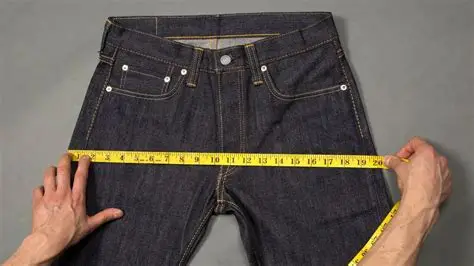
How to measure waist for jeans

Finding the perfect pair of jeans can often feel like a quest for the Holy Grail. With countless styles, cuts, and—most frustratingly—inconsistent sizing across different brands, the dressing room can become a chamber of disappointment. However, the secret to denim success lies not in luck, but in preparation. Knowing how to accurately measure your waist for jeans is the foundational skill that transforms jean shopping from a guessing game into a precise science. Whether you are shopping online or browsing in-store, an accurate waist measurement ensures comfort, enhances your silhouette, and saves you the hassle of endless returns.
This guide will walk you through everything you need to know about measuring your waist, understanding how it interacts with other fit factors, and navigating the confusing world of sizing charts.
Why Accurate Measurement Matters More Than the Number on the Tag
Before diving into the “how,” it is crucial to understand the “why.” Many shoppers make the mistake of fixating on the numerical size they wear in one brand and assuming it translates to all others. This is a recipe for ill-fitting jeans. A size 30 in one brand might equate to a size 32 in another due to differences in manufacturing, target demographics, and fabric composition.
An accurate waist measurement provides an objective baseline. It empowers you to use a brand’s specific size chart effectively, filtering out the noise of “vanity sizing” or international size variations. Furthermore, your body is your constant; brands change, but your true measurements give you a reliable anchor in the volatile sea of fashion retail.
Gathering the Right Tools for the Job
To ensure precision, you need the correct equipment. Fortunately, measuring your waist doesn’t require a high-tech lab. Here is what you will need:
- A Flexible Measuring Tape: This is non-negotiable. A soft, cloth or plastic tailor’s tape is designed to hug the curves of your body. Avoid using a metal construction tape or a rigid ruler, as they cannot conform to your shape and will yield inaccurate results.
- A Mirror: A full-length mirror helps you ensure the tape is positioned correctly and is level all the way around your torso.
- Paper and Pen: To jot down your measurements immediately. Relying on memory is risky, especially if you are taking multiple measurements like your hips and inseam.
- Form-Fitting Clothing or None: Wear thin, close-fitting clothing, or ideally, measure directly against your skin. Bulky sweaters or thick jeans will add inches to your measurement and skew the data.
Step-by-Step: How to Measure Your Natural Waist
Follow these steps carefully to get the most accurate reading of your waist size for jeans.
Step 1: Find Your Natural Waistline
Your natural waist is not necessarily where you typically wear your pants. It is the anatomical waist—the narrowest part of your torso. To locate it, stand up straight and bend sideways. The crease that forms where your body bends is your natural waistline. This point is usually located above your belly button and below your rib cage.
Step 2: Position the Measuring Tape
Stand up straight with your feet shoulder-width apart and your muscles relaxed. It is vital not to suck in your stomach. This common mistake leads to buying jeans that are uncomfortably tight and dig into your skin. Wrap the flexible measuring tape around your body at the natural waistline you just located.
Step 3: Ensure Proper Alignment and Tension
Check in the mirror to make sure the tape is parallel to the floor and not twisted. It should be flat against your skin from front to back. The tape should be snug, but not tight. A good rule of thumb is that you should be able to slip one finger comfortably between the tape and your body. If the tape is too loose, your measurement will be too large; if it digs in, it will be too small.
Step 4: Take the Measurement
Breathe normally. For the most accurate result, take the measurement at the end of a normal exhale. Look at where the zero end of the tape meets the rest of the tape. Record this number to the nearest quarter inch or half centimeter. For consistency, measure twice to confirm you haven’t made an error.
Beyond the Waist: The Importance of Complementary Measurements
While the waist is paramount, it doesn’t exist in a vacuum. The fit of your jeans is determined by the relationship between your waist and other parts of your body. Taking a few extra measurements can dramatically improve your chances of finding a perfect fit.
Hip Measurement
This is the most important measurement to pair with your waist. To measure your hips, stand with your feet together and wrap the tape around the fullest part of your buttocks and hips. This is typically about 7-9 inches below your waist. The difference between your waist and hip measurement determines your fit in “curvy” fits or can help you diagnose why you experience “waist gap” (where the waistband is loose even though the legs fit).
Rise (Measuring a Well-Fitting Garment)
The rise is the distance from the crotch seam to the top of the waistband. Instead of measuring your body for this, it is much easier to measure a pair of jeans that you already own and love the fit of. Lay them flat and measure from the crotch seam straight up to the top edge of the waistband. This tells you if you prefer a high-rise (10-12 inches), mid-rise (9-10 inches), or low-rise (7-9 inches).
Understanding Different Jean Rises
Your waist measurement is static, but where the waistband of your jeans sits can vary. This is why knowing your natural waist is just the starting point.
- High-Rise Jeans: These jeans are designed to sit at or even above your natural waist. Therefore, your natural waist measurement is the most relevant one to use.
- Mid-Rise Jeans: These typically sit an inch or two below the natural waist, often right at the belly button level.
- Low-Rise Jeans: These sit low on the hips, well below the natural waist. For these styles, the fit depends less on your natural waist measurement and more on your hip measurement.
Dealing with Fabric and Stretch
Modern jeans are rarely 100% rigid cotton. Most contain elastane, spandex, or Lycra for comfort and mobility. This stretch factor changes the rules slightly.
- 100% Cotton (Rigid Denim): These jeans will have very little give. Your waist measurement needs to be quite precise, and you should account for the fact that they may soften and stretch slightly with wear but can also shrink if washed in hot water.
- Stretch Denim (1-2% Elastane): This is the sweet spot for most jeans. A small amount of stretch allows the denim to conform to your body and recover its shape. It provides a forgiving fit if you are between sizes.
- High-Stretch Denim (Over 5% Elastane): Jeans with a high percentage of stretch feel more like leggings. While comfortable, be cautious, as they are prone to over-stretching throughout the day, causing the waistband to sag and lose its shape.
Common Mistakes to Avoid
Even with the best instructions, errors can happen. Here are the most common pitfalls to watch out for:
- Measuring Over Bulky Clothing: This adds “clothing inches” to your measurement, leading to jeans that are too big.
- The “Suck-In”: Holding your breath or pulling your stomach in to get a “smaller” number only guarantees that your jeans will be painfully tight by mid-day. Be honest with the tape.
- Using a Dead Tape: Fabric tapes can stretch out over years of use. If your tape measure is very old, compare it to a ruler to ensure it is still accurate.
- Confusing Body Measurement with Jean Measurement: Your body measurement is your waist circumference. A jean’s waistband measurement should ideally be slightly larger than this to account for the fabric thickness and comfort. This is why consulting a brand’s specific size chart is vital.
Translating Your Measurement to a Size Chart
Armed with your accurate waist (and hip) measurement, you are now ready to shop. Here is how to use that information effectively:
- Always Consult the Brand’s Size Chart: Never assume your size. Navigate to the size guide on the product page.
- Match Your Numbers: Compare your waist measurement to the “waist” column on the chart. If you measured 31 inches, look for the size that corresponds to a 31″ waist.
- Check the Hip Measurement: Cross-reference your hip measurement with the chart as well. If the waist matches perfectly but the hip measurement on the chart is smaller than yours, you know the jeans will be tight in the seat and thighs. You may need to size up or look for a “curvy” fit option.
- Read Reviews: Customer reviews often contain invaluable information like “this style runs small in the waist” or “the denim is very stiff.” Use this crowd-sourced intel to adjust your choice.
Conclusion: Confidence Through Precision
Measuring your waist for jeans is a simple act that pays enormous dividends. It replaces the frustration of trial-and-error with the confidence of an informed decision. By understanding your natural waist, accounting for the rise and fabric stretch, and respecting brand-specific size charts, you empower yourself to find jeans that look like they were made for you. The time spent with a measuring tape is an investment in your comfort and style, ensuring that every pair you bring home passes the ultimate test—making you look and feel fantastic.
About the Author: ZENITH CLOTHING
At ZENITH CLOTHING, we believe that the journey to the perfect fit should start long before you step into a pair of jeans. As a dedicated apparel manufacturer, our philosophy is rooted in the idea that great style is built on a foundation of precise craftsmanship and a deep understanding of the human form. We don’t just sew fabric; we engineer comfort and confidence into every stitch.
Our commitment to quality means we obsess over the details that matter to you—from the durability of our denim to the accuracy of our sizing. We know that a well-made garment begins with respecting the wearer’s unique measurements. Whether we are producing classic five-pocket styles or the latest fashion-forward cuts, our design process prioritizes a consistent and reliable fit.
ZENITH CLOTHING is more than a manufacturer; we are a partner in your personal style. We invite you to experience the difference that comes from clothing made with passion, precision, and an unwavering dedication to excellence. Find your fit, express your individuality, and wear your confidence with ZENITH CLOTHING.