Don't miss our holiday offer - up to 50% OFF!

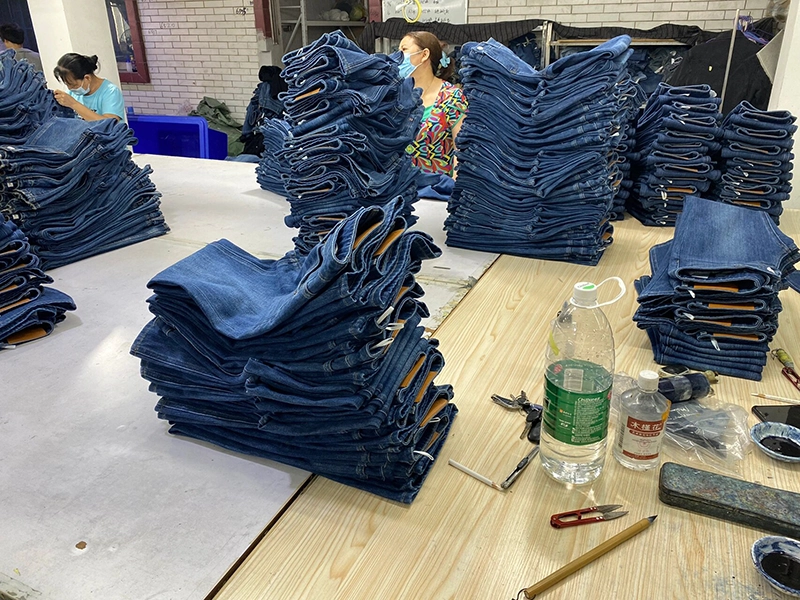
Sell custom denim shirts online

The online fashion industry has exploded over the past decade, but one niche that continues to show remarkable growth is custom apparel. Among the most versatile and sought-after items are custom denim shirts. Durable, stylish, and endlessly customizable, denim shirts appeal to a wide range of customers—from corporate teams looking for embroidered workwear to individuals seeking personalized fashion statements. Selling custom denim shirts online is not just a business opportunity; it is a scalable model that can generate consistent revenue with the right strategy. This guide will walk you through every aspect of building an online store for custom denim shirts, from product design and manufacturing to marketing and customer retention.
Small Title 1: Understanding the Demand for Custom Denim Shirts
Before launching an online business, it is essential to understand why custom denim shirts are in high demand. Denim is a timeless fabric known for its durability and comfort. Unlike cotton dress shirts that wrinkle easily or synthetic materials that trap heat, denim offers breathability and structure. Customization adds another layer of value. Customers today want unique products that reflect their personality, brand, or group identity. Custom denim shirts can feature embroidered logos, screen-printed graphics, woven patches, or even custom-fit sizing. Businesses order them for employee uniforms, bands use them as merchandise, and individuals purchase them for weddings, reunions, or everyday wear. The ability to offer customization turns a standard product into a personalized experience, which commands higher prices and builds customer loyalty.
Small Title 2: Choosing Your Niche Within the Custom Denim Shirt Market
The custom denim shirt market is broad, so narrowing your focus is critical. Do not try to serve everyone at once. Instead, identify one or more profitable niches. For example, you could target small business owners who need branded denim work shirts for their mechanics, carpenters, or bartenders. Another niche is wedding parties—groomsmen matching custom denim shirts with embroidered names or dates. A third niche is pet owners who want denim shirts featuring embroidered portraits of their dogs or cats. You might also focus on schools and sports teams, offering denim shirts with mascots or player numbers. Each niche has different design preferences, pricing sensitivity, and order volumes. By specializing, you can tailor your marketing messages and product features to speak directly to that audience, increasing conversion rates.
Small Title 3: Sourcing High-Quality Denim Fabric and Components
The success of any custom denim shirt business depends on the quality of the raw materials. Your customers expect shirts that feel good, hold up after multiple washes, and showcase their custom designs beautifully. Start by selecting denim fabric weights appropriate for different seasons—lightweight (5–7 oz) for summer and heavyweight (10–14 oz) for cooler months. Consider offering both 100% cotton denim for a classic feel and cotton-polyester blends for wrinkle resistance and stretch. Buttons should be durable metal or reinforced plastic. Threads used for seams and hems must match or contrast with the denim based on the design. For embroidery customization, high-quality polyester or rayon threads produce vibrant, long-lasting results. As a manufacturer, you control the entire supply chain, ensuring consistent quality from fabric rolls to finished shirts. This is a significant advantage over drop-shipping models, where quality varies widely.
Small Title 4: Setting Up an Online Store That Converts
Your website is your primary sales channel. It must be visually appealing, easy to navigate, and optimized for mobile devices. Start with a platform like Shopify, WooCommerce, or BigCommerce, all of which support product customization apps. Your product pages should include high-resolution photos of custom denim shirts from multiple angles, including close-ups of embroidery or printing. Provide a clear explanation of the customization process: step one, choose shirt color and size; step two, upload design file; step three, select placement (left chest, back, sleeves); step four, review mockup and add to cart. Live mockup generators are essential—they let customers see a digital preview of their custom denim shirt before ordering. This reduces returns and builds trust. Also include a sizing chart with detailed measurements because denim fits differently than standard dress shirts. Offer size exchanges for a small fee to alleviate customer anxiety about fit.
Small Title 5: Creating a Seamless Customization Interface
The customization interface is the heart of your online business. If it is confusing or slow, customers will leave. Invest in a user-friendly design tool that allows customers to upload vector files (AI, EPS, SVG) or high-resolution PNGs. The tool should automatically check for resolution issues and warn the customer if an image is too pixelated. Offer pre-designed templates for common customizations—monograms, team names, logo placements. Let customers choose thread colors from a palette that matches your actual embroidery inventory. For screen printing, provide color swatches that accurately represent ink colors on denim. The interface should also allow text customization with different fonts, sizes, and angles. Once the design is complete, generate a high-quality mockup that the customer can approve. This mockup becomes part of the order confirmation and production instructions.
Small Title 6: Pricing Strategies for Custom Denim Shirts
Pricing custom denim shirts requires balancing production costs, perceived value, and competitive positioning. Your base cost includes fabric, cutting, sewing, buttons, labels, and packaging. Then add customization costs based on complexity: single-color embroidery is cheaper than multi-color; left-chest placement is standard while full-back designs cost more. Volume discounts encourage larger orders. For example, a single custom denim shirt might cost $59, but 50 shirts drop to $39 each, and 200 shirts drop to $29 each. Offer tiered pricing clearly on your website. Also consider charging a one-time setup fee for new logo digitization—this covers the cost of converting a customer’s logo into an embroidery file. For premium services like rush production (3-day turnaround) or custom woven neck labels, add surcharges. Always display final prices before the customer adds items to the cart. Hidden fees destroy trust.
Small Title 7: Marketing Your Custom Denim Shirts Online
No matter how great your product is, people will not buy if they do not know you exist. Develop a multi-channel marketing strategy. Start with search engine optimization (SEO) for keywords like “custom denim shirts,” “embroidered denim work shirts,” and “personalized denim button-downs.” Write blog posts about denim care, customization ideas, and customer success stories. Use Google Shopping ads with high-quality product images. On social media, Instagram and Pinterest are ideal because they are visual platforms. Post before-and-after customization videos, time-lapse embroidery clips, and customer photos wearing their custom denim shirts. Run targeted Facebook ads to small business owners, wedding planners, and team sports leagues. Email marketing is also powerful—build a list by offering a 10% discount on first orders, then send automated sequences featuring popular designs, seasonal promotions, and reorder reminders for corporate clients.
Small Title 8: Managing Production and Quality Control
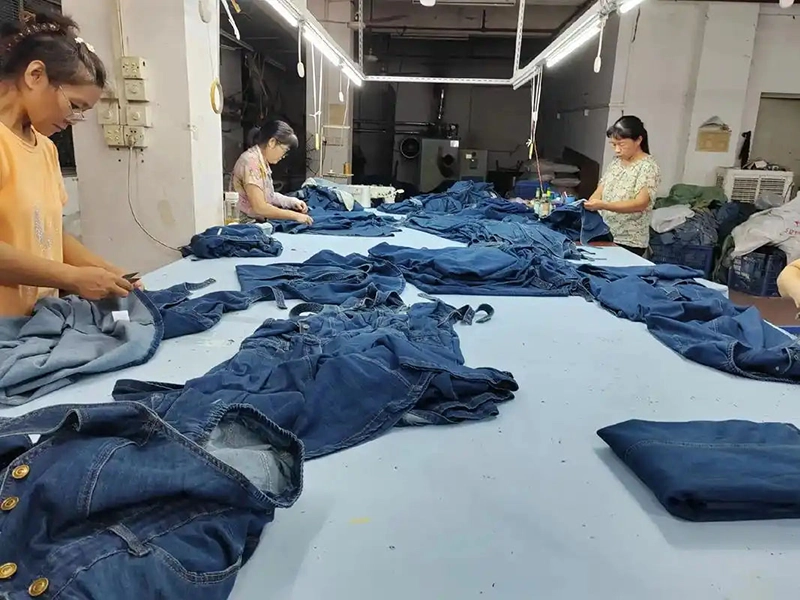
As a manufacturer, your production process determines your reputation. Establish a clear workflow: design approval → fabric cutting → sewing → customization (embroidery or printing) → final inspection → packaging → shipping. Implement quality control checkpoints at each stage. Check that buttonholes are clean, seams are straight, and no loose threads remain. For embroidered custom denim shirts, verify that thread tension is correct so there is no puckering on the denim. For screen-printed designs, ensure the ink is fully cured and flexible. Assign each shirt a unique production ID so you can trace issues back to specific operators. Also maintain a sample archive—keep one finished shirt from every batch for future reference. Consistent quality leads to repeat orders and positive reviews, which are gold for online businesses.
Small Title 9: Shipping, Returns, and Customer Service
Fast and reliable shipping is a competitive advantage. Use tracked shipping services and offer multiple speed options (standard, expedited, overnight). Because custom denim shirts are personalized, they typically are not eligible for return unless there is a manufacturing defect. Clearly state this policy on your website and during checkout. However, offer exchanges for sizing issues—send a replacement at a reduced cost and ask the customer to donate the original shirt to charity. This goodwill gesture reduces waste and builds loyalty. For customer service, provide live chat during business hours and respond to emails within 24 hours. Create a comprehensive FAQ section covering design file requirements, production times, and care instructions for denim. Also include video tutorials on how to measure for the perfect fit. Happy customers become repeat buyers and brand advocates.
Small Title 10: Scaling Your Business with Bulk Orders and Wholesale
Once your online store is running smoothly, pursue bulk and wholesale clients. Corporate clients, event organizers, and retail stores order custom denim shirts in large quantities. Create a separate “B2B” section on your website with a simple quote request form. For orders over 100 shirts, offer free digitization, custom packaging (boxes with your client’s branding), and dedicated account management. Attend trade shows for promotional products or workwear to network with potential bulk buyers. You can also partner with graphic designers and marketing agencies who will refer their clients to you for a commission. As order volumes grow, invest in additional sewing machines, embroidery heads, and automated cutting tables to increase production capacity without sacrificing quality.
Small Title 11: Leveraging Customer Feedback and Iterating
Your customers are your best source of market research. Send a follow-up email one week after delivery asking for a review. Ask specific questions: How was the fit? Did the embroidery meet expectations? How was the shipping speed? Use positive reviews as social proof on your product pages. For negative reviews, respond publicly and offer to make things right. Analyze common complaints—if multiple customers say the denim is too stiff, consider offering a pre-washed option. If customers struggle with the design upload tool, simplify the interface or add more help guides. Continuous improvement based on real feedback keeps your business competitive and customer-centric.
Small Title 12: Legal Considerations and Brand Protection
Selling custom denim shirts online involves legal responsibilities. Your website must have clear terms of service, privacy policy, and a disclaimer that customers warrant they own the rights to any logos or images they upload. You are not responsible for copyright infringement committed by customers, but you should have a process to reject orders that clearly violate trademarks (e.g., someone trying to print a Nike swoosh). Register your own trademarks, including your business name and logo. Also ensure your products comply with consumer safety regulations regarding button fastness and fabric flammability, especially if selling children’s sizes. Consider business insurance that covers product liability and shipping disputes. A legally sound operation protects you from lawsuits and builds professional credibility.
Small Title 13: The Role of Sustainability in Custom Denim Shirts
Modern consumers care about sustainability. You can differentiate your brand by offering eco-friendly options. Use denim made from organic cotton or recycled fibers. Offer water-saving wash treatments. Use biodegradable poly bags for packaging instead of standard plastic. Allow customers to opt out of unnecessary packaging. Promote these initiatives on your website and in marketing materials. Many buyers are willing to pay a premium for sustainable custom denim shirts. You can also start a take-back program where customers return worn-out denim shirts for recycling and receive a discount on their next order. Sustainability is not just ethical—it is a smart long-term business strategy.
Small Title 14: Analyzing Metrics to Grow Your Business
To succeed long-term, you must track key performance indicators (KPIs). Monitor conversion rate (percentage of visitors who complete a purchase), average order value (AOV), customer acquisition cost (CAC), and repeat purchase rate. Use Google Analytics and your e-commerce platform’s built-in reporting. For custom denim shirts, also track the most popular customization types, colors, and placements. If most customers choose left-chest embroidery, create bundles or promotions around that option. Track production lead times and on-time delivery percentage. Low on-time delivery will kill your business quickly. Set monthly targets for each KPI and review performance with your team. Data-driven decisions beat guesswork every time.
Small Title 15: Why Working Directly with a Manufacturer Gives You the Edge
At this point, you might be wondering where to find a reliable supplier for custom denim shirts. Many online sellers try to use middlemen or print-on-demand services, but those models have severe limitations—low profit margins, long shipping times, and no control over quality. The best solution is to work directly with a clothing manufacturer that owns its production facilities. That is exactly what we offer.
Conclusion: Partner with ZENITH CLOTHING for Premium Custom Denim Shirts
We are ZENITH CLOTHING, a professional apparel manufacturer with years of experience producing high-quality custom denim shirts. Unlike brokers or drop-shippers, we own our cutting, sewing, embroidery, and screen-printing equipment. This means we control every step of production, ensuring consistent quality, fast turnaround times, and competitive wholesale pricing. Our factory produces custom denim shirts in any size from XS to 5XL, with options for custom neck labels, hang tags, and poly bags. We have worked with corporate clients, bands, wedding parties, and retail brands worldwide. Our dedicated design team can help digitize logos and advise on thread colors that pop against denim. Whether you need 50 custom denim shirts for a small team or 5,000 for a national promotion, ZENITH CLOTHING has the capacity and expertise to deliver. Visit our website to request a quote, order fabric swatches, or schedule a factory tour. When you choose ZENITH CLOTHING, you are choosing a true manufacturing partner dedicated to your success. Let us help you build a thriving online business selling custom denim shirts that your customers will love and wear for years to come.