Don't miss our holiday offer - up to 50% OFF!

What size is 28 in womens jeans

In the world of women’s fashion, few garments inspire as much love—and confusion—as a great pair of jeans. Unlike the relatively straightforward nature of dresses or tops, jeans come with a dizzying array of sizing systems. You might see numbers like 2, 4, 6, or letters like S, M, L, but one of the most common and perplexing is the single-number size, such as a 28. If you’ve ever held up a pair of jeans marked size 28 and wondered where that fits into the grand scheme of your wardrobe, you are not alone.
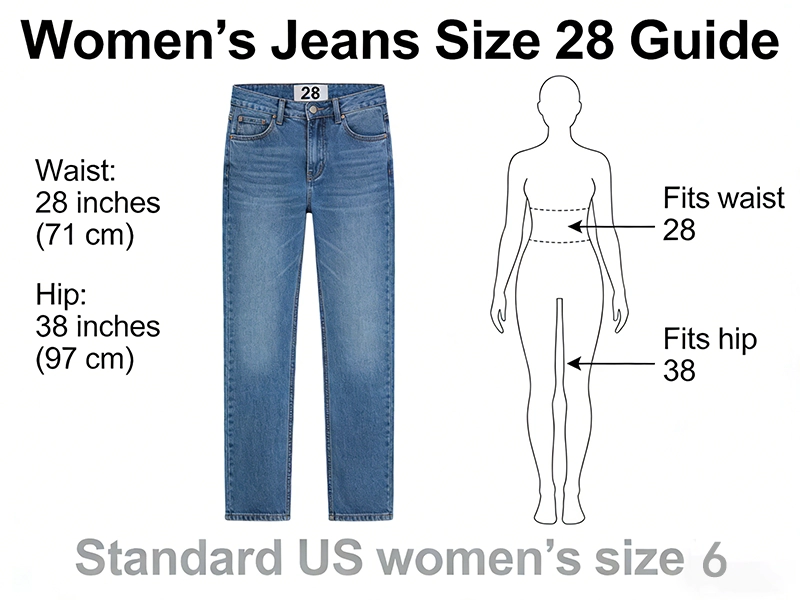
The simple answer is that a size 28 in women’s jeans typically corresponds to a waist measurement of 28 inches. In the standard US numeric sizing system, this generally equates to a size 6 or 8 . However, the journey from a number on a tag to a perfect fit is rarely a straight line. Sizing is not an exact science; it is an art form influenced by brand philosophy, fabric technology, and style trends. This article will unravel the mystery of the size 28, exploring its measurements, how it varies across brands, the impact of different jean styles, and how to ensure you find the pair that feels like it was made just for you.
The Naked Truth: What Does Size 28 Actually Measure?
At its most fundamental level, the number 28 on a pair of jeans refers to the waistband measurement in inches. However, a crucial detail often overlooked is where that measurement is taken. When you see “Size 28,” it refers to the circumference of the waistband of the jeans themselves, which is designed to sit at a specific point on your torso.
For most modern jeans, especially mid-rise and low-rise styles, this point is not your natural waist (the narrowest part of your torso, usually above your belly button). Instead, it is measured where the jeans are designed to sit—typically at or below your hip bones. This means you could have a naturally smaller waist of 26 inches but comfortably wear a size 28 jean that sits on your hips.
To give you a clearer picture, here are the typical full body measurements associated with a size 28 jean:
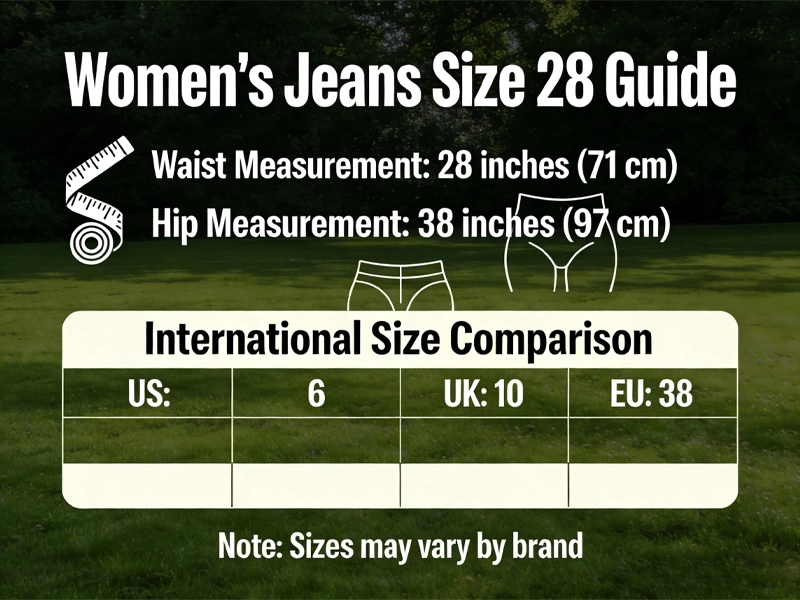
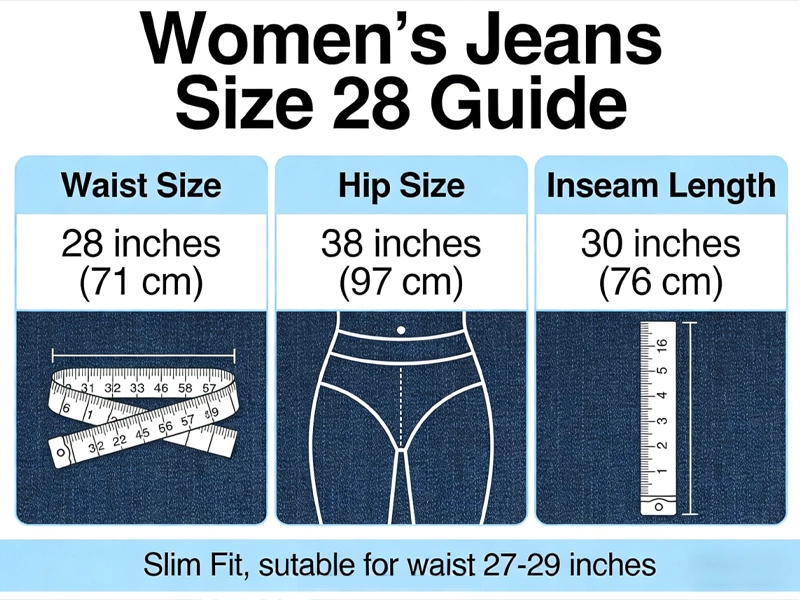
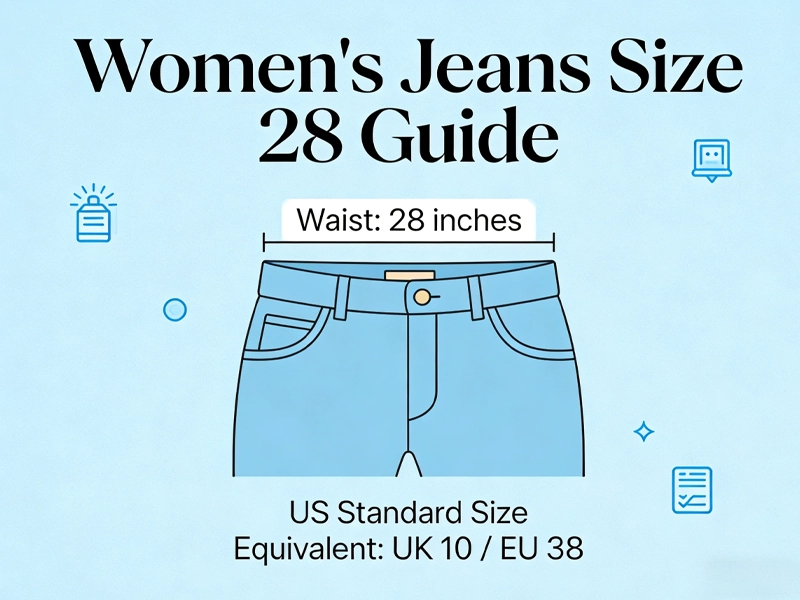
- Waist Measurement: 28 inches (where the jeans sit, usually at the hips)
- Hip Measurement: Approximately 38-39 inches (around the fullest part of your hip)
- US Size Equivalent: 6-8
- UK Size Equivalent: 10-12
- European Size Equivalent: 38-40
This basic breakdown serves as your compass. It tells you that if your body measures roughly 28 inches around the point where you like to wear your jeans (usually at hip level), and about 38-39 inches around the fullest part of your hips, a size 28 is an excellent place to start your search.
The Great Brand Divide: Why a 28 Isn’t Always a 28
This is where the plot thickens. If every brand used the same measuring tape and fit model, shopping would be boringly simple. But they don’t. Each brand has its own target customer and its own interpretation of fit, leading to significant variations in what a size 28 actually represents.
Premium Denim vs. Fast Fashion
In the world of fashion, you often get what you pay for, and consistency is one of those things. Higher-end denim labels like AG Jeans, Citizens of Humanity, Paige, or 7 For All Mankind tend to adhere more strictly to actual measurements. Their size 28 will almost always reflect a true 28-inch waistband. However, premium denim is often constructed from higher-quality, rigid-feeling fabrics and designed with a more tailored silhouette in mind. As a result, their size 28 might fit more like a standard US size 6, offering a sleek, streamlined look.
On the other end of the spectrum, fast-fashion retailers such as H&M, Zara, and Shein are notorious for their sizing inconsistencies. Their size 28 could fit anywhere from a US 4 to a US 10, depending on the specific style, the production batch, or even the fabric used. This variability makes checking individual size charts and reading customer reviews absolutely essential when shopping these brands -1.
The Vanity Sizing Phenomenon
Vanity sizing is the practice of labeling clothes with smaller sizes to appeal to consumers’ egos. A brand that employs vanity sizing might label a pair of jeans that actually measures 29 inches at the waist as a size 28, or even a 27, because it makes the wearer feel like they fit into a smaller size. American Eagle is a brand often cited for its generous, vanity-sized fits. Their size 28 frequently fits more like a US 8-10 compared to a standard size 6. This isn’t a mistake; it’s a deliberate marketing strategy.
Levi’s: A Benchmark for Consistency
If you are looking for a reliable baseline, Levi’s is often considered a standard-bearer for denim sizing. Their numbered sizing (like the iconic 501s) is generally true to size and consistent across different styles. According to their size guide, a women’s size 28 jean is designed for a waist measurement of 28-29 inches and hips of 38-39 inches, reinforcing the standard size 6/8 correlation. This makes Levi’s a useful reference point to understand how other brands might compare.
The Rise Factor: Where the Jean Sits Changes Everything
The “rise” of a jean—the distance from the crotch seam to the top of the waistband—is arguably as important as the size number. It dictates where the 28-inch measurement falls on your body.
- Low-Rise Jeans (7-8 inches): These sit well below your natural waist, often several inches below your navel. The 28-inch measurement here is taken at the widest part of your hips. Because your hip measurement is typically larger than your natural waist, a low-rise size 28 may feel snug on someone who wears a size 28 in other rises.
- Mid-Rise Jeans (8-10 inches): This is the “Goldilocks” zone. Mid-rise jeans sit right at or just below the hip bones. This placement is often the most predictable and comfortable, as the 28-inch waistband aligns with the part of the body that naturally corresponds to that measurement for most people.
- High-Rise Jeans (10+ inches): High-rise styles sit at or near your natural waist, which is often the narrowest part of your torso. Because your natural waist is smaller than your hips, a size 28 in a high-rise jean might actually feel looser or require you to size down. Conversely, if you have a defined waist-to-hip ratio, you might find that a size 28 in high-rise fits your waist perfectly but is too tight in the hips and seat. In this case, many women find they need to size up to a 29 or 30 in high-rise styles, even if they wear a 28 in mid-rise from the same brand.
Style by Style: Fit Profiles for Size 28
Beyond the rise, the overall silhouette of the jean drastically changes how a size 28 fits your legs and seat. Here is a breakdown of what to expect from different styles in a size 28:
- Skinny Jeans: The most precise fit. In a size 28, expect a snug hold from waist to ankle. Typical measurements include a 20-21 inch thigh and a 10-11 inch leg opening. Stretch is your best friend here.
- Straight Leg Jeans: More forgiving than skinnies while maintaining a clean line. A size 28 in straight leg usually offers slightly more room in the thigh (22-23 inches) and a wider leg opening (14-15 inches).
- Boyfriend Jeans: Designed for a relaxed, slightly slouchy look. A size 28 in this style will have a looser fit through the hip and thigh (24-25 inches), meaning it can often accommodate a range of body measurements comfortably.
- Wide Leg Jeans: The focus is on the waist fit. With a roomy thigh (25-27 inches) and a dramatically flared leg opening (22-24 inches), the most critical factor for a size 28 in a wide-leg style is that the waistband fits snugly without gapping.
Fabric Matters: The Role of Stretch and Rigidity
The fiber composition of your denim is the final piece of the puzzle. The percentage of elastane, spandex, or Lycra in the fabric determines how much the jeans will move with you.
- Rigid/100% Cotton Denim: These jeans have zero give. If you measure exactly 28 inches, a pair of rigid size 28 jeans will fit perfectly from day one. However, because they have no stretch, they require precise sizing and will feel less forgiving if you are between sizes. Over time, they will mold to your body but won’t stretch out significantly.
- Stretch Denim (2-4% Elastane): This is the modern standard for comfort. A jean with a mid-range stretch can comfortably accommodate waist measurements from 27 to 29 inches in a size 28. The fabric will hug your curves and provide a “second skin” feel. Keep in mind that stretch jeans can relax throughout the day and may bag out slightly, but they will typically snap back after a wash.
- High-Stretch Denim (5%+ Elastane): These jeans offer maximum flexibility and are incredibly forgiving. A size 28 in a high-stretch fabric might work for measurements ranging from 26 to 30 inches. However, the trade-off can be less structure and a potential for the jeans to lose their shape more quickly over time.
Mastering the Measurement: How to Find Your Size 28
Given all these variables, relying solely on the tag number is a recipe for disappointment. The most reliable method for finding your perfect fit is to arm yourself with accurate body measurements.
- Get a Soft Measuring Tape: A fabric tape measure is an indispensable tool.
- Measure Your Waist (The Jean Way): Stand naturally and wrap the tape around the area where you want your jeans to sit. For mid-rise jeans, this is usually at or just below your hip bones. Keep the tape snug but not tight, and parallel to the floor.
- Measure Your Hips: Measure around the fullest part of your hips and bottom, typically about 8-9 inches below your natural waist.
- Consult the Size Chart: Before you buy, compare your measurements to the specific brand’s size chart. Don’t look for the size number; look for the row where your waist and hip measurements align.
- Read the Reviews: Online reviews are a goldmine of information. Look for comments like “runs small,” “true to size,” or “order a size up for a relaxed fit.”
Conclusion: The Number is Just the Beginning
So, what size is 28 in women’s jeans? It is a 28-inch waistband. It is likely a US size 6 or 8. But more importantly, it is a starting point. It is an invitation to understand that the perfect pair of jeans is found at the intersection of accurate measurements, brand DNA, style silhouette, rise height, and fabric stretch.
The number on the tag is a guide, not a verdict. Don’t be disheartened if you are a size 28 in one brand and a 29 in another, or if you need a different size in a high-rise versus a low-rise. This is the beautiful, frustrating, and ultimately rewarding reality of denim. By focusing on fit over the number, you empower yourself to find jeans that not only look fantastic but also feel confident and comfortable, allowing your personal style to truly shine.
About the Author: Your Partners in Denim at ZENITH CLOTHING
Navigating the complexities of women’s jeans sizing is our daily business. Understanding that a size 28 is more than just a number—it’s a promise of fit, comfort, and style—is at the core of what we do.
We are ZENITH CLOTHING, a premier clothing manufacturing factory dedicated to the art and science of denim. With years of experience in the fashion industry, we specialize in full-package production services, partnering with brands to bring their denim visions to life. Our team of over 200 skilled workers and designers understands the nuances of the modern female form. We know that the difference between a good jean and a great one lies in the details: the consistency of the 28-inch waistband from batch to batch, the perfect recovery of a stretch denim blend, and the precise pattern-making that ensures a flattering fit across all rises and styles.
Whether you need OEM (Original Equipment Manufacturing) or ODM (Original Design Manufacturing) services, ZENITH CLOTHING is your partner in creating denim that fits your customer perfectly. We blend traditional craftsmanship with modern technology to ensure that every pair of jeans we produce meets the highest standards of quality and consistency. From concept to creation, we are here to help you cut through the confusion of sizing and deliver denim that builds brand loyalty.
When you choose ZENITH CLOTHING, you’re not just getting a manufacturer; you’re gaining a partner committed to excellence in fit, fabric, and finish. Let’s create the next generation of perfect-fitting jeans together.