Don't miss our holiday offer - up to 50% OFF!

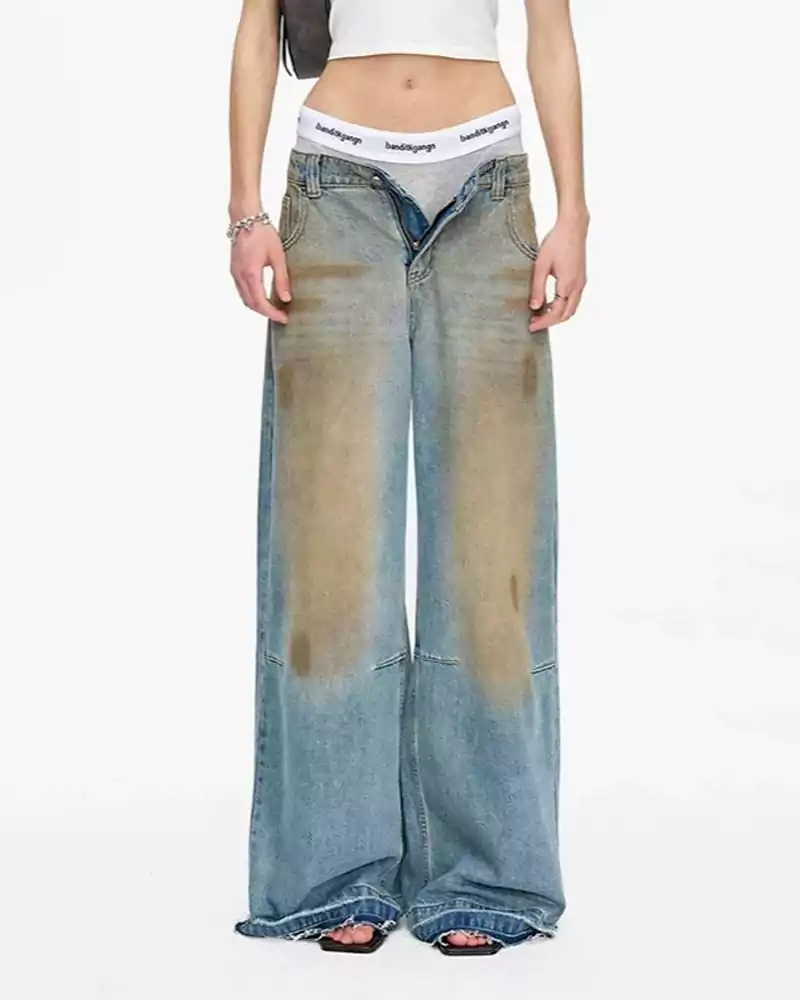
Affordable Custom Denim Pants: Get a Quote Today

1. Introduction: Affordability Is a Specification, Not a Bargain
Every buyer wants the same thing: a custom denim pant at a price that does not induce flinching. The word “affordable” appears in every sourcing brief, and it is understood by almost everyone differently. The truth is more clinical. Affordability is not a number on a quotation; it is a set of deliberate specification choices that push the unit price down without pushing the defect rate up.
The market will cooperate. Custom children’s denim pants are quoted today at figures that range from under three dollars to well past fifteen, with the spread explained almost entirely by specification. The buyer who understands the architecture of the price — fabric, labor, wash, trim, and margin — can purchase at the affordable end of that spectrum without purchasing trouble. This guide explains the architecture, the levers, and the one question that matters: what exactly are you asking for when you ask for a quote?
2. Why “Affordable” Misleads — and What It Actually Means
The adjective is a trap because it is relational. A US$5 pant is affordable against a US$15 pant and ruinous against a US$2 competitor selling the same silhouette at a fraction of the fabric weight. Affordability has no absolute meaning; it has only a context.
Define the context before you negotiate. What is your target retail price, your planned margin, and your landed cost? Work backward from the shelf to the factory gate, and the word “affordable” acquires a precise, numerical content: the maximum FOB price that preserves your margin after freight, duty, inspection, and the inevitable markdown allowance. A quote is affordable when it fits that ceiling — and only then. Everything else is a feeling, and feelings are a poor basis for a purchase order.
3. The Price Architecture of a Custom Denim Pant
3.1 Fabric: The Largest Single Line
The fabric is the first and largest line on any denim quotation. A pair of children’s pants consumes roughly 0.6 to 0.9 meters of twill, depending on size and silhouette, and the fabric cost dominates the calculation. Weight, fiber composition, and finishing each move the needle: ring-spun cotton commands a premium over open-end yarn; organic and recycled content add further increments; elastane blends price above rigid weaves.
The affordable buyer is not the one who buys the cheapest cloth. It is the one who matches the cloth to the garment’s actual demands — a 10-ounce cotton-stretch for everyday school wear, a lighter twill for summer, a heavier rigid for the structured silhouette. Over-specifying fabric is a quiet way to overpay; under-specifying it is a quieter way to build returns.
3.2 Construction and the Cut-Make-Trim Model
The second pillar is labor, priced in the industry’s standard cut-make-trim (CMT) formulation. Cutting the panels, sewing the assembly, and attaching the trims each carry their own cost, and children’s garments are disproportionately labor-intensive because the pieces are small and the handling is delicate. A waistband with an elastic casing, a zip fly, or a five-pocket configuration each adds operations — and each operation is a line on the quote.
Construction choices are affordability levers in disguise. An elastic waistband is cheaper than a zip fly with a button closure. A two-pocket pant is cheaper than a five-pocket pant. A straight leg is cheaper to sew than a cargo pant with pockets, flaps, and reinforcements. Decide which construction details are essential to your design language and which are inherited habit; the savings are real and cumulative.
3.3 Wash and Finish: Where Bargains Hide
The wash is the third pillar and the least understood. A garment-dyed and enzyme-washed pant runs through machinery, chemistry, and effluent treatment that a rigid, unwashed pant never touches. The wash is also the point at which “affordable” quotations most often conceal their arithmetic — a low base price that excludes washing, or a wash spec that will be silently simplified at production.
The rule is simple: establish the wash specification before the quote, and demand it appear on the quotation. An affordable pant is not necessarily an unwashed pant — the wash drives perceived quality and parent satisfaction — but it should be a wash that you chose, priced transparently, and verified at the pre-production sample.
4. The Current Price Terrain: What the Market Actually Shows
The wholesale market for children’s denim pants is broad, and the terrain rewards comparison. Current marketplace listings illustrate the spread. Custom washed children’s jeans on Made-in-China.com are quoted at approximately US$8.70 to US$9.00 per piece at minimum orders of 300 pieces . On Alibaba’s European-facing listings, the same category ranges from economy lots near US$3.70–3.90 at minimal volumes to fully washed, decorated styles at US$7.49–8.99, and higher-specification garments from US$14.39 upward . The trending baggy segment sits higher, with wholesale baggy denim typically quoted between US$11 and US$19 per piece .
| Tier | Description | Indicative FOB (per piece) | Typical MOQ |
|---|---|---|---|
| Economy | Basic twill, rigid or simple wash, elastic waist | US$3.70 – US$6.50 | 50–300 pcs |
| Standard | Cotton-stretch, washed, simple decoration | US$7.00 – US$9.50 | 100–500 pcs |
| Premium | Custom wash, full decoration, private label | US$10.00 – US$15.00 | 300–500 pcs |
| Baggy / fashion | Trend silhouettes, multi-stage wash | US$11.00 – US$19.00 | 100–500 pcs |
The takeaway is dispassionate: affordability is available at every tier if the specification matches the tier. The five-dollar quote and the fifteen-dollar quote are both honest; they are simply describing different garments.
5. The Seven Levers of Affordable Customization
5.1 Consolidate the Order
The most powerful lever is volume, expressed as order consolidation. Factories amortize fixed costs — pattern grading, wash setup, embroidery digitizing — across the units in a run. One order of 600 pieces in three colors prices lower per unit than three orders of 200 pieces, because the factory books one production campaign instead of three. Consolidate colors, consolidate sizes, and consolidate seasons where your cash flow permits.
5.2 Standardize the Size Run
Every size added to the run is a pattern to grade and a cutting marker to plan. A focused run — 2T through 8Y, say, rather than 3M through 14Y — reduces grading cost and improves the factory’s scheduling efficiency. The trade-off is real: narrower ranges risk missing older children and eroding the customer base. Decide the range against your market, not against the catalogue of every possible child.
5.3 Restrain the Wash
Multi-stage washes are the most expensive finishing operation on the list. A single enzyme wash at a controlled temperature delivers softness and drape at a fraction of the cost of a stone or acid treatment. If your design language does not demand the distressed aesthetic, the restrained wash is the single fastest route to a lower unit price.
5.4 Simplify the Hardware
Zippers, buttons, rivets, and drawcords each carry cost and compliance burden. A pant that replaces a metal zip fly with an elastic waistband, or a branded button with a standard one, sheds both price and testing liability. Custom hardware is a premium play; deploy it where the customer sees it, not where the seamstress hides it.
5.5 Choose the Decoration Deliberately
Decoration is priced by method and placement. Screen printing rewards volume and punishes small batches with setup fees; embroidery prices by stitch count; puff and discharge prints add their own increments. Choose the decoration that matches your order size, and confine it to the panels that carry your brand — the back yoke, the coin pocket, the hem label.
5.6 Buy the Correct Incoterm
The incoterm is a price line disguised as a formality. FOB leaves freight, insurance, and clearance to the buyer; CIF bundles insurance and freight into the quoted figure. Compare quotations on a landed-cost basis, not a headline basis, and let the supplier compete on the terms that suit your logistics. A slightly higher FOB with a superior freight arrangement can beat a lower FOB with an expensive one.
5.7 Commit to the Calendar
The final lever is the least glamorous and the most reliable: calendar commitment. Factories price for predictability. A seasonal program — two drops per year, communicated twelve months ahead — secures better pricing than any single-order negotiation, because it converts the factory’s idle capacity into planned utilization. The quotation you receive is a photograph of the relationship; the program is the movie.
6. The Quote Request That Earns an Honest Answer
6.1 What to Send the Supplier
A quote is only as good as the brief that produced it. Send the supplier a complete tech pack: the flat sketch, the measurement table in centimeters and inches, the fabric weight and composition, the wash specification, the decoration artwork in vector format with Pantone references, the hardware list, and the target quantity per size. A supplier who receives this document can quote accurately in one pass; a supplier who receives a photograph and a hope will quote with hedges, and the hedges will appear in the price.
6.2 What to Ask in Return
The response deserves equal rigor. Ask for the price broken into fabric, labor, wash, and trim. Ask whether the quote includes the decoration and the packaging. Ask the incoterm, the payment terms, the sample charge, and the lead time from confirmed artwork to shipment. Ask for the MOQ per color and the price break at higher volumes. A quotation that answers all of these is a document; one that answers only the unit price is a number with no context.
7. Reading the Quotation: Line by Line
Read the returned quotation with the same suspicion you applied to the price list in any procurement exercise. Verify the base size assumption — larger sizes consume more fabric and carry a premium. Confirm the wash is the wash you specified, not a paraphrase. Check whether the sample cost is refundable against the production order, and whether the decoration is itemized or bundled.
The most valuable habit is arithmetic. Convert the quotation to a landed-cost model on the same day it arrives: FOB plus freight plus insurance plus duty plus inspection plus inland carriage, divided across your expected sell-through. The number that emerges is the number that matters. A quote that looks affordable at the factory gate can turn expensive at the warehouse door.
8. The Affordability Trap: Cheap FOB, Expensive Shelf
The market’s lowest prices are not always the market’s best value. The economy-tier quotation — the two-dollar pant from a supplier without certifications — carries costs that do not appear on the invoice: the compliance failure that halts a shipment at customs, the shrinkage that arrives with the first wash, the color drift that surfaces after the goods are on the shelf.
Affordability is a system property, not a unit-price property. A US$8 pant that passes inspection, survives the wash, and sells through at full margin is cheaper than a US$4 pant that returns. Compute the total cost of ownership: landed cost, defect allowance, compliance risk, and markdown exposure. The buyer who prices the whole system, rather than the single line, is the buyer who genuinely gets the affordable garment.
9. Conclusion: A Quote Is a Beginning, Not an Answer
Affordable custom denim pants exist in abundance; they are simply built, not found. The construction is a discipline: define the specification, understand the price architecture, pull the seven levers, and request quotations with the rigor the process deserves.
The market’s current pricing — from the sub-four-dollar economy lots to the fifteen-dollar premium garments — rewards the buyer who reads it correctly . Affordability is the intersection of a disciplined spec and an honest quote. Prepare the brief, request the numbers, and compare on landed cost. The quotation you receive will be the beginning of a negotiation — and the beginning of a garment that can actually reach the shelf at a price your customers will accept.