Don't miss our holiday offer - up to 50% OFF!

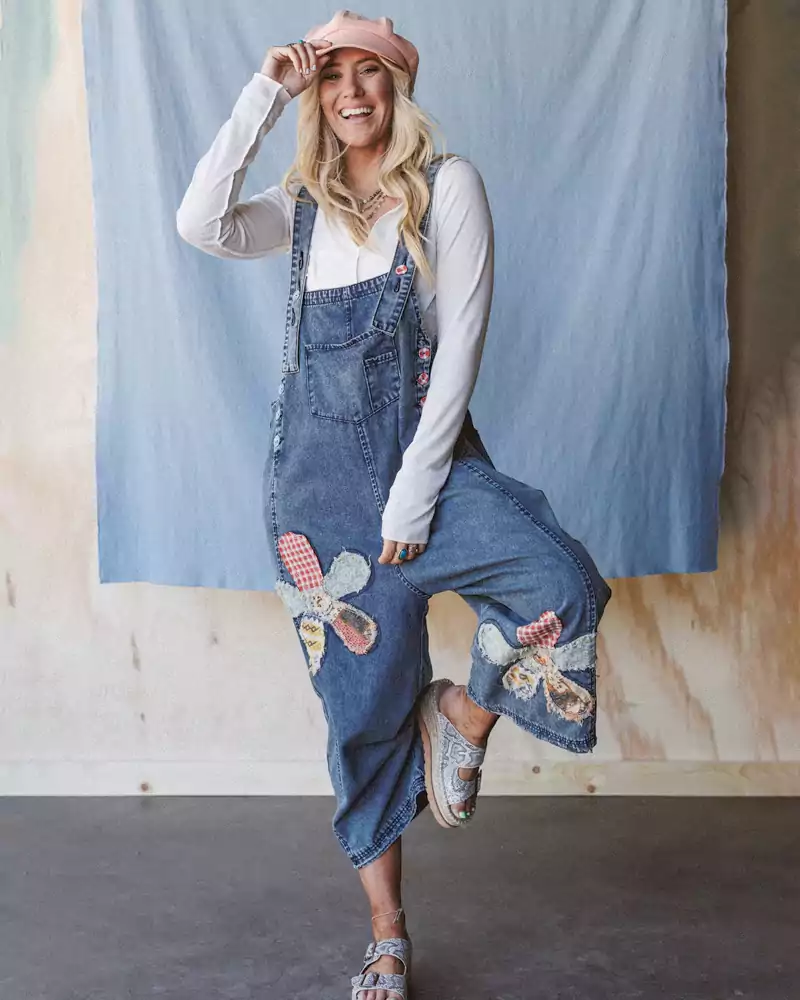
China Custom Denim Overall Factory for Global Fashion Brand Buyers

Introduction: The Overalls Renaissance
The denim overall, once the uniform of the laborer, has undergone a profound transformation to become a staple of contemporary fashion. For the global fashion brand buyer, sourcing a custom denim overall is a strategic endeavor that demands a manufacturing partner possessing not only technical proficiency but also a profound understanding of the garment’s structural complexities. China’s denim manufacturing ecosystem offers a compelling proposition, providing access to vertically integrated factories with the capacity for flexible production, rigorous quality control, and a deep well of textile expertise. This guide delineates the critical considerations for sourcing custom denim overalls from a professional China factory.
The Vertical Integration Advantage: A Foundation of Control
The selection of a manufacturing partner is the most consequential decision in the sourcing journey. A vertically integrated factory—one that consolidates fabric sourcing, cutting, sewing, washing, and finishing under a single roof—offers a decisive competitive advantage. This integration eliminates the communication lags and quality inconsistencies that plague fragmented supply chains . It permits the manufacturer to maintain rigorous quality control and reduce lead times. A vertically integrated facility can handle fabric sourcing, cutting, sewing, washing, and quality inspection all in-house, giving brands better control over quality and faster turnaround .
Defining the Overall: A Garment of Complexity
The denim overall is distinguished by its composite construction, comprising multiple components that demand meticulous engineering. It includes bib sections, adjustable shoulder straps, front and back leg panels, and functional pockets . The architecture of the overall requires a precise balance between the structural integrity of the waist and the articulation required for movement. For the factory, the overall presents a higher degree of technical difficulty compared to a simple pair of jeans, as too many tiny split panels can slow down assembly work and raise potential sewing defects .
The OEM/ODM Spectrum: Defining the Partnership
Understanding the distinction between Original Equipment Manufacturing and Original Design Manufacturing is essential for navigating the B2B landscape. In an OEM arrangement, the brand provides the complete design specifications—the tech pack, measurements, and material requirements—to the manufacturer for execution . In an ODM model, the manufacturer offers pre-existing designs that the brand can adapt and label as its own, providing a faster route to market for those with limited design resources . The choice between these models influences the level of creative control and the investment required.
Fabric Foundations: The Substrate of Structure
The integrity of a custom denim overall is predicated upon the quality of its substrate. Factories typically offer a spectrum of denim weights, with 10oz to 12oz denim being a common specification that balances durable performance with manageable sewing difficulty . The fabric’s weight, measured in ounces per square yard, dictates the garment’s drape and capacity for holding shape. The composition—whether 100% cotton or a cotton-elastane blend—determines the fabric’s hand-feel and its ability to withstand the rigors of industrial washing. Many factories now offer eco-friendly options, including recycled denim and organic cotton, to align with the values of the conscientious consumer .
Pattern Engineering: The Mathematics of the Overalls
The overall demands a pattern of exceptional precision. The multiple components—bib, straps, leg panels—must be engineered to achieve a consistent, comfortable fit across a range of body types. Professional factories conduct a thorough evaluation of every incoming design document before sampling begins, often proposing minor layout adjustments to optimize the construction while preserving the original visual style . One typical optimization merges the bib facing piece with the main bib panel, removing a seam line and improving long-term wearing comfort . The pattern must also account for shrinkage, ensuring that the final garment maintains its intended dimensions after washing.
The Sampling Cycle: The Crucible of Refinement
Before the commencement of bulk production, the sampling phase is indispensable. This iterative process involves the creation of physical prototypes that allow for the evaluation of the fabric, fit, and finishing details. The sample serves as a tangible benchmark against which the final order is measured . Standard sampling lead times typically range from 7 to 10 working days . It is the period during which potential issues—be it the placement of a strap or the behavior of a seam—are identified and rectified. It is the crucible in which the theoretical collides with the tangible.
The Wash as Signature: Chemical and Mechanical Finishing
The wash is the defining attribute of a denim garment, transforming a flat, rigid textile into a living, textural artifact. For denim overalls, the wash must be carefully considered, as the garment’s multiple panels can react differently to chemical and mechanical processes. Factories offer a panoply of finishing techniques, including acid wash, stone wash, enzyme wash, and vintage fade effects . The selection of a specific wash is often the most potent means of differentiating a brand’s offering. Factories often test each new wash recipe on small sample lots, restricting overall shade deviation within 5% to ensure consistency .
Hardware and Trims: The Details That Define Quality
The overall’s functionality is often mediated by its hardware. Buckles, functional buttons, and strap sliders must pass rigorous testing, including a 24-hour salt-spray test to ensure anti-corrosion properties . This is particularly critical for brands targeting coastal markets. The choice of hardware—zinc alloy, brass, or gunmetal—contributes to the garment’s tactile refinement. The integration of custom hardware, such as engraved buttons or branded zippers, is a hallmark of premium private-label manufacturing .
Stitch Reinforcement: The Structural Imperative
Denim overalls carry obvious high-stress zones during daily wear. The bib-connection joints and crotch seams are the two most critical structural positions. Professional factories apply consistent double-needle stitching across these vulnerable sections, with stitch density controlled between 8-10 stitches per inch . Heavy bar-tack reinforcement is added at pocket corners and strap connection points to prevent tears . This attention to structural integrity is what distinguishes a professional factory from a workshop.
Navigating Minimum Order Quantities
For emerging brands and established labels alike, the Minimum Order Quantity is a critical financial consideration. The landscape has evolved to accommodate smaller players, with many manufacturers now offering thresholds as low as 50 pieces per style . This flexibility is an investment in risk mitigation, allowing brands to test a silhouette or a wash without the financial burden of mass production. Other factories may set their MOQ at 100 pieces per design and color, but this is often negotiable .
Production Lead Times and Planning
The timeline from order placement to delivery is a variable that must be factored into operational planning. Bulk production lead times for custom denim overalls typically range from 20 to 35 working days following sample approval . This timeline can fluctuate based on the complexity of the wash, the manufacturer’s existing capacity, and the logistical arrangements for shipping. Factories offer diversified global shipping solutions, including cost-effective sea freight, fast air freight, and urgent express delivery .
Quality Control: The Assurance of Consistency
Maintaining consistency across a production run is a formidable challenge, particularly for complex garments like overalls. Reputable manufacturers implement rigorous in-line and final quality control checks. This process often involves a 4-step internal inspection system: raw fabric inspection, in-process sampling inspection, semi-finished product calibration, and finished product full inspection . To meet the high access standards of USA, European, Australian, and Canadian markets, many factories cooperate with international third-party testing institutions like ASAHI·LINK, ensuring every batch passes inspection before shipment .
Sustainability: The Green Imperative
The denim industry has faced significant scrutiny regarding its environmental impact, prompting a shift toward more sustainable practices. Professional factories are adopting technologies such as ozone washing and enzyme finishing to reduce water consumption and chemical usage. Many hold certifications such as OEKO-TEX Standard 100, GOTS, GRS, and BSCI, demonstrating a commitment to environmental and social responsibility . For brands seeking to appeal to a conscientious consumer base, partnering with a factory that prioritizes sustainability is a strategic imperative.
Compliance and Certifications: Verifying Quality
For brands seeking to appeal to a conscientious consumer base, manufacturer certifications are a critical consideration. ISO 9001 indicates adherence to quality management standards, while OEKO-TEX Standard 100 verifies chemical safety. BSCI or SA8000 certification demonstrates a commitment to social compliance and ethical labor practices . Verifying these certifications provides assurance that the production process aligns with international standards.
Factory Profiles: Notable Manufacturers
The Chinese landscape offers a diverse array of manufacturers. DZX Apparel, with a 2000-square-meter production base and over 100 skilled employees, offers a low MOQ of 50 pieces per style and cooperates with ASAHI·LINK for third-party inspections . Bless Denim specializes in private-label manufacturing with flexible MOQs starting at 50 pieces per style . Guangzhou Chuangxing Garment Group, a larger enterprise with 656 employees and a 480-acre industrial park, provides comprehensive ODM/JDM services . Shenzhen Pengcheng Clothing, with its history of 20 years in denim production and credentials working with brands like JUICY and DKNY, offers deep expertise in washed denim .
Communication and Transparency: The Partnership Ethos
In a global sourcing environment, communication is the linchpin of a successful partnership. Leading manufacturers maintain responsive communication protocols, often providing 24/7 English customer service to address inquiries from global brands in real time . A dedicated account manager is often assigned to each client, serving as a single point of contact from sample development through to delivery . This level of engagement is an important indicator of a manufacturer’s professionalism and commitment to partnership.
Conclusion: Forging a Global Denim Identity
The sourcing of custom denim overalls from a professional China factory is a strategic endeavor that demands a careful selection of a manufacturing partner. By navigating the nuances of fabric selection, wash consistency, pattern engineering, and quality control, a brand can create a garment that is both functional and a powerful statement of identity. The Chinese denim ecosystem, with its vertically integrated facilities, flexible MOQs, and commitment to sustainability, offers global fashion brand buyers a formidable partnership for bringing their distinctive vision to the world market. The result is not merely a garment, but a durable artifact that embodies the brand’s character and ambition.