Don't miss our holiday offer - up to 50% OFF!

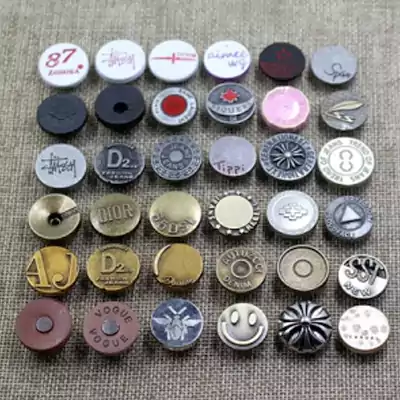
Custom denim buttons and rivets

Denim is more than just a fabric; it is a cultural icon, a symbol of durability, and a canvas for self-expression. From the classic blue jeans that built the American workforce to the high-fashion runway adaptations of today, denim’s identity is shaped by every stitch, every fade, and every metal component. Among these components, custom denim buttons and rivets play a silent yet critical role. They are not merely fasteners; they are statements of quality, branding touchpoints, and structural necessities. This article explores the world of custom denim buttons and rivets, diving into their history, manufacturing processes, design variations, and functional importance, ultimately demonstrating why bespoke hardware is essential for any serious denim brand.
Chapter 1: The Historical Legacy of Rivets and Buttons in Denim
The story of denim hardware begins in the 19th century. In 1873, Jacob Davis and Levi Strauss patented the process of placing rivets at points of strain on men’s work trousers. These small metal pieces, typically made of copper, revolutionized the durability of workwear. Before rivets, pockets would tear, and button flies would separate under heavy loads. The rivet reinforced these weak points, creating a garment that could withstand the harshest conditions of mining, farming, and railroading.
Buttons, on the other hand, evolved alongside the trousers. Early denim used simple metal buttons stamped with basic logos or no branding at all. As denim transitioned from workwear to everyday fashion, the button became a branding opportunity. The distinctive two-piece waist overall button — featuring a front face and a separate back post — became standard. Today, custom denim buttons and rivets honor this legacy while offering endless possibilities for personalization. Every custom rivet echoes the original 1873 patent, and every custom button connects the wearer to over a century of American heritage.
Chapter 2: Anatomy of Custom Denim Buttons
Custom denim buttons are not uniform; they come in multiple styles, each suited to different garment designs and functional needs. Understanding these styles is crucial for any brand looking to develop bespoke hardware.
2.1 The Universal Waist Button (Two-Piece Button)
The most common button found on jeans is the two-piece or universal waist button. It consists of a cap (the visible face) and a separate back post that is attached through the denim using a die and hammer mechanism. Customization occurs on the cap, where logos, textures, and finishes are applied. The cap can be flat, domed, or recessed, and the edge can be smooth, beveled, or notched.
2.2 The Tack Button
Tack buttons are similar to universal buttons but are often used for fly closures. They are slightly smaller and feature a pronounced center post that is riveted over a die. For custom denim buttons, tack buttons offer a clean, modern look.
2.3 The Jeans Button (Donut Button)
The donut button features a distinct recessed ring around the center, creating a donut-like appearance. This design was originally intended to reduce the amount of metal needed, saving costs while maintaining strength. Today, the donut style is a nostalgic nod to vintage denim and remains popular for heritage brands. Custom donut buttons can be stamped with letters or symbols in the outer ring.
2.4 The Snaps and Prym Buttons
While less common on rigid denim, snaps are used on denim jackets and relaxed-fit jeans. A custom snap involves four separate parts: the cap, socket, stud, and post. Customization typically focuses on the visible cap, which can be engraved or embossed.
Each type of button can be produced with custom molds, allowing manufacturers to replicate logos, brand names, and even intricate artwork onto the metal surface.
Chapter 3: The Science of Rivets – Small Parts, Immense Strength
Rivets are deceptively simple. A single rivet is typically a short cylinder of metal with a pre-formed head on one end. When inserted through layers of denim, the plain end is compressed by a rivet setter, flattening it into a second head. This mechanical lock is incredibly strong and does not rely on glue or thread.
3.1 Types of Rivets for Denim
- Universal Rivets: The standard rivet with a flat or slightly domed head, used on pocket corners and belt loops.
- Burr Rivets: These feature a hollow back that folds outward, often used for lighter weight denim.
- Tacked Rivets: A variation where the visible head displays a custom shape or logo.
- Copper and Alloy Rivets: Traditional copper offers a classic look and natural patina. Modern rivets use brass, steel, zinc alloys, or even aluminum for color and weight control.
3.2 Functional Placement
In jeans, rivets are placed at critical stress points: the corners of the front pockets, the top edge of the coin pocket, the base of the button fly, and occasionally on the back pocket rivets (though many brands now omit back pocket rivets to prevent scratching furniture). Custom rivets can also be applied decoratively, turning a functional element into a design feature.
Chapter 4: The Customization Potential – Materials, Finishes, and Logos
The phrase “custom denim buttons and rivets” opens a world of aesthetic possibilities. Customization is not limited to stamping a logo; it includes material selection, color, texture, and secondary treatments.
4.1 Base Materials
- Brass: Durable, corrosion-resistant, and accepts plating well. Brass is the most common core material.
- Zinc Alloy: Easily cast into complex shapes, allowing for three-dimensional logos and fine details.
- Copper: Traditional, soft, and develops a desirable patina over time. Ideal for vintage reproductions.
- Stainless Steel: Extremely hard and modern. Used for minimalist, industrial looks.
- Iron with Plating: Economical but less corrosion-resistant.
4.2 Finishes
The finish defines the visual character. Popular finishes include:
- Antique Brass: A dark, aged appearance.
- Silver/Nickel: Bright and clean.
- Matte Black: Modern and stealthy.
- Copper and Rose Gold: Warm and premium.
- Enamel Filled: Colorful paint embedded into recessed areas.
- Laser Engraved: High-precision logos with no surface deformation.
4.3 Logo Integration
Brands can place their identity directly on buttons and rivets through:
- Embossing (Raised Logo): The design protrudes from the surface.
- Debossing (Recessed Logo): The design is sunk into the metal.
- Laser Etching: A fine, detailed mark, ideal for small rivet heads.
- Printed on Flange: Some buttons accept printing on the rim.
For rivets, due to their small diameter (typically 10mm to 15mm), logos are often simplified to initials, geometric marks, or single symbols. However, a well-designed custom rivet is a powerful brand touchpoint that discerning customers notice.
Chapter 5: The Manufacturing Process – From Mold to Finished Hardware
Understanding production helps brands appreciate why custom denim buttons and rivets require lead times and tooling investments.
Step 1: Design and Mold Creation
A metal mold is precision-engineered based on the client’s artwork. For a two-piece button, separate molds are needed for the cap and the back piece. For rivets, a single mold may suffice. Mold costs are the primary setup expense but can be reused for thousands of units.
Step 2: Stamping or Casting
Brass or zinc alloy strips are fed into high-speed presses. For brass, a cold forging process presses the metal into shape. For zinc, hot chamber die casting is used. The result is raw button caps and rivet blanks.
Step 3: Trimming and Deburring
Excess metal (flash) is trimmed, and pieces are tumbled to smooth sharp edges.
Step 4: Polishing and Plating
The raw pieces are polished, then run through electroplating baths to apply finishes like antique brass, nickel, or black oxide. Some finishes require multiple layers or a lacquer topcoat.
Step 5: Assembly and Attachment Checks
Button caps are mechanically joined to their back posts. Each batch is tested on a tensile pull machine to ensure it can withstand 50-70 lbs of force without separating.
Step 6: Quality Control
Visual inspection, finish uniformity tests, and dimensional checks are performed. Rivets are tested for splay (the evenness of the collapsed back).
Chapter 6: Why Quality Hardware Defines a Denim Brand
Many garment manufacturers treat buttons and rivets as afterthoughts, selecting cheap, generic hardware to save pennies per unit. This is a mistake. High-quality custom denim buttons and rivets directly influence consumer perception.
First Impressions: When a customer tries on jeans, the first physical touchpoint is often the waist button. A heavy, smooth-feeling button with a crisp logo conveys premium quality. A lightweight, loose, or scratched button suggests poor construction.
Durability and Safety: Cheap rivets may have sharp edges that scratch skin or tear fabric. They may corrode, turn green, or fail after a few washes. Professional custom hardware uses corrosion-resistant plating and precise tensioning to avoid these issues.
Brand Story: A custom button with a brand’s founding year or a rivet shaped like a unique icon tells a story. These small details create emotional connection and justify premium pricing.
Sustainability: Increasingly, brands are asking for lead-free, nickel-free, and recyclable custom hardware. Responsible manufacturers can provide eco-friendly options such as recycled brass or natural copper without toxic plating.
Chapter 7: Common Challenges and Solutions in Denim Hardware
Working with custom buttons and rivets presents practical challenges, especially for brands new to garment production.
Challenge 1: Matching Hardware to Fabric Weight
Heavyweight denim (14oz+) requires larger, stronger rivets and button posts that are longer or have wider barbs. Using lightweight hardware on heavy denim results in popped rivets or bent buttons. Solution: Specify your denim weight to your hardware supplier.
Challenge 2: Finish Wear
Some finishes, like antique brass, are topical and can wear off with abrasion or washing. For a naturally worn look, this may be desirable. For a permanent finish, request galvanized coatings or physical vapor deposition (PVD).
Challenge 3: Rivet Mushrooming
Poorly set rivets can mushroom unevenly, leaving sharp rings of metal. This is often a machine calibration issue in the factory. Solution: Use high-quality rivet setters and train operators.
Challenge 4: Minimum Order Quantities (MOQs)
Custom molds require MOQs typically ranging from 5,000 to 20,000 pieces per design. For small startups, this can be prohibitive. Some suppliers offer semi-custom options (stock molds with custom finishing).
Chapter 8: Design Inspirations for Custom Denim Buttons and Rivets
To illustrate creativity, here are conceptual design directions:
- Heritage Collection: Use solid copper donut buttons with a stamped “est. 2025” and matching copper universal rivets. Unpolished, allowing natural patina.
- Minimalist Tech: Matte black galvanized steel buttons with no visible logo (only a laser-etched brand code on the rim). Matching flat-top rivets.
- Western Aesthetic: Engraved silver buttons featuring floral or rope motifs. Copper rivets with a hammered texture.
- Luxury Streetwear: Enamel-filled buttons in a brand’s signature color, with gold-plated rims. Rivets shaped as tiny crowns or diamonds.
- Eco-Line: Buttons made from recycled brass with a brushed finish, featuring a debossed leaf logo. Rivets with no additional plating.
Each design directly affects the perceived value of the jeans. A $30 pair of jeans will not carry $2 custom rivets, but a $200 pair absolutely should.
Chapter 9: How to Work with a Manufacturer for Custom Hardware
Bringing custom denim buttons and rivets to life requires collaboration between a clothing brand and a hardware supplier. Here is a typical workflow:
- Concept Submission: Send artwork (AI or PDF file) showing the logo or design, dimensions, and preferred finish.
- Sample Mold and Proto: The hardware maker produces a mold and creates 50-100 sample pieces.
- Attachment Test: The brand’s garment factory attaches samples to actual denim to test pull strength and appearance.
- Color and Finish Approval: Approved samples are signed off.
- Production Run: Bulk hardware is manufactured, usually requiring 4-6 weeks.
- In-House Quality Check: The clothing factory inspects a percentage of the shipment for defects.
Chapter 10: Conclusion – Small Components, Big Impact
Custom denim buttons and rivets are the jewelry of a pair of jeans. They catch the light, support the structure, and quietly announce the brand behind the garment. From the original copper rivets of 1873 to today’s laser-engraved, eco-plated works of art, these small metal pieces have never been more important.
For a brand, investing in custom hardware is not an expense; it is a declaration of quality. It tells the customer that everything about the garment has been considered, from the stitching to the smallest fastener. In a crowded market of mass-produced denim, custom buttons and rivets provide a tangible point of difference.
About the Manufacturer – ZENITH CLOTHING
Behind every great pair of jeans is an experienced manufacturing partner. ZENITH CLOTHING is proud to be that partner. As a full-scale garment production factory, we specialize in bringing denim designs to life from concept to finished product. Our expertise extends far beyond cutting and sewing fabric. We maintain direct partnerships with hardware foundries to offer our clients fully custom denim buttons and rivets without the typical barriers of high minimum orders or long lead times.
At ZENITH CLOTHING, we understand that hardware defines your brand. Whether you need vintage-inspired copper donut buttons, matte black tack rivets, or full-zinc alloy logo buttons with enamel inlay, we manage the entire production chain. Our team provides in-house mold design, finish sampling, and attachment testing to ensure every button and rivet meets your specification.
Why work with ZENITH CLOTHING?
- End-to-End Denim Production: We manufacture the entire garment, including custom hardware integration, so you have a single, accountable partner.
- Low MOQ Flexibility: We accommodate emerging brands with lower minimums on select custom hardware.
- Quality Assurance: Every batch of rivets and buttons is pull-tested and visually inspected at our facility.
- Sustainable Options: We offer recycled metals, nickel-free plating, and water-reducing finishing processes.
Your denim tells a story. Let ZENITH CLOTHING ensure every chapter, down to the smallest fastener, is perfectly written. Contact us to discuss your next custom denim project, and let us show you why premium brands trust ZENITH CLOTHING.