Don't miss our holiday offer - up to 50% OFF!

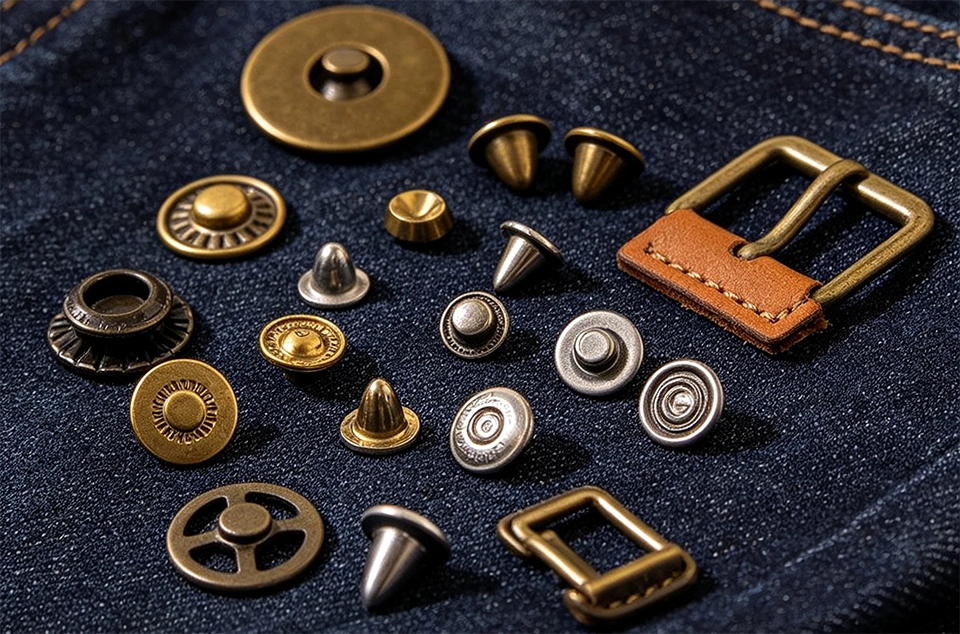
Custom Denim Buttons | Logo‑Stamped Metal Tack Buttons for Jeans

Introduction: The Unassuming Power of the Denim Button
In the grand tapestry of denim design, it’s easy for the casual observer to overlook the humble button. We interact with it several times a day, a small, metallic disc that bears the brunt of our daily activities. Yet, for the discerning denim brand, this seemingly insignificant component is a cornerstone of both functionality and identity. It is the anchor that holds the garment together and the signature that authenticates the craftsmanship. When you opt for custom denim buttons, you are not just selecting a closure; you are investing in the narrative of your brand.
The market offers a plethora of options, but the true value lies in logo-stamped metal tack buttons. They are more than just hardware; they are tangible proof of attention to detail, promising longevity and a bespoke character that resonates with a brand’s core audience. This article explores the intricate world of these branded fasteners, peeling back the layers of material science, manufacturing artistry, and strategic branding that define the modern denim button.
Beyond Fastening: The Button as a Branding Canvas
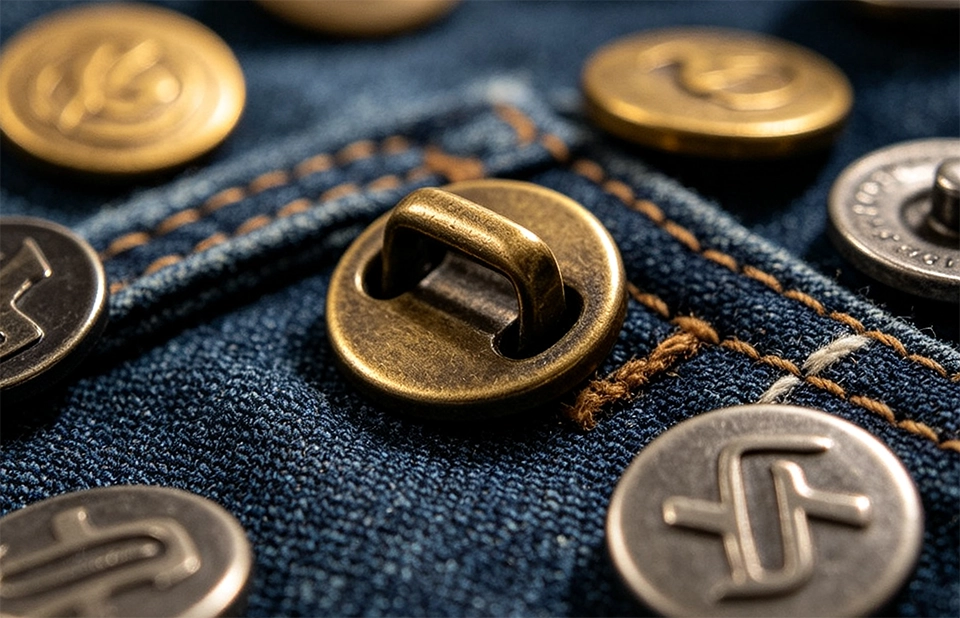
The primary role of a jean button—securing the waistband—is undeniable. However, for a garment that is often emblazoned with a brand’s name on the patch, the button offers a more subtle, yet equally powerful, branding opportunity . When a customer fastens their jeans, they are touching your brand. Custom logo buttons transform this functional act into a moment of brand reinforcement.
This is where you replace generic hardware with embossed logo buttons that proudly display your name or emblem. It elevates a standard pair of jeans to a premium product, signaling that no detail has been overlooked. In the crowded market of denim, such meticulous branding on custom jeans buttons can be a decisive factor in building consumer loyalty and perceived value .
Anatomy of a Tack Button: Deconstructing the Two-Piece Fastener
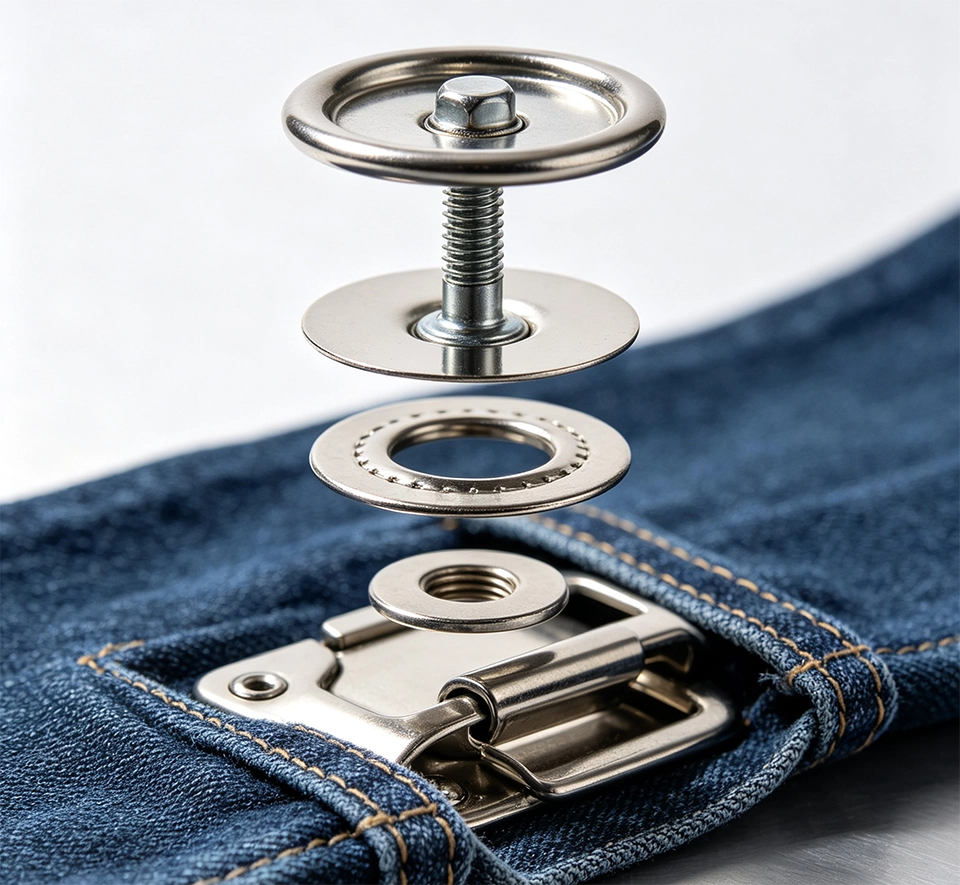
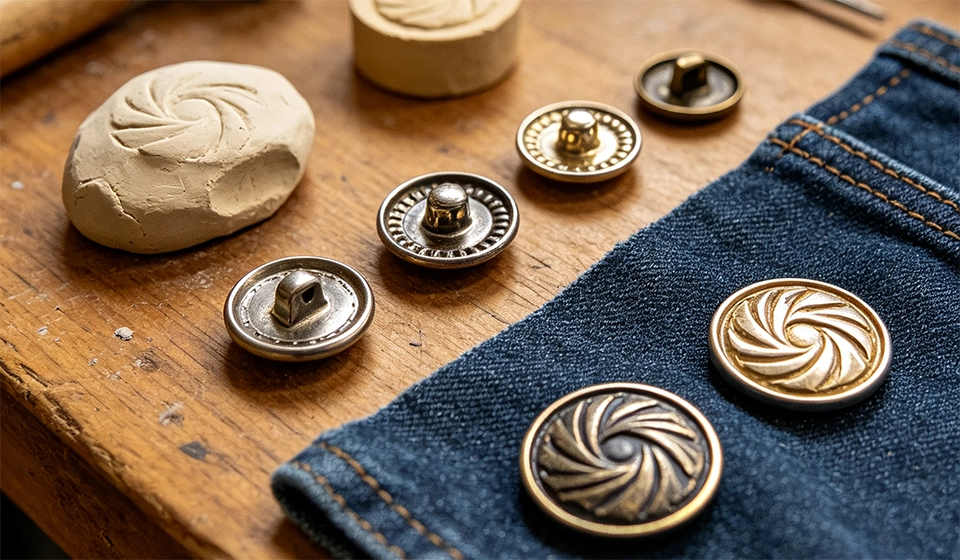
To appreciate the customization, one must first understand the construction. The classic jeans tack button is a two-part system. The first is the “cap,” the visible face that displays your logo. The second is the “nail” or “tack,” a sharp metal post that pierces through the layers of denim at the waistband .
During installation, the cap is placed over the tack on the fabric’s exterior, and the assembly is clinched together using a hammer or a pneumatic press. The tack bends outward within the cap, creating a permanent, secure fastening . This robust mechanism is designed to withstand the immense tension and stress placed upon the waistband of a pair of jeans .
The Metal Menagerie: Choosing Your Core Material
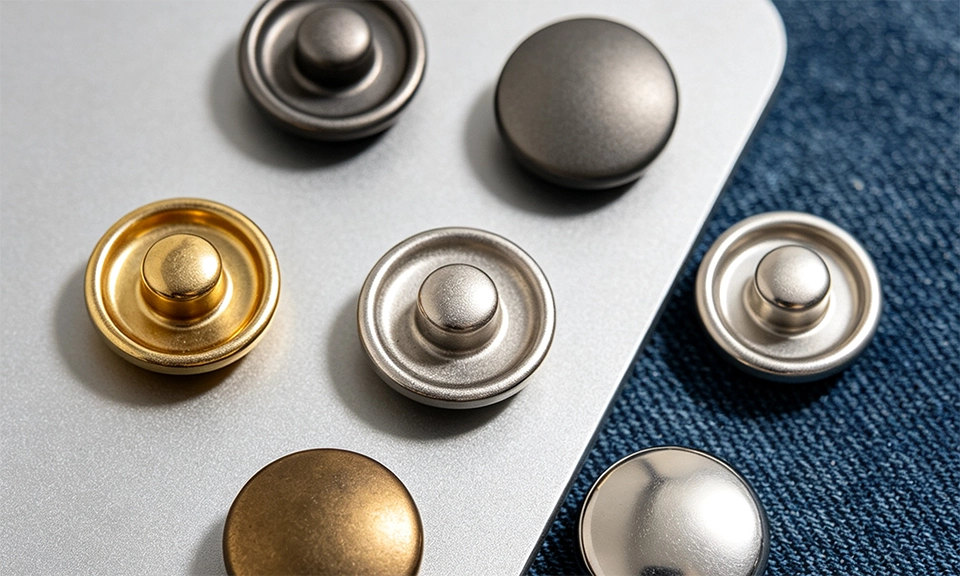
The choice of material for your custom denim buttons is a critical decision that impacts cost, aesthetics, and performance. Different materials offer unique advantages that must align with your brand’s target market and price point.
A supplier worth its salt will offer a selection of metal alloys to meet your needs. This choice dictates not only the button’s strength and resistance to wear but also how well it holds fine details like embossed logos .
Brass: The Gold Standard for Durability and Premium Feel
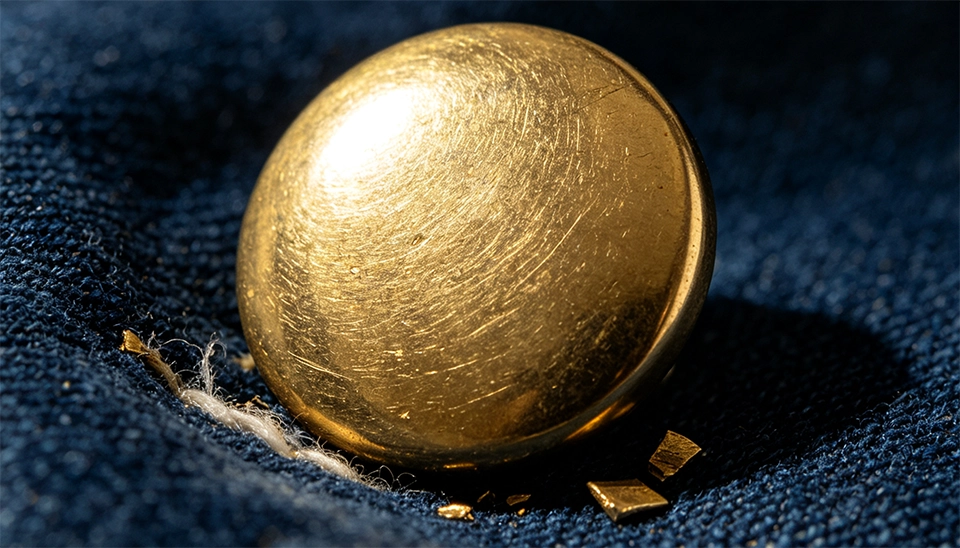
For those aiming for the pinnacle of durability and a premium aesthetic, solid brass remains the benchmark. Historically used in heritage denim, brass is an exceptionally robust copper-zinc alloy that offers superior corrosion resistance and a luxurious feel .
Buttons made from solid brass are a significant investment and often carry a higher price point than their zinc counterparts. They are frequently the material of choice for raw selvedge denim and premium collections where longevity is paramount. Manufacturers in regions like Italy and Turkey are particularly renowned for their high-quality brass jean buttons .
Zinc Alloy: The Versatile and Cost-Effective Workhorse
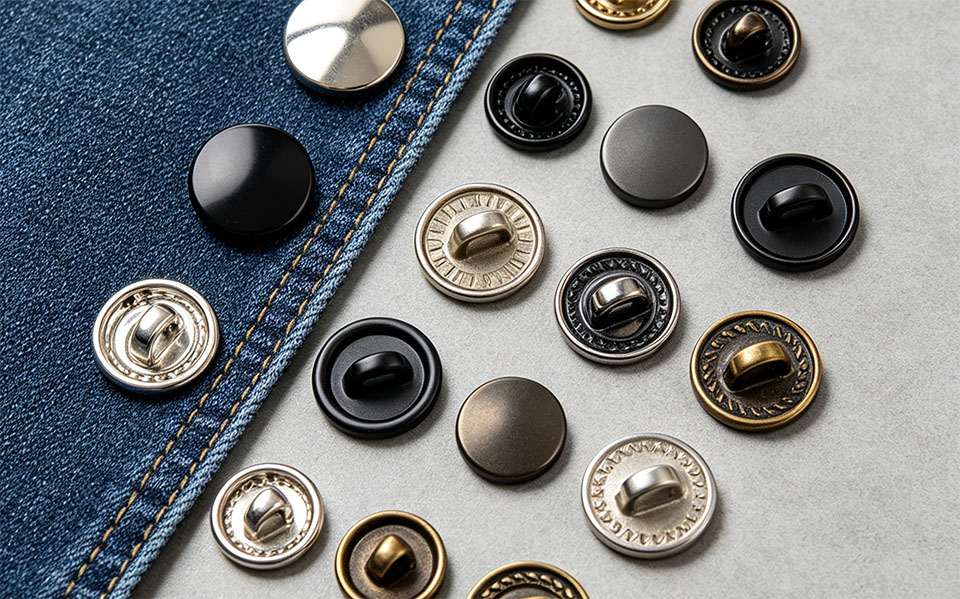
While brass offers a premium feel, zinc alloy stands as the undisputed workhorse of the denim hardware industry. This material is highly favored for its excellent casting properties, which allow for incredibly intricate detail in embossed logos that brass stamping sometimes struggles to replicate .
Modern custom logo buttons made from zinc alloy can be engineered to mimic the look and feel of brass, offering excellent plating adhesion and sufficient strength for most denim applications . It is the go-to choice for bulk orders and mid-market brands that require consistent quality and a sharp, professional appearance.
Logo Execution: Embossing vs. Debossing
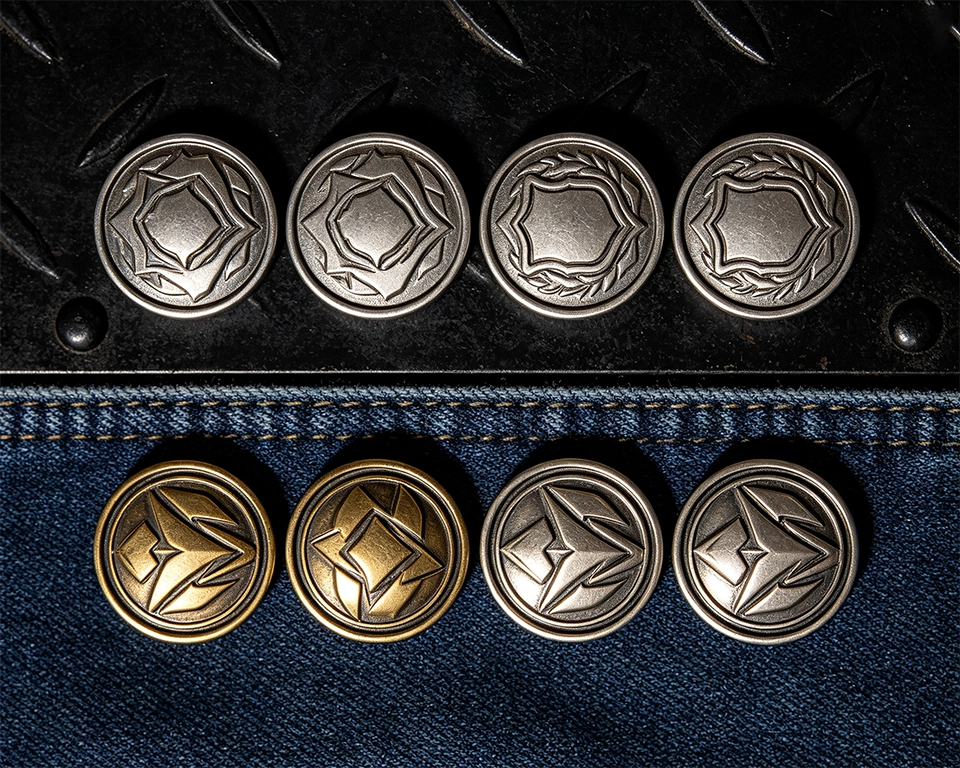
Once the material is selected, the next step is how to apply your logo to the cap. The two most common methods for customizing metal tack buttons are embossing and debossing.
Embossing creates a raised, three-dimensional effect by stamping the logo outward from the metal’s surface. This method catches light exceptionally well, creating a highly tactile and visible presence . Debossing, conversely, creates a recessed or sunken impression of the logo . This is often preferred for a more subtle, minimalist branding look and can be exceptionally durable as the metal edges protect the logo from abrasion.
The Allure of the Antique: Navigating Patina Finishes
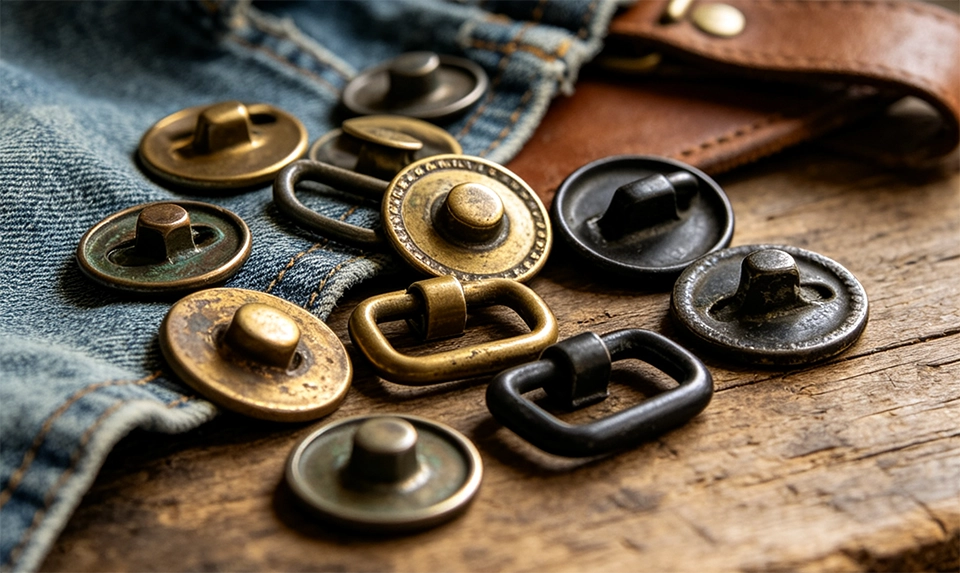
The finish applied to your button is what gives it a distinct personality. Modern electroplating techniques allow for a dizzying array of options, from high-shine polished silver to dark, moody gunmetal .
The current trend leans heavily towards antique and vintage finishes. Antique brass and antique copper finishes are exceptionally popular . They often feature a base plating of brass or copper with an added patina effect that creates a depth of color reminiscent of vintage workwear. This finish not only looks excellent but also reduces the appearance of minor scratches and wear over time.
The Rise of the Moving Button: Embracing the Swivel
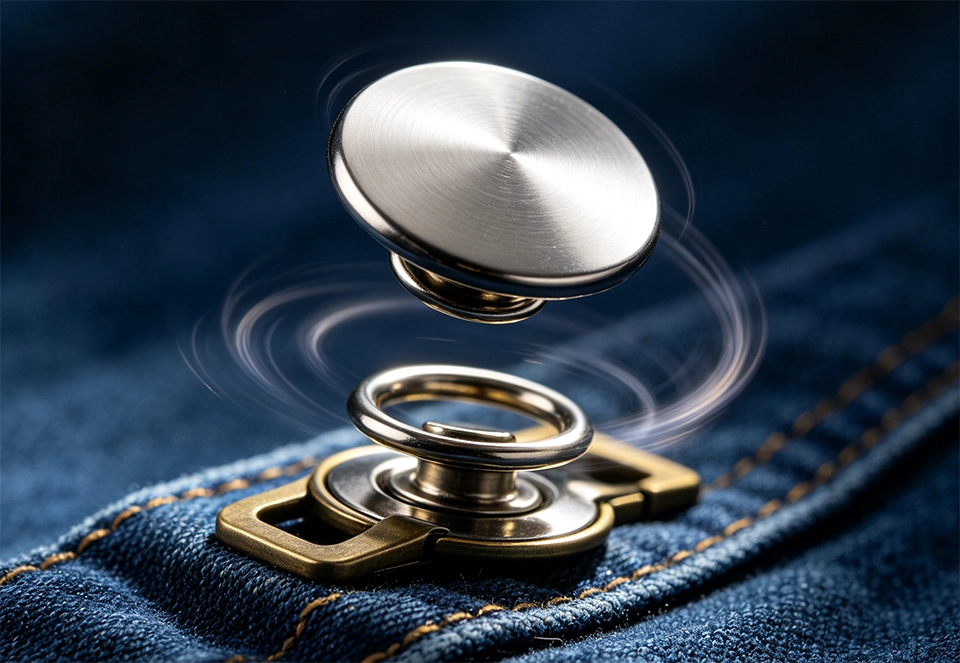
While the traditional tack button is fixed, an innovation known as the “moving” or “swivel” button is gaining traction, particularly in high-end and stretch denim.
These moving jean buttons feature a shank or pivot mechanism that allows the cap to move after installation . This reduces the stress placed on the buttonhole when bending or sitting, preventing the fabric from stretching out or tearing. For brands incorporating high amounts of stretch (e.g., 2-way or 4-way stretch denim), a custom moving button can significantly enhance the garment’s comfort and lifespan.
Sizing Matters: Navigating the Standard Diameter Options
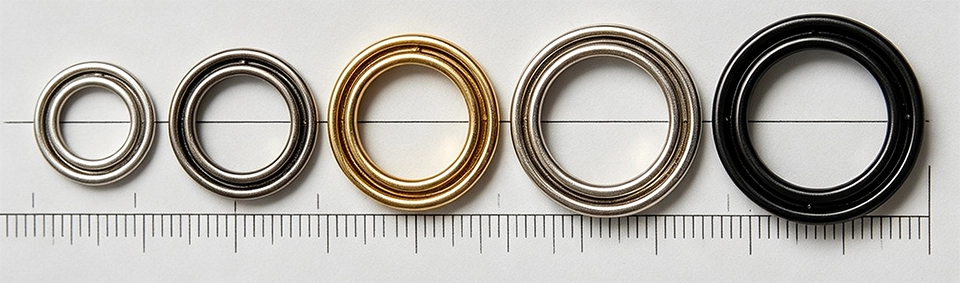
Size selection is a crucial, often overlooked, aspect of ordering custom jeans buttons. The diameter of the cap is usually measured in millimeters. The global standard for jeans is 17mm, a size that works well for most waistbands and fits the standard buttonhole .
However, manufacturers offer a range of sizes to suit different aesthetics and garment weights. A 14mm button is often used for slimmer fits or youth jeans, while a 20mm or 22mm button is preferred for heavy-duty workwear or oversized, statement-making designs . The tack length (nail length) is equally important and must be matched to the thickness of the denim to ensure a secure attachment .
The Manufacturing Process: From Molten Metal to Masterpiece
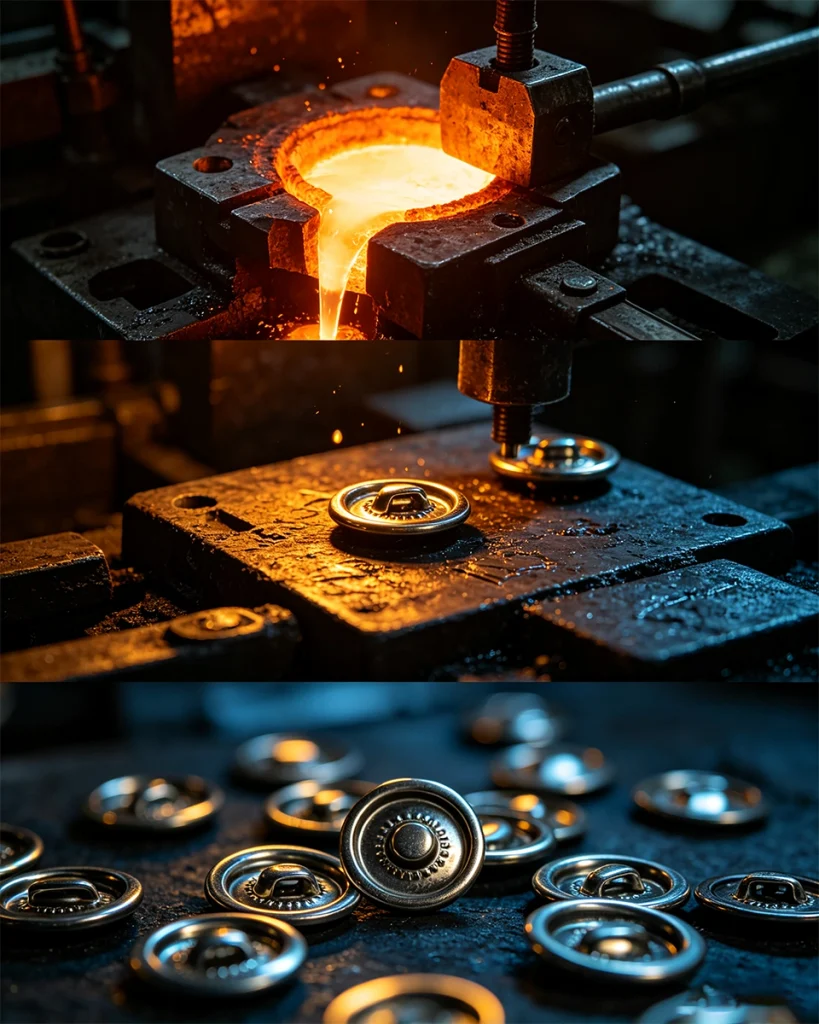
To truly appreciate a high-quality custom logo button, it helps to understand its journey from raw material to the finished product.
The production process for custom denim hardware is a blend of heavy machinery, chemistry, and meticulous quality control. A journey that typically involves ten to fifteen distinct steps ensures that every single button meets rigorous standards of consistency and performance.
The Die-Casting Process: Precision for Complex Logos
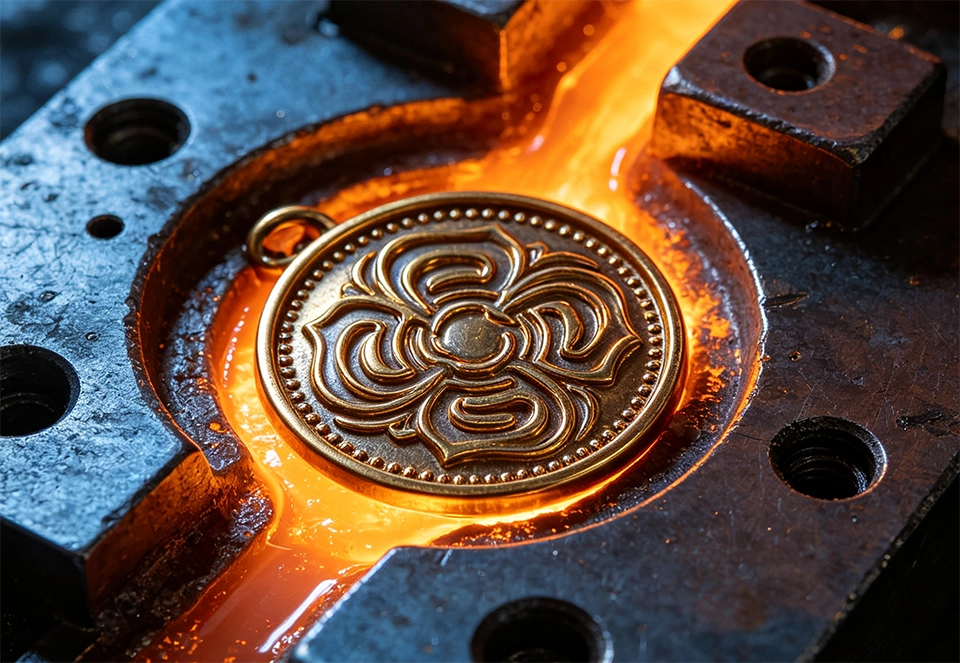
For zinc alloy buttons, die-casting is the preferred manufacturing method. Molten metal is injected into a hardened steel mold under high pressure . This process is ideal for capturing intricate details, such as fine lines in an embossed logo. It ensures that the logo details are consistent and sharp across millions of units .
The Stamping Process: Efficiency for Bulk Production
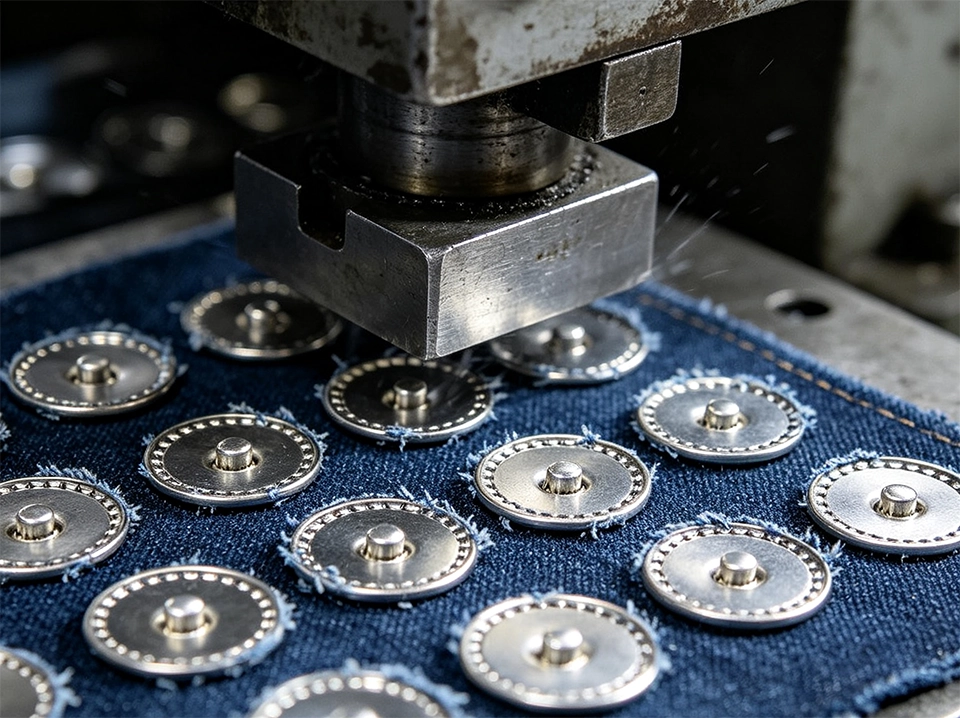
In contrast, brass jean buttons are often manufactured using a stamping (or pressing) process. Brass strips are fed into a press, which cuts and shapes the cap and nail . While stamping is incredibly efficient for high-volume production and yields a strong, durable component, it is less suited to capturing the extremely fine detail possible with die-casting.
The Plating Process: The Science of the Perfect Finish
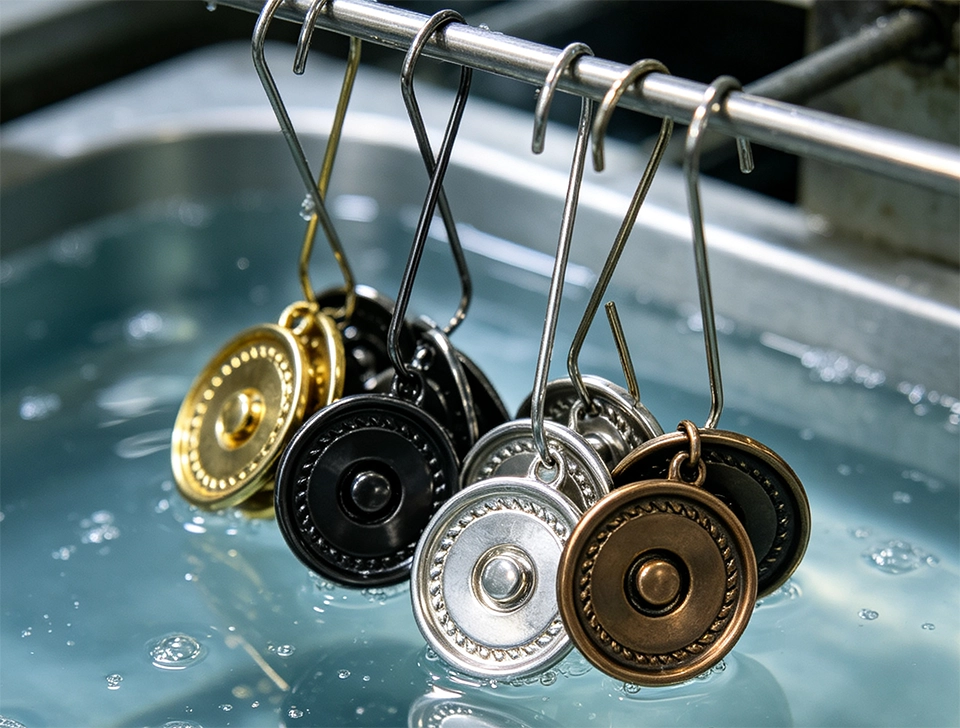
After the caps are formed, they undergo a rigorous plating process. This is where they acquire their final color, such as gold, nickel, or antique brass.
A crucial distinction in this phase is how the parts are plated. Rack plating involves hanging the buttons individually on racks to ensure even exposure to the electroplating solution. This is the superior method for preserving the sharp definition of an embossed logo, as it prevents the pooling of metal in recessed areas, which is a risk with barrel plating .
Quality Control: The Crucible of Durability Testing
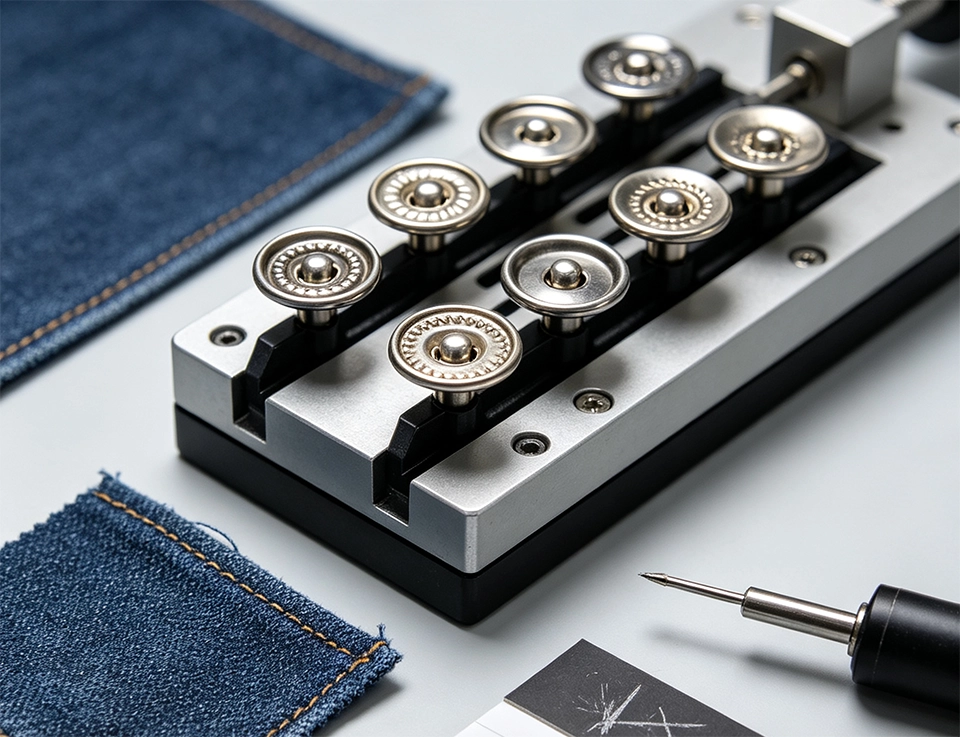
Quality control is where the best suppliers separate themselves. Beyond simple visual inspection, rigorous testing is employed. One of the most important is the salt spray test, where buttons are exposed to a highly corrosive saline mist to simulate years of exposure to sweat and the elements . This ensures the plating will not tarnish or degrade prematurely.
The Rivet Connection: Creating a Cohesive Hardware Palette
A single custom logo button should not exist in a vacuum. For a truly cohesive and professional finish, the hardware on the rest of the garment must be harmonized.
Matching jeans rivets, which reinforce stress points like pockets, in the exact same material, finish, and with a matching logo (if desired) is essential . This “hardware suite” approach elevates the entire garment, creating a signature look that is instantly recognizable. When ordering custom denim buttons, many suppliers offer the option to extend the customization to matching rivets.
Sourcing Strategy: Navigating the Global Supply Chain
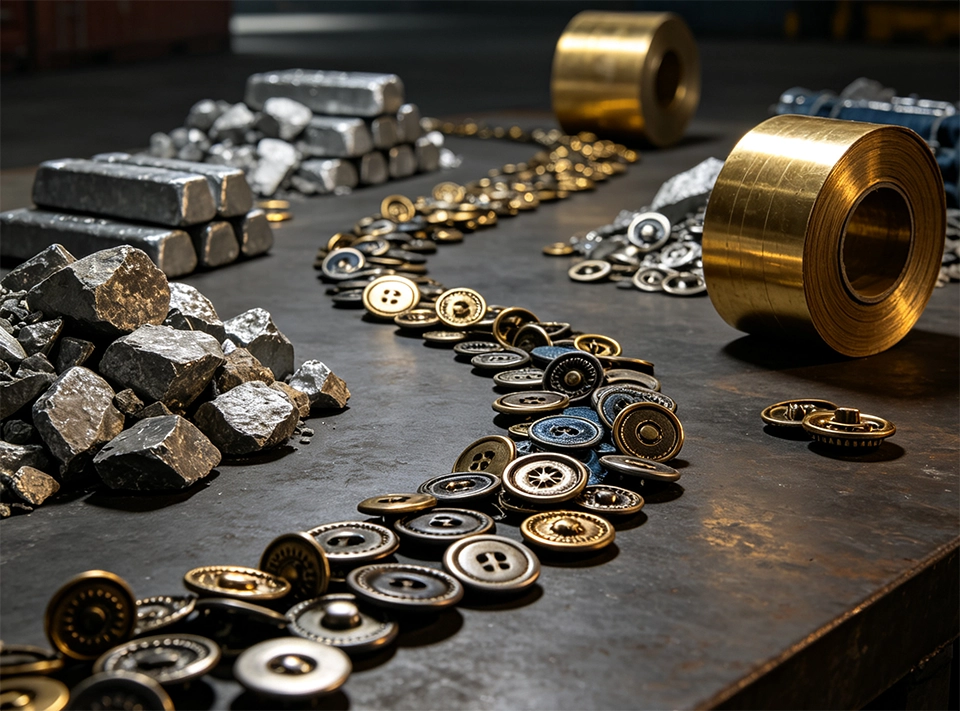
Choosing a supplier for your custom metal buttons is a critical business decision. Several global hubs are known for their denim hardware expertise.
- China: The dominant player for high-volume, cost-effective custom logo buttons with excellent die-casting capabilities and vast production capacity .
- Turkey: A major exporter known for high-quality brass manufacturing, faster shipping times to Europe, and lower minimum order quantities compared to Asia .
- Italy: The pinnacle of luxury and heritage manufacturing, often associated with the highest quality and craftsmanship for premium denim .
The OEM Journey: A Step-by-Step Guide to Customization
Ordering OEM jeans buttons with a custom logo is a streamlined process that generally follows these steps:
- Artwork Submission: Provide a high-resolution vector file (e.g., AI, CDR, EPS) of your logo.
- Mold Development: Your supplier creates a custom mold based on your design. This incurs a one-time tooling fee, which may be waived for large quantity orders .
- Sampling: The supplier produces a sample for your approval.
- Bulk Production: Once approved, the factory scales up for mass production.
- Quality Control & Shipping: A final inspection is conducted, and the products are packed and shipped.
Beyond the Waistband: Alternative Applications for Logo Buttons
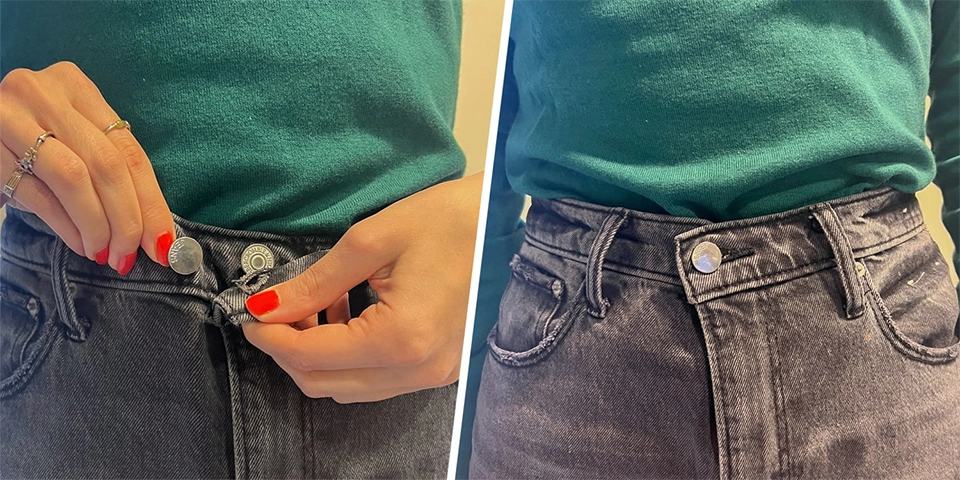
While the primary application is the waistband of jeans, the versatility of custom metal tack buttons extends far beyond this.
Brands are leveraging custom denim buttons for a variety of purposes:
- Denim Jackets: Used as front closures or chest pocket flaps .
- Workwear: Branded buttons on overalls and heavy-duty trousers.
- Bags and Accessories: A stylish closure for canvas totes or denim purses.
- Furniture Upholstery: Adding a branded touch to tufted furniture.
Conclusion: The Details that Define Your Denim Legacy
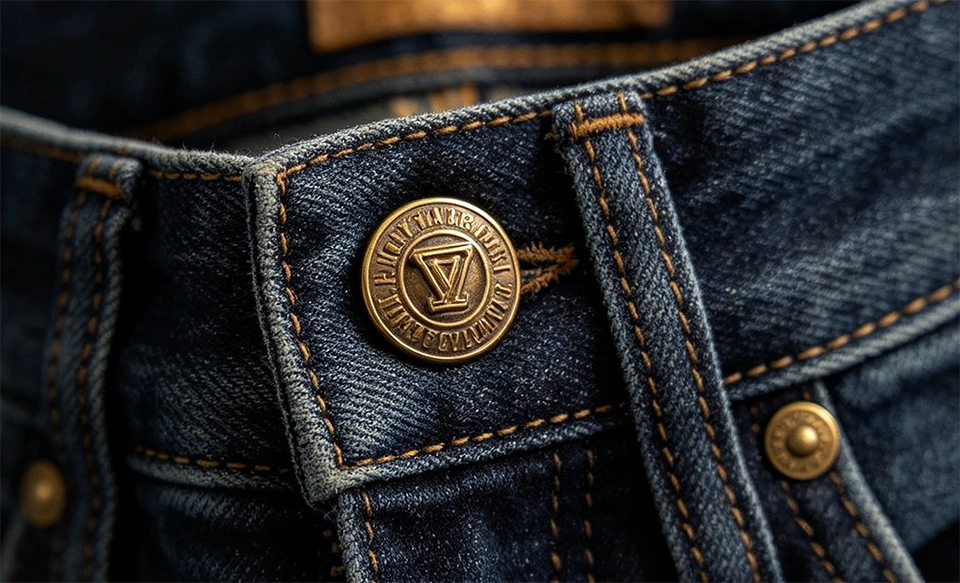
A pair of jeans is more than four pieces of fabric sewn together. It is a curated collection of details, and the button at the waistband is a focal point of both form and function. Investing in custom denim buttons is a declaration of intent—it signals that your brand cares about the entire product, not just the wash.
From the precise engineering of the tack button construction to the intricate etching of a logo-stamped metal tack button, the perfect closure is a tangible testament to quality. By meticulously considering the material, finish, and manufacturing process, you are not just creating a pair of pants; you are crafting a legacy. And it all starts with that one, tiny, powerful button.