Don't miss our holiday offer - up to 50% OFF!

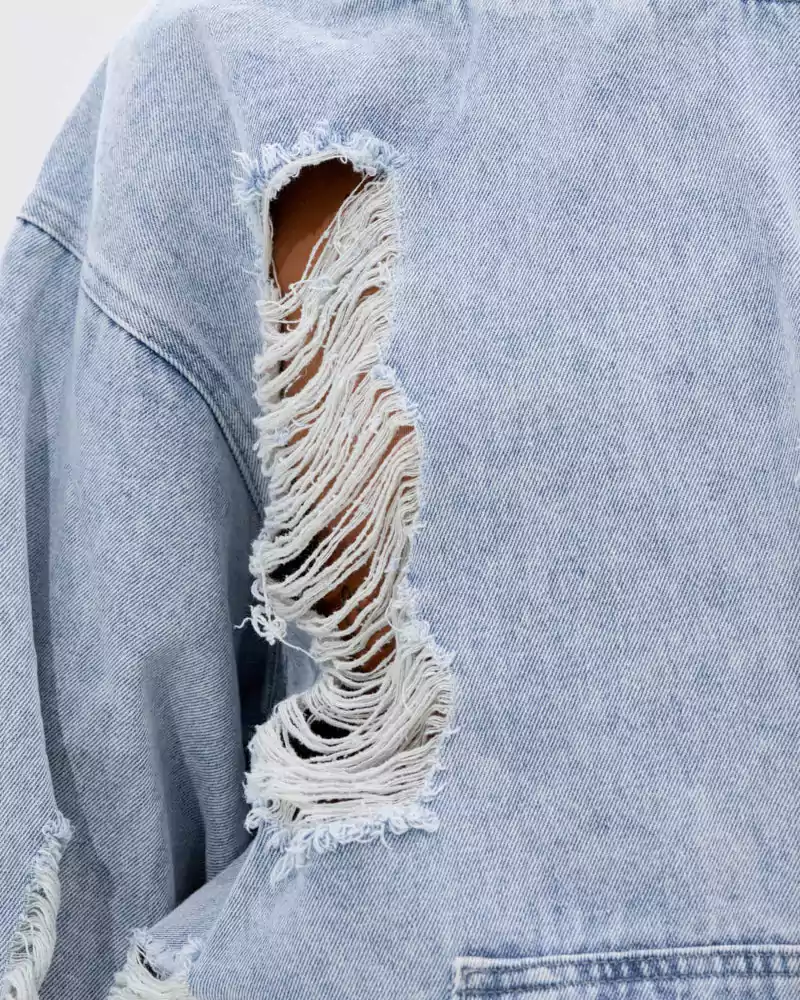
Custom denim jacket with patches

Introduction: The Patched Denim Jacket as a Palimpsest of Personal Narrative
The denim jacket is a garment of singular cultural weight. It is the uniform of the rebel, the artist, the wanderer. When adorned with patches, it transcends mere outerwear and becomes a palimpsest—a surface upon which personal history, aesthetic allegiance, and creative expression are inscribed in thread and fabric. The custom denim jacket with patches is not merely a garment; it is a wearable autobiography, a tactile record of places visited, bands beloved, and values held. This treatise examines the manifold dimensions of this artifact, from the selection of the base garment to the techniques of patch application and the design principles that govern successful composition.
The Base Garment: Selecting the Denim Jacket Substrate
Thrifted and Vintage Denim: The Aesthetic of Prior Lives
The most compelling patched jackets often begin with a thrifted or vintage denim jacket. The reasoning is both aesthetic and practical. Vintage denim possesses a character that new fabric cannot replicate—the softness that comes from years of wear, the fade patterns that record the movements of a previous owner, the subtle irregularities that attest to its provenance. A thrifted jacket may cost a fraction of a new one, allowing the maker to invest more in patches and supplies . The imperfections of the base garment become part of the finished piece’s narrative.
New Denim Jackets and the Question of Pre-Washing
For those who prefer a pristine foundation, new denim jackets are a viable option. However, pre-washing is essential before applying patches, particularly iron-on varieties. New denim carries sizing—a chemical finish applied during manufacturing—that can impede adhesion. Washing removes this barrier and also accounts for any shrinkage, preventing the jacket from distorting after the patches are applied .
Silhouette Considerations: Trucker, Oversized, and Cropped
The silhouette of the base jacket influences the overall aesthetic of the finished piece. The classic trucker jacket, with its fitted waist and chest pockets, offers a structured canvas that suits symmetrical patch arrangements. Oversized and cropped styles, by contrast, lend themselves to more experimental compositions. An oversized denim jacket provides ample space for a large back patch or an elaborate collage, while a cropped silhouette creates a concentrated focal area that demands careful curation .
The Patch Repertoire: Types, Materials, and Sourcing
Embroidered Patches: Texture and Dimensional Detail
Embroidered patches are the most traditional and visually substantial option. Created by stitching thread into a fabric base, they offer a raised, tactile quality that reads as premium and durable. The thread’s sheen catches light, adding dimension to the jacket’s surface. Embroidered patches are available in an enormous range of designs—band logos, vintage travel badges, floral motifs, abstract graphics—and can also be custom-produced from original artwork .
Woven Patches: Fine Detail and Color Reproduction
Woven patches are created on a loom, with the design integrated into the fabric rather than stitched upon it. This technique allows for finer detail and more precise color reproduction than embroidery, making woven patches ideal for complex designs with small text or intricate patterns. They have a flatter profile than embroidered patches, which may be preferable for compositions where a smooth surface is desired .
Leather and Appliqué Patches: Heritage and Tactile Quality
Leather patches introduce a distinct material register—a heritage quality that evokes motorcycle culture and workwear traditions. They may be debossed, embossed, or left plain, and they age gracefully, developing a patina that complements the denim’s own evolution. Appliqué patches—shapes cut from fabric and sewn onto the jacket—offer a more artisanal, handcrafted aesthetic, allowing for the incorporation of contrasting textiles, patterns, and textures .
Iron-On Versus Sew-On: The Durability Calculus
Patches are available with two primary attachment systems: iron-on (heat-activated adhesive) and sew-on (no adhesive, requiring stitching). Iron-on patches offer convenience and speed, but their adhesive is not permanent. For jackets that will be worn frequently and washed regularly, sewing around the edges of iron-on patches—or choosing sew-on patches exclusively—provides far greater durability. The received wisdom is unambiguous: iron-on alone is suitable for decorative jackets worn occasionally; for denim jackets subject to the rigors of daily wear, stitching is non-negotiable .
The Application Process: Techniques for Attachment
Iron-On Application: Heat, Pressure, and the Pressing Cloth
The iron-on application requires a household iron, a heat-safe surface, and a thin cotton pressing cloth. The jacket is laid flat, the patch positioned adhesive-side down, and the pressing cloth placed over the patch to protect both the patch and the jacket from direct heat. The iron is set to the temperature specified by the patch manufacturer—typically the cotton setting, with steam disabled—and pressed firmly over the patch for approximately thirty to forty-five seconds. The jacket is allowed to cool before the patch’s adhesion is tested. Edges that lift can be re-pressed with additional heat .
Hand-Sewing: Whip, Running, and Blanket Stitches
Hand-sewing offers the greatest control and is particularly suited to patches in awkward locations—sleeves, collars, curved seams—where machine access is difficult. The whip stitch, which wraps over the edge of the patch, is fast and decorative. The running stitch, simple and subtle, is appropriate for fabric patches where minimal visible stitching is desired. The blanket stitch, decorative and strong, is ideal for patches intended to stand out. Thread should match the patch border or intentionally contrast with it. Stitches should be even and tension consistent; uneven stitches are more noticeable than slow sewing .
Machine Sewing: Speed and Structural Integrity
Machine sewing is faster and produces exceptionally durable attachment. A straight stitch or narrow zigzag, with a medium stitch length (2.5–3) and a denim or heavy-duty needle, is appropriate for most patches. The machine is run slowly, pivoting at corners with the needle down. For bulky jackets, excess fabric is rolled or bunched to prevent pulling. The resulting attachment withstands repeated washing and the stresses of daily wear .
Hybrid Approaches: Iron-On with Reinforcing Stitches
The hybrid approach—applying an iron-on patch and then stitching around its perimeter—combines the convenience of heat adhesion with the durability of thread. This method is particularly recommended for patches on high-wear areas such as elbows, shoulders, and pocket edges. The stitching prevents the patch from lifting when the adhesive eventually degrades, extending the life of the application .
Design Composition: The Architecture of a Patched Jacket
Placement Zones: Back Panel, Chest, Sleeves, and Collar
The denim jacket offers multiple zones for patch placement. The back panel, with its broad expanse, is the traditional site for large statement patches—band logos, flags, portraits—and can serve as the jacket’s focal point. The chest, particularly the left chest, is suited to smaller patches, badges, and insignia. The sleeves accommodate a sequence of patches running from shoulder to cuff, creating a narrative progression. The collar offers a subtle placement for a single small patch or a repeating motif .
Layout Principles: Symmetry, Asymmetry, and Overlap
Patch composition may be symmetrical, with mirrored arrangements across the jacket’s centerline, or asymmetrical, with a more organic, clustered distribution. Symmetry conveys order and intentionality; asymmetry suggests spontaneity and accumulation. Overlapping patches—where one partially covers another—create depth and suggest a history of accretion, as if the jacket has been adorned over years rather than in a single session. The layout should be planned before any permanent attachment: patches arranged on the flat jacket, photographed, and adjusted until the composition satisfies the eye .
Thematic Coherence Versus Eclectic Accumulation
A patched jacket may be organized around a theme—vintage travel, music, horror, flora—or may embrace a deliberately eclectic accumulation of disparate motifs. The former creates a cohesive statement; the latter evokes the battle jacket tradition, where patches function as a record of experiences and allegiances acquired over time. Neither approach is superior; the choice reflects the wearer’s intent and aesthetic sensibility .
DIY Versus Commissioned: Pathways to a Custom Patched Jacket
The DIY Atelier: Personal Craft and Satisfaction
The DIY pathway is the most accessible and, for many, the most rewarding. The process requires only a denim jacket, patches, thread, a needle, and an iron. The satisfaction of wearing a garment that one has personalized with one’s own hands is considerable. The imperfections—a slightly crooked stitch, a patch that sits a degree off-axis—are part of the garment’s character, evidence of human labor rather than industrial precision .
Commissioning a Bespoke Piece from an Artisan
For those disinclined toward sewing, or for those seeking a more elaborate composition, commissioning a bespoke patched jacket from an artisan or small brand is an option. Companies such as Burnt Toast offer ready-made patched jackets with custom embroidered patch sets and screen-printed slogans. Fleek offers upcycled patchwork denim jackets from wholesale quantities. The Jacket Maker produces fully bespoke jackets with custom embroidery and patch sets, made to measure with a lead time of ten to twelve weeks .
OEM and Private Label Production for Brands
For brands seeking to produce patched denim jackets at scale, the OEM manufacturing ecosystem offers a pathway. VANRD, a Chinese manufacturer, provides custom denim jackets with patch branding, MOQ 100 per colorway, and sampling in seven to ten days. Fineyst Patches offers custom patches at $2.30 each at 100 pieces, with free physical proofs and no art or setup fees, suitable for brands producing patched jackets in bulk. The Sauce Suppliers, a global manufacturer with over two decades of experience, offers full customization including embroidery, woven patches, leather patches, and screen-printed artwork .
Care and Longevity: Preserving the Patched Jacket
Washing and Drying Protocols
A patched denim jacket should be washed inside out on a gentle cycle, preferably in cold water. Air drying is strongly recommended; the heat of a dryer can degrade the adhesive of iron-on patches and cause shrinkage that distorts the garment’s fit. The jacket should be turned inside out before washing to protect the patches from abrasion against other garments. Harsh detergents and bleach should be avoided .
Repairing Loose Patches and Stitching
Over time, patches may begin to lift at the edges, and stitching may fray or break. These minor repairs are easily addressed with a needle and thread. A few reinforcing stitches at the lifting corner will secure the patch. The patched jacket, like the denim itself, is an object that improves with maintenance and care.
Conclusion: The Patched Jacket as Wearable Autobiography
The custom denim jacket with patches is a garment of uncommon expressive potential. It is a canvas, a record, a declaration. The base may be thrifted or new, the patches embroidered or woven or leather, the application ironed or sewn or both. The composition may be symmetrical or chaotic, thematic or eclectic. What unites all patched jackets is the intention behind them—the decision to transform a mass-produced garment into something singular, to inscribe upon its surface a record of who the wearer is and what they value. The patched jacket is not merely clothing. It is a document, written in denim and thread, of a life being lived.