Don't miss our holiday offer - up to 50% OFF!

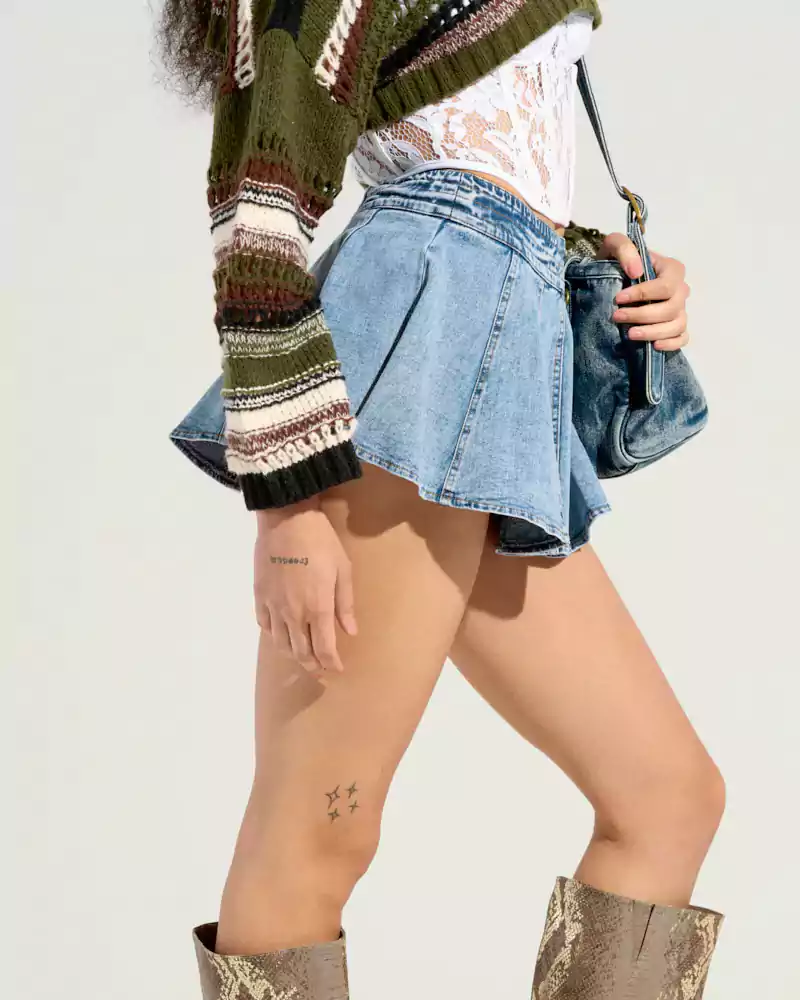
Custom Denim Skirt | OEM Private‑Label Denim Skirt Wholesale Manufacturing

The Enduring Appeal of the Denim Skirt in Contemporary Fashion
The denim skirt, a perennially versatile garment, has transcended its utilitarian origins to become a mainstay in the contemporary fashion landscape. Its unique capacity to oscillate between casual nonchalance and sophisticated refinement renders it an indispensable asset for any discerning brand. From the runways of Paris to the streets of Tokyo, this fabric of the people continues to evolve, offering a canvas for innovation in design, wash, and silhouette. For brands seeking to capitalise on this enduring trend, the pathway to market necessitates a foray into the intricate world of OEM (Original Equipment Manufacturer) and private-label manufacturing, a process demanding a sophisticated understanding of production intricacies.
Deciphering the Manufacturing Lexicon
Before embarking on a manufacturing partnership, it is imperative to navigate the nomenclature defining the industry. Original Equipment Manufacturing (OEM) refers to a model where a manufacturer produces a garment based on a brand’s exact specifications, tech pack, and design blueprint. You provide the proprietary design, and the factory executes the production.
Conversely, Original Design Manufacturing (ODM) involves the factory offering its own pre-existing designs and silhouettes, which a brand can then select and customise with its own fabrics, washes, and branding. This model is often expedites the development cycle, as the foundational pattern work is already established. The term Private Label is frequently intertwined with these concepts, yet it is distinct, referring specifically to a garment manufactured by one company for sale under another company’s brand name, often encompassing both OEM and ODM models. A distinction must be drawn here with White Label, which involves taking a generic, already-manufactured product from a catalogue and simply affixing one’s brand label to it—a model that offers limited scope for bespoke differentiation.
The Foundation of Quality: Selecting the Optimal Denim Fabric
The fabric selection is the single most consequential decision in the denim manufacturing process, as it dictates the garment’s final drape, durability, and tactile experience. This choice is a nuanced interplay of fibre composition, weight, and weave, each contributing a distinct character to the final product.
Stretch vs. Rigid
The perennial debate between stretch and rigid denim is predicated on the intended aesthetic and function of the skirt. Rigid, non-stretch denim is celebrated for its structure and authenticity, holding its shape with an unyielding integrity ideal for architectural silhouettes like the A-line or pencil skirt. It moulds to the wearer over time, developing a personalised patina. In contrast, comfort stretch denim, typically incorporating 1-2% elastane or spandex, offers enhanced mobility and a forgiving fit, making it a pragmatic choice for form-fitting styles like the bodycon or for designs intended for all-day wear.
Weight and Weave
Denim weight, measured in ounces per square yard, is a critical factor. Lighter weights, around 8-10 oz, are suited for flowing, tiered, or maxi skirts, offering a fluid drape that is less rigid. Heavier weights, from 12-14 oz, are the purview of structured minis and pencil skirts, providing substantial form and resilience. The weave is equally pivotal. Selvedge denim, woven on traditional shuttle looms, is prized for its tightly woven edges that prevent fraying and create a clean, finished appearance. This premium fabric is often reserved for high-end, heritage-inspired collections and carries a commensurate price point.
The Sustainable Imperative
Contemporary brands are increasingly guided by an ethical compass, necessitating consideration of sustainable materials. Organic cotton denim, sourced without harmful pesticides and synthetic fertilisers, offers a reduced environmental footprint and appeals to the eco-conscious consumer. Furthermore, recycled cotton blends and eco-friendly washing techniques like ozone finishing, which reduces water and chemical usage, are rapidly becoming standard practice for progressive manufacturers.
Navigating the Silhouette Spectrum: From Mini to Maxi
The silhouette of a denim skirt is a powerful vehicle for brand identity, with each style resonating with different demographics and style sensibilities. The mini skirt, a perennial favourite, channels youthful exuberance and is often crafted in a low-rise or high-waisted iteration, appealing to contemporary streetwear and vintage revival trends. The midi skirt, falling between the knee and the calf, offers a sophisticated and versatile option, suitable for A-line, pencil, or wrap styles, and has become a staple for a more modern, elegant aesthetic. At the other end of the spectrum, the maxi skirt, with its flowing, floor-length design, exudes a bohemian, relaxed elegance, often employing lighter fabrics like chambray or soft, washed denim to enhance its drape.
Mastering the Wash: The Art and Science of Denim Finishing
The wash and finishing process is where a denim skirt is truly imbued with its character. This is a highly technical domain that distinguishes a commoditised garment from a covetable fashion piece. Techniques such as enzyme washing use enzymes to soften the fabric and create a worn-in feel without the harshness of traditional stone washing. Stone washing, which utilises pumice stones to abrade the fabric, produces a distinct faded appearance and a soft handfeel. For precision and consistency, laser fading is increasingly employed, using digital technology to create intricate whiskering, patterns, and distressing effects with unparalleled accuracy. More artisanal techniques like hand sanding, grinding, and ripping are also utilised, though these manual processes often extend lead times and demand meticulous quality control to ensure uniformity across bulk orders.
Technical Detailing: Hardware, Stitching, and Branding Accoutrements
The micro-details of a garment often provide the most significant opportunities for brand differentiation. The selection of hardware—including zippers, buttons, and rivets—should align with the brand’s aesthetic, with YKK being the industry benchmark for quality. The stitching, both in terms of thread weight and contrast, can dramatically alter a garment’s visual impact, with top-stitching serving as a critical design feature. Furthermore, the application of branded labels, custom patches, and innovative packaging are integral components of the private-label service, transforming a generic product into a cohesive and marketable brand offering.
The Manufacturing Workflow: From Tech Pack to Finished Garment
Professional denim manufacturing follows a rigorously structured workflow to mitigate errors and ensure quality. The journey commences with the development of a comprehensive tech pack, a detailed blueprint containing all construction specifications, measurement charts, and visual references. This is followed by pattern making and the creation of sampling, often through multiple iterations to perfect the fit and wash. Upon approval of the “Golden Sample,” the process escalates to bulk cutting, sewing, and the pivotal washing and distressing stage. The workflow culminates in a final inspection, pressing, and packing for shipment.
The Crucible of Quality: Ensuring Consistency in Bulk Production
Maintaining consistency across a bulk order is the paramount challenge for manufacturers, particularly when dealing with complex washes or distressing. A robust Quality Control (QC) system is non-negotiable and must incorporate checks at every stage: fabric inspection, in-line production checks, and a final 100% inspection before packing. The QC checklist for a distressed denim skirt, for instance, would meticulously compare every unit to the approved Golden Sample, verifying the position and intensity of rips, the uniformity of the wash, the security of seams, and the integrity of hardware, with tight tolerances of ±1 cm on critical measurements.
Navigating Lead Times and Minimum Order Quantities
An understanding of production timelines and order minimums is crucial for effective collection planning. Lead times for custom denim skirts are variable, influenced by design complexity and order volume. Industry benchmarks suggest a total timeline of 35 to 60 days from sample approval to shipment, with samples often taking 12-15 days and bulk production a further 25-35 days, excluding ocean freight. Complex distressing and hand-finishing can extend this period significantly. Minimum Order Quantities (MOQs) are equally variable, with many manufacturers requiring a minimum of 100 to 300 pieces per style, though some offer lower thresholds for new brands.
Due Diligence: Selecting the Ideal Manufacturing Partner
The selection of a manufacturing partner is a strategic decision of immense consequence. Due diligence should encompass an evaluation of the factory’s technical capabilities, including in-house washing and sampling facilities, and their experience with specific denim types and distressing techniques. Verifying certifications such as ISO 9001 and BSCI provides assurance of quality management and social compliance. Finally, assessing their communication efficacy, transparency regarding pricing and lead times, and their willingness to support new brands will help forge a durable and mutually beneficial partnership.
Conclusion: Cultivating a Signature Denim Skirt Collection
The journey from concept to creation in the realm of custom denim skirts is a complex, multi-faceted process that demands attention to detail at every turn. By meticulously navigating the selection of materials, mastering the subtleties of wash and finish, and partnering with a seasoned manufacturer, a fashion brand can transcend the ordinary, creating a signature collection that resonates with its audience and establishes a powerful foothold in the competitive apparel market.