Don't miss our holiday offer - up to 50% OFF!

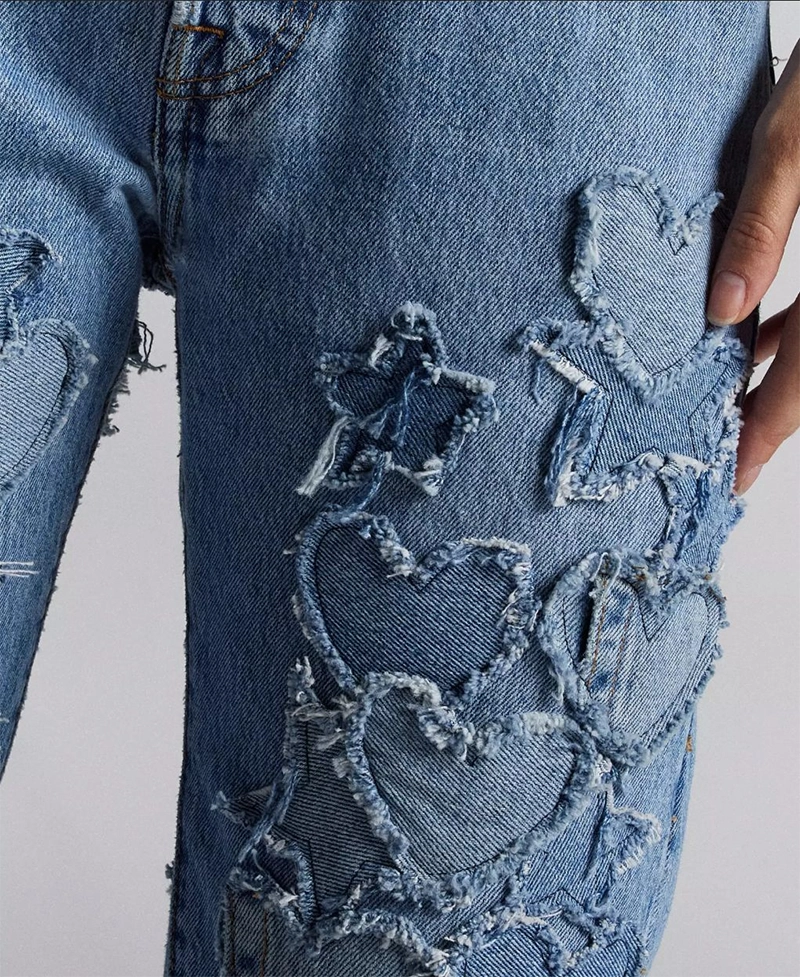
Custom Embroidery Denim Garments With Multiple Stitch Options

Introduction: The Renaissance of Textile Adornment
The denim garment, in its raw state, is a declaration of utilitarian purpose. Yet, when subjected to the art of embroidery, it is transformed from a simple covering into a detailed narrative of personal expression. Custom embroidery on denim represents a convergence of textile engineering and artistry, a process wherein a garment’s surface is elevated to a canvas. This guide delineates the intricate world of custom embroidered denim, exploring the myriad stitch options, design philosophies, and manufacturing considerations that bring these richly textured garments to life.
Defining the Art: Machine Embroidery vs. Hand Embroidery
The foundation of any embroidery project lies in the distinction between its execution. Machine embroidery, driven by digitized patterns and automated looms, offers precision, consistency, and the capacity for intricate repeats. It is the engine of commercial scalability. Hand embroidery, conversely, is a deliberately slow, artisanal practice that imparts a human touch to each stitch. The subtle variations in tension and spacing make each hand-embroidered piece a unique artifact, a rarity in the age of mass production. The choice between these approaches dictates the garment’s character and its market positioning.
The Denim Substrate: Why Twill is the Ideal Canvas
The weave of denim—the distinctive diagonal ribbing of the twill—offers a formidable yet receptive surface for embroidery. The fabric’s tight construction provides a stable base that resists distortion, ensuring that the stitches maintain their integrity. Furthermore, the inherent weight of the denim, particularly in heavier weights (12 oz and above), mitigates the “puckering” that can plague finer fabrics. This structural resilience renders denim the preferred substrate for substantial, textural embroidery work.
The Pantheon of Stitches: Navigating the Thread Options
The vocabulary of embroidery is vast, encompassing a spectrum of stitch types, each with its own aesthetic and structural properties. The run stitch, the simplest of all, creates a delicate, dashed line ideal for outlines. The satin stitch, with its closely packed zigzag construction, is the cornerstone of dense, filled areas, producing a smooth, lustrous surface. The fill stitch, often comprised of a series of parallel lines, efficiently covers large expanses. The multiplicity of options allows the designer to construct a visual hierarchy through texture alone.
The Play of Texture: Flat vs. Dimensional Stitching
The tactile dimension of embroidery is as significant as its visual impact. Flat stitching, where the thread lies flush against the fabric, creates a clean, two-dimensional graphic. Dimensional stitching, conversely, introduces volume. Techniques such as the French knot create small, raised beads of thread, while cording—the placement of a cord under a satin stitch—produces a pronounced, sculptural line. The interplay between these techniques yields garments that invite touch, adding a layer of engagement beyond the visual.
The Color Theory of Thread: Chromatic Considerations
The selection of thread color is a nuanced decision that profoundly influences the final aesthetic. A monochromatic scheme, utilizing varying shades of the same hue, imparts a subtle, sophisticated feel. High-contrast choices, such as a stark white against deep indigo, create a bold, graphic impact. The integration of metallic threads—gold, silver, and copper—introduces a dimension of reflectivity, catching light and conferring a premium, decorative quality.
Preparation and Stabilization: The Critical Underlayment
The integrity of the final embroidery is contingent upon the meticulous preparation of the fabric. To prevent the puckering and distortion that can accompany machine sewing, a stabilizer is utilized. This temporary backing supports the fabric and the stitches during the embroidery process. The selection of the appropriate stabilizer—whether cut-away, tear-away, or water-soluble—is determined by the density of the stitch pattern and the stretch of the fabric.
Digitizing the Design: The Art of Conversion
For machine embroidery, a digital representation of the design is required. Digitizing is the process of translating a graphic image into a machine-readable format, dictating the path, speed, and stitch type the machinery will execute. This is a highly specialized skill, as the quality of the digitizing directly affects the fidelity of the final embroidery. A poorly digitized file can result in thread breaks, misregistration, and an unsatisfactory finish.
Pattern Placement: The Visual Rhythm of the Garment
The location of the embroidery on the garment is as critical as the design itself. Strategic placement can accentuate the natural lines of the body or create a point of visual interest. Common placements include the back panel of a jacket, the thigh and leg of a pair of jeans, or the chest of a shirt. The orientation and scale of the pattern must be carefully considered to harmonize with the garment’s silhouette.
Traditional Motifs: Florals, Scrolls, and Americana
Certain motifs have become ingrained in the lexicon of denim embroidery. Floral motifs, from the intricate to the abstract, offer a timeless elegance. The scroll and the vine, with their curling, organic lines, are staples of Western and Americana design. These traditional patterns are often used to evoke a sense of heritage and craftsmanship, connecting the garment to a historical lineage of textile adornment.
Contemporary Expressions: Abstract and Avant-Garde
The contemporary landscape of denim embroidery has expanded to embrace the abstract and the conceptual. Designers are exploring geometric compositions, experimental thread gradients, and the integration of unconventional materials. This avant-garde approach challenges the perception of embroidery, positioning it not merely as decoration but as a form of fine art.
Thread Composition: Cotton, Rayon, and Metallic Variations
The intrinsic properties of the thread dictate the final luster and durability of the embroidery. Cotton thread, with its matte finish and exceptional strength, is a standard for heavy-duty applications. Rayon thread offers a high sheen and is preferred for its vivid color rendition, though it is less durable. Metallic thread, composed of a fine polyester core wrapped in a metallic foil, provides a striking reflective quality but requires careful tension management due to its inherent stiffness.
The Significance of Stitch Density and Tension
Two technical parameters—stitch density and tension—are critical to the quality of the embroidery. Stitch density, measured by the number of stitches per unit length, determines the opacity and smoothness of the fill. Excessive density, however, can result in puckering or even perforation of the fabric. Tension, the resistance applied to the thread, must be carefully calibrated to ensure the stitch forms correctly without pulling or breaking.
Embellishment Convergence: Combining Embroidery with Patches
The contemporary aesthetic often seeks to create complex visual textures through the combination of multiple techniques. Embroidery can be integrated with patchwork, where raised embellishments sit alongside flat-stitched sections. This juxtaposition of textures—the raised against the flat, the machine-stitched against the hand-applied—creates a rich, layered visual effect that distinguishes the garment from conventional, single-method decoration.
Customizing Hardware: The Union of Metal and Thread
The narrative of a custom garment is often told through the interaction of its constituent parts. The union of embroidery with custom hardware—button designs, zip-pullers, and rivets—creates a cohesive aesthetic. Embroidery can be designed to flow around or complement the hardware, ensuring that the garment feels integrated rather than ad-hoc.
The B2B Landscape: OEM/ODM Considerations
For brands seeking to bring embroidered denim to market, understanding the manufacturing landscape is paramount. OEM (Original Equipment Manufacturer) services allow brands to provide their own patterns and designs for production. ODM (Original Design Manufacturing) services offer a more comprehensive solution, where the manufacturer provides design, development, and production expertise. The choice between these models influences the level of creative control and the investment required.
Sampling: The Iterative Development Process
The journey from a digital design to a physical garment is an iterative one, requiring the production of samples. This crucial step allows for the evaluation of the embroidery’s scale, color, and texture on the actual fabric. The sample phase provides an opportunity to identify and correct issues—such as thread breakage or fabric puckering—before the commencement of a full production run. It is the crucible in which the design is refined.
Quality Control: Metrics for Embroidery Integrity
Ensuring the consistency and durability of embroidery across a production run is a significant challenge. Quality control protocols must encompass checks for correct thread tension, stitch alignment, and the absence of loose threads. The density of the stitching must be verified to ensure it matches the specification. In bulk production, random sampling is employed to verify the structural integrity of the embroidery and its resistance to abrasion.
Care Protocols: Preserving Embroidery Longevity
An embroidered garment demands a nuanced approach to maintenance. To preserve the threads, the garment should be washed inside out to minimize abrasion. The use of a mild detergent and cold water is recommended to prevent color bleeding and degradation. Air drying is vastly preferred to the tumble dryer, as the heat of the dryer can cause shrinkage of the denim, potentially distorting the embroidery.
Conclusion: The Art of the Embellished Jean
Custom embroidery on denim is a discipline that marries the industrial precision of textile engineering with the expressive freedom of fine art. Through the manipulation of stitch type, thread composition, and color, a garment is imbued with a distinctive identity. It is a practice that requires a profound understanding of fabric behavior and a commitment to technical excellence. For the discerning brand or individual, custom embroidery is not merely a service; it is a pathway to a garment that is truly unique—a lasting artifact of personal or commercial expression.