Don't miss our holiday offer - up to 50% OFF!

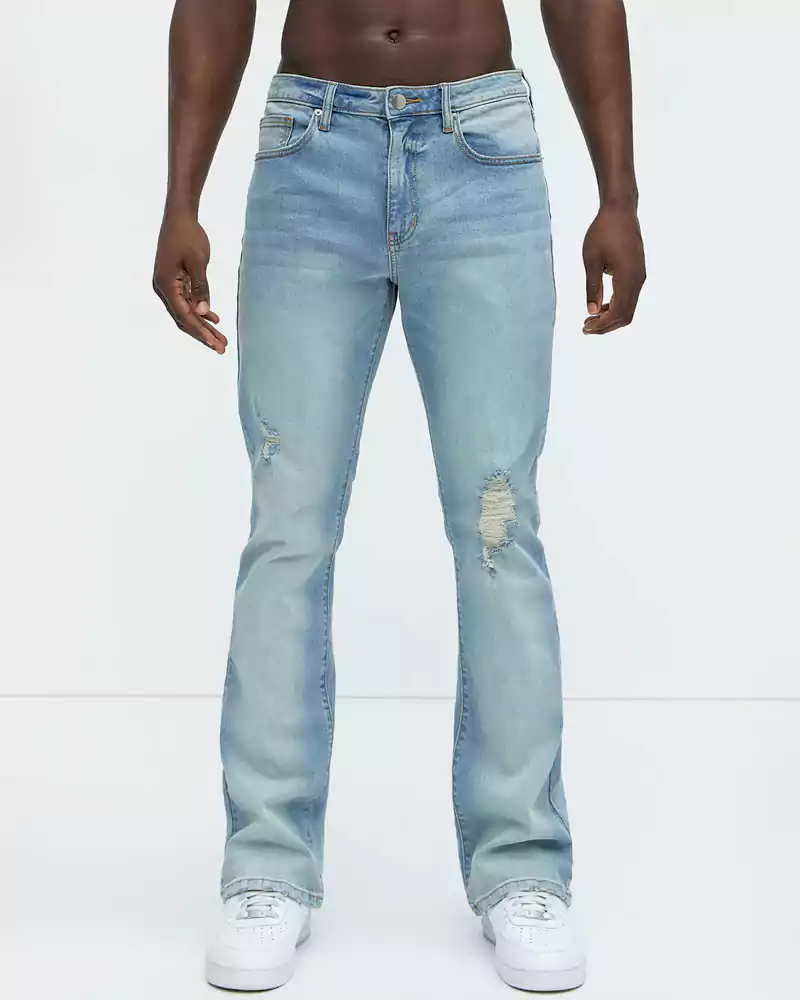
Custom Men Denim Pants Manufacturer for Bespoke Apparel Production

Introduction: The Denim Imperative
Denim pants occupy a singular position within the menswear hierarchy. They are a garment of profound versatility, capable of traversing the spectrum from utilitarian workwear to high-fashion statement. For the brand seeking to create a bespoke offering, the custom men’s denim pant represents a strategic opportunity to articulate a distinct identity through fabric, fit, and finish. This guide delineates the essential considerations for sourcing custom denim pants from a professional manufacturer, navigating the technical, commercial, and creative variables that define a successful bespoke production partnership .
The OEM/ODM Spectrum: Defining the Creative Partnership
The pathway to a custom denim pant involves a fundamental choice between manufacturing models. Original Equipment Manufacturing (OEM) allows a brand to provide its own specifications, tech packs, and approved samples for execution, offering maximal creative control. Original Design Manufacturing (ODM) offers a more collaborative approach, where the manufacturer develops the concept from a brief or adapts existing designs for the brand’s label. This distinction is critical, as it dictates the level of creative control a brand maintains over the final product .
Fabric Foundations: The Substrate of Quality
The integrity of a custom denim pant is predicated upon the quality of its substrate. The fabric’s weight, composition, and weave dictate the garment’s drape, durability, and capacity for holding a wash. Manufacturers typically offer a spectrum of denim weights, with midweight 10oz to 14oz cotton denim providing a balance of structure and comfort. The composition—whether 100% cotton or a cotton-elastane blend—determines the fabric’s hand-feel and its ability to withstand the rigors of industrial washing .
The Weight and Feel: Understanding GSM
The weight of the fabric, measured in ounces per square yard or grams per square meter (GSM), is a critical determinant of a garment’s character. Lighter fabrics, typically around 10oz, are suited for spring and summer collections. A mid-weight fabric of 13oz to 14oz is considered the standard for all-season wear, balancing durability with a comfortable drape. Heavier fabrics, ranging from 15oz upwards, offer a rigid, structured feel that is prized by purists for its potential to develop high-contrast, personalized fades .
The Pantheon of Washes: Defining the Aesthetic
The wash is the defining attribute of denim, transforming a flat textile into a textured artifact. The selection of the wash—whether a soft light wash for a casual appeal or a more aggressive acid wash for a grunge aesthetic—is a primary differentiator for a brand’s offering. Vintage washes, evoking a faded, lived-in look, are particularly favoured in the streetwear sphere, aligning with the trend of “intentional imperfection.” This process may include stone washing, enzyme washing, or the application of special finishes to achieve the desired depth and hue .
The Distressing Art: Controlled Decay
Distressing is the process of artificially aging denim to replicate the natural wear and tear of extended use. This is not a random act of destruction but a calculated application of abrasion, tearing, and fading. Manufacturers utilize techniques such as manual sanding, laser etching, and the application of potassium permanganate to create localized fading and “whiskering” patterns. For bespoke production, the level and placement of distressing are defined by the design brief, ensuring the garment embodies the desired character .
The Silhouette Spectrum: Defining the Fit
The architecture of a denim pant is defined by its silhouette. The contemporary market has shifted towards relaxed, voluminous cuts that prioritize comfort and a distinct visual language. Options range from the straight-leg and tapered fits to the oversized baggy and saber-style curved wide-leg silhouettes that dominate modern streetwear. The fit selection is a foundational decision that dictates the garment’s overall character and market positioning .
Pattern Engineering: The Mathematics of Fit
The translation of a design concept into a three-dimensional garment is a feat of mathematical precision. Pattern engineers draft the constituent pieces—the fronts, backs, waistbands, and pockets—that are assembled into the final pant. This is followed by grading, the process of proportionally increasing or decreasing the pattern to create a range of sizes while maintaining the integrity of the silhouette. For bespoke production, some manufacturers offer made-to-measure services, where the pattern is adjusted to specific body measurements .
Hardware and Trims: The Tactile Signature
The tactile experience of a pair of jeans is significantly influenced by its hardware. The selection of a zipper—brass, nickel, or antique copper—and the finish of buttons and rivets contribute to the garment’s narrative. High-end manufacturers offer an array of custom hardware options, allowing brands to select finishes that align with their aesthetic. The choice of thread color for stitching, from contrast orange to tonal, is another subtle yet powerful design element .
The Sampling Cycle: The Crucible of Refinement
Before the commencement of bulk production, the sampling phase is indispensable. This iterative process involves the creation of physical prototypes that allow for the evaluation of the fabric, fit, and finishing details. The sample serves as a tangible benchmark against which the final order is measured. Professional manufacturers offer structured sampling lead times, typically ranging from 7 to 10 days after receiving full design specifications .
Navigating Minimum Order Quantities
For emerging and established brands alike, the Minimum Order Quantity (MOQ) is a critical financial consideration. The market has evolved to accommodate smaller players, with many manufacturers offering flexible thresholds. While some factories may require a minimum of 300 pieces per style for fully custom denim garments, others offer existing styles with customization from 50 pieces. Understanding these thresholds is essential for effective cash flow management and risk mitigation .
Production Lead Times: Planning for Success
The timeline from order placement to delivery is a variable that must be factored into operational planning. Bulk production lead times for custom denim pants typically range from 20 to 35 days following sample approval, depending on the complexity of the wash, the manufacturer’s existing capacity, and the logistical arrangements for shipping. For made-to-measure production, lead times may extend to 15 working days, reflecting the bespoke nature of the garment .
Quality Control: The Assurance of Consistency
Maintaining consistency across a production run is a formidable challenge. Reputable manufacturers implement rigorous in-line and final quality control checks. This process often involves a multi-point inspection that assesses wash shade, stitching integrity, pocket alignment, zipper quality, and hardware installation. Professional facilities employ dedicated QA/QC staff and may engage third-party inspection agencies to provide an additional layer of impartial quality assurance .
Compliance and Certifications: Verifying Integrity
For brands targeting international markets, manufacturer certifications are a critical consideration. Certifications such as ISO 9001 (quality management), OEKO-TEX Standard 100 (chemical safety), and BSCI (social compliance) provide assurance that the production process aligns with international standards for quality, safety, and ethical labour. Verifying these credentials is a fundamental part of responsible sourcing .
The Italian Alternative: Bespoke Denim
For brands seeking a fully bespoke experience with a focus on sustainability and traceability, Italian manufacturers offer a distinct alternative. The Candiani Custom micro-factory in Milan, for example, produces made-to-measure jeans on demand, using materials sourced within a 238 km radius. This eliminates overproduction and ensures complete transparency in the value chain. The garments are crafted in timeless fits that transcend seasonal trends, embodying the principles of responsible consumption .
The American Artisan: Blue Delta Jean Company
The American manufacturing landscape offers a compelling proposition for bespoke denim production. Blue Delta Jean Company, the largest custom jean maker in America, produces each pair from extensive personal measurements, custom pattern making, and hand sewing by seamstresses. This artisanal approach, which takes approximately three weeks from initial fitting to delivery, has attracted a clientele that includes celebrities and sports figures, demonstrating the enduring appeal of domestically crafted, custom-fit denim .
Special Finishing: From Raw to Deconstructed
Beyond the wash, manufacturers offer a range of special finishing techniques to achieve specific design effects. This includes deconstruction, where raw edges are left unfurled to create a distressed, avant-garde aesthetic. Special processes like fringed distressing, rivet detailing, and patchwork are applied after the initial washing to ensure they appear natural and visually appealing. These finishes allow a brand to offer a truly distinctive product .
The B2B Landscape: China’s Production Hub
China’s Guangdong province remains a dominant force in denim manufacturing, offering a dense concentration of vertically integrated factories. These manufacturers specialize in a wide range of finishes, from enzyme washing to laser distressing, and provide flexible customization services with low MOQ options. Key players include Dongguan Shirui International Clothing Co. and Shenzhen Pengcheng Clothing Co., the latter with a 20-year heritage in water-washed denim and experience producing for international brands such as JUICY and DKNY .
The Value of a Tech Pack
A comprehensive tech pack is the cornerstone of a successful bespoke production. This document, containing detailed specifications regarding fabric, measurements, hardware, and finishing, ensures that the manufacturer can accurately execute the design vision. Providing a reference sample or design sketch can further accelerate the sampling phase and minimize the risk of misinterpretation .
Conclusion: Forging a Denim Identity
The sourcing of custom men’s denim pants is a strategic endeavor that demands a careful selection of a manufacturing partner. By navigating the nuances of fabric selection, wash consistency, silhouette definition, and quality control, a brand can create a garment that is not merely a product, but a durable artifact of its identity. It is a partnership that extends beyond transaction, requiring a manufacturer that understands the creative vision and possesses the technical acumen to execute it with precision and artistry.