Don't miss our holiday offer - up to 50% OFF!

Custom Men’s Denim Jacket Factory | Small Batch Available

Introduction: The Denim Jacket as an Enduring Menswear Archetype
The denim jacket occupies a singular position in the menswear canon. It is at once utilitarian and expressive, heritage-bound and perpetually contemporary. From the laborer’s uniform to the rebel’s uniform, its evolution mirrors broader cultural shifts. For apparel brands, the denim jacket represents a canvas for identity—a garment that carries logos, embroidery, patches, and wash treatments with equal facility. Yet the path from design to delivered product is intricate. The selection of a custom men’s denim jacket factory, particularly one offering small batch capability, is a decision that shapes a brand’s agility, margins, and reputation. This article examines the considerations that inform that selection and the execution of a successful small batch program.
Defining the Custom Men’s Denim Jacket Factory
A custom men’s denim jacket factory is a specialized manufacturing facility that produces denim outerwear to a client’s specifications. Unlike generic garment factories, such a facility possesses deep expertise in denim’s idiosyncrasies: its shrinkage behavior, its fading potential, its structural weight, and its responsiveness to finishing techniques. “Custom” implies that patterns, fabrics, washes, hardware, and branding are tailored to the buyer’s requirements. “Small batch available” signals flexibility—a willingness to accommodate lower volumes that larger factories often dismiss. This combination of specialization and flexibility is the factory’s value proposition.
The Historical Trajectory of the Denim Jacket
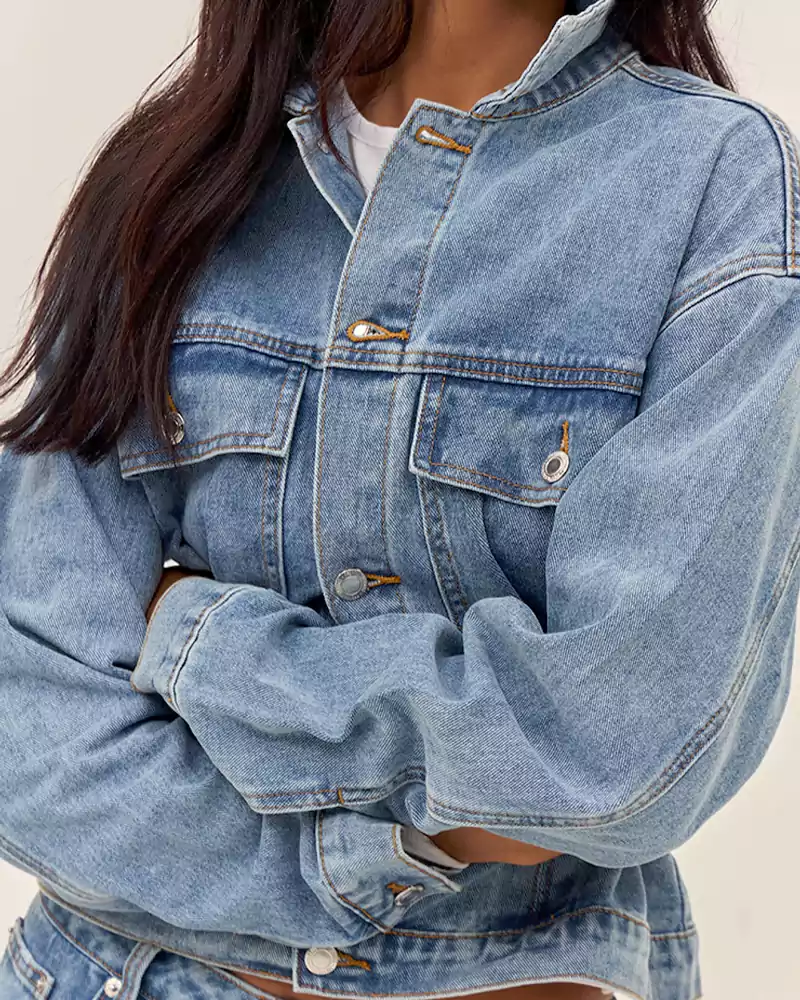
The denim jacket’s lineage stretches to the late nineteenth century, when durable workwear was engineered for miners, cowboys, and railroad workers. The Type I jacket, introduced in the early twentieth century, featured a pleated front and cinch back. The Type II refined the silhouette with a slimmer fit and flap pockets. The Type III, introduced in the 1960s, established the trucker silhouette that dominates today: pointed collar, button-front placket, chest pockets, and adjustable waist tabs. Understanding this evolution equips manufacturers and buyers to draw upon heritage references while executing modern interpretations.
Why Small Batch Production Matters in Contemporary Apparel
Small batch production has migrated from the periphery to the mainstream. Brands launch with limited runs to test market response. Drops, capsules, and collaborations demand low volumes and rapid turnaround. Sustainability imperatives discourage overproduction. Small batch manufacturing enables brands to iterate quickly, minimize inventory risk, and cultivate scarcity. A factory that accommodates small batches is not merely a vendor; it is a strategic enabler of contemporary brand strategy.
The Economic Viability of Low Minimum Order Quantities
Low MOQs are not charity; they are sound business. A factory that accepts small orders can attract emerging brands that will scale over time. It can fill capacity during slow periods. It can command premium pricing per unit to offset setup inefficiencies. The economics hinge on disciplined production planning, flexible machinery, and cross-training of operators. Buyers should understand that per-unit costs will exceed those of mass production and should plan accordingly.
Target Clientele for Small Batch Denim Jacket Manufacturing
The clientele for small batch denim jackets is diverse. It includes startup brands launching their first collection, established labels testing new fits or washes, musicians and artists seeking limited-edition merchandise, retailers developing private-label capsules, and promotional agencies requiring branded outerwear. Each client brings distinct requirements: some prioritize speed, others cost, others craftsmanship. A factory that understands these segments can tailor its service model accordingly.
Fabric Selection: Selvedge, Sanforized, and Specialty Denims
Fabric is the foundation. Selvedge denim, woven on shuttle looms, offers a finished edge and a distinctive character prized by enthusiasts. Sanforized denim has been pre-shrunk, reducing shrinkage unpredictability. Specialty denims—slubby, nep-flecked, cross-hatch, and overdyed—introduce visual texture. The factory must maintain access to a curated library of fabrics and advise on their suitability for jacket construction. Heavyweight selvedge may require reinforced stitching; lightweight denim demands careful tension control.
Weight Considerations and Seasonal Positioning
Denim weight, measured in ounces per square yard, determines drape, warmth, and seasonal suitability. A ten-ounce jacket suits spring and summer; a twelve- to fourteen-ounce jacket serves year-round; an eighteen-ounce jacket appeals to aficionados and cold-weather wearers. The factory should guide buyers in selecting weights that align with their target market and climate. Weight also influences construction; heavier fabrics require more robust needles, threads, and seam finishes.
Indigo Dyeing Methodologies and Their Aesthetic Consequences
Indigo dyeing is alchemical. Natural indigo, derived from the Indigofera plant, yields a softer, greener blue. Synthetic indigo dominates commercial production, offering consistency and colorfastness. Rope dyeing, the preferred method for premium denim, involves dipping yarns in successive dyebaths with oxidation between immersions. The number of dips determines shade depth. A factory with in-house dyeing capabilities can control this variable precisely, ensuring batch consistency that is vital for brands that reorder.
Silhouette Taxonomy: Trucker, Rider, Chore, and Beyond
The trucker jacket is the archetype: pointed collar, button front, chest pockets, waist tabs. The rider jacket, often associated with motorcycling, features an asymmetrical zipper and belted waist. The chore jacket, longer and boxier, descends from French workwear. Beyond these lie the blouson, the bomber, and the oversized contemporary silhouette. A capable factory maintains pattern blocks for these archetypes and can modify them to suit a brand’s aesthetic. Clarity of silhouette at the outset precludes ambiguity during production.
Pattern Engineering for the Male Torso
Men’s torsos present distinct patterning challenges. Shoulder width, chest circumference, and torso length vary considerably across populations. A pattern engineered for a slender European frame may constrain an athletic American build. The factory must possess a library of blocks and the expertise to adapt them. Grading rules must accommodate these variations without distorting the intended fit. For denim jackets, which are often worn layered over shirts or hoodies, ease allowances must be calibrated carefully.
Collar, Yoke, and Placket Configurations
The collar shapes the jacket’s character. A pointed collar signals heritage; a spread collar suggests modernity. The yoke, a shaped panel across the shoulders, influences fit and aesthetics. Western yokes, with their pointed drops, evoke cowboy heritage. Straight yokes offer minimalism. The placket—the reinforced strip housing the buttons or zipper—must be engineered for durability and alignment. These details, though seemingly minor, define the jacket’s visual signature.
Pocket Architecture and Functional Design
Pockets are both functional and decorative. Chest pockets with flaps, welt pockets, slash pockets, and interior pockets each serve distinct purposes. Pocket placement influences visual proportions. A factory must execute pocket construction with precision, ensuring that flaps align, stitching is uniform, and stress points are reinforced with bartacks. For branded jackets, pockets may incorporate embroidery, patches, or custom labels, requiring coordination with trim suppliers.
Hardware Selection: Buttons, Rivets, and Zippers
Hardware contributes both function and flair. Metal buttons, snap fasteners, and zippers must meet durability and compliance standards. Nickel release, lead content, and phthalates are regulated in many markets. Custom branding on hardware—debossed buttons, engraved rivets—enhances perceived value but requires tooling investment and extended lead times. The factory should present options, advise on durability, and ensure that hardware complements rather than competes with the fabric.
Wash Treatments and Finishing for Denim Jackets
Washing is where denim acquires personality. Techniques include stonewashing, enzyme washing, acid washing, sandblasting, whiskering, and laser fading. For jackets, localized abrasion at the elbows, collar, and hem creates authentic wear patterns. Some buyers prefer raw or rinse-wash jackets, allowing the consumer to develop fades. The factory must replicate the approved wash sample across bulk production, a task requiring disciplined process control and experienced washhouse personnel.
Lining Options and Interfacing Considerations
Lining enhances comfort, warmth, and structure. Options include cotton flannel, quilted nylon, sherpa fleece, and satin. Interfacing—fusible or sew-in—provides shape retention to collars, plackets, and waistbands. The factory must select interfacing appropriate to the fabric weight and desired hand feel. Poor interfacing choices yield collars that curl, plackets that pucker, and waistbands that roll. These internal details, though concealed, determine the jacket’s longevity and wearability.
Sizing, Grading, and Fit Inclusivity
Sizing a denim jacket requires attention to shoulder width, chest circumference, sleeve length, and torso length. Grading must preserve proportional relationships across sizes. Extended sizing, including larger chests and broader shoulders, broadens the addressable market. Buyers should provide clear size charts and specify whether jackets are intended to fit snugly or with layering ease. Transparency and consistency are paramount.
The Sampling Process for Custom Denim Jackets
Sampling is the crucible in which concepts are tested. Prototypes reveal pattern flaws, fabric behavior, and construction issues. Fit samples assess silhouette and comfort. Wash samples determine shrinkage and color. Pre-production samples confirm that bulk materials and methods will yield the approved result. A factory that embraces iterative sampling reduces the risk of bulk production failures. Patience during sampling averts costly corrections later.
Quality Assurance Protocols Specific to Outerwear
Quality assurance for denim jackets must address measurements, stitch integrity, hardware function, and wash consistency. Seams must withstand tension and abrasion. Bartacks must reinforce stress points. Buttons and zippers must function smoothly. A factory with a documented QA protocol and traceable records provides assurance that the delivered product matches the approved sample. Third-party inspections offer additional verification.
Compliance, Certification, and Ethical Manufacturing
Compliance is non-negotiable. Certifications such as WRAP, BSCI, Sedex, GOTS, and OEKO-TEX provide independent verification of labor conditions and environmental performance. Restricted substances lists must be observed. Wastewater from dyeing and washing must be treated responsibly. A factory committed to these standards enables buyers to market their jackets with integrity and mitigates legal and reputational risks.
Lead Times and Production Scheduling for Small Batches
Lead times in small batch denim jacket production are influenced by fabric availability, dyeing schedules, washhouse capacity, and sewing floor throughput. A factory that promises unrealistic timelines jeopardizes the entire production calendar. Reliability entails transparent communication about lead times and the ability to scale production up or down in response to market feedback. Buyers should plan for contingencies and maintain buffer stock where feasible.
Packaging and Branding for Boutique Presentation
Packaging shapes perception. Jackets may be folded, hung, or rolled, depending on retailer requirements. Branded tape, tissue paper, and care cards enhance unboxing experiences. Hangtags, woven labels, and size stickers must align with the brand’s identity. A factory that understands boutique presentation reduces the burden on the buyer and enhances the product’s shelf appeal.
Cost Structures and Pricing Transparency
Costs comprise fabric, trims, labor, washing, finishing, packaging, and overhead. A reliable factory provides itemized quotations that delineate these components, enabling buyers to identify cost drivers and negotiate intelligently. Hidden fees or vague pricing erode trust. Volume discounts, payment terms, and currency fluctuations should be discussed openly. The lowest bidder may deliver the highest defect rate; total cost of ownership must be evaluated.
Common Pitfalls in Small Batch Denim Jacket Sourcing
Pitfalls are plentiful. Inadequate vetting of a factory’s credentials leads to substandard output. Overlooking shrinkage tolerances yields ill-fitting garments. Neglecting hardware compliance invites customs delays. Underestimating sampling timelines compresses production schedules. Failing to verify wash consistency produces mismatched batches. Remedies include thorough due diligence, clear technical documentation, realistic timelines, and regular quality checks.
Case Studies: Successful Small Batch Denim Jacket Programs
Examination of successful programs yields insights. A startup brand partnered with a Portuguese factory to produce a limited run of selvedge trucker jackets, achieving sell-through within weeks. A musician collaborated with a Turkish maker on overdyed rider jackets for a tour, leveraging small batch flexibility. In both cases, success derived from aligned aesthetics, transparent communication, and the factory’s technical proficiency.
Future Trends in Custom Denim Jacket Manufacturing
The future will be shaped by digitalization, automation, and sustainability. 3D sampling reduces the need for physical prototypes. Automated cutting and sewing enhance precision. Blockchain traceability appeals to transparency-minded consumers. Circular economy models encourage take-back and recycling. Factories that invest in these capabilities will offer buyers a competitive advantage. Those who resist may find themselves marginalized.
Conclusion: Cultivating a Lasting Partnership with a Denim Jacket Factory
The custom men’s denim jacket factory offering small batch capability is a strategic asset for brands navigating an era of rapid iteration and discerning consumers. The selection of such a factory is a decision of considerable consequence. It determines product quality, market responsiveness, and brand reputation. The ideal partner combines technical expertise, transparent communication, flexible capacity, and ethical integrity. By conducting rigorous due diligence, documenting specifications meticulously, and nurturing collaborative relationships, buyers can bring distinctive denim jackets to market that resonate with consumers and endure beyond a single season.