Don't miss our holiday offer - up to 50% OFF!

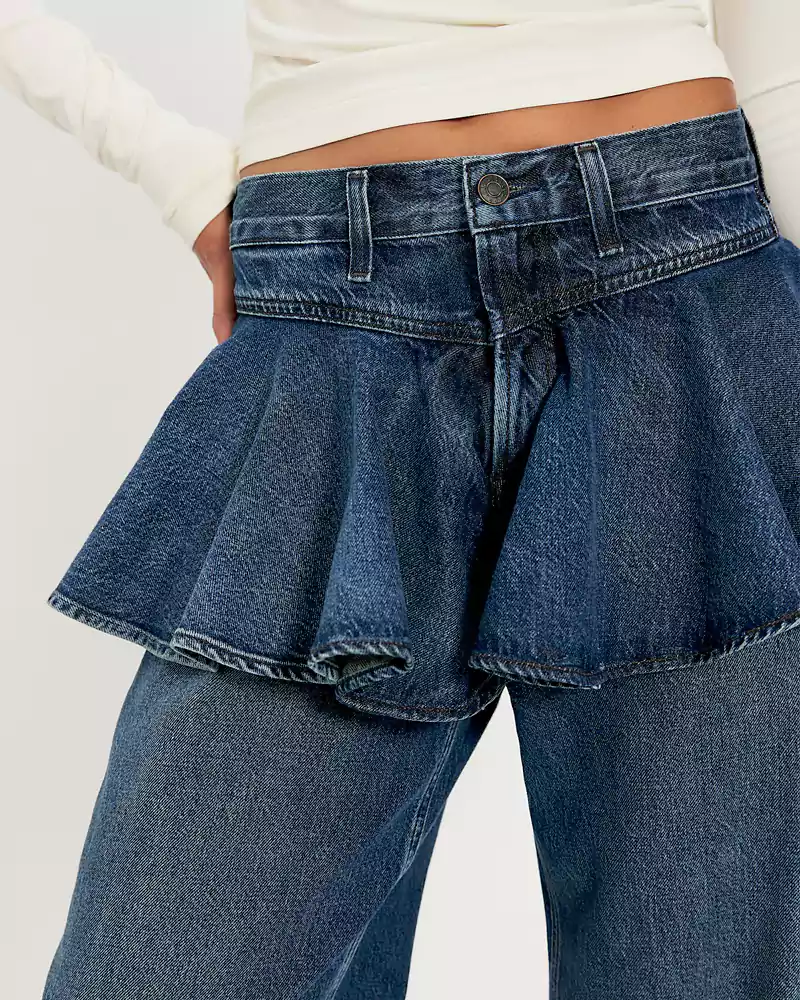
Custom Patchwork Denim Skirt | Vintage Washed Cut‑Sew Manufacturing Service

Custom patchwork denim skirts stand out as a statement‑driven staple for vintage‑inspired, streetwear and slow‑fashion collections, blending artistic panel assembly with authentic vintage‑washed character. Unlike mass‑produced ready‑to‑wear styles, professional cut‑sew manufacturing builds each skirt from the ground‑up: custom pattern drafting, multi‑panel patchwork layout, selective denim fabric matching, contrast topstitching, raw‑edge or frayed detailing, followed by specialized vintage wash processes including stone wash, enzyme fade, hand sanding and distressing to achieve your target retro aesthetic. Brands gain full control over silhouette — from midi maxi A‑lines to asymmetrical cuts — hardware selections, private‑label trims and patchwork composition, whether working with new denim yardage or dead‑stock fabric remnants. Pre‑production sampling validates panel alignment, seam durability, wash consistency and fit before bulk production, mitigating quality risks for small‑batch and limited‑run releases. This guide covers patchwork design options, vintage wash techniques, cut‑sew workflow, tech‑pack requirements, sampling cycles, MOQ realities and practical sourcing advice for your custom patchwork denim skirt line.
The Resurgence of Patchwork and the Imperative for Distinction
The patchwork denim skirt has transcended its DIY origins to become a formidable force in the contemporary fashion zeitgeist. This sartorial resurgence is driven by a confluence of factors: a yearning for individual expression, a growing consumer consciousness regarding sustainability, and a nostalgic reverence for the tactile, handmade aesthetic. In this landscape of mass-produced homogeneity, the patchwork skirt stands as a bastion of uniqueness, offering brands a potent vehicle for differentiation. The path to commercialising this garment, however, demands a sophisticated engagement with cut-sew manufacturing, a discipline distinct from standard apparel production, requiring meticulous planning, artisanal skill, and a comprehensive understanding of materials and finishing.
The Patchwork Paradigm: Defining Cut-Sew and Its Technical Nuances
At its core, the term “patchwork” in a manufacturing context refers to a specific construction methodology where the garment is assembled from numerous smaller pieces of fabric, rather than cut from a single, continuous bolt. This is the essence of cut-sew production . Unlike a straightforward skirt constructed from two or three main pattern pieces, a patchwork skirt is a complex mosaic. This process demands a profound rethinking of the production workflow. Each patch—whether a geometric square, a trapezoid, or an irregular shard—must be precisely cut, meticulously sequenced, and flawlessly joined. The technical complexity is amplified by the fact that these patches often vary in thickness, weight, and stretch, creating significant challenges in maintaining consistent tension and seam integrity during assembly.
Sourcing the Pixels: A Typology of Denim for Patchwork Construction
The selection of denim for patchwork is the foundational act that will dictate the final aesthetic and structural integrity. A brand has several strategic pathways. The first is the procurement of deadstock fabrics, the surplus textiles from other manufacturing runs. This approach offers a curated palette of unique, often obsolete washes that lend an immediate sense of authenticity. Alternatively, the upcycling of pre-consumer and post-consumer garments is a powerful narrative. This involves deconstructing existing jeans and jackets to salvage usable panels . This method is the quintessential embodiment of the circular economy, though it introduces variables in fabric condition and consistency that must be meticulously managed. A more conventional route is the development of custom-milled denim, where rolls of fabric in distinct washes and weights are produced specifically for the design, ensuring homogeneity in quality while still achieving the aesthetic of a patchwork of disparate elements.
Deconstructing the Vintage Wash: Artisanal and Mechanical Finishing Techniques
The vintage wash is the alchemical process that imbues a newly constructed garment with a patina of history. It is a critical differentiator for patchwork skirts. The techniques employed are both artisanal and mechanical. Enzyme washing, a staple of the industry, utilises biological enzymes to soften the fabric and create a subtle, worn-in feel without the harshness of pumice stones. For a more pronounced aged character, stone washing is deployed, where the garments are tumbled with porous stones to abrade the surface, producing a distinct faded appearance and a supremely soft handfeel . The true artistry lies in vintage effects such as garment dyeing, a process where the completed skirt is immersed in a dye bath, often in multiple iterations, to create tonal variation and depth . Techniques like hand sanding or whiskering are then applied to specific patches to simulate the wear patterns of a garment that has been loved for decades, a process that demands exceptional skill.
The Silhouette Lexicon: From Y2K Minis to Bohemian Maxis
The versatility of the patchwork principle allows for its application across a wide spectrum of silhouettes. The Y2K mini skirt, often characterised by a low-rise waist and a form-fitting construction, remains a perennial favourite, particularly within the streetwear and Gen Z demographics . This style often incorporates paneling and distinctive pocket placements. The A-line midi, falling gracefully between the knee and calf, offers a more sophisticated and universally flattering option. Its structure benefits from the architectural nature of patchwork, where the seams create natural lines and a fluid drape. At the other end of the spectrum, the bohemian maxi skirt, often constructed with a looser, gathered waist, leverages the patchwork technique to create a flowing, eclectic garment that feels intrinsically connected to artisan traditions. These longer silhouettes frequently utilise lighter denim weights or a combination of denim and complementary woven fabrics to ensure the necessary drape.
The Cut-Sew Workflow: Precision, Patterning, and Piecemeal Assembly
The manufacturing process for a patchwork skirt is a non-linear, iterative sequence that demands rigorous planning. It commences with the development of a tech pack that is exceptionally detailed, specifying the exact dimensions, material, and placement of every single patch. This is followed by the creation of a production pattern, a master template that is then dissected and re-configured to accommodate the patchwork mosaic. The cutting phase is critical; it often involves a manual, high-skill operation to cut each patch with precision. The subsequent assembly is the most intricate stage. The patches are meticulously joined, often starting with the creation of larger panels that are then combined to form the skirt’s body. This process requires a highly skilled sewing team capable of managing multiple seams and maintaining consistent tension across a variety of fabric types to prevent puckering or distortion.
Linearity and Construction: Stitching Methodologies and Durability
The structural integrity of a patchwork skirt is contingent upon the appropriateness of its stitching. The chosen seam type is not merely a functional necessity but a design feature. The most common approach is the use of a flat felled seam, which is exceptionally strong and creates a clean, finished appearance on both sides, a crucial consideration when working with multiple layers of varying thicknesses. Alternatively, a French seam can be employed for a more refined, delicate finish, encasing the raw edges entirely. The thread weight and colour are also pivotal; a contrasting top-stitch using a heavier, bonded nylon thread can accentuate the patchwork lines, serving as a deliberate design statement, while a tonal approach allows the fabric itself to take precedence . The hardware used in the pockets and fly must also be considered; the use of branded YKK zippers and custom rivets or buttons reinforces the garment’s premium positioning .
The Critical Infrastructure: Lining, Hardware, and Waistband Engineering
Beyond the patchwork itself, the ‘invisible’ elements of the skirt are paramount to its commercial success and consumer satisfaction. A professional patchwork skirt will almost invariably be fully lined. The lining serves a dual purpose: it provides comfort against the skin, shielding the wearer from the irritation of multiple bulky seams, and it conceals the internal construction, offering a clean, premium finish . The choice of lining fabric, typically a smooth polyester or viscose blend, must also complement the drape of the outer denim. The waistband is another critical engineering challenge; it must be robust enough to support the weight of the garment, often requiring a sturdy canvas or twill interfacing. The selection of hardware, from the central zipper to the waistband closure and any decorative rivets, should be of the highest quality, with metal finishes like brass, nickel, or gunmetal carefully chosen to resonate with the brand’s aesthetic language .
Navigating the OEM/ODM Landscape: Capabilities, MOQs, and Timelines
Partnering with a manufacturer for patchwork denim skirts requires a clear-eyed assessment of their capabilities and operational constraints. Most OEM/ODM partners for this category operate on a 50-100 piece minimum order quantity (MOQ) per style and colour . However, a lower threshold of 20 pieces may be negotiated for projects incorporating specific upcycled materials or for a pilot run . The production lead time is inevitably extended by the complexity of the design. Sampling, a crucial stage for approving fit and wash, will typically require 7-10 days to produce and refine prototypes, followed by a bulk production window of 15-20 working days . It is imperative for brands to factor in additional weeks for sea or air freight and to communicate the total timeline clearly to their distribution channels.
Vetting the Atelier: Selecting a Partner for Cut-Sew Expertise
The selection of a manufacturing partner for a project of this complexity is a strategic decision that transcends simple price comparison. Brands must prioritise factories with demonstrable experience in cut-sew denim construction. This specific expertise involves a deep understanding of working with multiple fabric weights and managing tension-related issues. The ideal partner will have in-house washing and finishing facilities, enabling tight control over the vintage wash process . A manufacturer’s willingness to collaborate on a custom sample and to provide transparent, iterative feedback is a strong indicator of their reliability. Furthermore, verifying certifications for social compliance and quality management, such as BSCI and ISO standards, is a non-negotiable part of the due diligence process, ensuring ethical and consistent production practices.
Conclusion: Forging a Signature of Sustainable Artistry
The custom patchwork denim skirt represents a pinnacle of apparel craftsmanship, a garment where artistry and industrial precision converge. It is a powerful statement piece that inherently speaks to a brand’s commitment to sustainability, individuality, and quality. The journey from a conceptual mosaic to a finished, commercially viable product is complex, demanding a meticulous approach to material sourcing, a sophisticated understanding of cut-sew techniques, and a deep partnership with a factory possessing specialised denim expertise. For the discerning brand, however, mastering this production creates an opportunity to offer not just a piece of clothing, but a tangible piece of wearable art—a definitive signature in a market saturated with the ordinary.