Don't miss our holiday offer - up to 50% OFF!

Custom Silver Denim Buttons: Custom Engraving, Plating & Size Options

Introduction: The Unassuming Anchor of Denim Identity
The denim button is a study in functional humility. It is a component so fundamental to the garment’s architecture that it often escapes conscious notice. Yet, this unassuming fastener is the focal point of closure, a mark of durability, and a statement of brand identity . For the discerning brand, the transition from a generic mass-produced button to a custom silver denim button represents a strategic elevation of the garment’s tactile and visual language. This guide delineates the critical considerations for sourcing custom silver denim buttons, navigating the technical, commercial, and creative variables that define a successful partnership.
Deconstructing the Button: The Anatomy of a Silver Denim Fastener
A denim button is more than a disc of metal; it is a precision-engineered two-part system. It typically comprises an upper cap and a lower nail (or stud), which are joined through the fabric to create a secure fastening . The cap is the visible element that bears the brand’s signature, while the nail is the functional anchor. The integrity of this union is paramount, as the button must withstand the rigorous tensile forces of daily wear and the repeated cycles of industrial laundering .
The Material Matrix: Zinc Alloy and Solid Brass
The choice of base material is the foundational decision that dictates the button’s durability, weight, and aesthetic potential. Zinc alloy is the most prevalent material in the production of custom denim buttons, prized for its excellent malleability, cost-effectiveness, and ability to hold intricate detail through die-casting . For premium applications, solid brass is the preferred substrate, chosen for its exceptional strength, malleability, and inherent corrosion resistance . Brass ensures the button meets rigorous holding and pushing strength standards mandated by major global markets.
The Plating Palette: Achieving the Silver Aesthetic
The silver aesthetic is achieved through electroplating, a process that deposits a thin layer of metal onto the base substrate. This layer determines the final color, luster, and corrosion resistance of the button. The silver spectrum is vast, extending beyond a simple metallic finish. Manufacturers offer a range of silver tones, from a matte silver and pearl nickel to a darker, moodier black nickel and the more reflective dark silver . For a vintage, understated character, a plated finish that mimics aged silver can be specified.
Custom Engraving: A Permanent Signature of Identity
The application of a logo or brand mark is the definitive act of customization. The preferred method for achieving a permanent, precise marking is laser engraving. This technique involves the use of a high-powered laser to vaporize the surface of the metal, creating a crisp, indelible design that is resistant to wear . An alternative is 3D embossing or debossing, where the logo is raised above or recessed below the surface through a stamping process . Embossing creates a tactile, raised signature that conveys a sense of premium craftsmanship.
The Pantheon of Sizes: From Delicate to Statement
The diameter of a silver denim button is a critical variable that influences the garment’s aesthetic and the functional requirements of the fastening. The size is typically measured in millimeters (mm) or in the traditional line (L) unit. The most common size is a 17mm diameter, widely considered the standard for classic denim . Beyond this benchmark, manufacturers offer a full diameter spectrum, from discreet sizes as small as 14mm, often used in women’s skinny jeans, to oversized, statement-making buttons of 22mm and above, typically employed in designer pieces and heavy workwear .
Hardware and Trims: A Comprehensive Denim Ecosystem
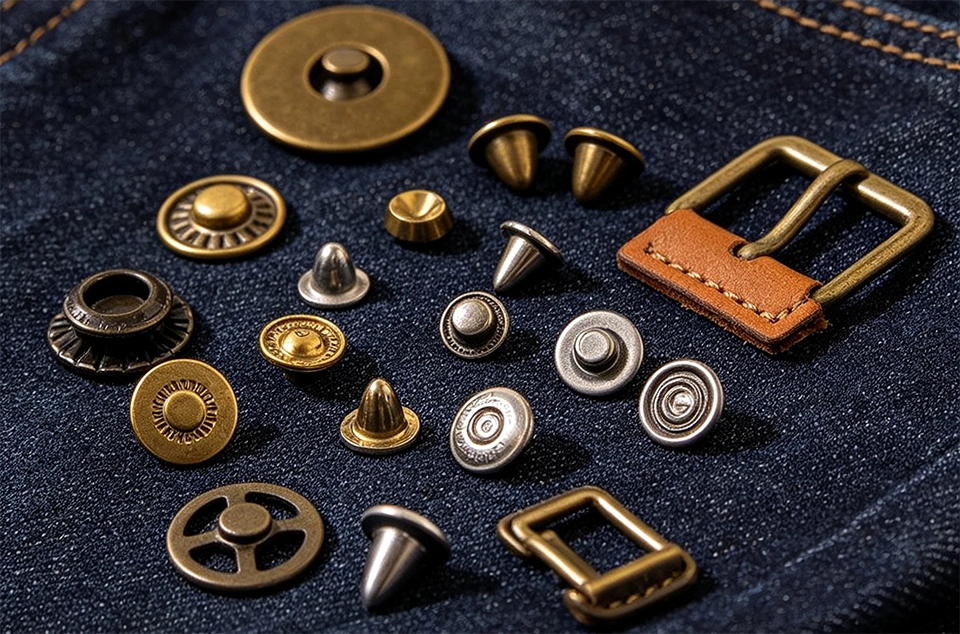
A professional button manufacturer will offer not only bespoke buttons but a full suite of coordinating denim hardware . This includes rivets, burrs, zipper pulls, and eyelets, all available in a matching silver finish. This ecosystem ensures perfect visual consistency across the garment, from the fly closure to the pocket reinforcements. By sourcing all hardware from a single, specialized supplier, a brand can achieve a unified, coherent aesthetic and streamline its supply chain.
Compliance: The Imperative of Safety and Sustainability
In an era of heightened regulatory scrutiny and consumer awareness, compliance is a non-negotiable attribute for a professional manufacturer. High-quality denim buttons are tested for the presence of restricted substances such as Nickel, Lead, and Chromium. A reputable manufacturer will adhere to global safety and environmental regulations, including CPSC (CPSIA), REACH (SVHC), and MSDS-based standards . Certifications such as OEKO-TEX Standard 100 and GRS provide assurance that the production process aligns with international standards for chemical safety and sustainability .
Navigating the Landscape: Chinese Manufacturing Hubs
China remains the global epicenter of denim hardware manufacturing, with two regions offering distinct advantages. Guangdong Province, the industrial powerhouse of the Pearl River Delta, is home to large-scale, vertically integrated factories like Dongguan D&G Industrial Co., Ltd., which boasts a 400,000-square-foot facility and 1,000 skilled workers . These operations specialize in high-volume production with consistent quality control. Fujian Province, centered around Quanzhou, is known for its agile manufacturers that excel in intricate designs and mid-volume runs, offering a balance of flexibility and precision .
The Economics of Customization: MOQs and Pricing
The cost and feasibility of a custom order are governed by the Minimum Order Quantity (MOQ). This threshold varies dramatically based on the supplier and the complexity of the customization. Some manufacturers offer flexible MOQs as low as 100 pieces per design . For a more aggressive project involving a custom mold and a sophisticated plating finish, the MOQ may be substantially higher, often starting at 5,000 to 10,000 pieces . Unit pricing is inversely proportional to volume, with costs decreasing as order quantities increase.
The Sampling Cycle: The Crucible of Approval
Before the commitment to bulk production, the sampling phase is essential. This process involves the creation of physical prototypes for evaluation. For a custom button, this requires the production of a custom mold. The sample time for a standard custom button typically ranges from 7 to 10 days . More complex designs involving intricate laser engraving or bespoke shapes may require a longer lead time. The sample is the tangible benchmark against which the final order is measured.
Conclusion: The Anchoring Detail
The custom silver denim button is a small component with a significant impact. It is an anchoring detail that defines the garment’s tactile character and communicates the brand’s commitment to quality. By navigating the nuances of material selection, plating options, engraving techniques, and size specification, a brand can craft a fastener that is not merely functional, but a permanent and distinctive signature of its identity.