Don't miss our holiday offer - up to 50% OFF!

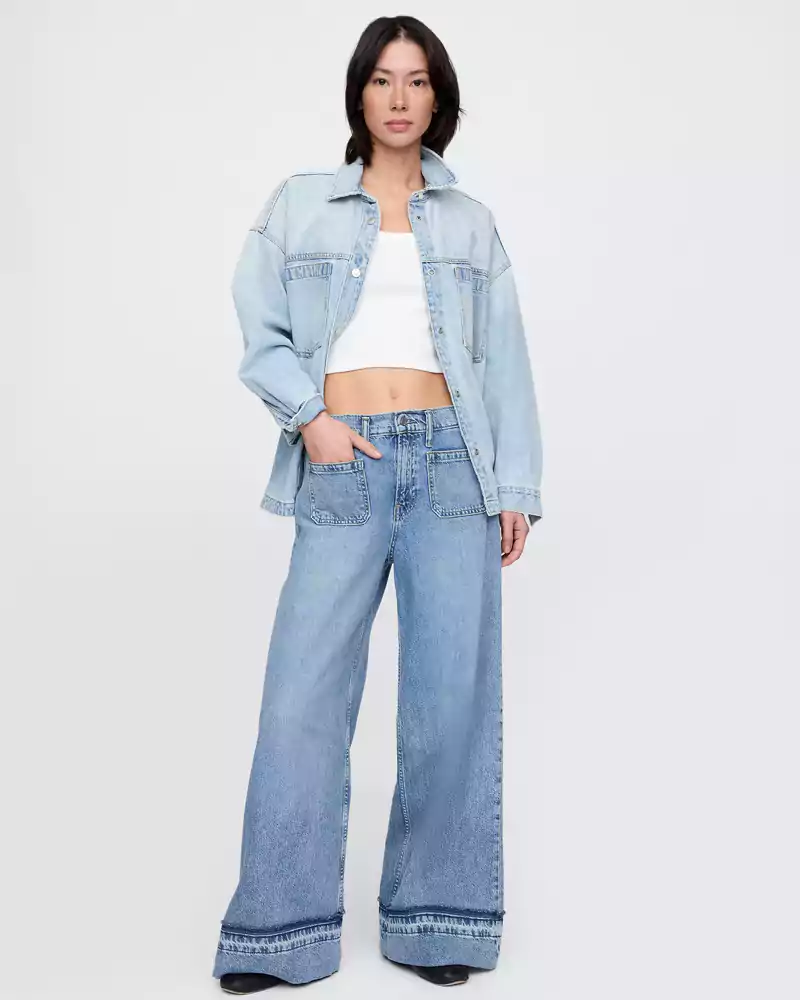
Custom Streetwear Denim Pants | OEM Manufacturer for Apparel Lines

Introduction: The Strategic Imperative of Custom Denim
In the volatile realm of contemporary streetwear, few garments command the cultural cachet of a well-executed pair of jeans. Denim is not merely a fabric; it is a canvas upon which brands project their identity, a medium through which authenticity is communicated. For apparel lines seeking to establish a distinctive presence, the transition from off-the-shelf offerings to custom streetwear denim pants represents a strategic imperative. This necessitates a partnership with an Original Equipment Manufacturer (OEM) that possesses not only technical proficiency but also a profound comprehension of the subculture’s visual lexicon.
Defining the Streetwear Aesthetic: Authenticity and Attitude
Streetwear, at its core, is a dialectic of rebellion and comfort. It draws inspiration from the raw energy of skate culture, the rhythmic pulse of hip-hop, and the avant-garde sensibilities of high fashion. Custom denim in this context must embody a deliberate rawness—a tactile authenticity that speaks to the wearer’s lived experience. The aesthetic is often characterized by relaxed silhouettes, utilitarian detailing, and assertive washes that defy convention. It is an attitude rendered in indigo, cotton, and thread.
The OEM Advantage: Why Partner with a Specialist Manufacturer
The pathway to a successful denim collection is fraught with technical complexities that are often beyond the purview of a nascent apparel brand. An OEM manufacturer provides the infrastructural backbone required to navigate this labyrinth . They offer access to specialized machinery, a skilled labor force, and, crucially, the institutional knowledge of wash chemistry and fabric behavior. By leveraging the expertise of an established OEM, brands can circumvent the steep learning curve and significant capital expenditure associated with setting up independent production lines, allowing them to focus on design and marketing.
Fabric Foundations: Understanding Denim Weights and Compositions
The integrity of any denim garment is predicated upon the quality and characteristics of its raw material. The weight of the denim, measured in ounces per square yard, dictates its drape, durability, and aesthetic potential . Lightweight denims (5–10 oz) offer breathability for summer collections, while heavyweight denims (14 oz and above) provide the rigid, structural form that produces high-contrast fades and lends a premium feel. Furthermore, the composition—whether 100% cotton or a blend with elastane for stretch—directly impacts the garment’s fit and comfort.
The Architecture of a Jean: Pattern Engineering and CAD Design
The journey from a design sketch to a tangible garment begins with meticulous pattern engineering. In a modern manufacturing workflow, Computer-Aided Design (CAD) software is employed to draft the digital blueprints for the front and back panels, yoke, waistband, and pockets . This precision is critical; pattern pieces must account for the inevitable shrinkage that occurs during the washing process. A slight miscalculation in the digital realm can compound into significant sizing errors in the final product.
Beyond the Five-Pocket: Exploring Contemporary Silhouettes
While the classic five-pocket configuration remains a staple, the streetwear milieu demands exploration beyond convention. The contemporary market has witnessed a resurgence of voluminous silhouettes—baggy, straight-leg, and wide-stack fits that offer a relaxed and often nostalgic aesthetic . OEM manufacturers adept in streetwear provide the flexibility to adapt these silhouettes, adjusting rise, thigh circumference, and leg opening to align with current trends and brand directives.
The Wash as Signature: From Raw to Acid to Snow
The wash is the defining element of a denim garment, transforming a simple blue pant into a statement piece. Manufacturers utilize a panoply of techniques—each producing a distinct visual effect . Stone washing imparts a soft, worn-in surface, while acid washing creates a high-contrast, marbled aesthetic. Enzyme washes offer a cleaner, more sustainable fading method. The selection of a specific wash is often the most potent means of differentiating a brand’s denim offering in a crowded marketplace.
Laser Precision: The Role of Technology in Distressing
The advent of laser finishing technology has revolutionized the denim industry, allowing for unprecedented precision in the application of distressing patterns. Laser systems can be programmed to burn away surface indigo with exactitude, recreating complex “whiskering,” “honeycombs,” and other wear patterns with digital consistency . This technique not only eliminates the environmental impact associated with traditional chemical distressing but also ensures that each pair in a production run is perfectly uniform.
The Art of Embroidery and Patchwork Detailing
To transcend the ordinary, streetwear jeans increasingly incorporate intricate embroidery and eclectic patchwork. These embellishments serve as a direct conduit for brand expression, whether through the integration of ornate scrollwork, rhinestone application, or the use of contrasting textile patches . Manufacturers offering ODM (Original Design Manufacturing) services can bring these elaborate concepts to fruition, ensuring that detailing is executed with the structural integrity required for the garment’s intended lifespan.
Hardware and Trims: The Significance of Buttons, Rivets, and Zippers
The tactile experience of a pair of jeans is significantly influenced by its hardware. The choice of a zipper—metal versus nylon—and the finish of buttons and rivets (e.g., brass, gunmetal, or anti-copper) contributes to the garment’s overall narrative. High-quality, branded hardware imparts a sense of robustness and premium value. It is a subtle yet powerful signal of craftsmanship that distinguishes a luxury streetwear piece from mass-market alternatives.
Labeling and Branding: Woven Tags, Leather Patches, and Packaging
The final branding touches—woven labels, leather or PU patches, and customized hang tags—are essential for establishing a cohesive brand identity. OEM manufacturers provide comprehensive services for private labeling, incorporating these elements according to the brand’s specification . Even the packaging, from the poly bag to the custom box, contributes to the unboxing experience and reinforces brand perception.
The Sampling Cycle: From Tech Pack to Physical Prototype
Before committing to bulk production, the sampling phase is indispensable. This iterative cycle involves creating physical prototypes from the tech pack to allow for the evaluation of fit, fabric behavior, and wash quality. It is the period during which potential flaws are identified and rectified. A single sample can undergo multiple revisions to ensure that the final product aligns perfectly with the brand’s vision and quality benchmarks .
Navigating Minimum Order Quantities and Lead Times
For emerging brands, the financial and logistical barriers to entry are often dictated by Minimum Order Quantities (MOQs) and lead times. While MOQs vary by manufacturer, many specializing in custom streetwear offer relatively accessible thresholds, often starting from 100 to 200 pieces per style . Lead times for sample development typically range from 3 to 10 days, with bulk production requiring an additional 20 to 35 days, depending on order volume and wash complexity .
Quality Control Metrics: Ensuring Consistency Across Production Runs
Denim manufacturing is a process fraught with variables, and maintaining consistency across a production run is a formidable challenge. Reputable OEMs implement rigorous in-line and final quality control checks to manage shrinkage, color fastness, and dimensional stability . This includes the use of standardized lighting for color matching and the inspection of every garment for stitching integrity and hardware security. Some facilities even employ third-party inspection services to provide an additional layer of quality assurance.
Sustainability in Denim: Eco-Friendly Practices and Certifications
The environmental impact of traditional denim production has drawn increasing scrutiny, prompting a shift toward more sustainable practices. Many manufacturers are now adopting technologies such as ozone washing to reduce water consumption and utilizing certified organic or recycled cotton. Certifications like GOTS (Global Organic Textile Standard), GRS (Global Recycled Standard), and OEKO-TEX are becoming crucial for brands seeking to appeal to environmentally conscious consumers .
Vertical Integration: The Advantage of In-House Laundry Facilities
The ability to control the wash process internally is a significant strategic advantage, offering brands greater autonomy over their product’s final aesthetic. Vertical integration—where a manufacturer maintains its own laundry facilities—allows for greater secrecy regarding proprietary wash formulas, streamlined production timelines, and tighter quality control. Such facilities are adept at executing a diverse array of washes, from stone and acid to the most nuanced specialty finishes .
Private Label vs. White Label: Distinguishing the Offerings
Understanding the distinction between private label and white label manufacturing is crucial. Private label, in the OEM context, involves producing a garment designed by the brand, to their exact specifications . White label, conversely, involves a brand purchasing a pre-existing style from a manufacturer’s catalog and adding their own labels. For brands seeking a truly unique identity, private label manufacturing is the only viable path.
Global Sourcing: Navigating Logistics and Export Compliance
The logistics of global sourcing involve complex considerations, from shipping terms to export compliance. Most Chinese OEMs offer flexible delivery terms, including FOB (Free on Board) from major ports like Shenzhen . Payment terms often involve a deposit (e.g., 30% T/T) with the balance paid before shipment. Ensuring that the manufacturer is experienced in exporting to the target market—be it the US, EU, or Australia—is essential for avoiding customs complications.
Market Trends: The Resurgence of Vintage and Y2K Silhouettes
The cyclical nature of fashion has brought the aesthetics of the 1990s and early 2000s back to the fore. Baggy, straight-leg, and flared fits dominate the contemporary streetwear landscape, providing the perfect canvas for heavy, high-contrast washes and intricate embellishments . Brands that successfully partner with an OEM that understands the technical demands of these voluminous silhouettes are poised to capture the zeitgeist.
Conclusion: Crafting a Distinctive Denim Identity
The creation of custom streetwear denim pants is a sophisticated alchemy of art and industry. It demands a profound understanding of fabric behavior, a mastery of chemical processes, and an unwavering commitment to quality. By forging a strategic partnership with a specialist OEM manufacturer, apparel brands can navigate the complexities of production and bring their distinctive vision to the market. In a world of mass production, it is the meticulous attention to detail—from the yarn selection to the final stitch—that enables a brand to craft a truly distinctive identity.