Don't miss our holiday offer - up to 50% OFF!

Denim clothing company manufacturers of Chinese

China has established itself as the undisputed powerhouse of global denim production, accounting for approximately 60% of the world’s denim fabric output and an even larger share of finished garment manufacturing. The phrase “denim clothing company manufacturers of Chinese” represents not merely a geographical designation but a comprehensive ecosystem of expertise, infrastructure, and innovation that has evolved over four decades. From the cotton fields of Xinjiang to the dyeing facilities in Zhejiang, from the sewing workshops in Guangdong to the finishing plants in Jiangsu, China has built an integrated denim supply chain that is unmatched in scale, efficiency, and technical capability.
The journey of Chinese denim manufacturing began in the late 1970s when the country opened its doors to international trade. Initially focused on basic, low-cost production, Chinese manufacturers quickly absorbed global best practices, invested in modern machinery, and developed indigenous expertise. Today, the industry has transcended its reputation as merely a low-cost producer to become a leader in sustainable practices, technological innovation, and design capability. This transformation has positioned Chinese denim manufacturers as preferred partners for the world’s most prestigious fashion brands and retailers.
Historical Evolution of Denim Production in China
The Early Years: Foundation Building
The emergence of China as a denim manufacturing hub can be traced to the economic reforms of the late 1970s and early 1980s. During this period, the government encouraged foreign investment and technology transfer, leading to the establishment of joint ventures with Japanese, Hong Kong, and European denim producers. These early partnerships brought essential knowledge about indigo dyeing techniques, shuttleless weaving technology, and garment finishing processes that were previously unavailable in China.
By the 1990s, China had developed a robust domestic denim industry, with manufacturing clusters forming in coastal provinces. Guangdong province, particularly the Pearl River Delta region, emerged as the epicenter of denim garment production, while Zhejiang and Jiangsu provinces specialized in fabric weaving and finishing. This geographic specialization created efficiencies that allowed Chinese manufacturers to offer competitive pricing without compromising on quality.
The Modern Era: Technological Advancement
The turn of the millennium marked a significant shift as Chinese denim manufacturers began investing heavily in research and development. Advanced machinery from Italy, Germany, and Japan was imported and adapted for local production conditions. Computer-aided design systems, automated cutting tables, and robotic sewing equipment became commonplace in larger manufacturing facilities. This technological adoption enabled Chinese manufacturers to produce increasingly complex designs with consistent quality.
Furthermore, the industry developed indigenous innovation capabilities. Chinese engineers and technicians developed proprietary dyeing formulations, finishing chemicals, and washing techniques that reduced water consumption and environmental impact while achieving unique aesthetic effects. This period also saw the emergence of Chinese denim brands that began competing in domestic and international markets, demonstrating the country’s ability to move up the value chain from contract manufacturing to branded production.
Comprehensive Manufacturing Capabilities
Vertical Integration: From Fiber to Finished Garment
One of the defining characteristics of leading Chinese denim manufacturers is vertical integration. Unlike manufacturers in many other countries that specialize in a single stage of production, Chinese companies often control the entire supply chain from raw material procurement to finished garment delivery. This integration provides several critical advantages: quality control at every stage, reduced lead times, cost efficiencies through elimination of intermediaries, and the flexibility to respond quickly to design changes.
The vertical integration typically begins with cotton sourcing and yarn spinning. Chinese manufacturers work directly with cotton producers to ensure fiber quality and traceability. State-of-the-art spinning mills convert raw cotton into ring-spun, open-end, or compact yarns, each offering different characteristics in terms of strength, softness, and appearance. The yarns then move to weaving facilities where high-speed air-jet or rapier looms produce denim fabrics in various weights, constructions, and finishes.
Dyeing is perhaps the most critical and technically demanding stage of denim production. Chinese manufacturers have mastered both traditional rope dyeing and newer slasher dyeing methods, achieving consistent indigo penetration and wash-down properties. Many facilities also offer specialty dyeing including sulfur, reactive, and pigment dyes, enabling a diverse color palette beyond classic indigo. The finishing department completes the fabric production process with sanforizing, singeing, brushing, and coating treatments that determine the final hand feel and appearance of the denim.
Garment Manufacturing Excellence
The garment manufacturing stage is where Chinese denim companies truly excel. With access to one of the world’s largest and most skilled workforces, manufacturers can handle production volumes ranging from small-batch artisanal collections to massive orders for global retailers. Advanced cutting rooms utilize computer-controlled spreading and cutting equipment that minimizes fabric waste while ensuring pattern accuracy. Sewing floors are equipped with specialized denim machinery including chainstitch machines for hems, buttonhole machines, and bartacking equipment.
Quality control is embedded throughout the manufacturing process, with inspection points at fabric receiving, cutting, sewing, and final finishing. Many Chinese manufacturers hold ISO 9001 certification and comply with international quality standards. The use of statistical process control and lean manufacturing principles has further improved consistency and reduced defect rates.
Finishing and Laundry Capabilities
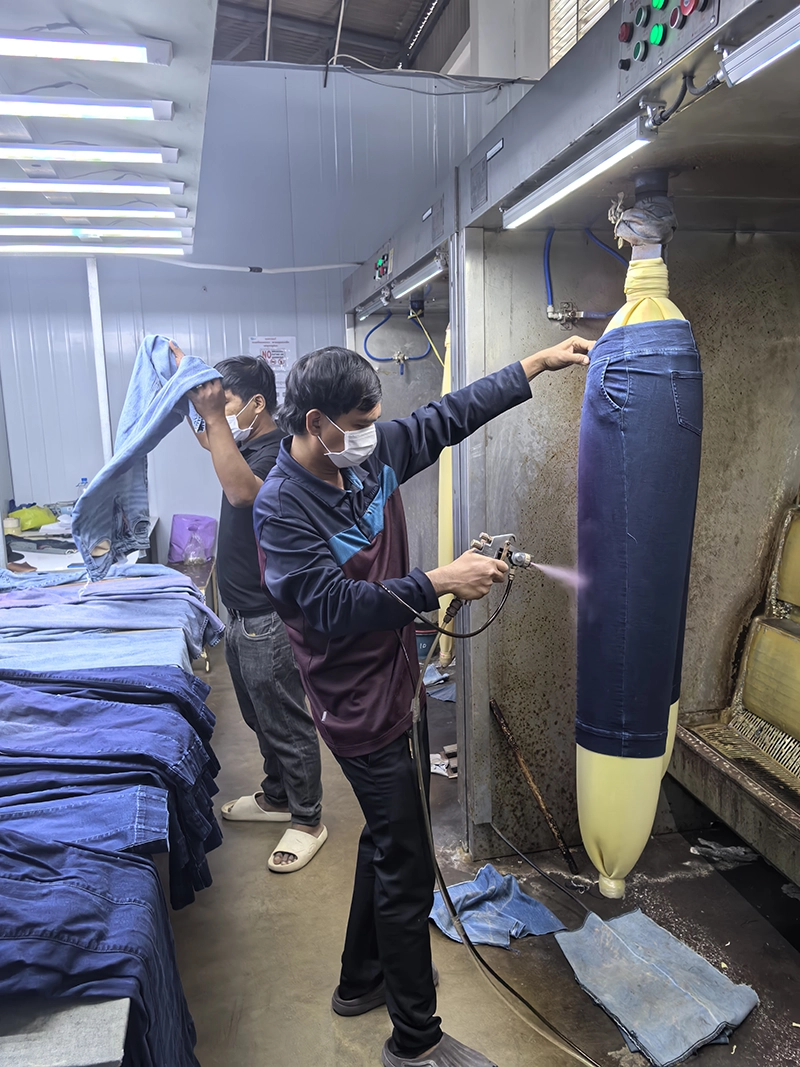
Perhaps the most distinctive aspect of Chinese denim manufacturing is the sophisticated finishing and laundry capabilities. The finishing department transforms raw, stiff denim into the soft, worn, and characterful garments that consumers desire. Chinese manufacturers operate some of the world’s largest and most advanced laundry facilities, capable of executing dozens of different finishing techniques:
Stone washing, once the predominant finish, has been supplemented by enzyme washing, which achieves similar effects with less damage to fabric and machinery. Bleach washing, acid washing, and tie-dye effects are produced using carefully controlled chemical processes. For higher-end products, hand sanding, whiskering, and grinding are performed by skilled artisans using specialized tools to create realistic wear patterns.
The most technologically advanced facilities have incorporated laser technology for creating distressed effects with exceptional precision and reproducibility. Ozone washing machines reduce chemical usage while achieving bleaching effects. E-flow and other water-saving technologies have dramatically reduced the environmental footprint of denim finishing. These innovations position Chinese manufacturers at the forefront of sustainable denim production.
Commitment to Sustainability and Social Responsibility
Environmental Stewardship
The denim industry has historically faced criticism for its environmental impact, particularly regarding water consumption, chemical usage, and waste generation. Chinese manufacturers have responded proactively to these challenges, implementing comprehensive environmental management systems that go far beyond regulatory requirements. Water recycling and treatment facilities have become standard in modern denim operations, with many plants achieving water reuse rates exceeding 80 percent.
Chemical management has also improved dramatically, with manufacturers adopting the ZDHC (Zero Discharge of Hazardous Chemicals) framework and eliminating restricted substances from their production processes. Alternative dyeing technologies, including foam dyeing and electrochemical indigo reduction, are being deployed to reduce water and chemical consumption. Many facilities now operate on renewable energy sources, with solar panels and biomass boilers supplementing traditional energy supplies.
Waste reduction initiatives have transformed what was once considered waste into valuable resources. Cotton fiber waste is recycled into new yarns or used in non-woven applications. Indigo waste is recovered and repurposed. Packaging materials are increasingly biodegradable or recyclable. These circular economy approaches demonstrate that Chinese manufacturers are not merely responding to regulatory pressure but are actively leading the industry toward more sustainable practices.
Labor Standards and Worker Welfare
Social responsibility is equally important to Chinese denim manufacturers. Major manufacturers have implemented rigorous labor standards that exceed national requirements and align with international expectations. Safe working conditions, fair compensation, reasonable working hours, and the prohibition of child and forced labor are non-negotiable principles. Many facilities have achieved SA8000 or other social accountability certifications.
Worker training and skill development are prioritized, with manufacturers operating internal training centers that teach technical skills, safety protocols, and quality awareness. Career advancement opportunities are provided through internal promotion systems and educational support. Employee welfare programs include health insurance, housing allowances, and childcare facilities, recognizing that a stable, motivated workforce is essential for consistent quality production.
Quality Assurance and International Standards
Certifications and Compliance
Chinese denim manufacturers have demonstrated their commitment to quality and compliance through an extensive array of international certifications. These credentials are essential for accessing global markets and building trust with international clients. Common certifications include:
OEKO-TEX Standard 100 ensures that products are free from harmful substances and safe for human use. This certification is particularly important for garments that come into direct contact with skin. Global Organic Textile Standard certification demonstrates that manufacturers can produce denim from organically grown cotton without contaminating it with prohibited substances during processing. GOTS certification covers environmental and social criteria throughout the supply chain.
Other certifications address specific aspects of production. The Better Cotton Initiative supports sustainable cotton farming practices. The Fair Trade certification ensures ethical trading relationships. For retailers requiring environmental management systems, ISO 14001 certification is often specified. Product safety certifications such as CPSIA for the US market and REACH compliance for Europe demonstrate that products meet regulatory requirements.
Testing Capabilities
In-house testing laboratories are a hallmark of serious Chinese denim manufacturers. These facilities are equipped with tensile testers, abrasion testers, color fastness testing equipment, and instruments for measuring dimensional stability, seam strength, and other critical parameters. Testing is conducted throughout the production process, from incoming raw materials to finished products, ensuring that every shipment meets specifications.
The testing capabilities extend to chemical analysis, with GC-MS and HPLC equipment for detecting restricted substances. Physical testing includes pilling resistance, tearing strength, and burst strength. Many laboratories are accredited to international standards, meaning that their test results are accepted by global buyers without the need for third-party verification. This in-house capability reduces costs and lead times while providing clients with confidence in product quality.
Innovation and Product Development
Collaborative Design Services
Leading Chinese denim manufacturers offer comprehensive product development services that go far beyond simple manufacturing. Design teams work collaboratively with clients to interpret trends, develop concepts, and create prototypes that can be industrialized efficiently. The product development process typically begins with trend research, followed by fabric and wash development, then sample making and refinement.
The fabric development capability is particularly noteworthy. Manufacturers can create custom weaves, develop proprietary dye formulations, and engineer fabrics with specific performance characteristics. Stretch denim with improved recovery, lightweight denim for summer wear, and thermal denim for cold weather are among the innovations emerging from Chinese R&D departments. Performance finishes such as water repellency, antibacterial treatment, and UV protection are also available.
Wash development is another area of expertise. In-house laundry facilities allow for rapid experimentation with different finishing combinations. Skilled technicians understand how different fabric constructions, dye formulations, and wash combinations will interact, enabling them to predict results accurately. This capability reduces the sampling cycle and helps clients achieve their design vision more efficiently.
Technological Innovation
Chinese manufacturers have embraced Industry 4.0 technologies to improve efficiency, quality, and flexibility. Smart factories equipped with sensors and data analytics optimize production parameters in real-time. Machine learning algorithms predict maintenance needs and identify quality issues before they become problems. Digital inventory management systems ensure efficient material flow from warehouse to production floor.
3D design and virtual sampling technologies have shortened product development cycles and reduced the environmental impact of sample production. Clients can visualize designs virtually before committing to physical samples, enabling faster decision-making and reducing waste. Digital fabric libraries and color management systems ensure consistency between design intent and production reality.
Supply Chain Reliability and Global Reach
Efficient Logistics and Export Infrastructure
Chinese denim manufacturers benefit from one of the world’s most efficient logistics infrastructures. Major manufacturing clusters are located near international ports, ensuring rapid access to global shipping networks. Hong Kong, Shanghai, Shenzhen, and Ningbo are among the busiest container ports globally, providing frequent sailings to all major markets. Air freight alternatives are available for urgent shipments, with cargo airports in Hong Kong, Shanghai, and Guangzhou handling significant volumes.
Manufacturers have developed sophisticated logistics capabilities that encompass not only shipping but also customs clearance, warehousing, and distribution. Many offer consolidated shipping services, combining multiple clients’ orders into full container loads to reduce costs. Just-in-time delivery capabilities ensure that retailers can rely on Chinese manufacturers for responsive replenishment.
International Client Relationships
Chinese denim manufacturers have built long-term relationships with the world’s leading fashion brands and retailers. These partnerships are based on trust built through years of reliable performance. Manufacturers understand the unique requirements of different markets, from the sizing preferences in different regions to the packaging requirements of different retailers.
The ability to handle complexity is a key strength. Manufacturers manage diverse product ranges, multiple quality standards, and varying order sizes simultaneously. This operational flexibility is supported by robust enterprise resource planning systems that track orders from receipt through production to shipment. Regular communication, transparent reporting, and proactive problem-solving characterize successful manufacturer-client relationships.
Demonstration of Manufacturing Capability
Physical Assets and Production Capacity
As a denim clothing manufacturer in China, our production facility embodies the excellence that has made Chinese denim manufacturing globally renowned. Our manufacturing plant spans over 50,000 square meters and houses more than 800 units of specialized denim production equipment. This infrastructure enables us to produce approximately 3 million pieces of denim garments annually, with the flexibility to accommodate both large-volume orders and smaller, specialized runs.
Our weaving facility operates 150 air-jet looms capable of producing denim fabrics in weights ranging from 5 to 16 ounces per square yard. This range encompasses lightweight summer denim, mid-weight all-season fabrics, and heavy-duty materials for workwear and fashion garments. The dyeing department runs rope and slasher dyeing lines with a combined capacity of 15 million meters of denim annually, using both traditional indigo and sustainable dye technologies.
The garment manufacturing division operates twelve production lines equipped with specialized denim sewing machinery. We employ approximately 1,200 skilled operators who have completed extensive training programs and have an average of eight years of experience in denim garment construction. Quality control is supported by a 45-member inspection team and a fully equipped testing laboratory that conducts dimensional stability, color fastness, and strength testing on every production batch.
Technical Expertise and Service Capabilities
Our product development team includes 35 designers and technicians with expertise in denim construction, wash development, and finishing engineering. This team averages 12 years of industry experience and has collaborated with brands at every market level, from mass-market retailers to luxury fashion houses. The design studio and sample room operate 24/7, allowing for rapid prototyping and accelerated development cycles.
Our laundry and finishing facility is one of the most comprehensive in the region, equipped with stone washing drums, enzyme washing machines, bleaching systems, laser technology for dry distressing, and ozone treatment equipment. We can produce any finishing effect currently in the market, as well as develop custom washes to client specifications. This capability gives our clients the creative freedom to bring even the most challenging design concepts to production.
Certifications and Compliance
Our manufacturing operations have achieved certification to multiple international standards, reflecting our commitment to quality, sustainability, and social responsibility. These certifications include OEKO-TEX Standard 100, GOTS, GRS, BCI, ISO 9001, ISO 14001, SA8000, and ZDHC. We maintain comprehensive documentation of our compliance activities and welcome independent audits by clients or their designated third-party inspectors.
Our environmental performance includes water conservation measures that have reduced consumption by 45% over the past five years through recycling and process optimization. Solar panels installed on our factory roof generate 25% of our electricity requirements. Chemical management follows the ZDHC framework, with all restricted substances eliminated from our production processes.
Commitment to Partnership
We view ourselves not merely as a supplier but as a strategic partner to our clients. This partnership philosophy manifests in transparent communication, collaborative problem-solving, and a commitment to continuous improvement. We share market intelligence, technical innovations, and sustainability insights with our clients to help them achieve their business objectives more effectively.
Our quality guarantee is straightforward: every garment that leaves our facility meets or exceeds the specifications agreed with the client. If a defect is discovered, we take responsibility and take corrective action. This reliability has earned us repeat business and long-term relationships with clients across North America, Europe, Asia, and beyond.
Why Choose Us
Selecting us as your denim manufacturing partner offers distinct advantages. We provide comprehensive vertical integration from fabric production through finishing, ensuring quality consistency at every stage. Our scale enables competitive pricing without compromising quality, while our technical expertise allows us to execute complex designs and finishes. Our sustainability initiatives help you meet environmental goals, and our commitment to compliance protects your brand reputation.
Our location in a major manufacturing region provides access to the best suppliers of raw materials, dyes, and auxiliaries, ensuring competitive pricing and consistent availability. Our experienced logistics team ensures reliable delivery, while our multilingual sales and customer service team facilitates smooth communication.
In conclusion, as a Chinese denim manufacturing company, we bring together the strengths that have made China the world’s denim production center: scale, capability, expertise, and commitment to continuous improvement. We invite you to experience the difference that dedicated, knowledgeable, and responsible manufacturing partners can make to your denim business.