Don't miss our holiday offer - up to 50% OFF!

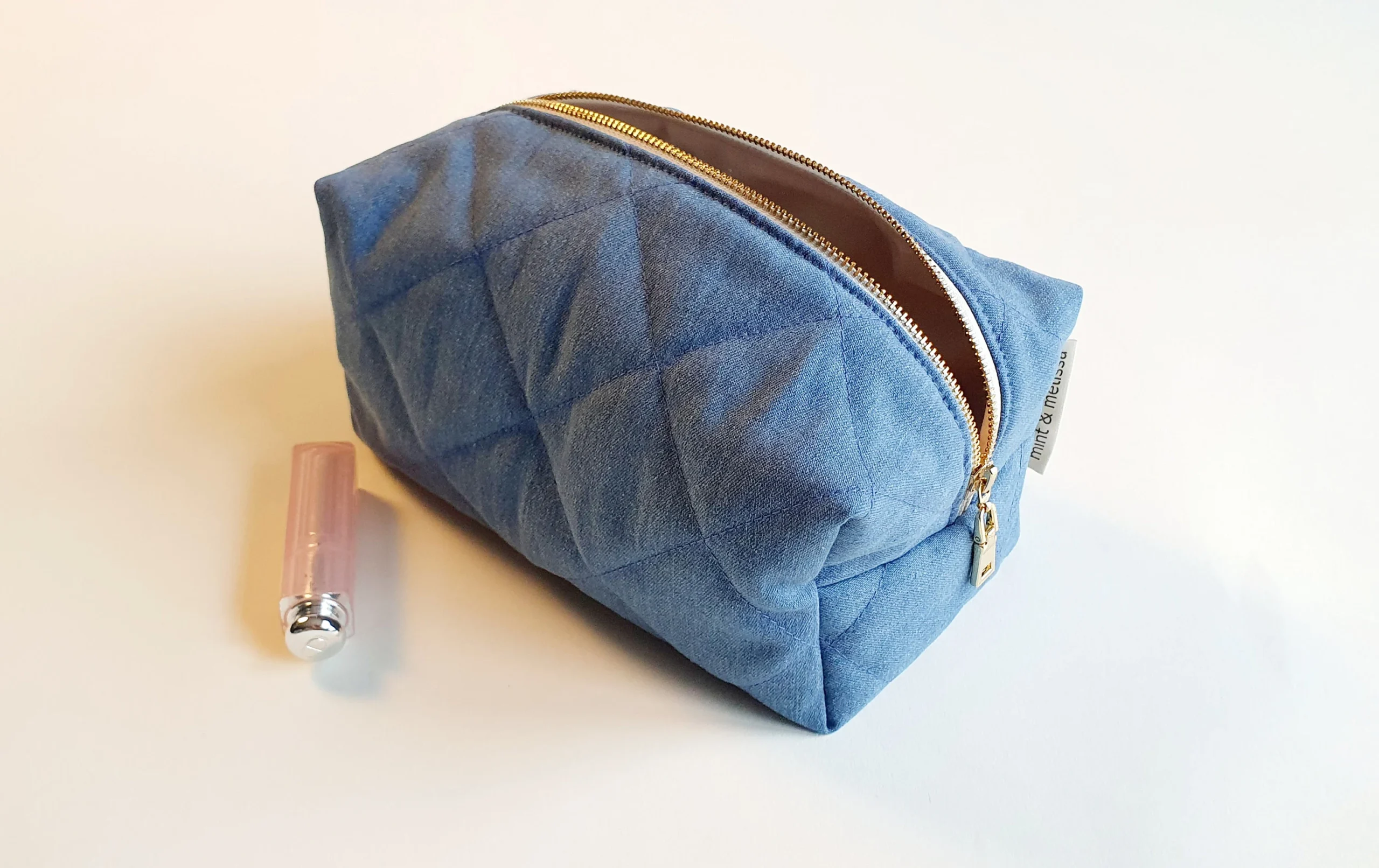
Denim quilted toiletry bags custom tag

Introduction: The Toiletry Bag as an Object of Material Consequence
The toiletry bag is an object of quiet necessity. It is packed in haste, unzipped in unfamiliar bathrooms, and subjected to the indignities of travel. Yet it is also an opportunity for refinement. The quilted denim toiletry bag, adorned with a custom tag, elevates a utilitarian object into something approaching a luxury good. It combines the rugged heritage of denim with the tactile indulgence of quilting, and it bears the mark of its maker or owner through a personalized tag. This treatise examines the manifold dimensions of this artifact—its materiality, its construction, its branding potential, and its production pathways.
The Quilted Denim Substrate: Materiality and Construction
Denim Selection: Weight, Weave, and Hand-Feel
The denim selected for a quilted toiletry bag must balance durability with workability. Heavyweight denims—12 ounces and above—offer exceptional structure and resistance to abrasion, but they are difficult to quilt. The multiple layers of fabric, batting, and lining become unwieldy under the sewing machine’s needle. Midweight denims—8 to 11 ounces—offer a more tractable substrate. They retain the visual character of denim—the diagonal twill, the indigo hue, the capacity for patina—while accommodating the quilting process.
Batting and Interlining: The Architecture of Padding
Batting is the soul of the quilted bag. It provides the padding that gives the bag its plush, protective quality. Batting may be composed of cotton, polyester, or a blend. Cotton batting offers breathability and a natural hand-feel; polyester batting provides loft and resilience. The batting is sandwiched between the denim exterior and an interior lining, and the three layers are stitched together in the quilting process. The thickness of the batting determines the bag’s bulk and its protective capacity.
Quilting Patterns and Stitch Architecture
The quilting pattern is both functional and aesthetic. Diamond quilting—a grid of intersecting diagonal lines—is the classic pattern, evoking equestrian and country aesthetics. Channel quilting—parallel vertical or horizontal lines—offers a more contemporary, streamlined appearance. Bespoke motifs—custom-designed patterns that incorporate the brand’s logo or a decorative element—transform the bag into a unique artifact. The quilting pattern must be specified in the design brief and sampled for approval.
The Toiletry Bag Silhouette: Form and Function
Dimensions and Compartmentalization
The standard toiletry bag measures approximately 9 to 12 inches in width, 5 to 7 inches in height, and 4 to 6 inches in depth. These dimensions accommodate the essentials—toothbrush, toothpaste, deodorant, razor, skincare products—without excessive bulk. Compartmentalization enhances utility. Interior slip pockets, elastic loops, and zippered mesh sections keep small items organized and accessible. The bag may feature a single main compartment or a multi-compartment design, depending on the intended user and use case.
Structural Elements: Gussets, Bases, and Zipper Closures
The structural elements of the toiletry bag determine its durability and functionality. A gusseted base allows the bag to stand upright when filled, preventing spills and facilitating access. The zipper closure—whether a single zipper across the top or a three-sided zipper that opens the bag flat—must be robust and smooth-operating. YKK zippers are the industry standard for quality and reliability. The zipper pull may be customized with a leather tab, a metal charm, or a woven label.
Interior Linings and Water-Resistant Considerations
The interior lining of a toiletry bag serves both aesthetic and functional purposes. A lining conceals the batting’s raw edges and the seams’ interior construction. It also provides a barrier against moisture. For toiletry bags, a water-resistant lining—nylon, polyester, or a coated cotton—is preferable. The lining may be wipeable, allowing for easy cleaning after spills. The choice of lining material should be specified in the design brief and tested for compatibility with the denim exterior.
The Custom Tag: A Diminutive Surface with Strategic Import
Material Options for Custom Tags
The custom tag is a small but potent branding element. It may be constructed from leather, faux leather, woven fabric, printed cardstock, or metal. Leather tags offer a heritage quality; debossed or foil-stamped logos lend a premium aesthetic. Woven labels offer fine detail and color reproduction. Printed cardstock tags are economical and suitable for temporary or promotional applications. Metal tags—engraved or stamped—offer durability and a contemporary edge. The material should align with the bag’s overall aesthetic and the brand’s positioning.
Attachment Methods and Placement Protocols
The attachment method and placement of the tag are consequential. A tag may be sewn into an exterior seam, attached to the zipper pull, or affixed to the front panel as a standalone element. The placement should be conspicuous enough to be noticed but not so dominant that it disrupts the bag’s design. A tag sewn into the side seam, visible when the bag is opened, offers a subtle branding touch. A tag attached to the zipper pull is functional as well as decorative—it aids in gripping the zipper.
The Tag as a Branding and Personalization Vessel
The custom tag transforms the toiletry bag from a generic object into a branded artifact. It carries the brand’s logo, name, or mark. It may also serve a personalization function—embroidered initials, a monogram, or a name—making the bag an ideal gift or a personalized accessory. The tag is the smallest surface on the bag, but it may be the most strategically significant.
Production Pathways: Sourcing Quilted Denim Toiletry Bags
Domestic Artisans and Small-Batch Decorators
Domestic artisans and small-batch decorators offer the most accessible pathway for custom quilted denim toiletry bags. These makers may produce the bag from scratch—sourcing denim, quilting the fabric, constructing the bag, and attaching the custom tag. They may also decorate a pre-existing blank bag with embroidery, screen printing, or a sewn tag. The minimum order quantities are typically low—often single-piece or small runs—and the turnaround is relatively quick. The trade-off is a higher per-unit cost and limited capacity for large orders.
Overseas OEM Manufacturers and Minimum Order Quantities
Overseas manufacturers, particularly those in China, India, and Pakistan, offer custom quilted denim toiletry bags at lower per-unit costs but impose higher minimums. Traditional factories may require 500 to 1,000 pieces per style. However, a growing number of suppliers accommodate orders of 50 to 200 pieces, enabling smaller brands to access custom production. These manufacturers can produce the bag from scratch—custom denim, custom quilting pattern, custom lining, custom tag—with the brand’s specifications integrated into the construction. The trade-off is longer lead times, the need for clear communication across time zones, and the requirement for rigorous quality assurance.
Customization Beyond the Tag: A Spectrum of Interventions
Embroidery and Appliqué on Quilted Surfaces
Embroidery on a quilted surface presents unique challenges. The multiple layers of fabric and batting can cause the embroidery to sink into the padding, reducing its visibility and dimension. A stabilizer may be required to provide a firm foundation for the stitches. Embroidery on quilting is best suited to simple, bold designs—logos, initials, small motifs—rather than complex, detailed artwork. Appliqué—sewing a cut fabric shape onto the bag’s surface—is another option, adding a layer of color and texture.
Hardware Selection and Zipper Pulls
The hardware of the toiletry bag contributes to its aesthetic and functionality. Zipper pulls may be customized with leather tabs, metal charms, or woven labels. D-rings, snap hooks, and swivel clips may be added for carrying options. The finish of the hardware—antique brass, matte black, polished nickel—should complement the denim’s color and the tag’s material. Hardware selection is an opportunity for subtle branding and a marker of quality.
Quality Assurance for Quilted Denim Construction
Stitch Integrity and Quilting Consistency
The quilting stitches must be uniform in length and tension. Irregular stitches—loose threads, skipped stitches, uneven spacing—undermine the bag’s appearance and durability. Quality control should include visual inspection of the quilting pattern across the entire bag. The batting should be evenly distributed, with no lumps or thin spots. The quilted fabric should be flat and smooth, without puckering or distortion.
Zipper Function and Seam Durability
The zipper is a critical point of failure. It must operate smoothly, without catching or separating. The zipper tape should be securely stitched, and the ends should be finished to prevent fraying. The seams of the bag—particularly at the gussets and the zipper attachment—must be reinforced. Bar tacks at stress points add security. Quality control should include functional testing of the zipper and visual inspection of all seams.
Colorfastness and Washability
Denim is prone to crocking—the transfer of dye to other surfaces—particularly when new. The lining and the tag must be colorfast. The bag should be tested for washability if the care instructions specify machine washing. The quilting may affect the bag’s drying time; the batting holds moisture, and the bag may require extended air drying.
Conclusion: The Strategic Value of the Custom-Tagged Quilted Denim Toiletry Bag
The quilted denim toiletry bag with custom tag is an object of considerable strategic value. It transforms a utilitarian necessity into a branded artifact. It combines the rugged heritage of denim with the tactile luxury of quilting. It offers a canvas for branding—through the tag, through embroidery, through hardware—that is both subtle and potent. The production pathways are accessible, from domestic artisans to overseas manufacturers. The materials are sustainable, particularly when recycled denim is employed. For brands seeking a promotional or retail object that is at once practical, attractive, and distinctive, the quilted denim toiletry bag with custom tag offers a compelling proposition.