Don't miss our holiday offer - up to 50% OFF!

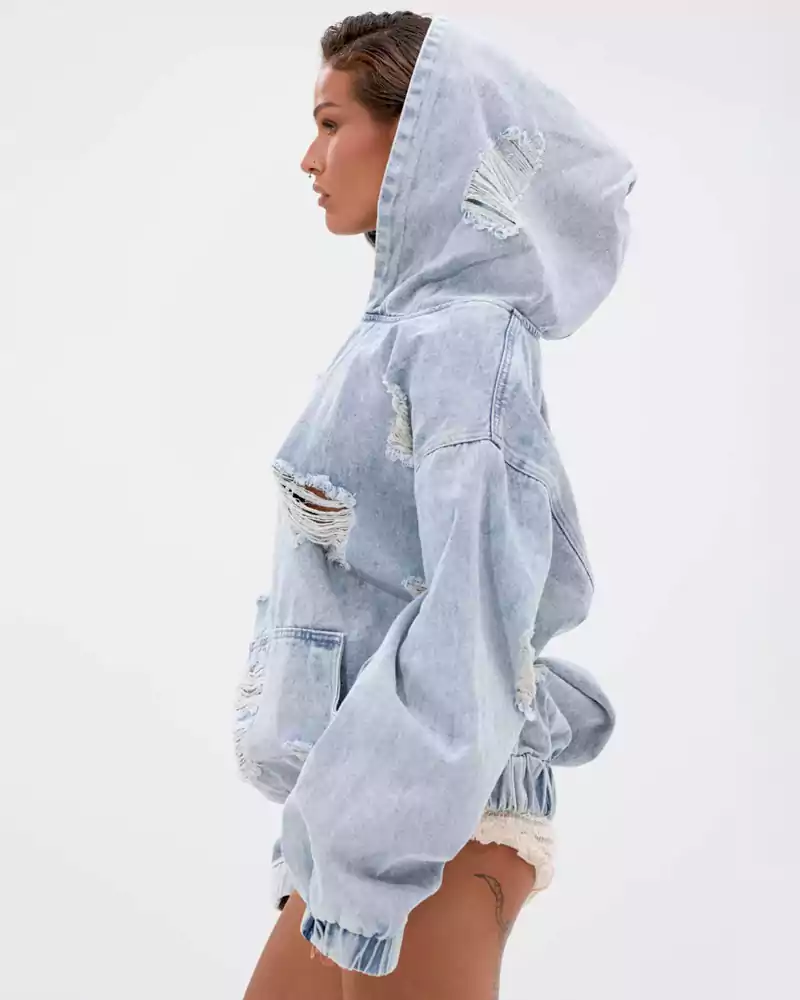
How to Order Custom Baggy Denim in 5 Easy Steps

1. Introduction: The Baggy Silhouette Has Won the Wardrobe
Baggy is no longer a subculture; it is the default. The children’s market has followed the adult one with the usual lag, and the loose-fit denim category now carries a commercial gravity that tight silhouettes cannot match. Global loose-fit denim is projected to reach US$65.4 billion by 2026, with volume-driven, “casualization” shapes leading the charge . For the children’s segment, the barrel leg, the balloon leg, and the dropped-rise jean have displaced the skinny jean as the object of parental desire.
“Easy” is a relative term. Ordering custom baggy denim in bulk is straightforward once the sequence is internalized — and ruinous when steps are skipped. The five steps below compress months of sourcing experience into a linear discipline: define, design, select, sample, and ship. Follow them in order, and the process becomes mechanical. Skip one, and the price of the omission will be measured in deadstock.
2. Step One — Define the Garment and Commit the Spec
1.1 Jean or Jacket: The First Fork in the Road
The silhouette is a language, and baggy speaks differently on the two legs of the business. A baggy jacket is a boxy, dropped-shoulder shell with a relaxed armhole and a cropped or shrunken body. A baggy jean is a high-rise, wide-leg proposition with a voluminous thigh and a tapered or ballooned ankle. These are not the same pattern, the same fabric consumption, or the same factory expertise.
Decide the garment before you contact a single supplier. The decision shapes the tech pack, the fabric weight, the hardware, and the price list in ways that cannot be retrofitted at the sampling stage. A factory that cuts a beautiful loose jean may have no competence in a structured jacket collar. Choose the path first; the factory search follows the garment, never the reverse.
1.2 The Tech Pack: Measurements That Survive Translation
The tech pack is the specification document, and it is the only language every factory reliably understands. It must contain a flat sketch, a back view, construction notes, a bill of materials, and — above all — a measurement table: waist, rise, hip, thigh, knee, leg opening, inseam, and outseam, in centimeters and inches, at every size you intend to run.
For baggy garments, the measurement table is not a formality; it is the definition of the aesthetic. A leg-opening measurement of 18 centimeters reads as a slim taper; 24 centimeters reads as a barrel; 28 reads as a full balloon. The same pattern graded across a 4T-to-14Y range can drift from charmingly loose to absurdly voluminous unless every size point is specified. Document it, or accept whatever the grader decides on your behalf.
1.3 Fabric: Weight, Stretch, and Drape
Baggy denim is a drape game. The fabric’s weight, stretch, and weave determine whether the silhouette falls with a languid roll or stands with a stiff architectural jut.
For children’s baggy jeans, a 10–12 oz (340–410 GSM) cotton or cotton-stretch twill provides structure without heaviness. Elastane content of 1 to 3 percent introduces recovery — essential, because a baggy jean must survive the abuse of playground motion without sagging into a puddle. The wash spec matters as much as the weave: enzyme washes soften the hand and improve drape; rigid, unwashed twill will hold its shape but chafe and stiffen. Specify the weight, the composition, and the wash intention in writing, and let the swatch be the arbiter.
3. Step Two — Assemble the Design Package
2.1 Artwork, Placement, and Decoration Method
The design package carries your identity into the garment. For baggy denim, the canvas is unusually generous: the wide thigh panel, the back yoke, and the rear pockets offer placement real estate that slim fits simply lack.
Choose the decoration method before the quote, because each method prices differently. Embroidery suits mascots and monograms but adds per-piece cost and lead time. Screen printing favors bold, flat color blocks at volume. Puff or raised prints are the current favorite for the “streetwear toddler” aesthetic. Regardless of method, deliver artwork as vector files with the Pantone references stated — a JPEG will not survive the translation, and a color drift between the strike-off and the bulk run is a defect you will see only after the goods have shipped.
2.2 Hardware, Labels, and the Trim Bill
The trim bill is the quiet accumulator of cost. Zippers, buttons, rivets, drawcords, and the drawcord toggles that baggy waistbands demand — each is a line item with its own price, its own minimum, and its own compliance burden.
For children’s garments, hardware is also a safety matter: small parts must withstand tensile testing, drawcords must comply with neck-and-waist cord regulations in the destination market, and every component must meet the relevant chemical limits. Specify the hardware in the design package — not merely the color, but the material, the finish, and the supplier if you have a preference. An engraved custom button adds perhaps fifteen cents per unit and a disproportionate share of perceived value. Decide it here, at the design stage, where it costs nothing.
4. Step Three — Vet and Select the Supplier
3.1 Factory, Agent, or Trading Company
The sourcing trilemma repeats itself for every category, and baggy denim is no exception. A direct factory relationship yields the lowest FOB price and the tightest technical control, but demands specification fluency and, usually, a working relationship with the factory’s export desk. A trading company consolidates sourcing, inspection, and documentation for a commission of roughly 5 to 15 percent. An agent works for you, not the factory, and is worth the fee precisely when you cannot be present at the wash line.
Wholesale pricing for best-selling baggy denim on the major sourcing platforms currently sits in the US$11–19 per piece range at volume . The spread within that band is specification, not luck. Vet the supplier against the garment you have defined, not against a catalogue.
3.2 Capability Audit: Wash Lines and Certifications
Baggy denim lives or dies on its wash, so the supplier’s wash capability is the audit priority. Ask which washes are run in-house and which are outsourced; ask for wash references from current production; ask for the existing test reports — CPSIA, REACH, OEKO-TEX — before commissioning new ones.
The certification file is a proxy for discipline. A factory that maintains current documentation across its supply chain is more likely to maintain tolerances in its sewing room. Request the certificates, verify the test dates, and note which components the reports actually cover. Children’s compliance is not a paperwork flourish; it is a precondition of sale in most developed markets, and it is cheaper to verify before the purchase order than after the shipment.
5. Step Four — Sample, Fit, and Freeze the Spec
4.1 The Four-Stage Sample Pipeline
Samples are the purchase order’s dry run. The professional sequence runs: development sample (the first physical expression), salesman’s sample (refined for fit and finish), and pre-production sample (sewn from bulk fabric, with bulk hardware, after the bulk wash). Between them sits the fit session — the moment the garment meets a real child’s body.
Never skip the intermediate stages for baggy garments. The silhouette’s looseness masks fit errors rather than preventing them: a baggy jean can hide a flawed rise measurement for an entire production run, and the defect will surface only when the child bends, sits, or climbs. Each sample stage is a gate through which error must pass before it can multiply into thousands of units.
4.2 The Baggy Fit Trap: Shrinkage, Rise, and Knee Girth
Baggy denim has three specific failure modes, and they are worth naming.
Shrinkage is the first. Washed denim can contract several percent across the rise and inseam, and the effect is compounded on voluminous panels. Measure the sample before and after its wash cycle, and grade the pattern accordingly. The rise is the second: a dropped rise reads fashionably on a hanger and disastrously on a child in motion. The third is knee girth — the measurement that separates a deliberate balloon from an accidental flood. Specify all three in the fit session, with the measurements written into the approval, not carried in memory.
4.3 The Pre-Production Sample as a Contract
The approved pre-production sample is the legal and technical anchor of the entire order. It is the reference against which the bulk run will be judged at inspection, and the exhibit in any dispute that follows.
Freeze it. Photograph it. Record its measurements, its wash shade, its hardware, and its label placement in a signed approval document. When the factory produces, the inspection agency compares the bulk garments against this frozen reference, not against a verbal recollection. The sample is not a milestone; it is the contract.
6. Step Five — Confirm, Produce, Inspect, and Ship
6.1 The Purchase Order and Payment Terms
The purchase order converts intention into obligation. It should restate the price, the incoterm (typically FOB), the quantity per color and size, the delivery date, the packaging specification, and the inspection requirement — every variable that can later be disputed.
Payment terms are the negotiation within the negotiation. A common structure is 30 percent deposit with the balance against shipping documents; terms that favor the buyer — such as payment against a bill of lading copy after inspection — are available, but they are priced into the quotation. Accept the trade-off consciously, and put the structure in writing. The most expensive sentence in apparel procurement is “we assumed.”
6.2 Production Oversight and AQL Inspection
Once production begins, the buyer’s work is not finished; it shifts from specification to verification. Mid-production communication matters: request wash-lot photos, confirm the fabric’s shade across lots, and keep the delivery calendar visible.
The final inspection is non-negotiable. A third-party agency conducts an AQL (Acceptable Quality Limit) inspection against a sampling plan, checking for defects in construction, decoration, sizing, and packaging. The agency’s verdict — pass, fail, or conditional — is your leverage before the goods leave the factory, when correction is still affordable. Inspection after arrival is archaeology; inspection before shipment is control.
6.3 Shipping, Landed Cost, and the Moment of Truth
The FOB price is a beginning, not an end. Add ocean freight, insurance, duties, port handling, and inland carriage, and the landed cost typically exceeds the FOB figure by 20 to 40 percent. Build the landed-cost model before you sign, and verify the tariff classification for children’s cotton denim in your destination market.
Sea freight adds weeks of capital in transit; air freight erases the delay at a price. Choose deliberately, and remember that the moment of truth is not the factory gate — it is the retail shelf, where the garment meets the child, the wash, and the refund counter. Everything before that moment is process. Done correctly, it is a quiet, predictable process that ends in a rack of sellable goods.
7. The Five Steps at a Glance
| Step | Core Action | Critical Output |
|---|---|---|
| 1. Define | Fix the garment, sizes, fabric, and wash | Complete tech pack |
| 2. Design | Specify artwork, hardware, and trims | Design package with Pantone and trim bill |
| 3. Select | Audit suppliers on wash capability and compliance | Shortlist with verified certificates |
| 4. Sample | Develop, fit, and freeze the pre-production sample | Signed, measured, photographed approval |
| 5. Ship | Confirm, inspect against AQL, and clear logistics | Inspection pass and landed-cost model |
8. Common Pitfalls and the Cost of Each
The catalogue of sourcing errors is short, familiar, and expensive.
Vague measurements are the first. A tech pack with missing knee-girth specifications produces a balloon where a taper was wanted; the correction arrives as markdowns. The second is the skipped wash reference: approving a sample that was washed differently from the bulk run guarantees a shade mismatch across the order. The third is the verbal change — a “small tweak” communicated by message rather than by revised document, which the factory executes at its own interpretation. The fourth is the missing inspection, which converts every hidden defect into a landed liability.
None of these are exotic. All of them are avoidable by the discipline the five steps describe. The industry phrase is apt: quality is not inspected in; it is specified in.
9. Conclusion: Ordering with Precision, Not Luck
Ordering custom baggy denim in five steps sounds reductive, and in one sense it is: the sequence is simple to state and demanding to execute. Define the garment completely. Assemble the design package. Select a supplier with proven wash capability. Sample until the spec is frozen in a signed reference. Then confirm, inspect, and ship with the paperwork as airtight as the seams.
The reward is not merely a good price; it is predictability. Baggy denim is the silhouette of the moment — loose, comfortable, and commercially vital — but it rewards the buyers who treat the order as an engineering discipline rather than a gamble. The market’s momentum is real . The discipline is yours. Order with precision, and the volume will take care of the rest.