Don't miss our holiday offer - up to 50% OFF!

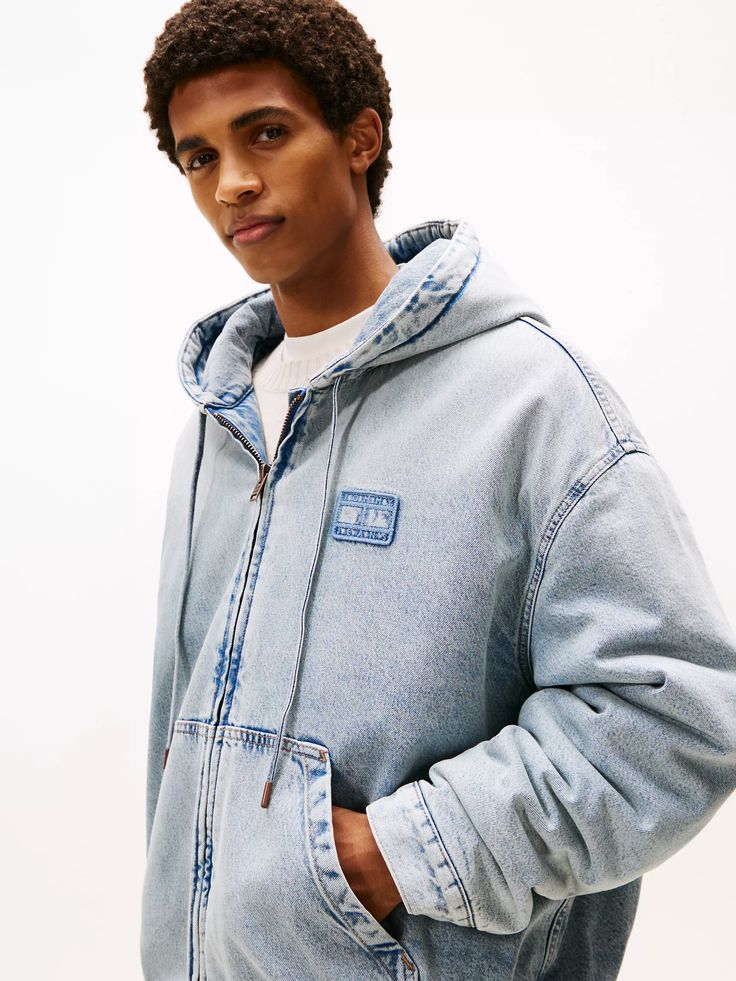
Source Customized Denim Hoodie Sets From Professional Apparel Factory

Introduction: The Ascendancy of the Coordinated Denim Ensemble
The denim hoodie set represents a compelling evolution in contemporary streetwear, merging the casual comfort of the hoodie with the rugged durability of denim. This coordinated ensemble—comprising a denim hoodie and matching trousers or shorts—offers a cohesive aesthetic that communicates a deliberate, curated identity. For the discerning brand, sourcing a customized denim hoodie set from a professional apparel factory is not a simple procurement exercise; it is a strategic collaboration that demands technical expertise, infrastructural capacity, and a profound understanding of textile behavior. This guide delineates the critical considerations for navigating this specialized sourcing landscape.
Defining the Denim Hoodie Set: A Synthesis of Silhouette
The denim hoodie set encompasses a coordinated pairing of a hooded denim jacket or pullover with matching denim pants or shorts. This configuration offers brands a “complete look” that resonates with consumers seeking a polished, head-to-toe aesthetic. The uniformity of fabric and wash across the ensemble creates a visual cohesion that distinguishes the set from mismatched separates. Contemporary interpretations range from classic trucker jacket silhouettes to relaxed, oversized hoodie cuts, reflecting the diversity of the modern streetwear market .
The OEM/ODM Spectrum: Defining the Partnership
Understanding the distinction between Original Equipment Manufacturing and Original Design Manufacturing is essential for navigating the B2B landscape. In an OEM arrangement, the brand provides the complete design specifications—the tech pack, measurements, and material requirements—to the manufacturer for execution . In an ODM model, the manufacturer offers pre-existing designs that the brand can adapt and label as its own, providing a faster route to market for those with limited design resources . The choice between these models influences the level of creative control and the investment required.
The Vertically Integrated Advantage: The Infrastructure of Quality
The selection of a manufacturing partner is the most consequential decision in the sourcing journey. A vertically integrated factory—one that consolidates fabric development, dyeing, finishing, and garment assembly under a single roof—offers a decisive competitive advantage. This integration eliminates the communication lags and quality inconsistencies that plague fragmented supply chains. Manufacturers with in-house capabilities for fabric testing, pattern making, and quality control can ensure that the garment’s integrity is maintained from the selection of the raw fiber to the final stitch .
Fabric Foundations: The Substrate of a Denim Hoodie
The integrity of a denim hoodie set is predicated upon the quality of its substrate. Denim fabric, characterized by its robust twill weave, offers the durability and structure essential for a garment that is expected to withstand repeated wear and washing. Manufacturers offer a spectrum of fabric weights, compositions, and washes to align with a brand’s aesthetic and functional requirements . The choice of 100% cotton offers classic durability and fade potential, while cotton-polyester blends provide enhanced strength and wrinkle resistance.
The Wash as Signature: Chemical and Mechanical Finishing
The wash is the defining attribute of a denim garment, transforming a flat, rigid textile into a living, textural artifact. The acid wash process, in particular, has gained prominence in the streetwear milieu for its distinctive marbled, high-contrast effect that imparts a vintage, distressed character . This process involves tumbling the garment with pumice stones saturated with bleaching agents, stripping away indigo dye in an uneven, chaotic pattern that is highly desirable . The selection of a specific wash is often the most potent means of differentiating a brand’s offering in a crowded marketplace.
The Silhouette Spectrum: From Classic to Contemporary
The architecture of the denim hoodie set is defined by its silhouette. Contemporary streetwear has expanded the vocabulary of the hoodie, moving beyond the classic pullover to include zip-up hoodies, cropped cuts, and oversized fits . The accompanying trousers can range from relaxed, straight-leg cuts to more contemporary cargo configurations. The ability to control the garment’s architecture is essential for aligning the product with the brand’s target audience and market positioning.
Pattern Engineering and Grading: The Mathematics of Fit
The translation of a design concept into a three-dimensional garment is a feat of mathematical precision. Pattern engineers draft the constituent pieces—the fronts, backs, hoods, sleeves, and pockets—that will be assembled into the final garment . Computer-Aided Design (CAD) software is frequently employed to achieve exacting tolerances. This is followed by grading, the process of proportionally increasing or decreasing the pattern to create a range of sizes while maintaining the integrity of the silhouette. Professional factories maintain US/EU grading blocks for consistent fit across different markets .
The Hood: The Defining Feature
The hood is the defining feature of the ensemble, and its construction demands meticulous attention. The hood’s depth, shape, and lining significantly influence the garment’s overall aesthetic and comfort. Manufacturers offer various hood configurations, from classic two-piece constructions to more substantial, lined designs. The integration of drawstrings, often featuring branded aglets, adds a functional and stylistic detail that contributes to the garment’s premium feel.
Customization Capabilities: Distinguishing the Set
Customization extends beyond the fabric and wash to the secondary details. Brands can select from a panoply of embellishment techniques: high-density embroidery, screen printing, DTG (Direct-to-Garment), DTF (Direct-to-Film), and chenille patches . The application of an embroidered logo, in particular, is a hallmark of premium streetwear, offering a tactile, three-dimensional finish that resists fading and conveys a sense of permanence . The choice of hardware—zippers, buttons, and rivets—is equally significant, with finishes ranging from brass to gunmetal to anti-copper.
The Sampling Cycle: The Crucible of Refinement
Before the commencement of bulk production, the sampling phase is indispensable. This iterative process involves the creation of physical prototypes that allow for the evaluation of the fabric, fit, and finishing details. The sample serves as a tangible benchmark against which the final order is measured. Standard sampling lead times typically range from 7 to 15 days, depending on the complexity of the design and the availability of materials . It is the period during which potential issues—be it the placement of a pocket or the behavior of a seam—are identified and rectified.
Navigating Minimum Order Quantities
For emerging brands, the concept of the Minimum Order Quantity (MOQ) is a critical financial consideration. The market has responded to the needs of smaller players, with many manufacturers offering flexible MOQs that accommodate small-batch development. While some factories may require a minimum of 100 pieces per style and color, others have reduced their thresholds to as low as 30 to 50 pieces, making it feasible for startups to test the market without a prohibitive capital outlay . Understanding these thresholds is essential for effective cash flow management.
Production Lead Times and Planning
The timeline from order placement to delivery is a variable that must be factored into operational planning. Bulk production lead times for custom denim hoodie sets typically range from 15 to 50 days following sample approval, depending on the complexity of the wash, the manufacturer’s existing capacity, and the logistical arrangements for shipping . A reliable manufacturing partner will provide transparent timelines and maintain consistent communication throughout the production cycle.
Quality Control: The Assurance of Consistency
Maintaining consistency across a production run is a formidable challenge, particularly for coordinated sets where the hoodie and trousers must share a unified aesthetic. Reputable manufacturers implement rigorous in-line and final quality control checks that measure stitching integrity, hardware placement, wash consistency, and overall fit . This process often involves a multi-point checklist on every piece, ensuring that the quality observed in the sample is replicated across the entire order. Some facilities employ third-party inspection agencies to provide an additional layer of impartial quality assurance.
Sustainability: The Green Imperative
The denim industry has faced significant scrutiny regarding its environmental impact, prompting a shift toward more sustainable practices. Professional factories are adopting technologies such as ozone washing and enzyme finishing to reduce water consumption and chemical usage. Many hold certifications such as OEKO-TEX, GOTS, and BSCI, demonstrating a commitment to environmental and social responsibility . For brands seeking to appeal to a conscientious consumer base, partnering with a factory that prioritizes sustainability is a strategic imperative.
Compliance and Certifications: Verifying Quality
For brands seeking to appeal to a conscientious consumer base, manufacturer certifications are a critical consideration. ISO 9001 indicates adherence to quality management standards, while OEKO-TEX Standard 100 verifies chemical safety. BSCI or SA8000 certification demonstrates a commitment to social compliance and ethical labor practices . Verifying these certifications provides assurance that the production process aligns with international standards.
Global Logistics and Export Compliance
The physical movement of goods from the factory to the end consumer is a complex logistical undertaking. Manufacturers located in major export hubs—such as China, Pakistan, and Bangladesh—are experienced in navigating international shipping regulations. Flexible delivery terms, including FOB (Free on Board) and DDP (Delivered Duty Paid), are standard, and payment terms often involve a deposit (e.g., 30% T/T) with the balance paid before shipment . Ensuring that the manufacturer is experienced in exporting to the target market is essential for avoiding customs complications.
The Economics of Customization: Pricing Structures
The cost of a custom denim hoodie set is determined by a confluence of factors: the quality of the fabric, the complexity of the wash, the type of hardware, the embellishment method, and the order volume. As order quantities increase, the per-unit cost decreases, reflecting economies of scale . Understanding this cost structure is essential for brands to manage their margins and price their products competitively. A typical small-batch run might carry a higher per-unit cost, but this is often offset by the brand’s ability to test the market and mitigate inventory risk.
Conclusion: Forging a Coordinated Identity
The sourcing of a custom denim hoodie set is a strategic endeavor that demands a careful selection of a manufacturing partner. By navigating the nuances of fabric selection, wash consistency, and customization capabilities, a brand can create a coordinated garment that communicates a deliberate, curated aesthetic. It is a partnership that extends beyond transaction, requiring a manufacturer that understands the creative vision and possesses the technical acumen to execute it. The result is not merely a matching hoodie and trousers, but a statement of identity—a cohesive artifact that embodies the brand’s character and ambition.