Don't miss our holiday offer - up to 50% OFF!

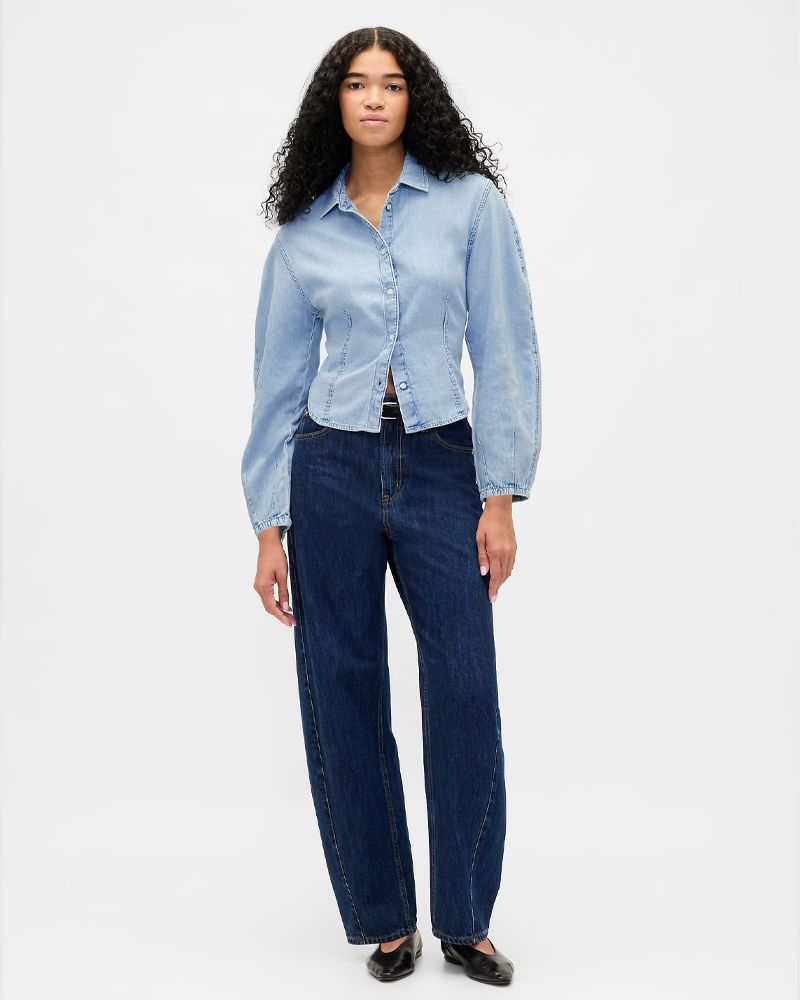
Wholesale Custom Long Sleeve Denim Shirts with Custom Logo

Introduction: The Long Sleeve Denim Shirt as Commercial Canvas
The long sleeve denim shirt occupies a curious position in the apparel hierarchy. It is at once utilitarian and aspirational, a garment that straddles the boundary between workwear and fashion. For wholesale buyers and private label entrepreneurs, it presents a compelling proposition. The shirt offers a generous surface for branding, a durability that justifies premium pricing, and a versatility that appeals across seasons and demographics. When paired with custom logo application, the denim shirt becomes more than apparel; it becomes a portable advertisement, a uniform, and a statement of identity.
Defining the Long Sleeve Denim Shirt
Silhouette, Cut, and Proportions
The long sleeve denim shirt typically features a straight or slightly tapered body, a button-front placket, a point or spread collar, and cuffs secured by one or two buttons. Length varies from hip-grazing to tunic-style. Some iterations include chest pockets with flaps; others omit them for a cleaner aesthetic. The silhouette must accommodate layering—over t-shirts, under jackets—without excessive bulk.
Differentiation from the Denim Jacket
Confusion sometimes arises between the denim shirt and the denim jacket. The distinction is one of weight and construction. Shirting denim is lighter, often between five and ten ounces, yielding a garment that drapes rather than armors. The denim shirt lacks the jacket’s heavy hardware, its riveted stress points, and its characteristic waistband. It is, in essence, a softer, more pliable cousin.
The Historical Lineage of Denim Shirting
Western Workwear Origins
Denim shirts emerged from the same milieu as denim trousers: the ranches, mines, and railways of the American West. Cowboys favored them for their durability and their ability to conceal dust and grime. The snap-button closure, a hallmark of Western shirts, allowed for quick fastening with gloved hands.
Transition into Contemporary Wardrobes
Over the twentieth century, the denim shirt migrated from pasture to pavement. It appeared on film stars, rock musicians, and eventually on runways. Today it is a staple of casual wardrobes worldwide, equally at home in a Brooklyn coffee shop and a Tokyo boutique.
Why Wholesale Buyers Prioritize Long Sleeve Denim Shirts
Year-Round Wearability
Unlike heavy jackets or summer-weight linens, the denim shirt transitions across seasons. Worn alone in spring and autumn, layered under sweaters in winter, or draped over shoulders in summer evenings, it offers remarkable versatility. For wholesalers, this translates into extended selling windows.
Broad Demographic Accommodation
The denim shirt suits men and women, young and old. It flatters a range of body types when cut appropriately. This breadth reduces the risk of inventory obsolescence.
Substantial Markup Potential
Denim carries a perception of quality and durability. Consumers expect to pay more for it than for a basic cotton poplin. Wholesale buyers can therefore apply healthier markups while remaining competitive.
Denim Fabric Selection for Shirting
Chambray, Muslin, and True Denim
Chambray resembles denim but is woven with a white weft and a colored warp, producing a lighter, smoother fabric. Muslin, a plain weave, lacks denim’s characteristic twill. True denim, with its diagonal rib, offers the authentic appearance that consumers associate with the category.
Ounce Weight Ranges for Shirting
Shirting denim typically ranges from five to ten ounces. Lighter weights (five to seven ounces) drape softly and suit warm climates. Heavier weights (eight to ten ounces) offer structure and durability. The choice depends on the intended use—whether the shirt is a fashion piece or a work garment.
Rigid Versus Stretch Compositions
Rigid denim, composed entirely of cotton, provides authenticity and develops character over time. Stretch denim, incorporating elastane or spandex, enhances comfort and movement. Wholesale buyers should consider their target market’s preferences; younger consumers often favor stretch, while heritage enthusiasts prefer rigid.
Colorfastness and Dye Considerations
Indigo, Sulfur Black, and Ecru
Indigo dye produces the classic blue hue, with a depth that reveals itself through fading. Sulfur black yields deep, matte blacks that resist fading. Ecru, an undyed natural shade, offers a neutral canvas for embroidery and printing.
Color Bleeding and Transfer Risks
Indigo and sulfur dyes may crock—transfer color to skin, upholstery, or undergarments—particularly when new. Proper washing and finishing reduce crocking. Wholesale buyers should verify colorfastness through standard tests.
Construction Anatomy of a Quality Denim Shirt
Collar Structures and Interfacing
The collar is a focal point. It must hold its shape through wear and washing. Fusible or sew-in interfacings provide structure. A poorly constructed collar curls at the points or collapses entirely.
Plackets, Cuffs, and Button Stands
The front placket houses the buttons and reinforces the opening. It should be interfaced to prevent stretching. Cuffs must be sized to accommodate wrists without constriction. Button stands—the fabric beneath the buttons—should be reinforced.
Yoke, Pleats, and Back Panel Design
The yoke across the shoulders distributes fabric stress. Some shirts feature pleats or darts for shaping. Back panels may be plain or embellished with embroidery, offering branding opportunities.
Stitching Standards and Seam Architecture
Single-Needle Versus Double-Needle Techniques
Single-needle stitching produces a finer, more precise seam but requires more labor. Double-needle stitching is faster and stronger, commonly used at side seams and armholes. Both have their place.
Chain Stitching and Flat-Felled Seams
Chain stitching, recognizable by its interlocking loops, provides elasticity and durability. Flat-felled seams, in which raw edges are enclosed, offer a clean interior and exceptional strength. These techniques signal quality to discerning buyers.
The Custom Logo Imperative
Branding as Differentiation in Wholesale Markets
In a crowded marketplace, logos differentiate. They transform generic garments into branded merchandise. For wholesalers, custom logos justify higher prices and foster brand recognition.
Logo Placement Hierarchy and Visibility
Placement determines visibility. A left-chest logo is conventional and professional. A full-back design is bold and promotional. Sleeve and collar placements offer subtlety. The hierarchy should align with the brand’s positioning.
Embroidery Techniques for Denim Shirts
Left Chest: The Conventional Placement
The left chest—over the wearer’s heart—is the most common embroidery location. It accommodates logos of moderate size and is visible when the shirt is worn open or closed.
Sleeve, Cuff, and Collar Embellishment
Sleeve embroidery, positioned on the upper arm, evokes military patches. Cuff embroidery is discreet, revealed only when the sleeve is rolled. Collar embroidery frames the face and draws attention.
Back Yoke and Full-Back Embroidery
Back yoke embroidery spans the shoulders, offering a large canvas. Full-back embroidery covers the entire back panel, delivering maximum impact. These placements suit promotional garments and statement pieces.
Screen Printing and Alternative Marking Methods
Plastisol, Water-Based, and Discharge Inks
Plastisol ink sits atop the fabric, offering opacity and vibrancy. Water-based ink penetrates the fibers, yielding a softer hand. Discharge ink removes dye from the fabric, creating a tone-on-tone effect.
Heat Transfer and Sublimation
Heat transfer applies a pre-printed design via heat and pressure. Sublimation gasifies ink into the fabric, suitable for light-colored synthetics. On cotton denim, sublimation requires a polymer coating.
Woven Labels and Heat-Seal Patches
Woven labels, stitched into seams, provide durable branding. Heat-seal patches adhere to the fabric with adhesive, offering a clean, modern appearance.
Digitizing Artwork for Embroidered Logos
Stitch Path Optimization
Efficient stitch paths reduce production time and thread consumption. The digitizer sequences colors and directions to minimize trims and jumps.
Density Calibration for Shirting Fabrics
Shirting denim is lighter than jacket denim. Excessive stitch density puckers the fabric. The digitizer must calibrate density to the substrate, ensuring a smooth, professional result.
Thread Selection and Color Matching
Polyester Versus Cotton Threads
Polyester thread is strong, colorfast, and economical. Cotton thread offers a matte, natural appearance but is less durable. The choice depends on the desired aesthetic and the garment’s end use.
Pantone Matching and Contrast Stitching
Precise color matching ensures brand consistency. Contrast stitching—gold on indigo, white on black—adds visual interest and emphasizes the logo.
Hardware and Trims as Branding Vehicles
Buttons, Snaps, and Custom Dies
Buttons can be customized with logos, debossed or engraved. Snap closures, common on Western shirts, can be die-struck with brand marks. These small details reinforce identity.
Woven Labels, Size Tags, and Care Labels
Interior labels declare brand, size, and care instructions. Woven labels are durable and prestigious. Printed tags are economical. Compliance with labeling regulations is mandatory for export.
Sizing, Grading, and Fit for Wholesale Distribution
Men’s, Women’s, and Unisex Blocks
Men’s shirts typically have broader shoulders and longer sleeves. Women’s shirts are shaped at the waist and bust. Unisex blocks offer a relaxed fit suitable for both.
Regional Grading Variances
Sizing conventions differ across regions. An Asian large may correspond to a Western medium. Wholesale buyers must specify their target market and grade accordingly.
Minimum Order Quantities and Wholesale Tiers
Entry-Level MOQs for Emerging Retailers
Some manufacturers offer low MOQs—50 to 100 units per style—to accommodate startups. These arrangements carry higher per-unit costs but lower financial risk.
Volume Discounts and Tiered Pricing
Larger orders unlock lower prices. Tiered pricing structures reward volume commitments. Buyers should calculate their optimal order size based on demand forecasts and storage capacity.
Sampling Protocols and Pre-Production Approvals
Fit Samples and Measurement Confirmation
Fit samples verify silhouette and measurements. Approvals at this stage prevent costly errors in bulk production.
Logo Strike-Offs and Placement Approvals
Strike-offs demonstrate embroidery or printing on the actual fabric. They reveal color accuracy, density, and placement. Approval is essential before mass production.
Quality Control for Wholesale Denim Shirting
Inline Inspection and Defect Classification
Inline inspection catches defects during production. Defects are classified as critical, major, or minor. Critical defects render the garment unsellable.
AQL Standards and Tolerance Thresholds
Acceptable Quality Limit (AQL) standards define acceptable defect rates. Buyers should specify AQL levels in their purchase agreements.
Packaging, Labeling, and Retail Presentation
Polybagging, Hangtags, and Fold Standards
Packaging protects garments and communicates brand values. Polybags, hangtags, and folding standards should be specified. Retailers often have precise requirements.
Compliance Labeling for Export Markets
Export markets require specific labeling: fiber content, country of origin, care instructions. Non-compliance can result in customs seizures.
Logistics, Freight, and Distribution Channels
Sea Freight Versus Air Freight Economics
Sea freight is economical but slow. Air freight is fast but costly. The choice depends on urgency, volume, and budget.
Incoterms and Customs Documentation
Incoterms define buyer and seller responsibilities. Customs documentation—commercial invoices, packing lists, certificates of origin—must be accurate.
Common Pitfalls in Wholesale Denim Shirt Sourcing
Underestimating Color Variability
Denim dye lots vary. A reorder may not match the original shipment. Buyers should request dye lot consistency or accept potential variance.
Neglecting Shrinkage Allowances
Cotton denim shrinks. Patterns must account for shrinkage, particularly if the garment will be washed by the consumer.
The Future of Custom Logo Denim Shirting
Sustainable Dyeing and Waterless Finishing
Waterless dyeing and finishing technologies reduce environmental impact. Brands that adopt these methods appeal to eco-conscious consumers.
Digital Printing and On-Demand Production
Digital printing enables small batches and rapid customization. On-demand production eliminates inventory risk.
Conclusion: Strategic Advantages of the Branded Denim Shirt
The wholesale custom long sleeve denim shirt is a strategic asset. It combines durability, versatility, and branding potential in a single garment. For wholesalers and private label entrepreneurs, it offers a pathway to differentiation and profitability. The key lies in selecting the right manufacturer, specifying quality materials and construction, and executing logo application with precision. When these elements align, the denim shirt becomes more than merchandise. It becomes a vessel for brand identity, worn and displayed by consumers who become ambassadors.